








I’m Delia Hartwell, and here’s why ShearNest exists
I cut hair in Providence for thirty years, and the appointment I came to dread was the woman holding a photograph of a haircut that was never going to work on her hair — not because of her age, but because nobody had told her what changes.
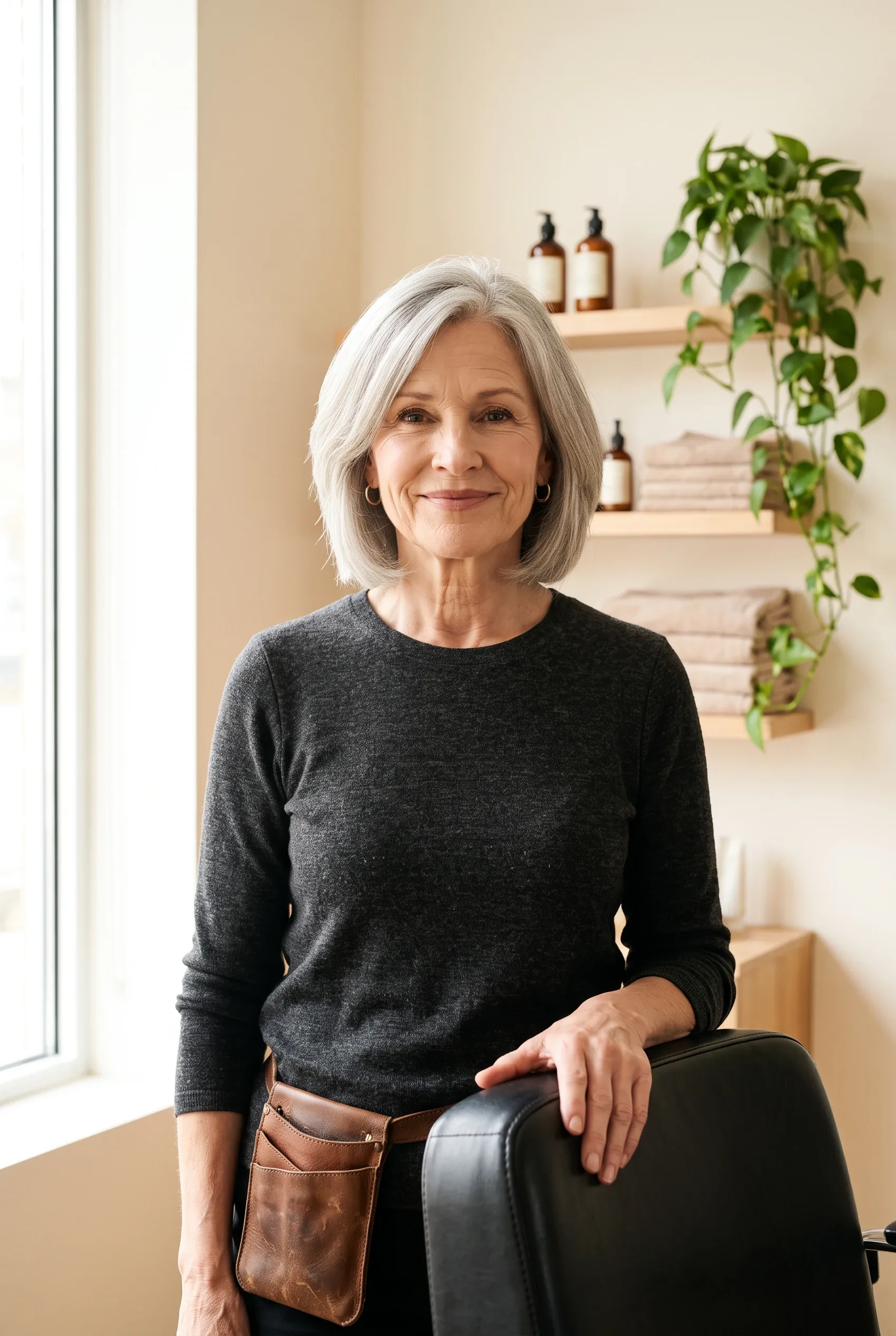
Thirty Years Behind The Chair
I opened my first chair in a two-room salon in Providence in 1996, and for the first fifteen years I cut whatever walked in. Kids before picture day. Brides. Men who wanted the same thing every five weeks for a decade. It was a good living and I learned my craft on volume, which is the only way anybody really learns it.
What changed was slower than a decision. Some time in my forties I noticed that the appointments I looked forward to were the women my own age and older — the ones who came in holding a photograph of a haircut that had been styled on somebody thirty years younger, and who left disappointed even when the cut was technically perfect.
The Photograph Problem
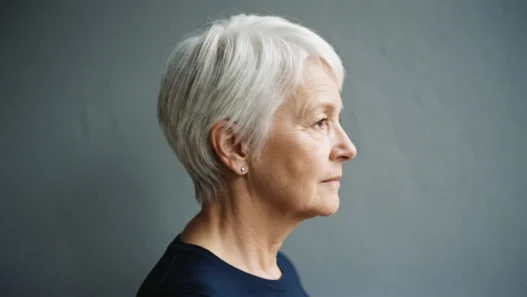
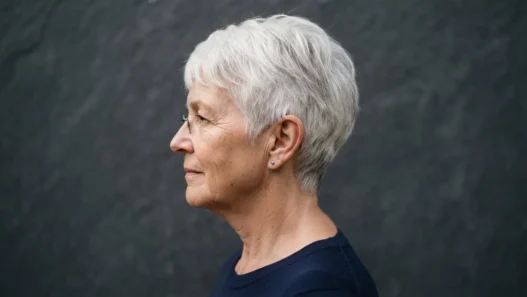
That gap is what ShearNest is about. A haircut is not a picture. It is a shape built for a specific density, a specific texture, a specific way the hair falls when you stop touching it — and all three of those change as we get older. Hair gets finer at the crown before it gets finer anywhere else. Grey hair is a different fibre: coarser, more resistant, and it takes light completely differently, which is why a cut that looked soft on brown hair can read severe the moment it grows out silver.
Nobody tells you any of that. You are handed a magazine and a mirror and left to work out for yourself why the same bob that looked effortless on the model looks heavy on you. It is almost never the cut. It is that the cut was built for hair that behaves differently from yours.
What Actually Changes, And When
I am not going to pretend there is a single haircut for being over fifty, because there is not. What there is, is a set of things that shift on a fairly predictable timetable, and once you know which one you are dealing with, the decision gets much easier.
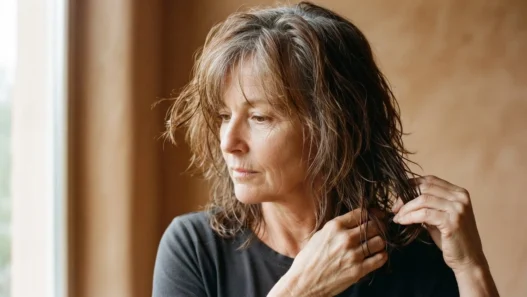
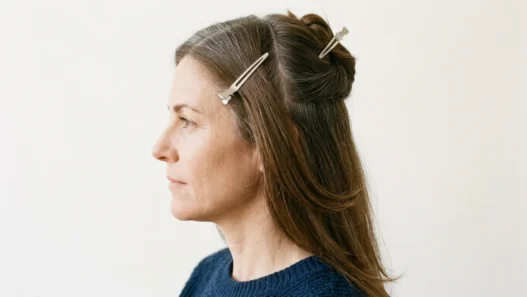
Density usually goes first, and it goes at the part line and the crown before it goes at the ends — which is why a style that relies on weight at the bottom starts looking bottom-heavy. Texture changes next: hair that was straight develops a bend, hair that was curly loosens. And the hairline softens, which matters enormously for fringe, because a fringe cut against a receding hairline needs a completely different sectioning approach than one cut against a full one.
Each of those has a real answer at the chair. Most of them are about where weight is removed, not about how short you go.
Why I Went Grey
I stopped colouring at fifty-one. It took fourteen months and I hated eleven of them.
I am telling you that because most of what is written about going grey is either an advertisement or a celebration, and the middle part is neither. The transition is a genuinely awkward stretch where you are neither one colour nor the other, and there are real techniques — blending, lowlights, strategic cutting — that make it shorter and less visible. There are also a lot of expensive products that do nothing.
I write about the transition the way I talk about it in the chair: what the stage actually looks like, how long it lasts, and which of the three or four options is worth the money.
How This Site Is Built
Everything here is organised by the thing you are actually deciding.
If you know your age band and want to see what suits it, the age sections are the fastest route. If you have already settled on a shape — a bob, a pixie, a shag — the cut sections go into how each one is built, because a layered bob and a blunt bob are two different haircuts that share a name. If the real question is grey, or fine hair, or what suits a round face, those have their own sections and they run across every age.
I write the cutting detail in because I think you should be able to walk into your appointment and describe what you want in terms your stylist recognises. A photograph plus the words for what is happening in it will get you a better result than the photograph alone, every single time.
What You Will Not Find Here
I do not review products I have not used, and I do not write about a technique I have not done on a real head of hair. Where something depends on your hair rather than on the method, I say so instead of pretending the answer is universal.
I also do not do the thing where every article about hair after fifty is secretly about looking younger. Some of these cuts will take years off you and I will happily say when one does. But a haircut that suits you is a better goal than a haircut that disguises you, and the two are not the same target.
Want to reach me?
I read every message myself. Whether it’s a question about your own hair, a correction, or a photograph of how a cut turned out, it comes straight to me and I answer it. You can find me on Pinterest or send a direct message through the contact page.
Business and collaboration inquiries go to [email protected].
See you at the chair. — Delia