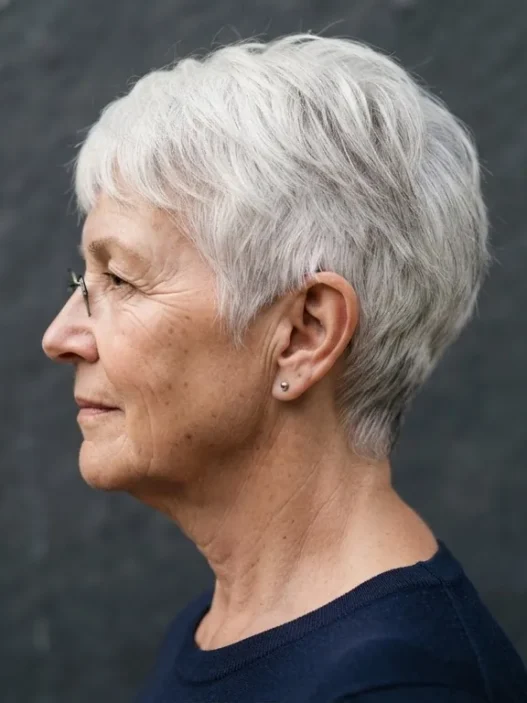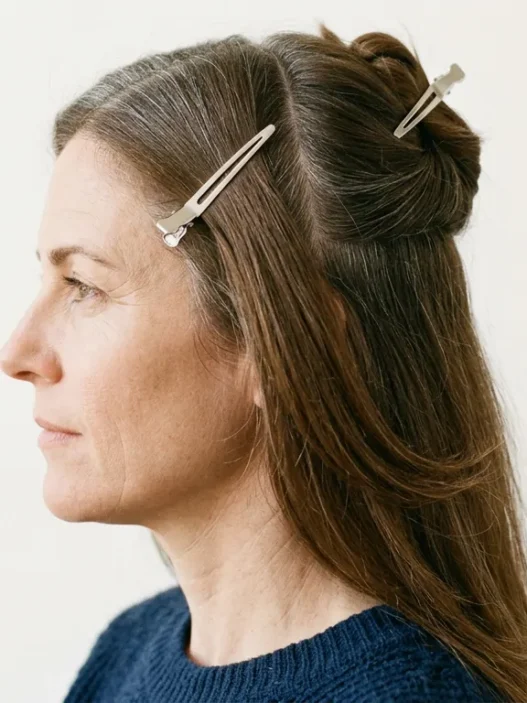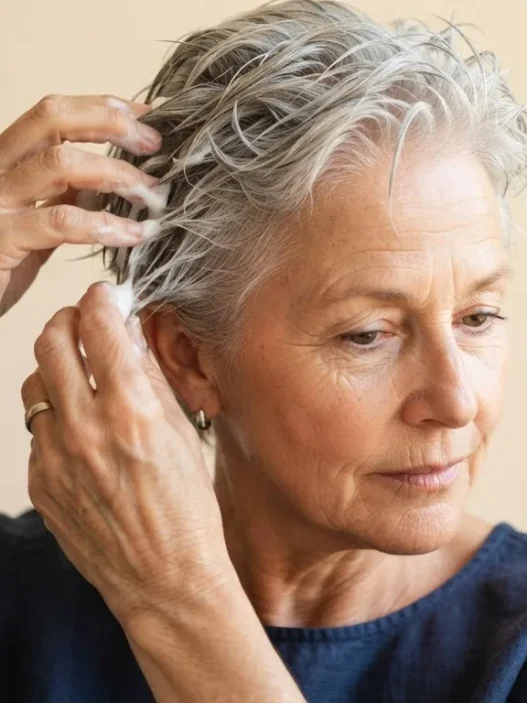







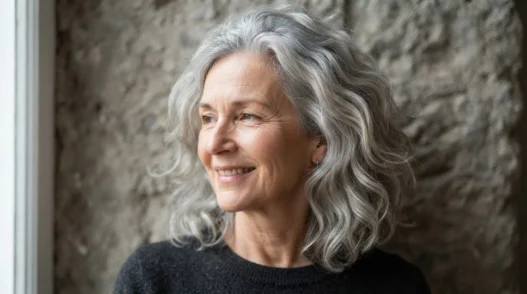

I had a client — I’ll call her Marion — who came in every eight weeks for years asking for the same thing: more volume, more bounce, more wave. And every time she left looking great for about four days before the whole thing collapsed into a flat, heavy curtain. It took us an embarrassingly long time to figure out why. The cut was wrong. Not the colour, not the products, not even her technique at home. The cut. And once we fixed that, everything else sorted itself out.
That was fifteen years ago. I’ve thought about Marion’s hair more times than I can count since then, usually when I’m standing behind a woman in her fifties or sixties who’s frustrated for exactly the same reason. Wavy hair over fifty is one of the most misunderstood hair types I work with — and the advice floating around hasn’t caught up with how hair actually changes as we get older.
The Appointment That Changed How I Think About Waves
Marion was fifty-three when she first sat down in my chair. Her wave pattern was genuinely lovely — a loose S-shape, the kind that most women with straight hair would kill for. But she was wearing it at collarbone length with barely any internal layering, and the weight was pulling every curl flat by mid-morning. The wave lived in the top six inches of her hair. Below that, it just gave up.
Here’s what I didn’t know then — or at least hadn’t connected properly — is that hair changes its behaviour in your fifties in ways that feel personal but are actually structural. The diameter of each individual strand narrows. The natural oils that used to travel down the hair shaft slow down. And the wave pattern, instead of being evenly distributed, starts to concentrate near the roots while the ends get looser and more unpredictable. What worked at thirty-five genuinely doesn’t work at fifty-five. Not because you’re doing anything wrong. Because the hair is different.
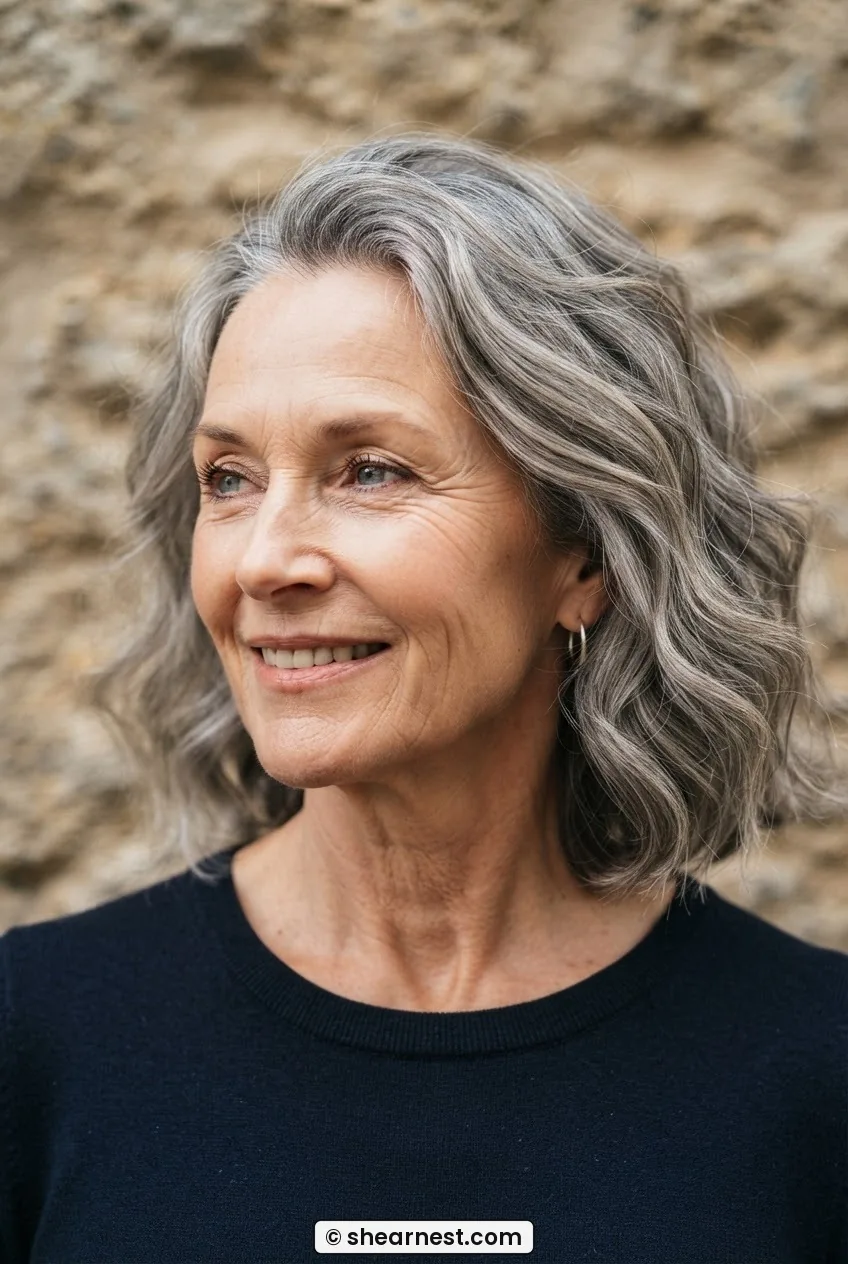
So I took about three inches off Marion’s length and put in proper internal layers — not wispy, fashion-magazine layers, but actual weight-removing layers that let the wave move. She cried. Not from distress — from relief. “It looks like what I always thought it could look like,” she said. I’ve been chasing that reaction ever since.
Why the Perimeter Matters More Than You Think
The perimeter of a haircut — the outermost edge, the line you see when you look at someone straight on — does more work on wavy hair over fifty than on almost any other hair type. And most people, and honestly some stylists, underestimate it.
Here’s the mechanism. Wavy hair naturally wants to curl outward at the ends. When the perimeter is blunt and heavy, that curl has nowhere to go — it either flips awkwardly or pulls straight under its own weight. But when the perimeter is softened — cut into slightly, given a little texture and movement — the wave can actually finish the job it started. It curls where it wants to curl. The ends don’t fight the shape.
This is especially important because faces change in our fifties. The jawline softens. The area around the temples thins slightly. A heavy, unbroken perimeter sitting at jaw level can actually emphasise both of those things — it draws a hard horizontal line exactly where you don’t need one. A slightly broken, textured perimeter at the same length does the opposite. It frames without announcing.
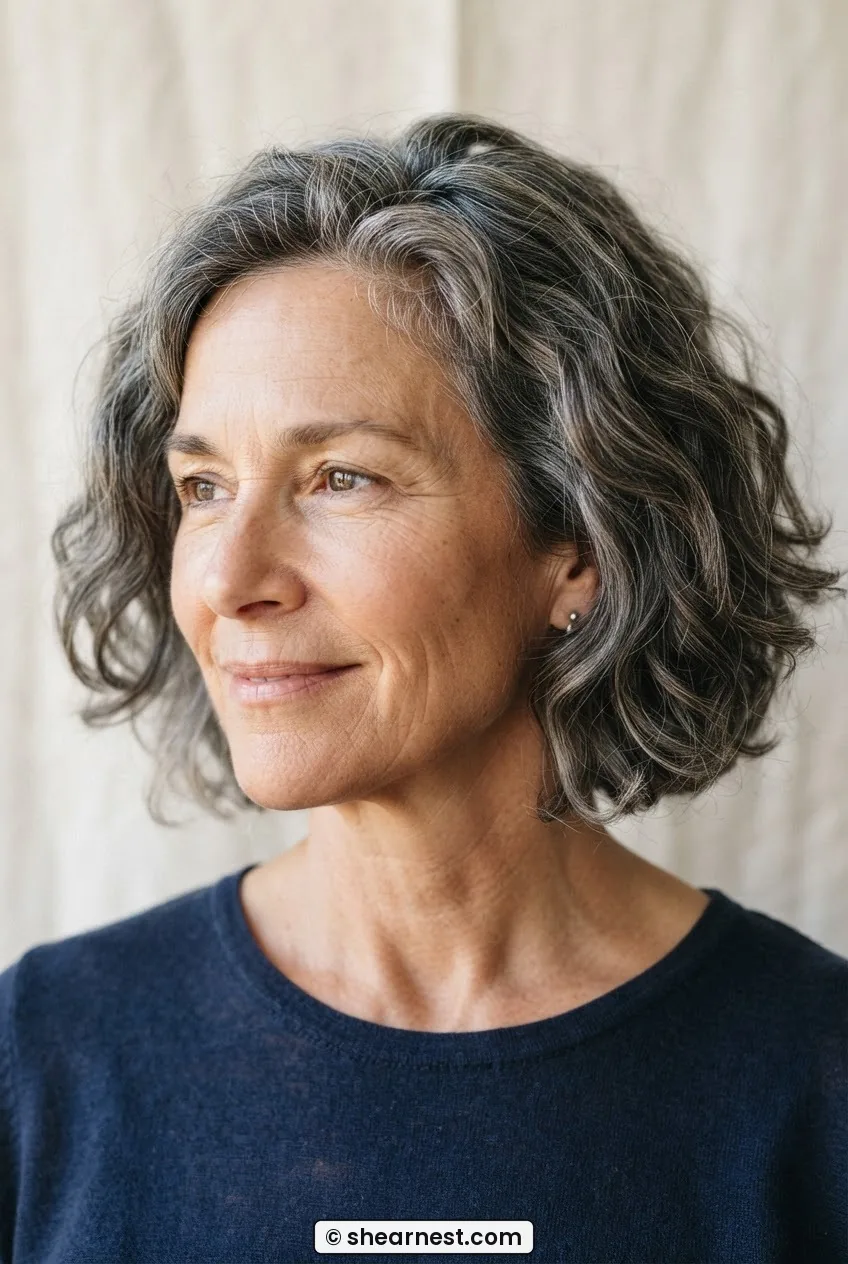
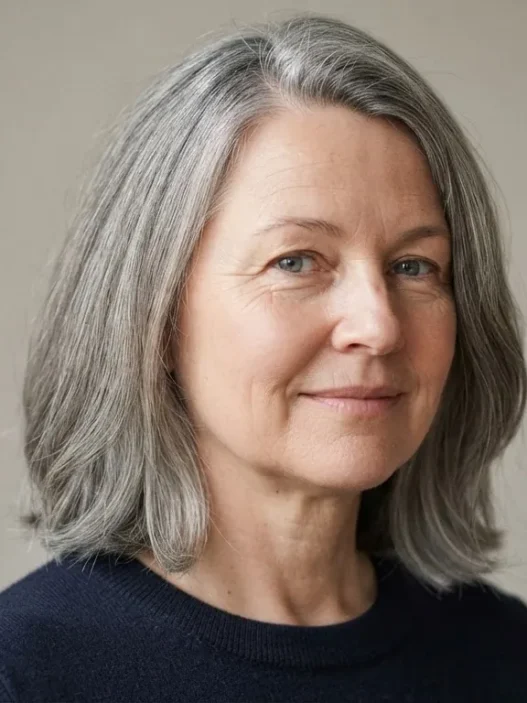
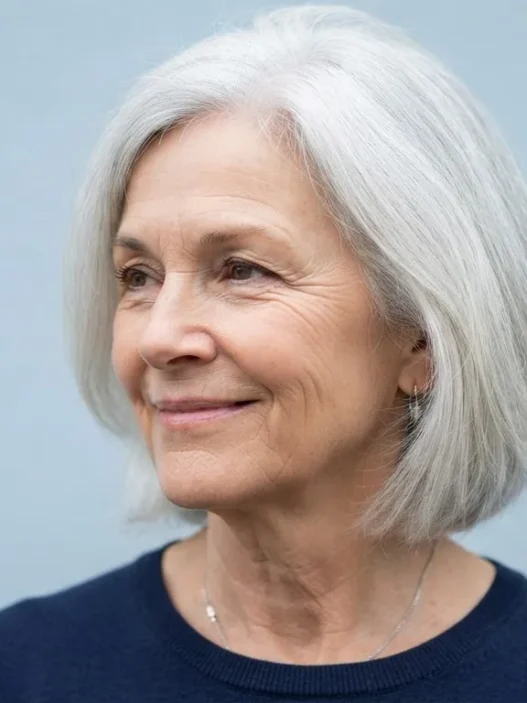
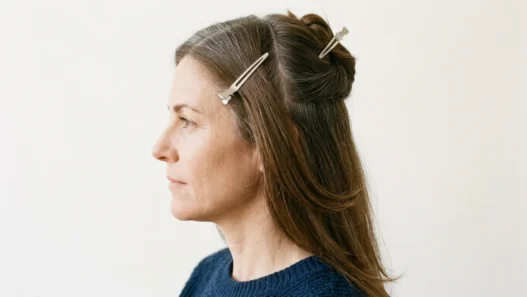
Look at how she’s wearing her lob in this photo — the wave sits right at jaw level, but the ends have just enough movement that the line isn’t rigid. That’s the difference between a perimeter that works and one that fights you every morning. The length itself isn’t what’s doing the heavy lifting. It’s what’s happening at that very edge.
Understanding how layering interacts with wave patterns can genuinely change the way you ask for a haircut. You stop asking for “more volume” and start asking for specific things — lighter perimeter, internal graduation — and you get much better results.
What I Changed My Mind About
I used to think that thick, wavy hair over fifty needed to stay long. My logic was: more length equals more weight equals more control. Keep it at collarbone or below, use the weight to anchor the wave, avoid anything that might go wild in humidity.
I was completely wrong.
The turning point was working with a woman in her early sixties who had dense, thick waves going grey — the kind of hair that seems like it should be easy but is actually incredibly demanding. She’d worn it long for decades because she’d been told, like I’d been telling people, that length was the answer. We eventually cut it to a jaw-length wavy bob — what I’d now call a wave-forward lob — and the transformation was immediate. The grey came alive. The texture, which had always been fighting for space, suddenly had room to actually form waves instead of compressing into bulk. She looked ten years more confident, not ten years younger. That distinction matters to me.
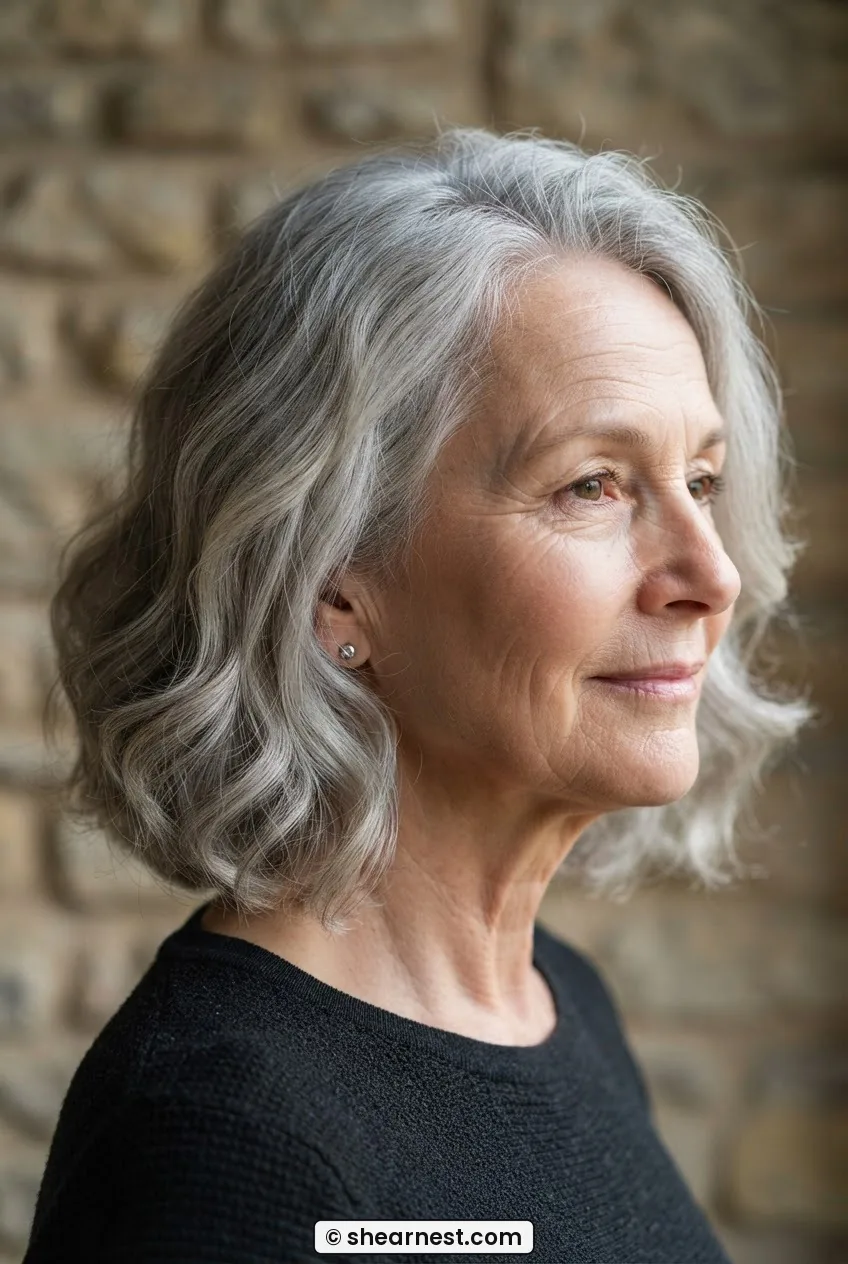
My controversial opinion, for what it’s worth: I think the medium-length wavy bob — chin to just below the jaw — is the single most underused haircut for women over fifty. Not the trendy shag, not a pixie, not the safe shoulder-length compromise. The wavy bob at jaw length, with soft internal layers and a lived-in perimeter. It does things for faces and hair types at this age that longer lengths simply cannot. And yet I spend half my consultations talking women into even trying it.
If you’re curious about how this kind of thinking applies as hair continues to change, I also write about hair styles for women over 70 — because the principles shift again, and it’s worth knowing where you’re headed.
Seeing the Wavy Bob Transformation Live
The Photograph Problem
Here’s something I notice constantly. Women come in with photographs — from Pinterest, from Instagram, from magazines — and they show me a wavy haircut they love. The photograph is usually of someone in their late twenties or thirties. The hair is gorgeous. The waves are defined and bouncy and sit perfectly.
And then I have to gently explain that what we’re looking at isn’t just a cut. It’s a cut on specific hair — likely thicker, likely more uniformly textured, likely with a more consistent wave pattern from root to end. The cut itself might be exactly right for my client. But the result won’t look the same, and that’s not failure. That’s just physics.
What I ask clients to do instead: find photographs of women in their fifties and sixties with wavy hair. They’re harder to find — the industry still skews young — but they exist. The research on how hair texture shifts after menopause is genuinely useful here, because it explains why the same cut photograph can look so different on different hair at different life stages. When you find an image of someone your age with waves you love, bring me that. It tells me so much more than the gorgeous twenty-eight-year-old with the beachy lob.
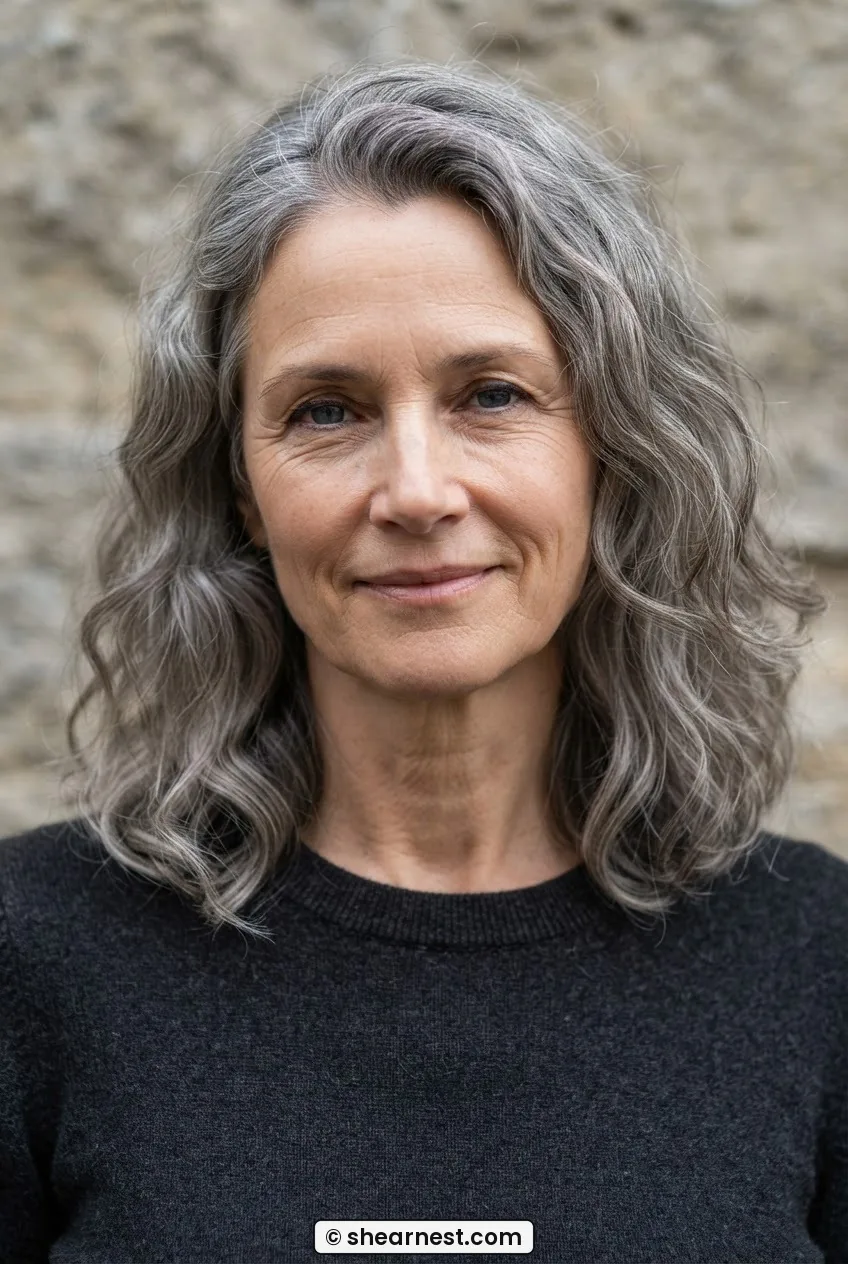
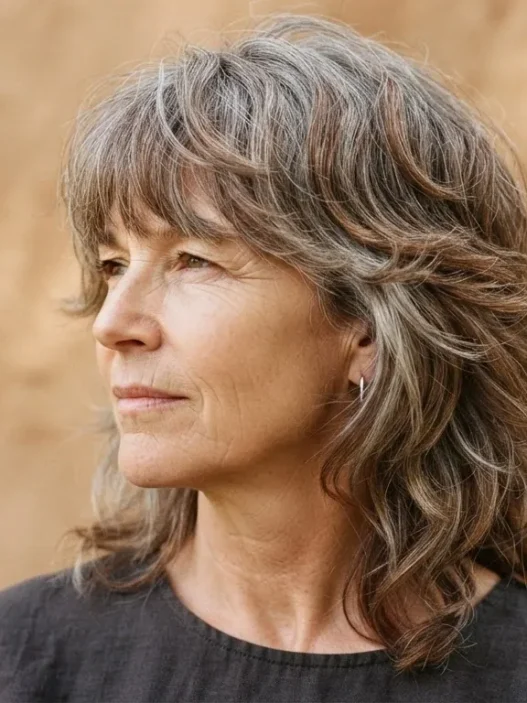
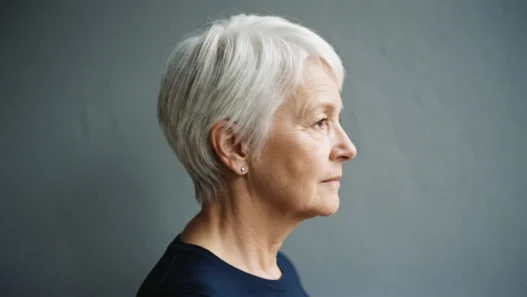
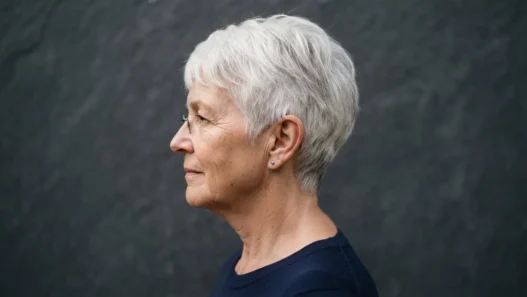
She’s got the kind of wave I’m talking about — look at the way it falls at jaw level, not fighting its shape, not collapsing, just sitting. That’s a cut working with the hair’s natural movement, not against it. And notice her face isn’t being swallowed by volume — the wave frames without overwhelming. That’s what we’re aiming for.
On the topic of what changes and when — this connects to a broader question about how hair evolves decade by decade. I’ve written elsewhere on Shearnest about how cuts that worked brilliantly in your forties sometimes need rethinking in your fifties and beyond. The bone structure doesn’t change, but everything draped over it does.
When Length Becomes the Enemy
There’s a length at which wavy hair — particularly wavy hair over fifty — stops cooperating. It varies by individual, but it’s usually somewhere past the collarbone. Once you hit that zone, the weight of the hair starts to suppress the wave at the top, where you most need it, and the ends develop their own unpredictable agenda. You end up spending forty-five minutes trying to make it look like a photograph from 2018.
That said — and this is the part where I’ll probably get letters — I don’t think all long wavy haircuts are wrong for women over fifty. Some women with genuinely thick, coarse waves can carry long length beautifully. The wave pattern in thick, coarser hair often stays stronger for longer, and the hair doesn’t thin in the same way finer hair does. For those women, a long wavy cut with strong internal layers and a softened perimeter can be stunning.
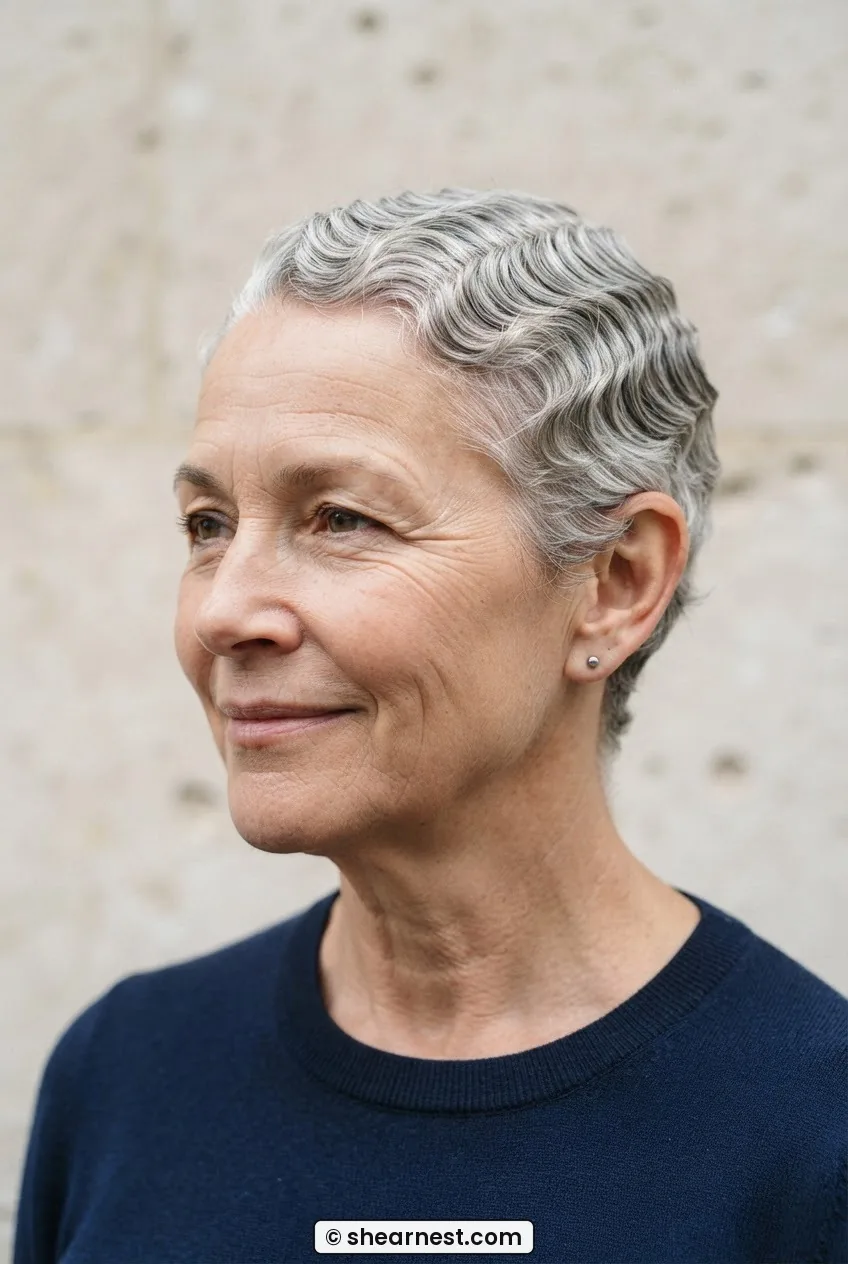
But for the majority of my clients — whose hair has become finer, where the wave is loosening, where the curl pattern has shifted upward toward the root — long length is working against them. The sweet spot is usually between chin and collarbone. That range gives the wave enough room to express itself without the length suppressing it. Short wavy styles — a cropped wave, a tight wavy pixie — can also be brilliant, but they require a very specific wave pattern and a willingness to work with the hair daily rather than occasionally.
For anyone exploring hairstyles for women over seventy, the length conversation shifts again — and it’s worth reading about separately, because the considerations change considerably when you factor in density loss and scalp visibility.
What I recommend now, consistently, is this: if you’ve been wearing your wavy hair long and you’re not happy with it — not happy with the flatness, the weight, the morning routine — try the jaw-to-collarbone range before you try anything else. Just try it. The number of women who’ve come back to me after that cut and said they should have done it years ago is genuinely uncountable. You can read about the mechanics behind why this works when you look into wavy fine hair cut techniques — the logic applies broadly across hair types in this range.
Questions I Get About This
Will a wavy bob make my face look rounder?
Not if it’s cut correctly. The perimeter placement and layering are what control how width is perceived — not the length category alone. A wavy bob with internal graduation and a slightly broken perimeter at jaw level tends to frame the face, not widen it. The wave movement itself creates vertical energy that counterbalances width. If a past wavy bob made you look rounder, the issue was the cut, not the concept.
My waves have loosened significantly — do I need a different approach?
Yes, and this is one of the most common things I hear from women in their fifties. When the wave loosens, you lose the curl’s ability to support its own shape — so you need the cut to do more of that work. Shorter layers, a more defined perimeter, and a slightly shorter overall length all help a looser wave look intentional rather than tired. You’re essentially giving the wave a better framework to live inside.
Is a wavy lob high-maintenance?
Less than most people expect. The wave at this length air-dries with minimal fuss if the cut is right — you’re not fighting the hair’s natural movement, you’re working with it. Most of my clients with wavy lobs come in every eight to ten weeks and spend maybe ten minutes on styling. The key is getting the initial cut right so the shape holds between appointments rather than requiring daily intervention.
Should I go grey with wavy hair or keep colouring?
This is entirely a personal decision, and I genuinely don’t have a strong opinion on what anyone should choose. What I will say is that grey wavy hair has a beautiful natural texture contrast that can look incredibly striking, especially at shorter to medium lengths. If you’re thinking about it, there are detailed guides on how we approach colour transitions at different stages — it’s worth reading before committing in either direction.
If any of this sounds familiar — if you’ve been chasing a wave that won’t behave, or wearing a length that isn’t doing what you hoped — I’d genuinely encourage you to start with the cut rather than the product cabinet. The cut is doing the heavy lifting or it isn’t. Everything else is just finishing details. And if you want to talk through what might work for your specific hair, the contact page is the easiest way to reach me.