



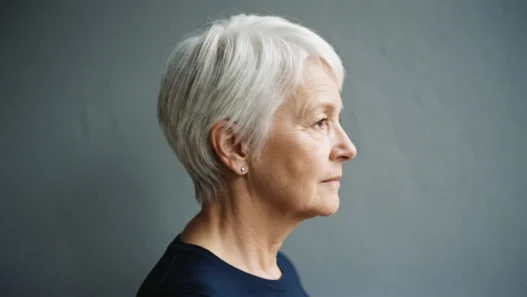

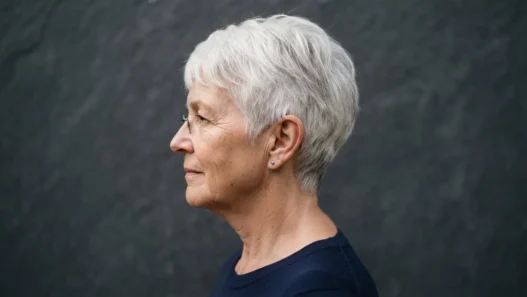


I had a client come in last spring — seventy-three years old, silver-white hair, and a photograph on her phone of a cut she’d worn in her late fifties. She held it up and said, simply, “I want this back.” I looked at the photo, then at her, then at the photo again. And I had to figure out how to tell her the truth without making her feel like she’d lost something.
That conversation is what I want to have with you here. Not a listicle. Not ten options ranked by difficulty. Just an honest look at what hair styles for women over 70 actually involve — the mechanics, the changes, the things I’ve revised my own opinions on over the years. Some of it might surprise you. A little of it might sting, but only briefly.
The Photograph Problem
The photograph is almost never the issue. The issue is that we remember how we felt in the photograph — and we want to feel that way again. Which is completely understandable, and also a little bit of a trap.
Hair from fifteen or twenty years ago was growing on a different scalp, with different density, different elasticity, and often a different colour — even if you were already going grey. The structure that held that cut in place, the natural body that made it photograph so well, those things shift. Not dramatically all at once, but steadily, across decades.
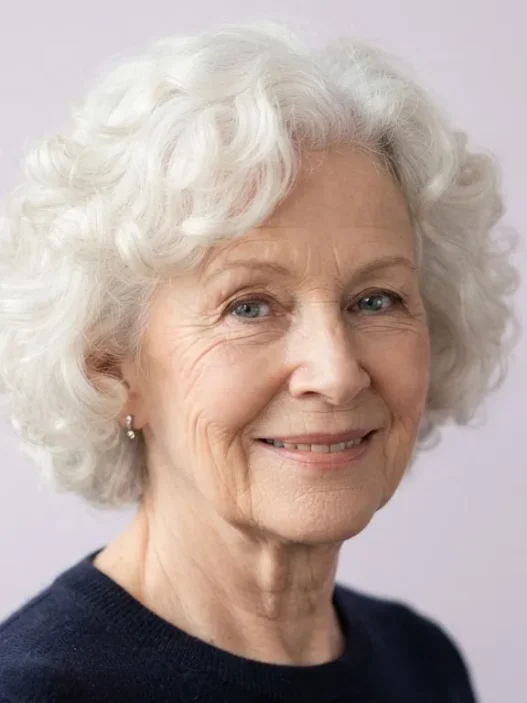
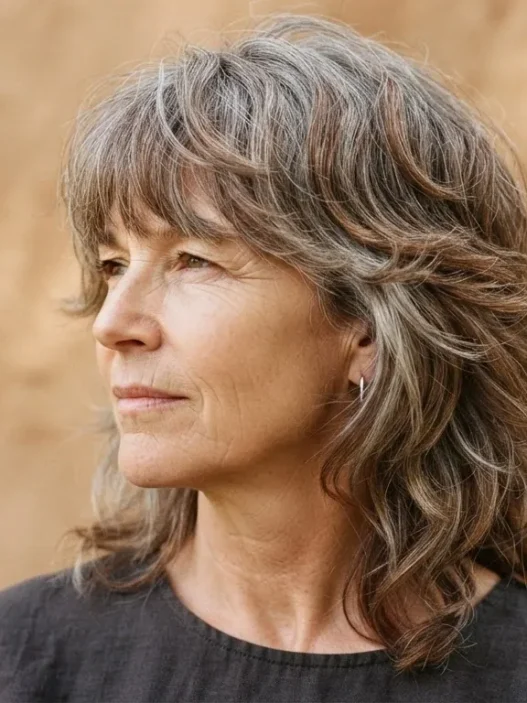
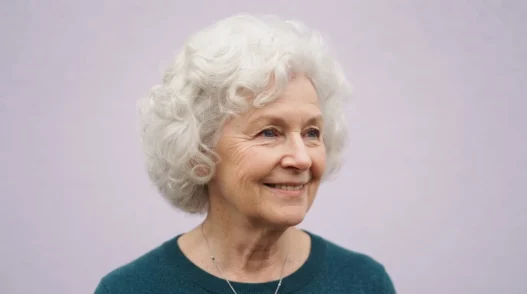
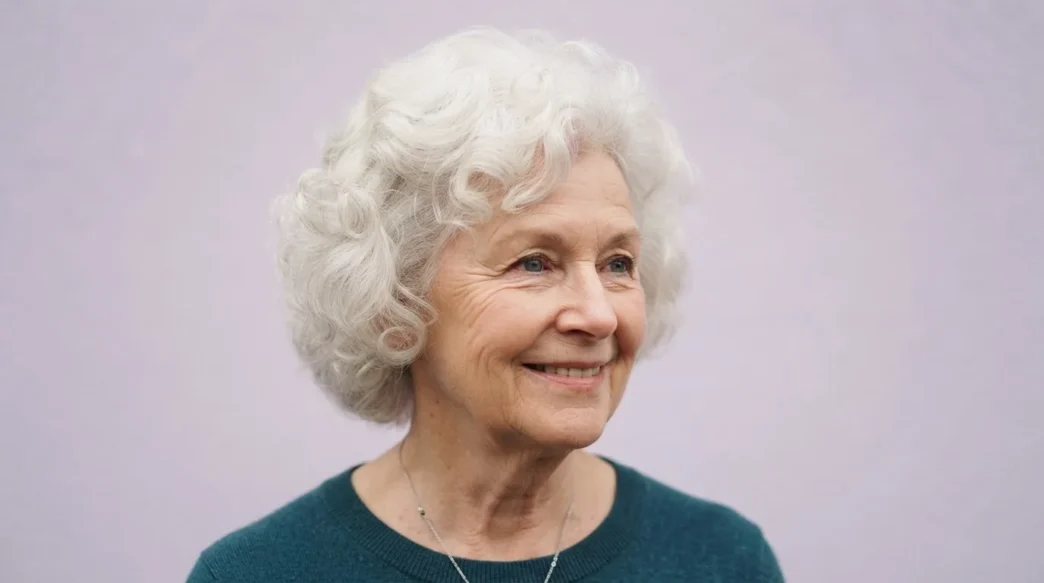
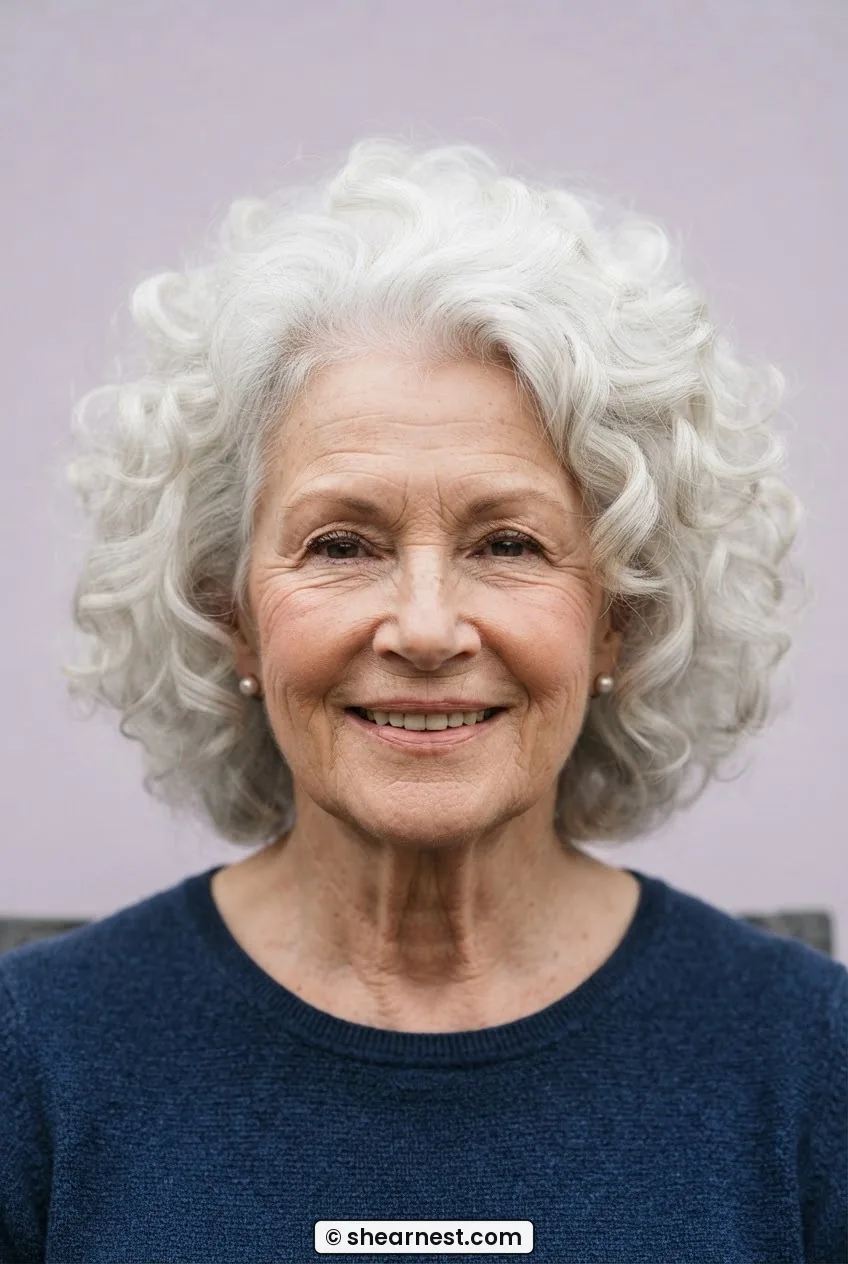
Look at the woman in this photo — see how her curls sit in that rounded silhouette, soft and full at the crown, tapering gently at the sides? That shape isn’t accidental. It’s the result of working with what her hair is doing now, not fighting it back toward something it did in 1998. That’s the distinction I want you to hold onto.
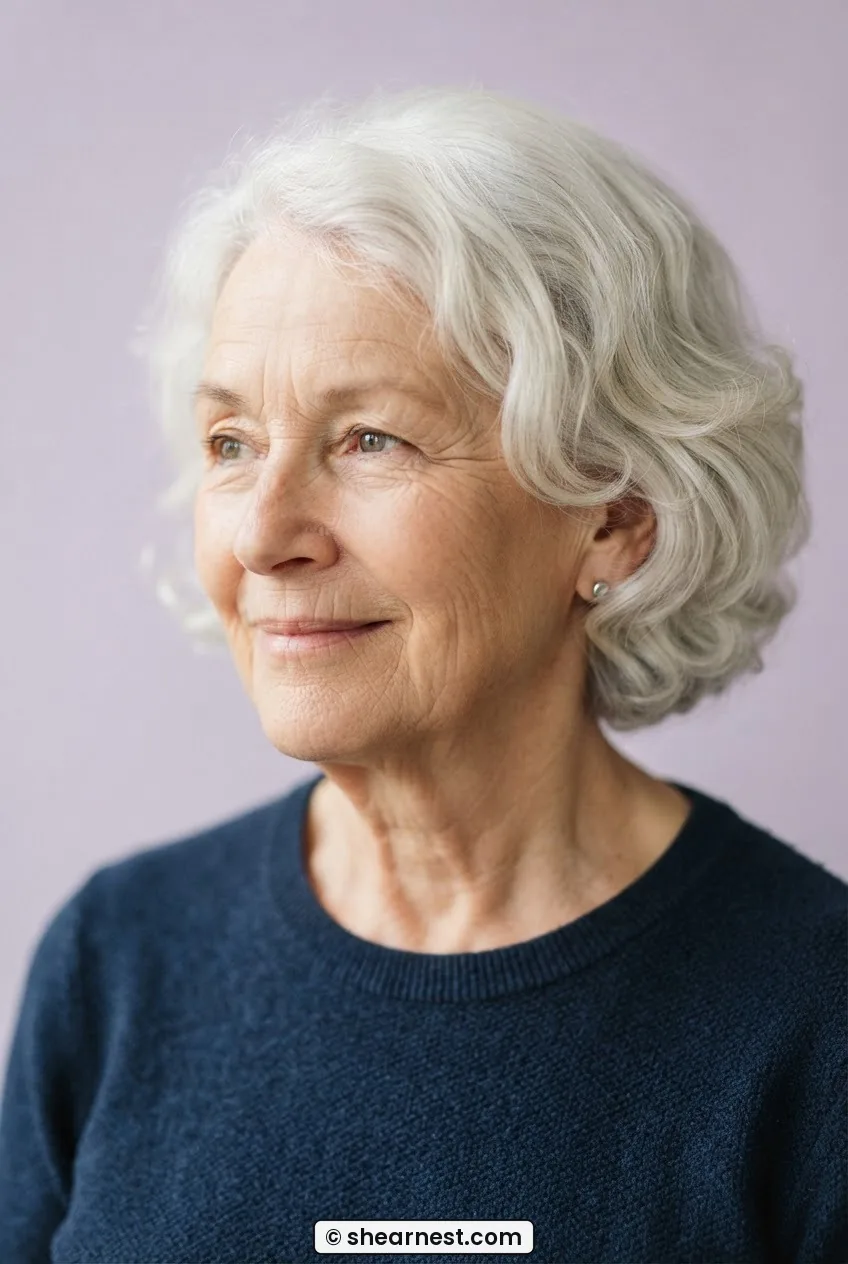
When I take a photograph from a client, I’m not trying to be discouraging. I use it as a reference for what she likes — the weight, the volume, the general energy of the style. Then I translate that into what her hair can actually do in 2026. Sometimes it’s very close. Sometimes we arrive somewhere she ends up liking better.
Why the Perimeter Matters More Than You Think
This is the technical thing I wish more stylists explained out loud. The perimeter — the outer edge of the cut, the line that frames the face and neck — does more work on hair over 70 than on any other hair type I can think of. And it’s usually where the most mistakes happen.
When hair thins and softens at the temples, when the hairline recedes slightly at the corners, when the nape becomes finer — the perimeter is what either compensates for those changes or exposes them. A blunt, heavy perimeter on fine silver hair can look helmet-like. Too wispy and it just disappears. The sweet spot is a softened, bevelled edge that gives the illusion of weight without actually being heavy.
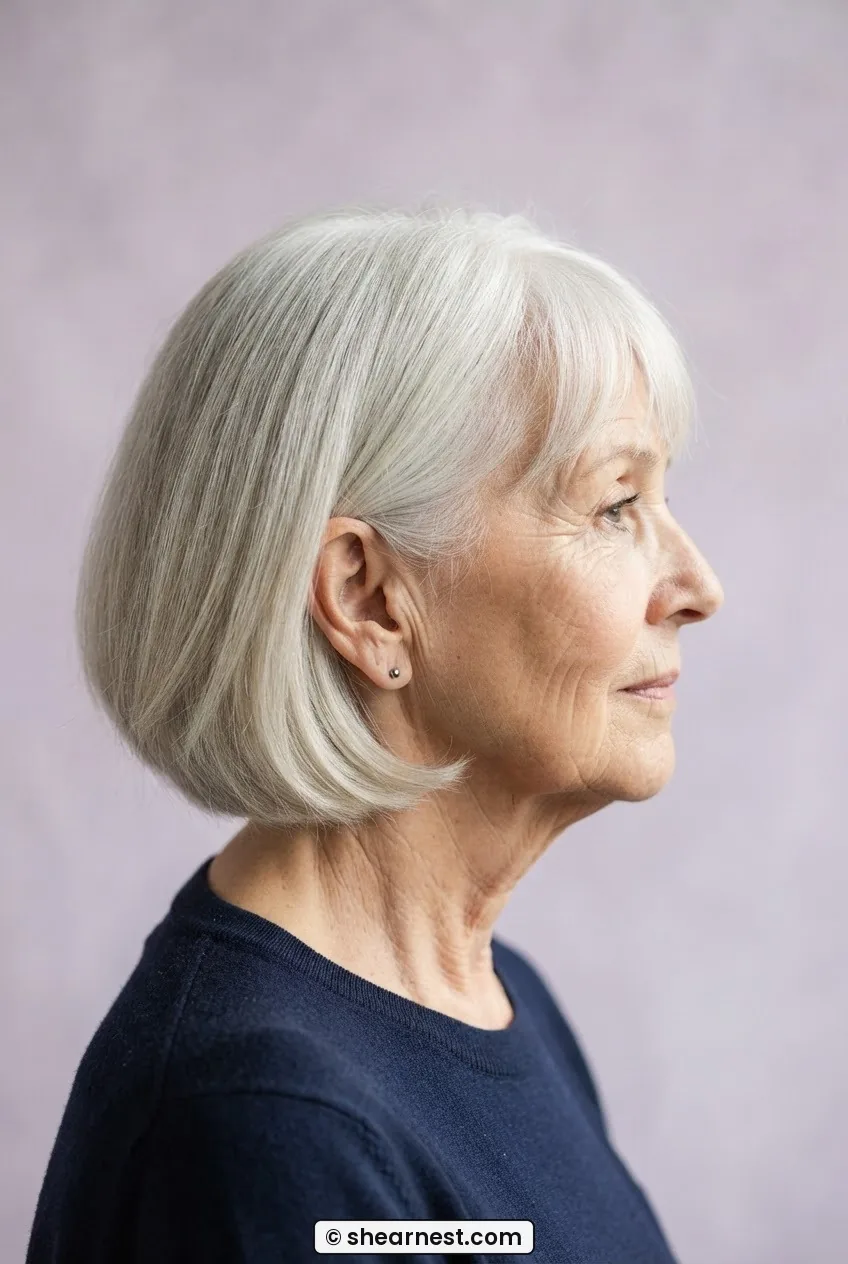
Sectioning matters enormously here. When I’m cutting the perimeter on a client in her seventies, I take smaller sections than I would on younger hair — thinner partings, slower release. It sounds tedious but it means I can feel exactly how much weight is there before I remove any. Guessing is how you end up with a cut that looks fine in the chair and flat by Thursday.
The length of the perimeter also affects the jawline in ways people don’t always anticipate. Hair that sits just at or slightly below the jaw carries visual weight in the right place — it draws the eye outward, which can soften a face that has naturally narrowed or elongated with age. This is worth reading more about if it’s your particular concern; you can look into how length affects jaw framing from a few different angles before your next appointment.
What the Hair Is Actually Doing Now
Let me be direct, because I think the beauty industry is sometimes too gentle about this and it doesn’t actually help anyone.
After seventy, most women are dealing with at least two or three of the following simultaneously:
- Reduced density — fewer hairs per square inch, especially at the crown and temples
- Altered texture — hair that was straight may have softened into a wave; hair that was curly may have loosened
- Changed porosity — white and silver hair is often more porous and absorbs product differently
- Slower growth — the anagen (growth) phase shortens, so hair doesn’t reach the same lengths as easily
- Scalp changes — the scalp itself becomes drier, which affects how the hair sits and behaves
None of these are catastrophic. They’re just real, and they change what a cut needs to do. Understanding how hair changes with age helps enormously when you’re having conversations with your stylist — because you can ask better questions.
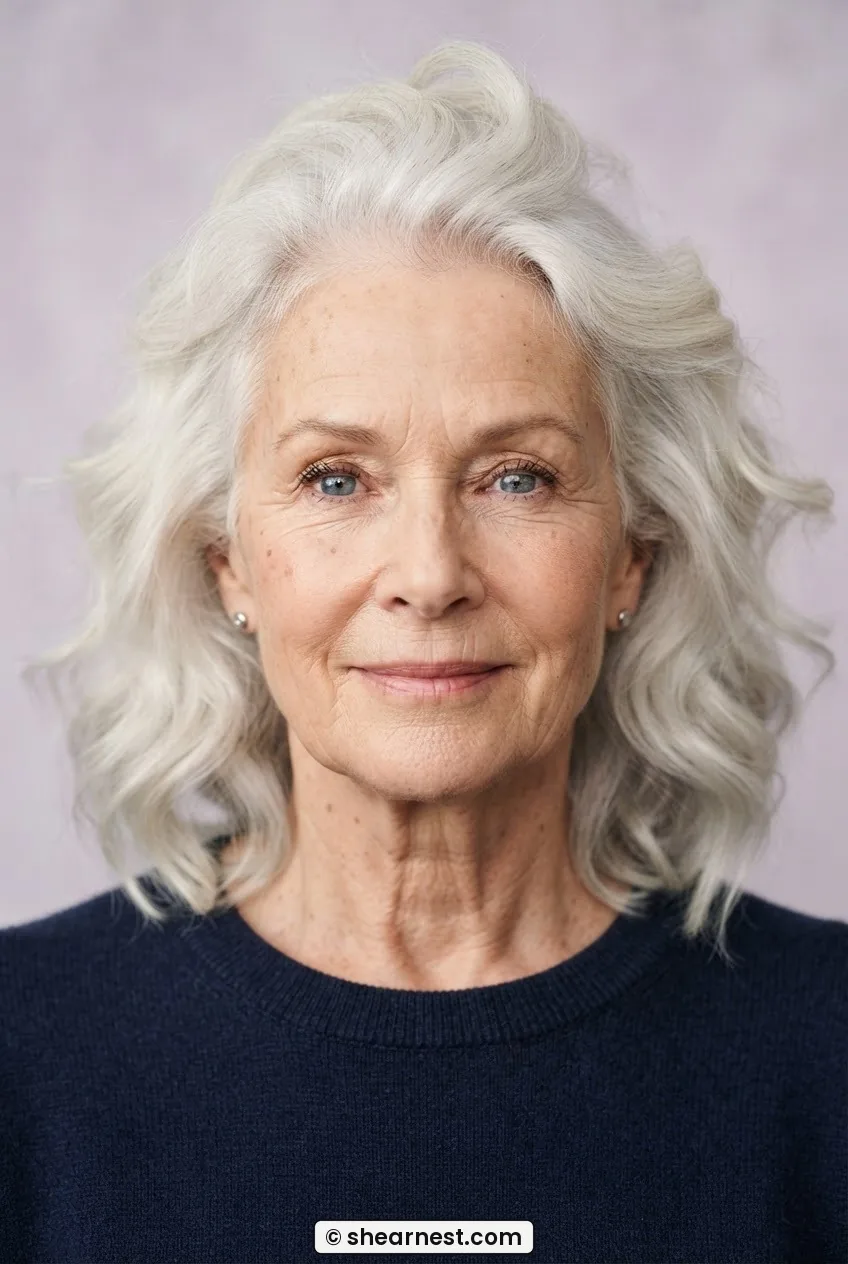
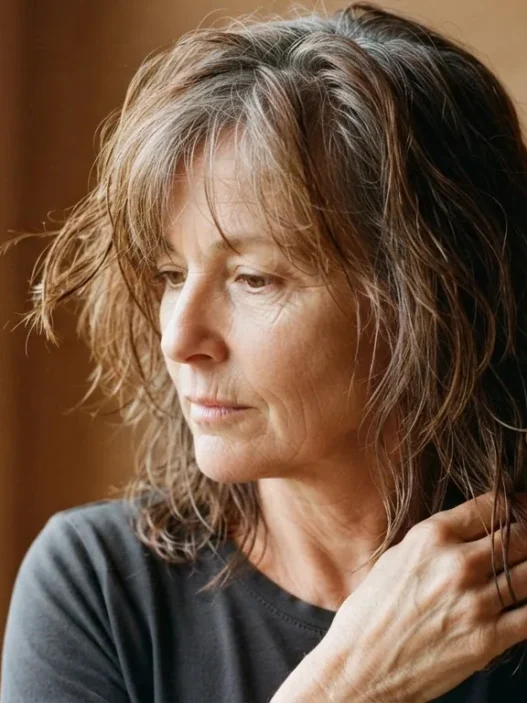
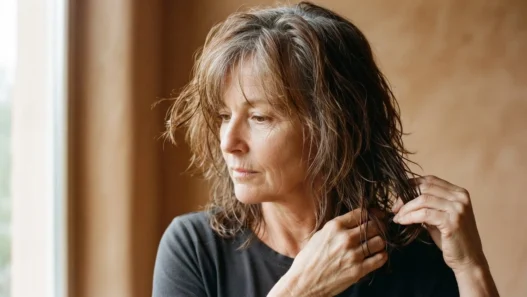
The texture change is the one that catches people most off guard. I’ve had clients come in convinced their hair has “gone wrong” when actually it’s simply wavier than it used to be. That wave is workable. More than workable — on the right cut, it’s genuinely lovely. But you can’t treat it like straight hair. Layering technique, product application, even how you towel-dry — all of it shifts.
What I Changed My Mind About
I used to believe — genuinely, for years — that shorter was almost always better for women over 70. Easier to manage. Less weight pulling on fine hair. More “age-appropriate” (a phrase I now find embarrassing to have used). I recommended pixies and close crops constantly, and many of my clients went along with it because I said it with confidence.
I was wrong. Not completely, but significantly.
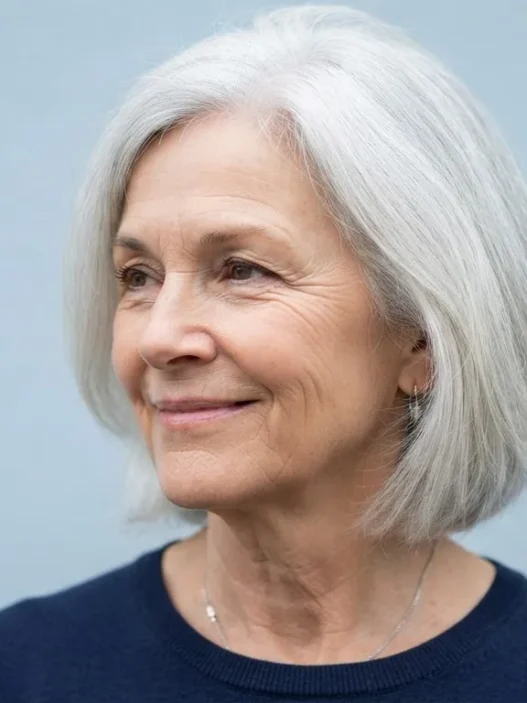
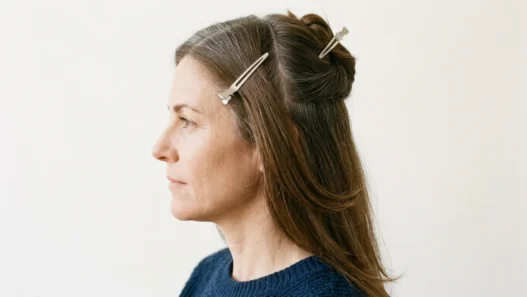
The real variable isn’t length. It’s weight distribution. A longer cut with the right layering removes bulk in the right places and keeps softness where it’s needed. A badly layered short cut on fine hair looks flat in a week. Meanwhile, a well-cut chin-length bob on the same hair type can look elegant for eight weeks. Length alone tells you almost nothing.
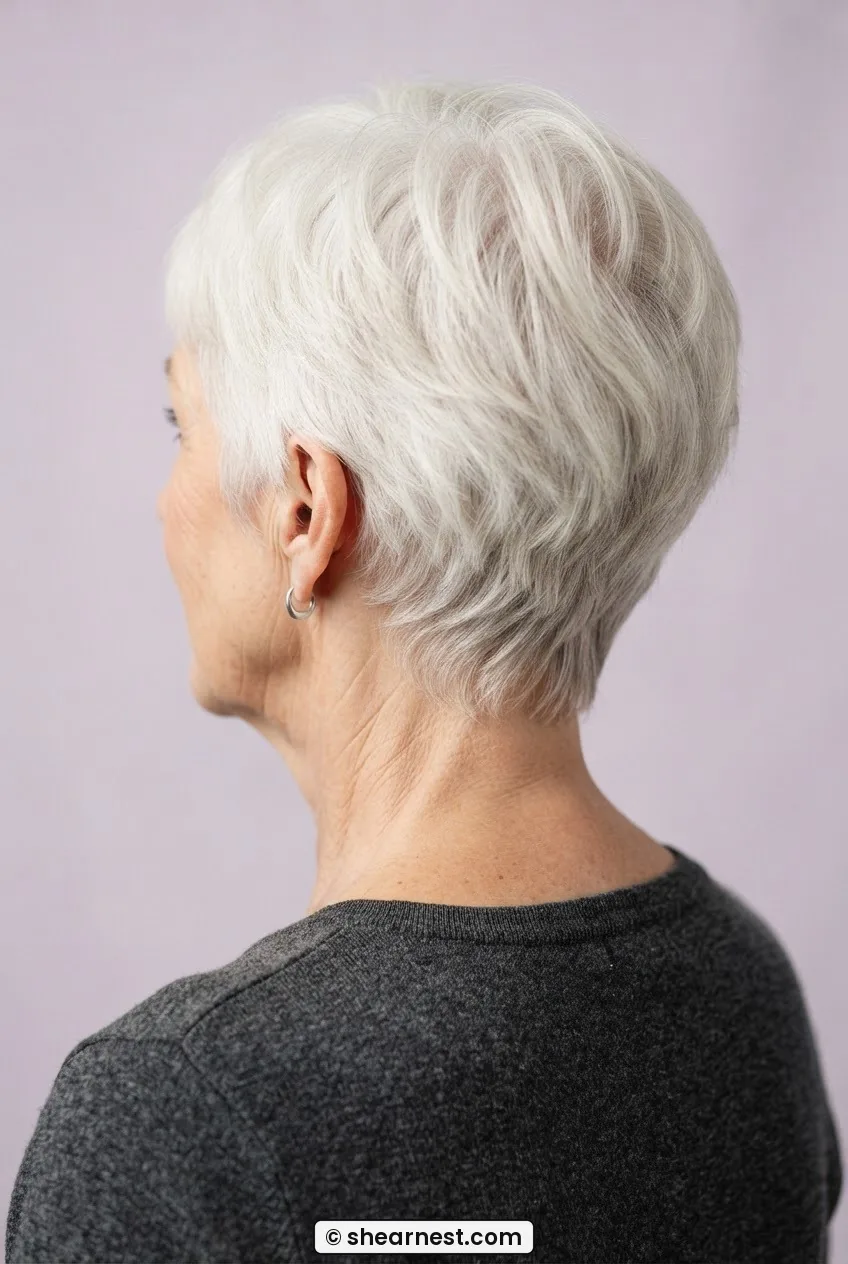
My controversial opinion, the one that sometimes gets raised eyebrows from colleagues: I think the “age-appropriate hair” conversation is largely nonsense. There is no length at which a woman over 70 suddenly looks “too young” or “trying too hard.” What actually reads as off is hair that fights its own texture, or a cut that requires forty minutes of daily styling to function. That’s a lifestyle mismatch, not an age mismatch. The approach I take on this site is always about what works for the actual person — not a category they’ve been assigned to.
I’d also revised my position on colour. I used to be neutral on it. Now I actively encourage clients to make a decision about their silver and white hair rather than letting it happen by default. Whether that’s embracing it fully, adding a toner to make it luminous, or blending some colour in — the choice itself matters. Drifting into grey without intention tends to produce hair that looks tired rather than graceful. There’s a real difference between silver that’s been considered and silver that’s just happened.
A Stylist Who Gets It Exactly Right
The Short-Hair Conversation
Since so many women over 70 are thinking about short hair — or have already been living with it for years — I want to give this topic the honest treatment it deserves rather than just a paragraph.
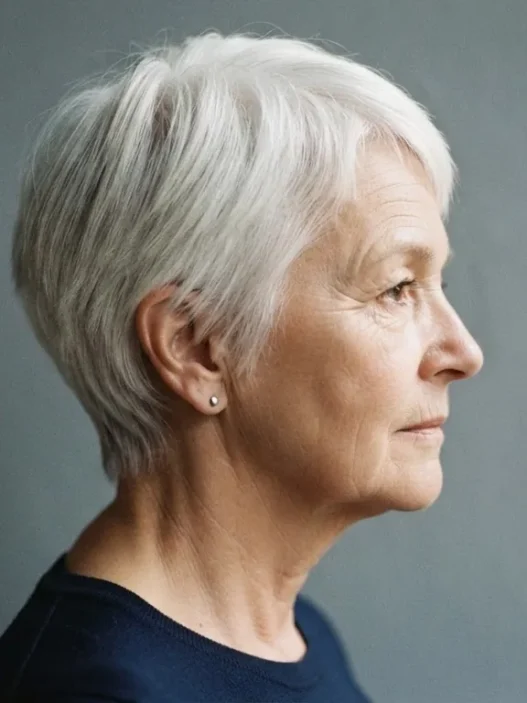
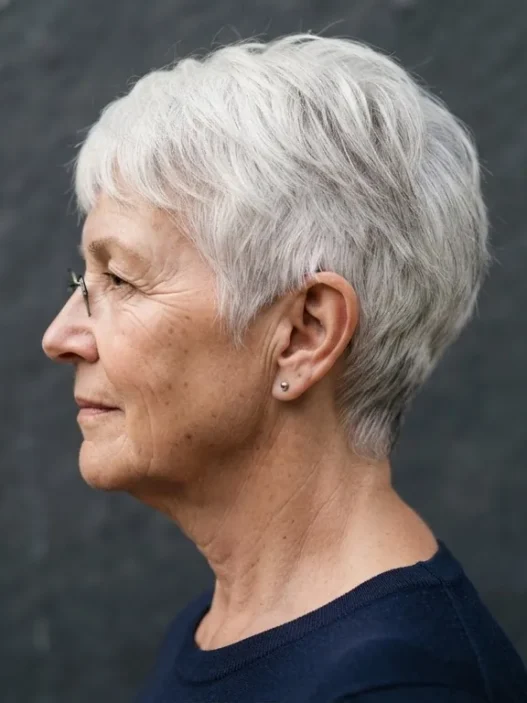
Short hairstyles for women over 70 work beautifully when they’re cut with texture in mind. A flat, smooth short cut removes all the movement that makes the style interesting. The cuts I come back to again and again are the ones with internal layering — not choppy, not edgy, just enough graduation that the hair has somewhere to go when it dries naturally.
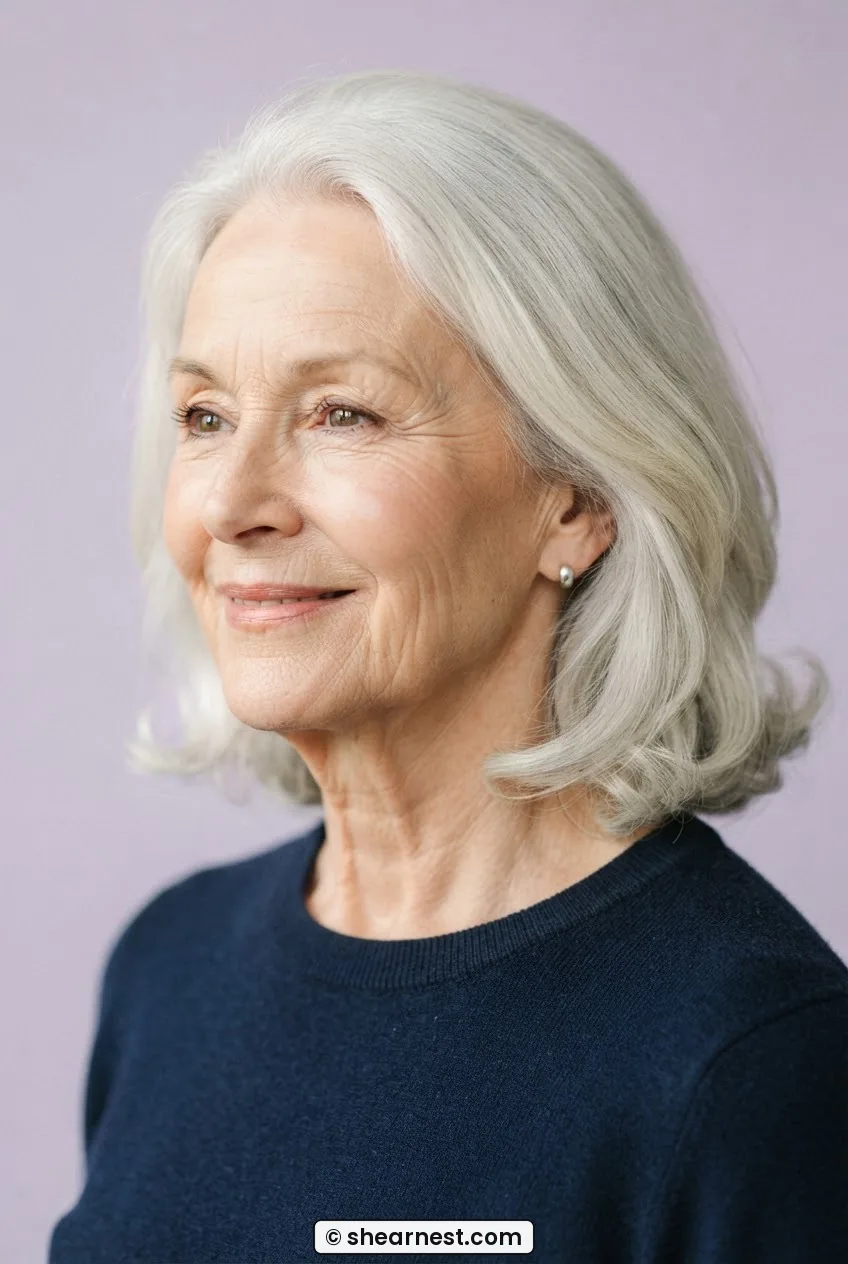
The nape is everything in a short cut on mature hair. I always tell clients: what happens at the back of the neck determines how often you’ll need a trim. If the nape is cut too closely, it grows out looking unkempt within four weeks. If it’s left with a slight weight and some softness, you can stretch that to seven or eight weeks comfortably. That’s not a small difference when you’re factoring in cost, time, and the general hassle of salon appointments.
Fringes come up a lot in the short-hair conversation too. I’m not against them — a soft, wispy fringe can be genuinely flattering on a woman over 70, especially if she’s got a longer face shape. But a heavy, blunt fringe rarely works the way people imagine it will. The hair at the front tends to be finer, so it doesn’t hold a thick fringe the way it might have at forty. A side-swept or feathered fringe gives you the visual benefit without demanding as much from hair that can’t always deliver.
If you’re in the process of navigating a style change or want to dig into this further, I’d genuinely encourage reaching out — the contact page here is the right place to start that conversation. And if you’re curious about the philosophy behind how all the content on Shearnest is put together, that’s worth a read too.
There’s also good evidence that short cuts for fine mature hair are evolving quickly — what was considered “the” safe option a decade ago (the close-cropped, heavily set style) is being replaced by softer, more lived-in shapes that suit the natural movement of silver and white hair far better.
Questions I Get About This
Does white hair really need different products than grey hair?
Mostly yes, though not for the reason most people assume. White hair has lost all its pigment and tends to be more porous — it absorbs and releases moisture more quickly than pigmented hair. A violet or blue-based toning product helps cancel any yellow cast, but beyond that, the priority is moisture retention. Heavier conditioning than you think you need, lighter hold products than you think you want.
How often should a woman over 70 really be getting a trim?
This depends enormously on the cut and the hair’s condition, but for most short styles I’d say every six to eight weeks. Longer cuts can go ten to twelve weeks if the ends are in decent shape. The honest answer is: whenever it stops doing what it’s supposed to do, that’s when it’s time. Don’t go by the calendar alone — go by what you see in the mirror.
Is a roller set actually still a good option for women over 70?
I’d argue it’s one of the best options, and I think it got unfairly dismissed as old-fashioned. A properly done roller set on white or silver hair produces soft, rounded volume that holds without weighing the hair down — which is exactly what fine mature hair needs. The technique has been quietly coming back, and for good reason. It’s gentle on the hair structure and the result looks current, not dated, when the set is soft rather than rigid.
Can I grow my hair longer after 70, or is that always a mistake?
Not a mistake at all — provided the condition supports it. If the hair is healthy enough to reach a longer length without becoming transparent at the ends, there is absolutely no reason not to wear it there. The key is keeping the ends trimmed regularly so the length looks intentional. A lob or soft mid-length on a woman over 70 with good-condition hair can look genuinely beautiful, and I’ve cut plenty of them. Don’t let anyone tell you otherwise.
My client with the photograph? We ended up somewhere close to what she wanted — not identical, but close enough that she smiled when she looked in the mirror. Which is all any of this is really for. The goal was never to replicate the past; it was to feel like herself again. That’s still achievable, at seventy and beyond. You just need a stylist willing to be honest with you, and maybe a willingness to hear that the hair you have now might actually have more to offer than the hair you remember. All the content on this site works from that same principle — you can read more about our approach here.