






I’ve been looking at older women’s hairstyles seriously for a few years now, and I keep noticing the same problem: most round-ups describe how a cut feels rather than how it’s built. And when you’re sitting in the chair trying to explain what you want, “soft and flattering” gets you nowhere. So this is my attempt at something more useful — eleven cuts described by construction, by who they actually suit, and by what day five looks like between appointments.
Some of these I’ve seen work brilliantly on women in their sixties and seventies. Some I’ve tested in various forms myself. None of them require you to be someone you’re not. And none of them promise to make you look younger — just sharper, more intentional, more you.
Jump to a Cut That Interests You
- The Rounded Crop With a Tight Back
- The Blunt Bob That Holds Its Line
- The Tapered Pixie With a Soft Crown
- The Long Layers That Don’t Collapse
- The Feathered Shag for Thick Hair
- The Chin-Length Bob With Internal Graduation
- The Soft Updo That Works on Medium Hair
- The White Curl Set in a Rounded Silhouette
- The Salt-and-Pepper Braid Wrap
- The Side-Part Lob for Fine Straight Hair
- The Sassy Bixie With Disconnected Ends
1. The Rounded Crop With a Tight Back
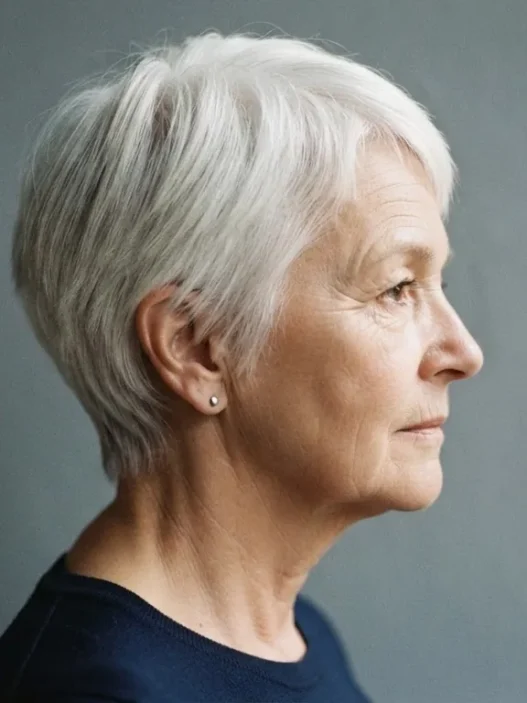
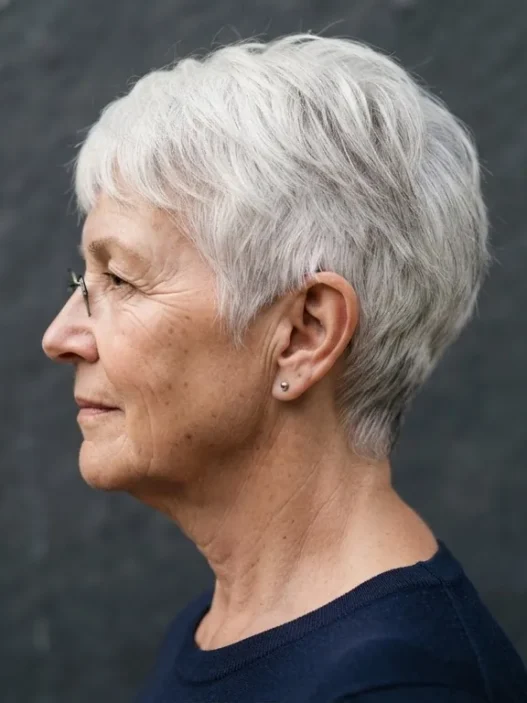
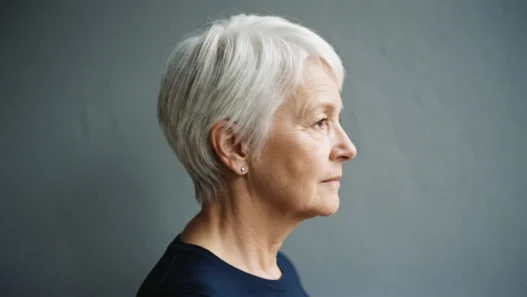
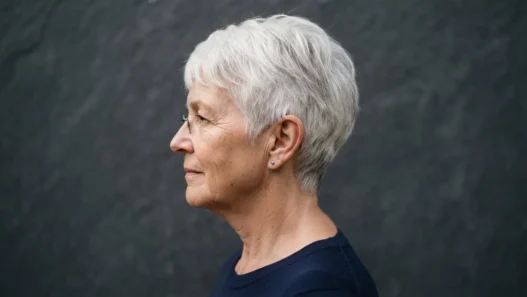
The back is clipped close — usually clipper-tapered from nape to occiput — and then the top is left long enough to form a soft dome when blow-dried forward and around. The weight sits at the crown. There’s no hard perimeter at the sides; the graduation is smooth and continuous so the silhouette reads as one rounded shape rather than a boxy helmet.
This suits women with fine, flat hair best. The short back removes the bulk that drags fine hair down, and the domed top gives the illusion of density where it’s usually lacking. It’s also genuinely one of the lowest-upkeep cuts on this list once you’re in it — three to four weeks between trims, and the in-between stage is forgiving because the shape softens rather than grows out awkwardly.
At the chair, say: “I want a tapered back — clipper-graduated from the nape — with length kept at the crown and blown forward into a rounded dome. No hard edges at the sides.”
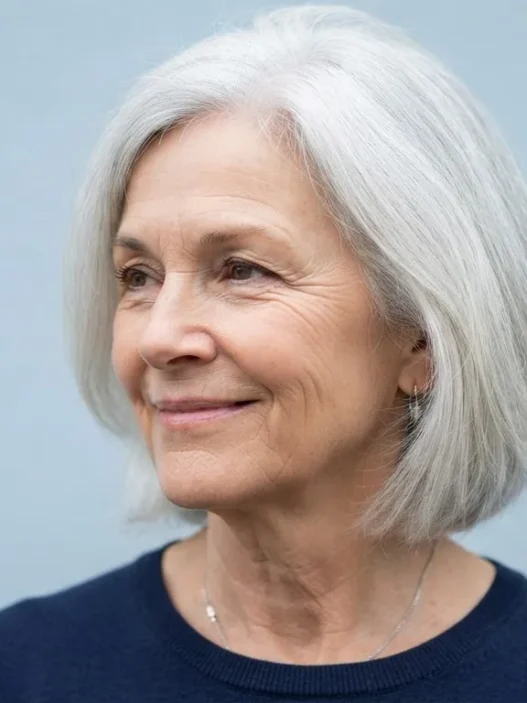
2. The Blunt Bob That Holds Its Line
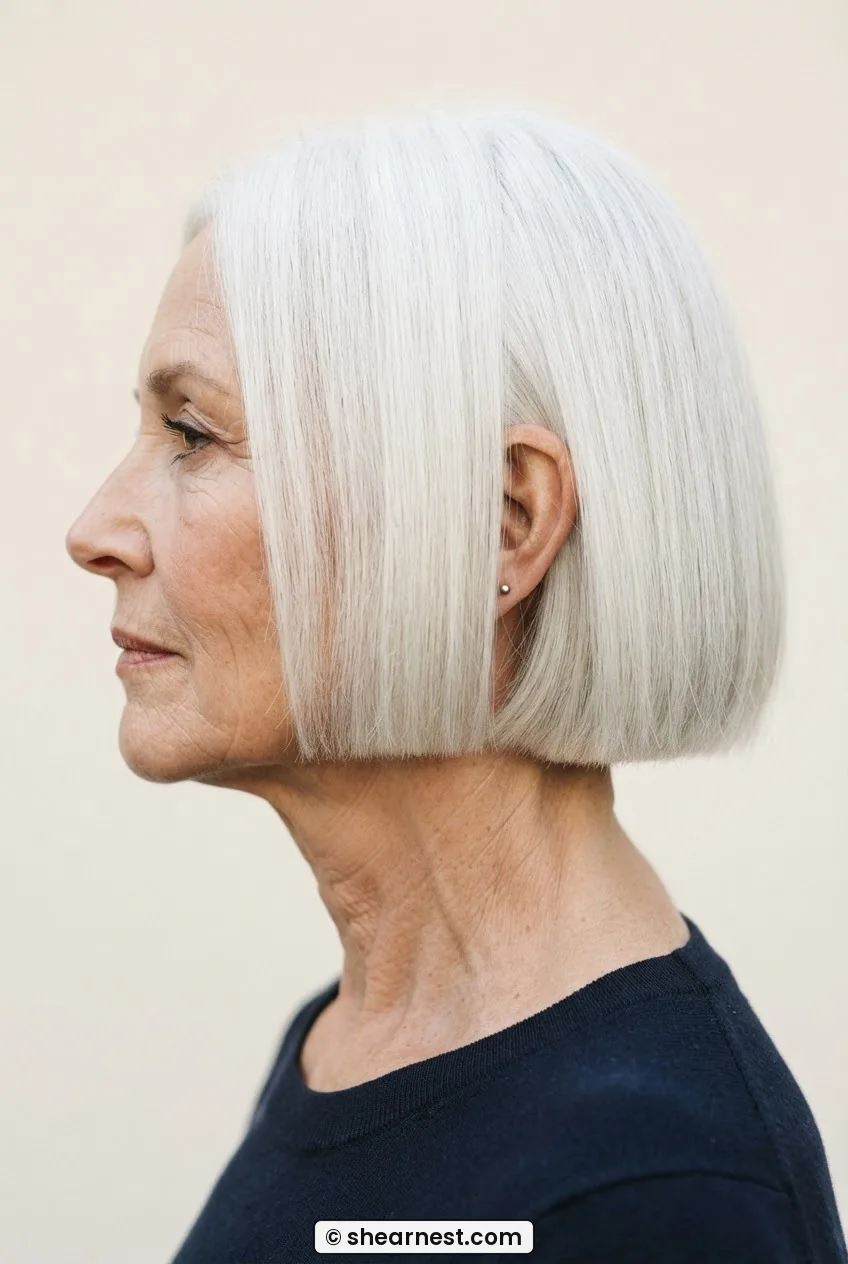
Cut at one length — chin to jaw, no graduation, no layers — with the perimeter left dense and blunt. The weight is entirely in the bottom inch. On straight or gently wavy hair, this creates a clean horizontal line that doesn’t budge through humidity or a long day. On days three through five, it still reads as intentional.
It suits women with medium to thick hair, and it’s particularly good for straight hair that tends to separate and fall flat when layered — here you want that density, not layers pulling it apart. If you have an oval face or a strong jawline you don’t mind emphasizing, this is excellent. If your face is round and you’re worried about width, have your stylist cut a slight V at the back (only the back — keep the sides blunt) to give the silhouette a touch of movement without losing the line.
Upkeep is every six to seven weeks. The blunt perimeter is unforgiving when it grows — you’ll know when it’s time. What you get for that discipline is a cut that genuinely takes fifteen minutes to style: blowdry, paddle brush, done.
If you have straight hair and want to understand what lengths genuinely work as you get older, the guide on straight hair cuts for women over 50 goes into this in much more depth — really worth reading before you commit.
3. The Tapered Pixie With a Soft Crown
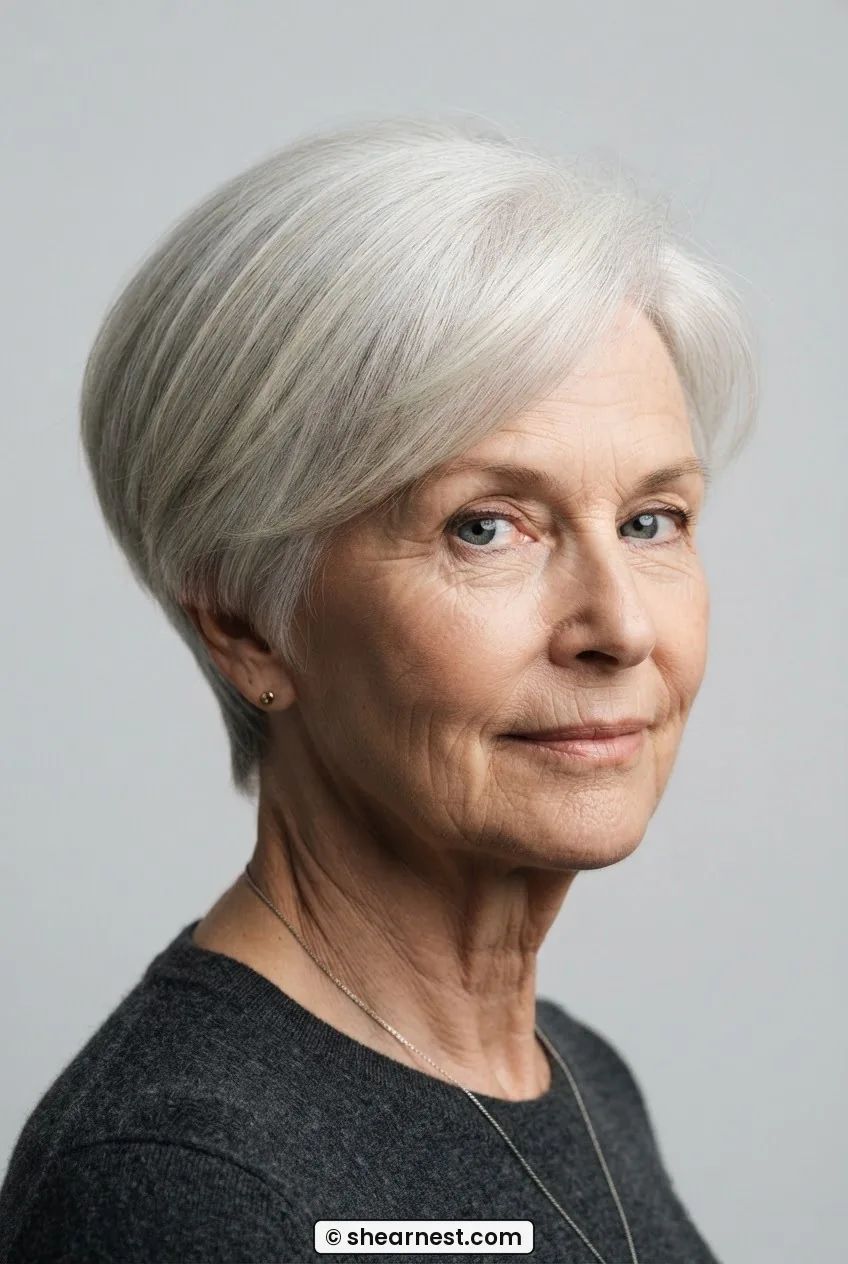
Different from the rounded crop: here the sides are scissor-tapered rather than clipped, which leaves a slightly longer, softer result at the temple. The crown is cut in point-cut layers — short but feathered — so it moves rather than sits flat. The perimeter at the forehead can be worn with a small fringe or swept to one side; that decision changes the whole character of the cut.
This is the pixie for women who want softness, not severity. I find it works beautifully on oval and heart-shaped faces. Fine hair gets volume from the crown layers; if you have thicker hair, your stylist may need to point-cut more aggressively through the sides to stop the temples from puffing. Every four to five weeks for upkeep — it’s a regular commitment.
At the chair: “Scissor-taper the sides, point-cut crown layers for movement, and I’d like the front swept — no hard fringe.”
4. The Long Layers That Don’t Collapse
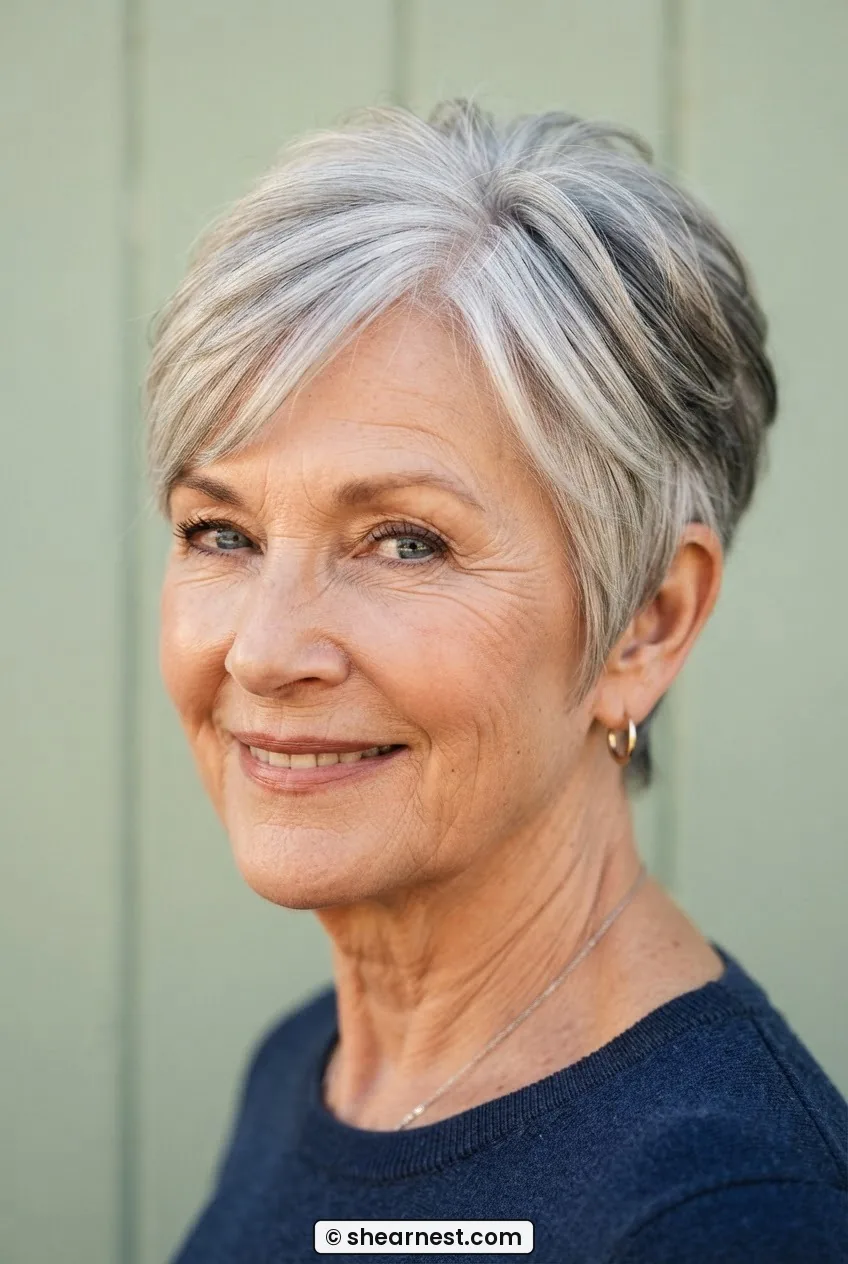
Long hair past the collarbone doesn’t have to read as tired or afterthought-ish. But the cut matters enormously. What makes long layers collapse on older hair — especially fine hair — is when layers are cut too short and too close together, removing the weight that gives the style shape. The fix: long, spaced layers starting below the shoulder, with the shortest layer no shorter than mid-chest. The perimeter is kept full so it reads as intentional length, not scraggle.
If you want to understand what actually changes about long hair as you age — texture, density, the way it catches light — the article on hair styles for women over 70 is honest about it in a way most sites aren’t.
This cut suits women with medium to thick hair who genuinely want to keep length. Upkeep is every ten to twelve weeks — more forgiving than any short cut. Day five looks like day one if you’re sleeping on silk and using a light oil at the ends. For wavy hair especially, how long wavy hair sits determines everything about whether it looks polished or tired.
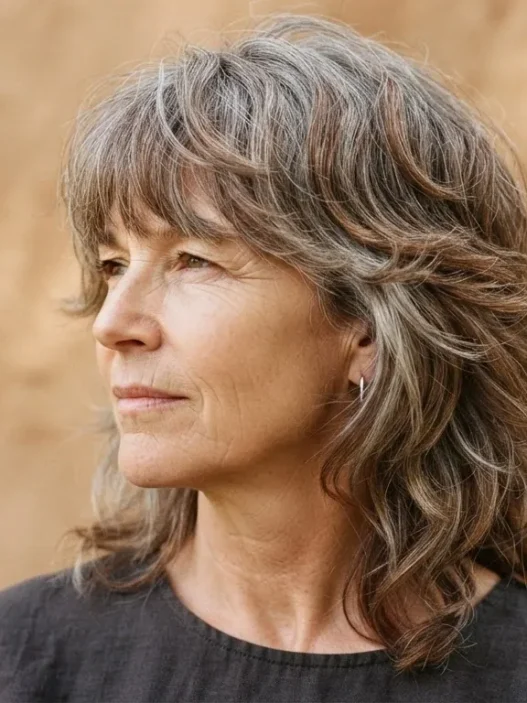
5. The Feathered Shag for Thick Hair
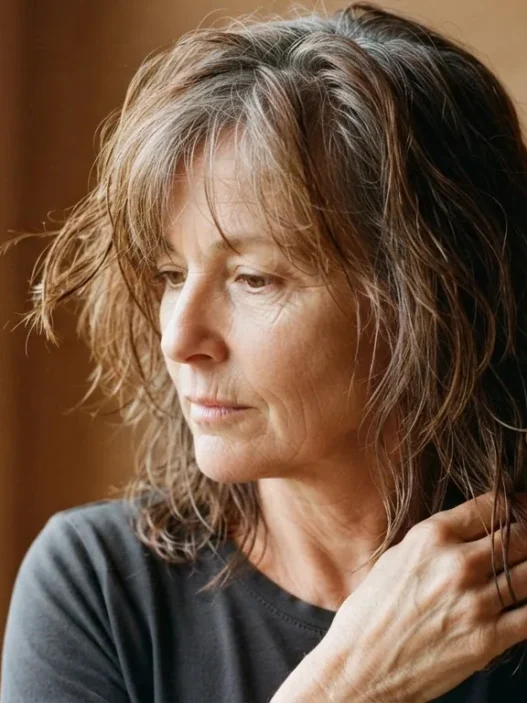
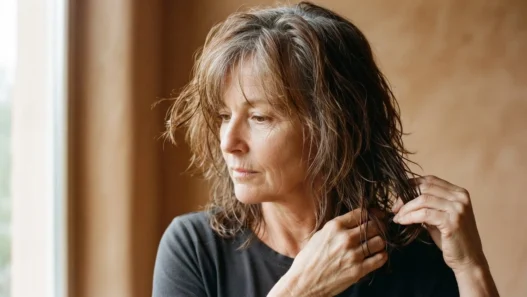
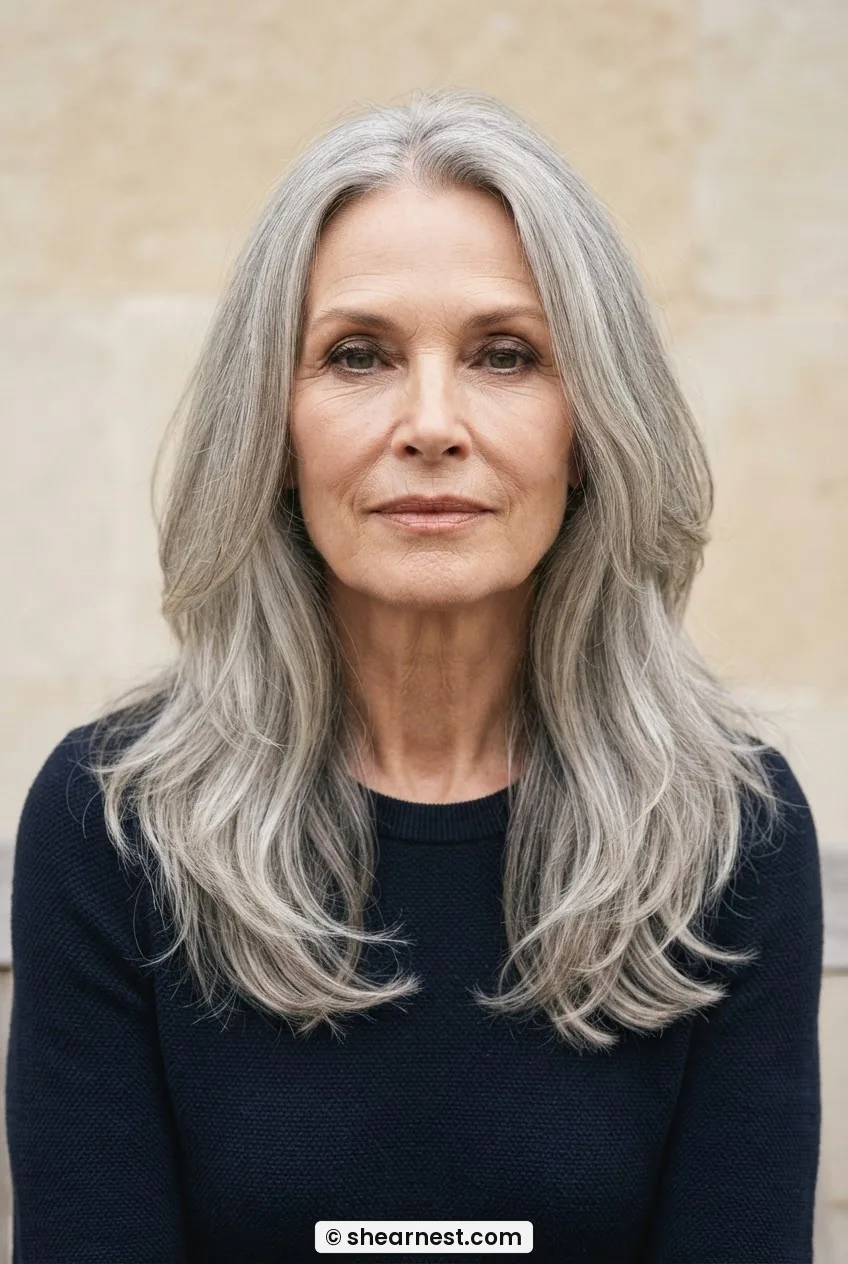
This one is specifically for thick-haired women who’ve been told their whole life to go short because “long hair weighs you down.” The shag disagrees. It’s cut in disconnected layers — shorter at the crown, longer toward the ends — with the perimeter razored or point-cut to remove bulk rather than length. Face-framing pieces at the front are usually cut to cheekbone or chin level. The result is a silhouette with movement and internal lightness that thick hair almost never gets otherwise.
On wavy or naturally textured thick hair, this is genuinely transformative. If you air-dry, the layers fall into each other and create shape without effort. If you blowdry, work section by section with a diffuser or a medium round brush, and the feathering gives you volume without width. Upkeep is every eight to ten weeks.
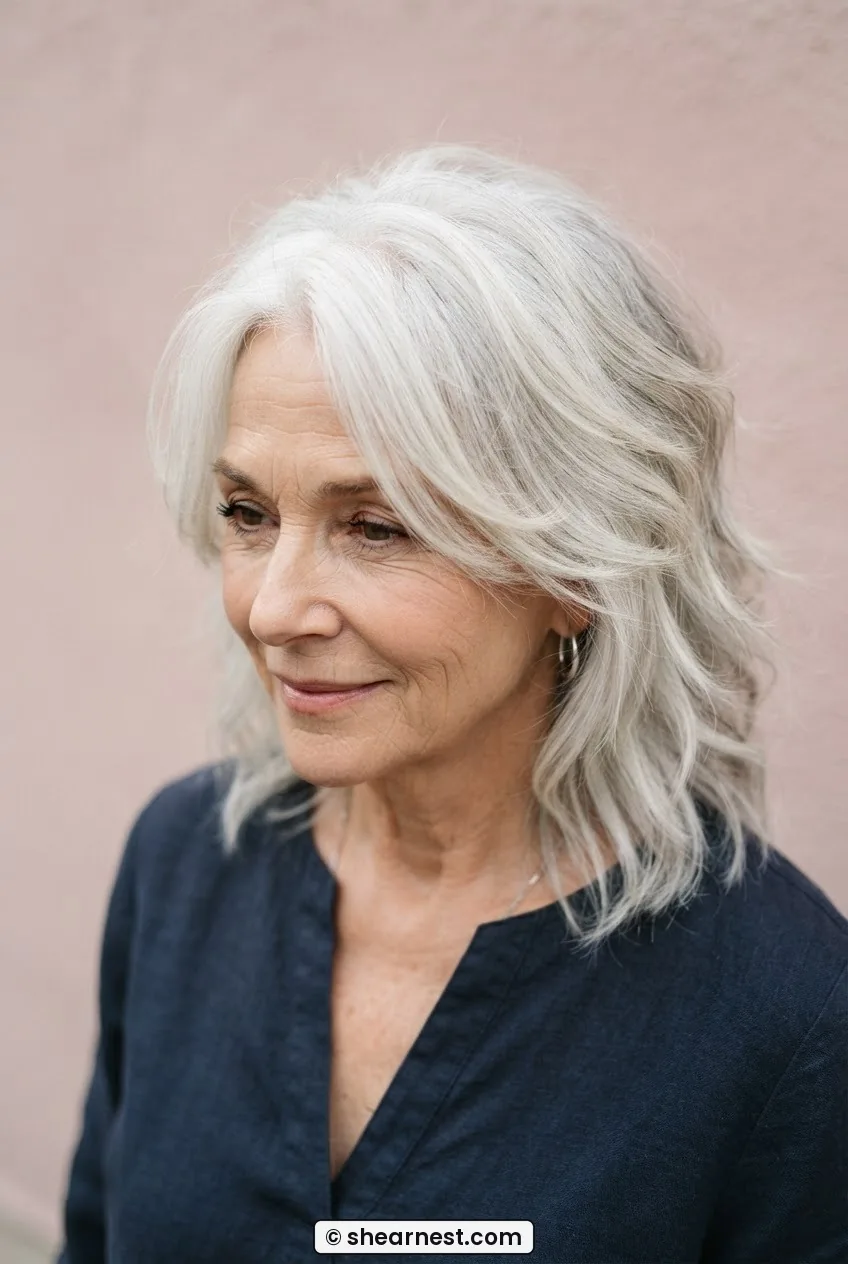
My personal pick, if I had thick hair and didn’t want to go short, is this one. Looking at her in the photo — the way those layers sit just past her collarbone, the face-framing pieces landing right at the cheekbone — that’s the version I’d bring to the chair. It has sass without trying to have sass, if that makes sense.
6. The Chin-Length Bob With Internal Graduation
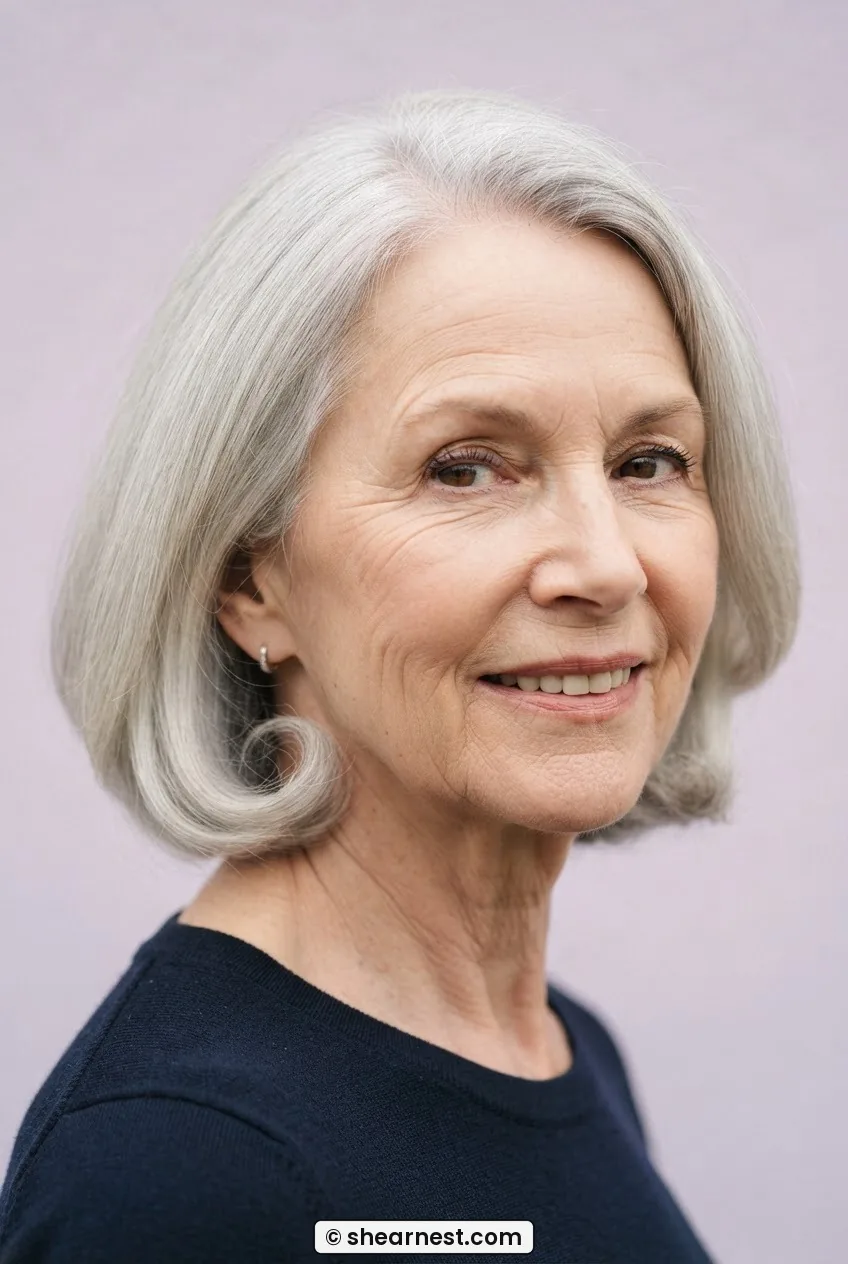
The outside of this bob looks like a simple chin-length cut. The inside is different: there’s a graduated layer built underneath — maybe two centimetres of graduation tucked invisibly below the surface — that lifts the hair off the neck and gives the ends a natural tendency to curl under. You don’t need a round brush to get the bend. It’s engineered in.
This is excellent for women who want a put-together look without committing to a full blowout every morning. On fine to medium hair, the internal graduation adds density and the under-curl keeps the perimeter looking intentional even on a humid day. On thick hair, the graduation helps control bulk without dramatically reducing length. Every six to eight weeks to maintain the internal shape before it grows out and flattens.
At the chair: “Chin-length bob with about two centimetres of internal graduation underneath — enough to make the ends turn under naturally without a brush.”
7. The Soft Updo That Works on Medium Hair
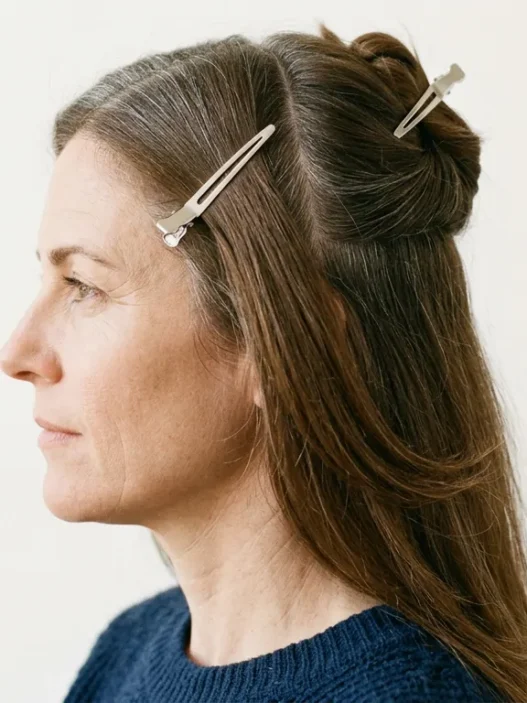
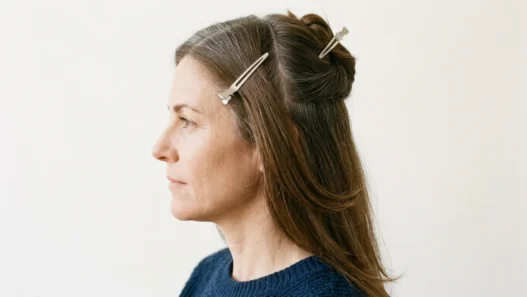
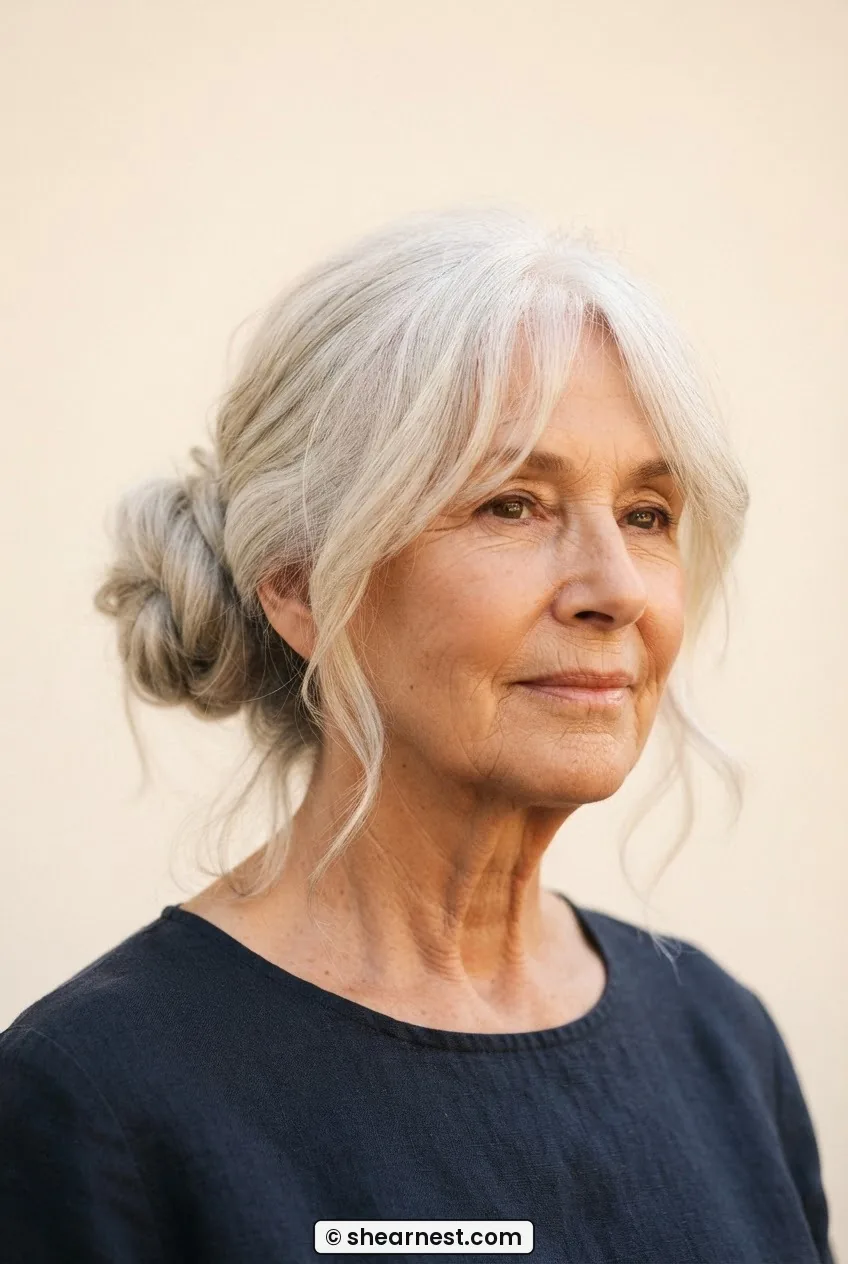
Not every entry on this list is a cut — this one is about what to do with medium-length hair between appointments, or for an occasion where you want to pull it up without it looking stiff. The construction here: a low, slightly off-centre bun where pieces are deliberately not tucked smooth. The nape hairs are left out. Two or three pieces at the front fall forward.
What makes it work on older hair is exactly what people tend to fight — the wispy bits, the pieces that won’t lie flat, the texture that appears at the hairline. Lean into all of it. If you want more detail on structure and pinning, the post on hairstyles over 70 has good examples of how soft updos are actually built on real hair rather than editorial models with extensions.
This needs no specific cut underneath — it’s about the styling decision. Which is what I love about it. You can walk into an event with medium-length hair, put it up in ten minutes at the hotel mirror, and look completely intentional.
8. The White Curl Set in a Rounded Silhouette
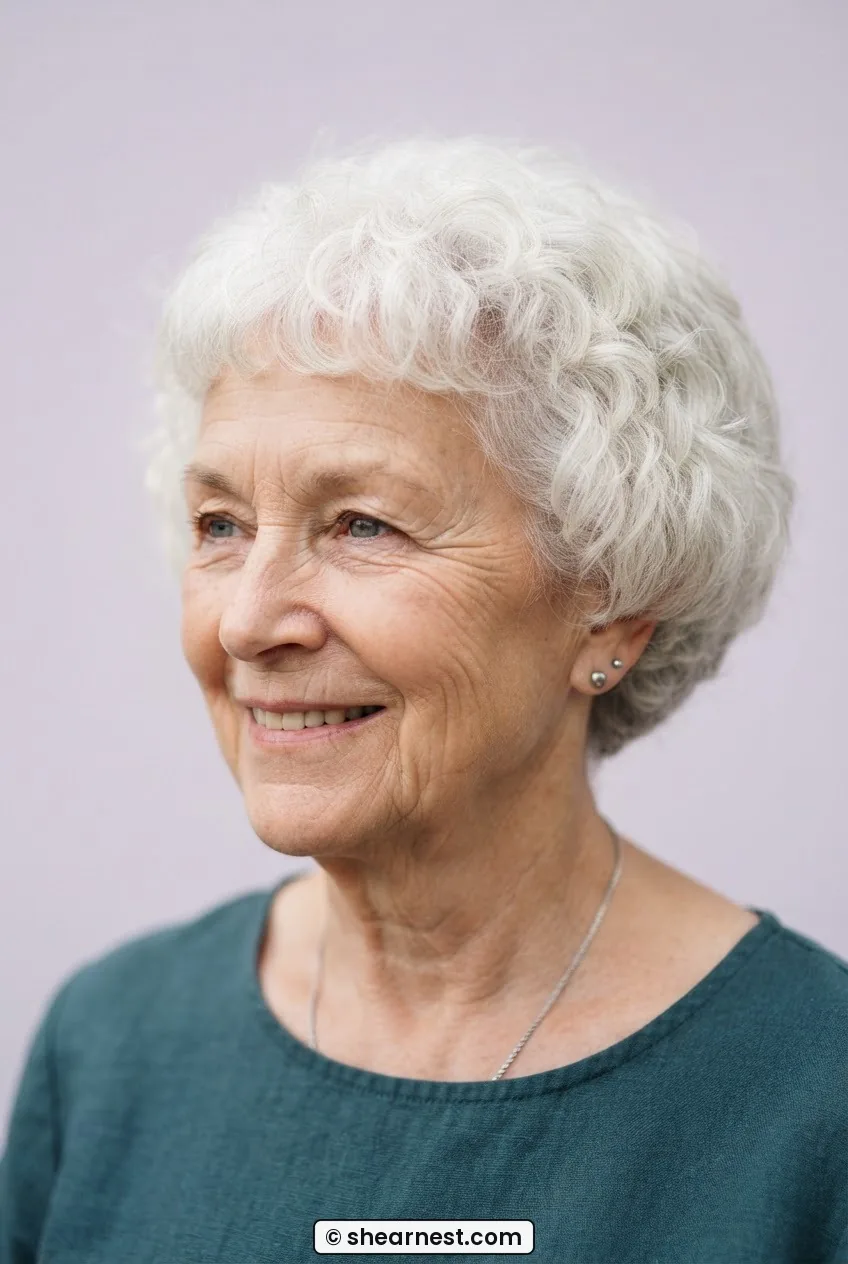
This is the one I find most striking every time I see it done well. The cut itself is a uniform short length — usually two to four inches — maintained all over so the natural curl can contract into a consistent shape. There are no dramatic layers, no graduation at the back. The goal is a rounded, dome-like silhouette where the curl does the structural work. The stylist cuts to a curl, not to a straight length.
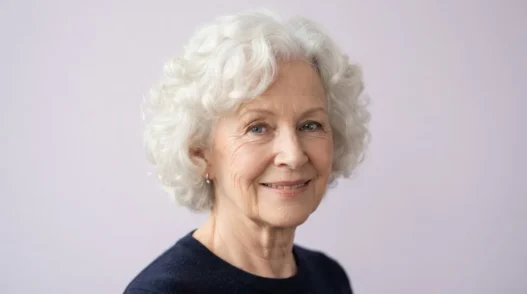
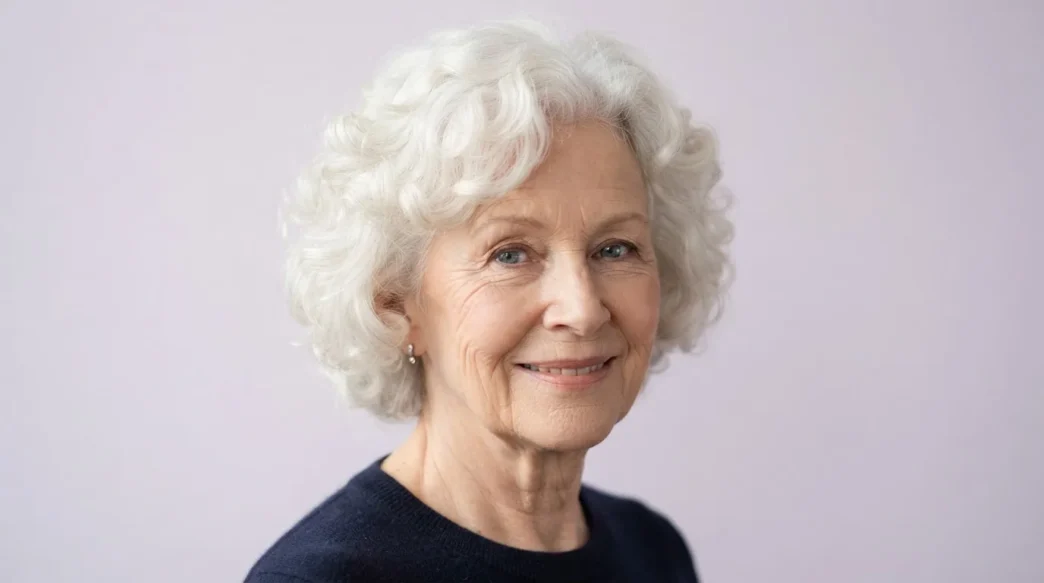
Look at the woman in this photo — that soft, rounded crown, the way the curls sit as a complete shape rather than individual ringlets flying in all directions. That’s what you’re after. It only works if the cut is done dry or on stretched curl, because wet hair gives a false sense of length and ruins the final shape.
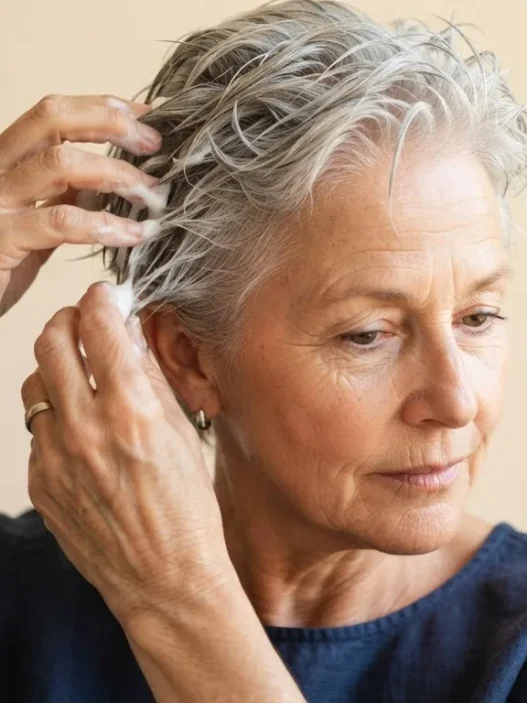
This suits naturally curly hair — type 2C through 3B works well here. Upkeep is every six to eight weeks, though the shape holds its rounded character longer than most cuts because the curl itself maintains the perimeter. You need a good curl cream and a diffuser, or just air-dry if your curl pattern is consistent. Ask about caring for curly grey hair before your first appointment — the way grey curl behaves is genuinely different from pigmented curl and your stylist should know that too.
Watching a Curl Set Cut in Real Time
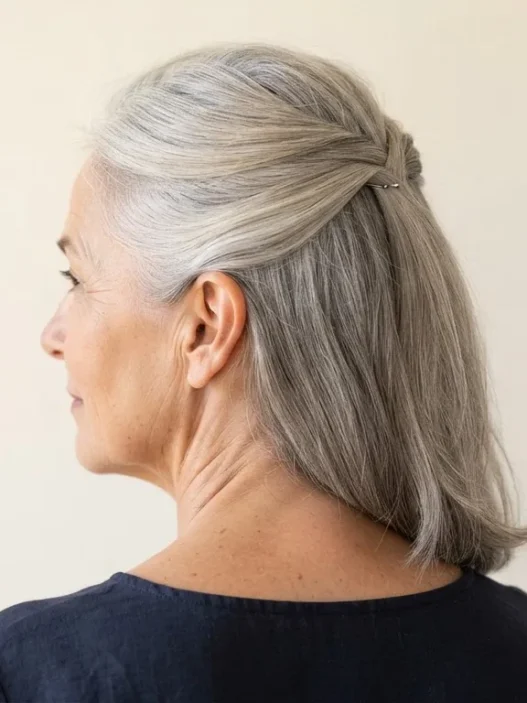
9. The Salt-and-Pepper Braid Wrap
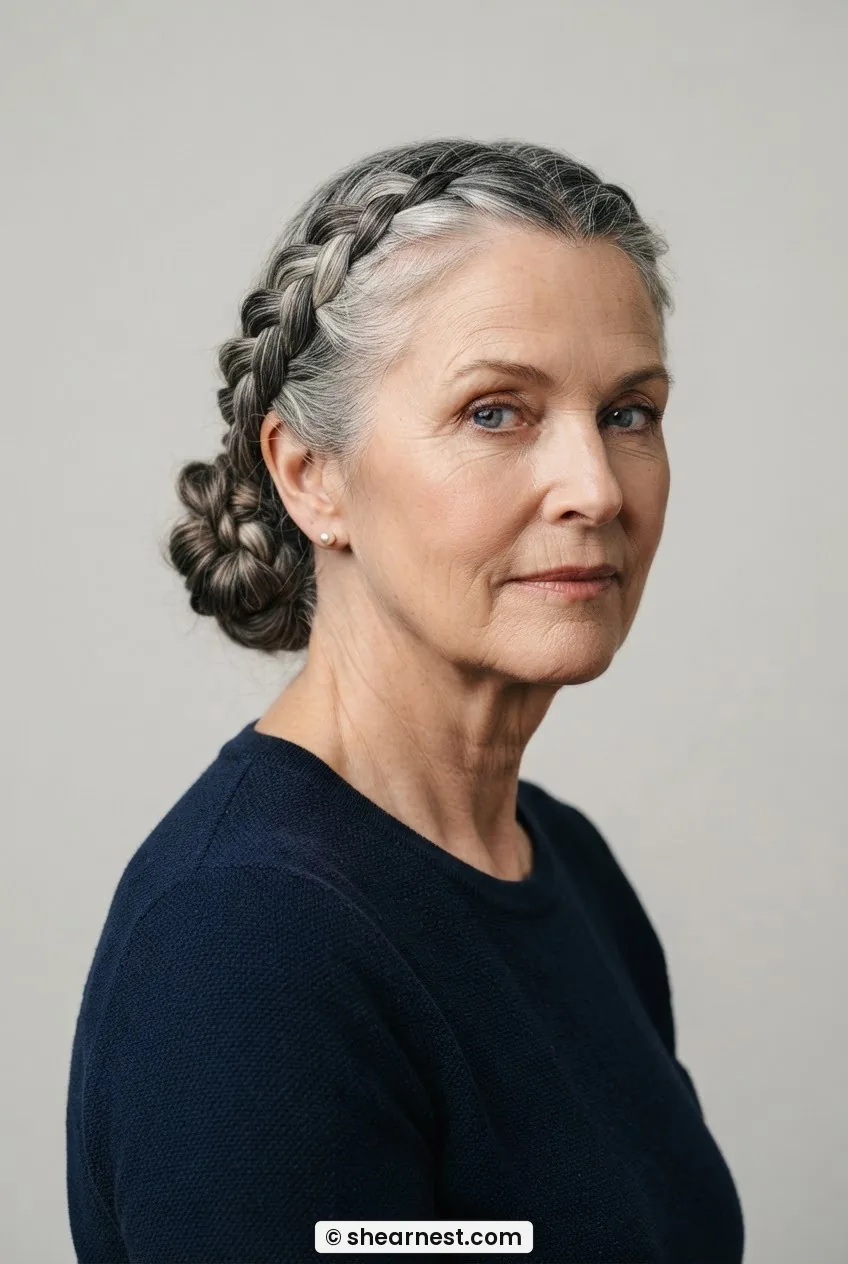
This isn’t a cut at all. It’s a styling technique — and I’m including it because I keep seeing it come up on Pinterest searches for older women’s styles, and it deserves a proper explanation rather than just an aspirational photo.
A braid wrap is built from two or three flat braids that start at the temples or sides and are gathered toward the back of the head, wrapping around each other or pinned to form a low, structured style. On salt-and-pepper or fully silver hair, the contrast of the braid pattern makes the tonal variation look deliberate and beautiful. It works best on hair that’s at least shoulder-length with enough density to hold a braid without it going limp.
Upkeep between appointments? This is a styling choice, not a cut. What you do need is length maintenance so the braids have something to work with. Every ten to twelve weeks for a trim to keep the ends from splitting and making the braid look shaggy at the tips. The result is worth it — genuinely elegant, and it works just as well for a Tuesday as for a wedding.
10. The Side-Part Lob for Fine Straight Hair
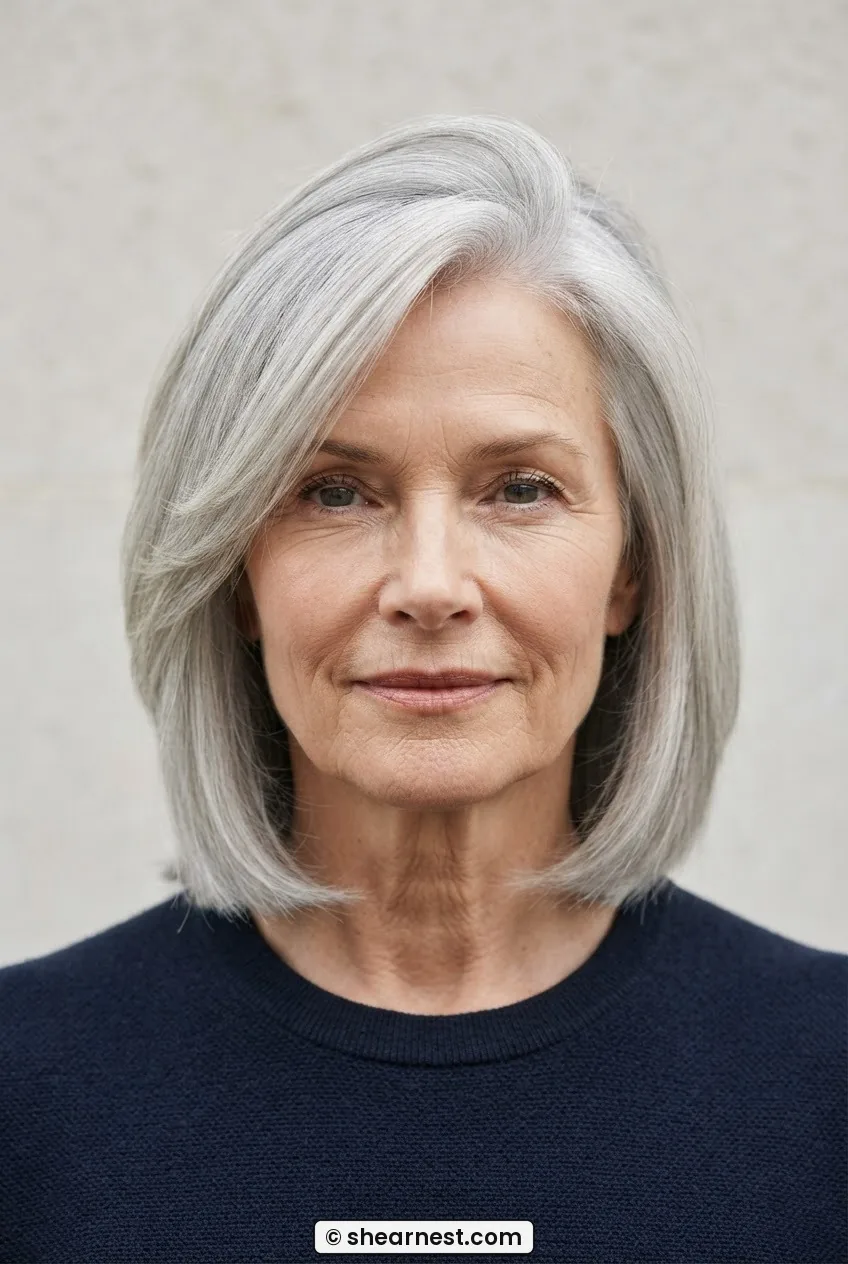
A lob — long bob, sitting between chin and collarbone — cut with a deep side part and minimal internal layering. The weight stays in the perimeter. What the side part does is create a diagonal line across the crown that reads as volume even when the hair is flat; the asymmetry tricks the eye. The layers, if any, are cut only at the very front to give the face-framing pieces movement, leaving the rest of the length dense.
For fine straight hair, this is one of the most flattering lengths available. Too short and fine hair has nothing to work with; too long and it collapses under its own weight and goes stringy at the ends. The lob length is the sweet spot. If your face is oval, this works brilliantly — and the full breakdown of why in oval face hairstyles for women over 50 is useful even into your sixties and seventies because the geometry doesn’t change.
Every seven to eight weeks to keep the perimeter clean. Between appointments, a volumizing mousse applied at the root before blowdrying — nothing too heavy — keeps it looking like a proper style rather than just hair that’s there.
11. The Sassy Bixie With Disconnected Ends
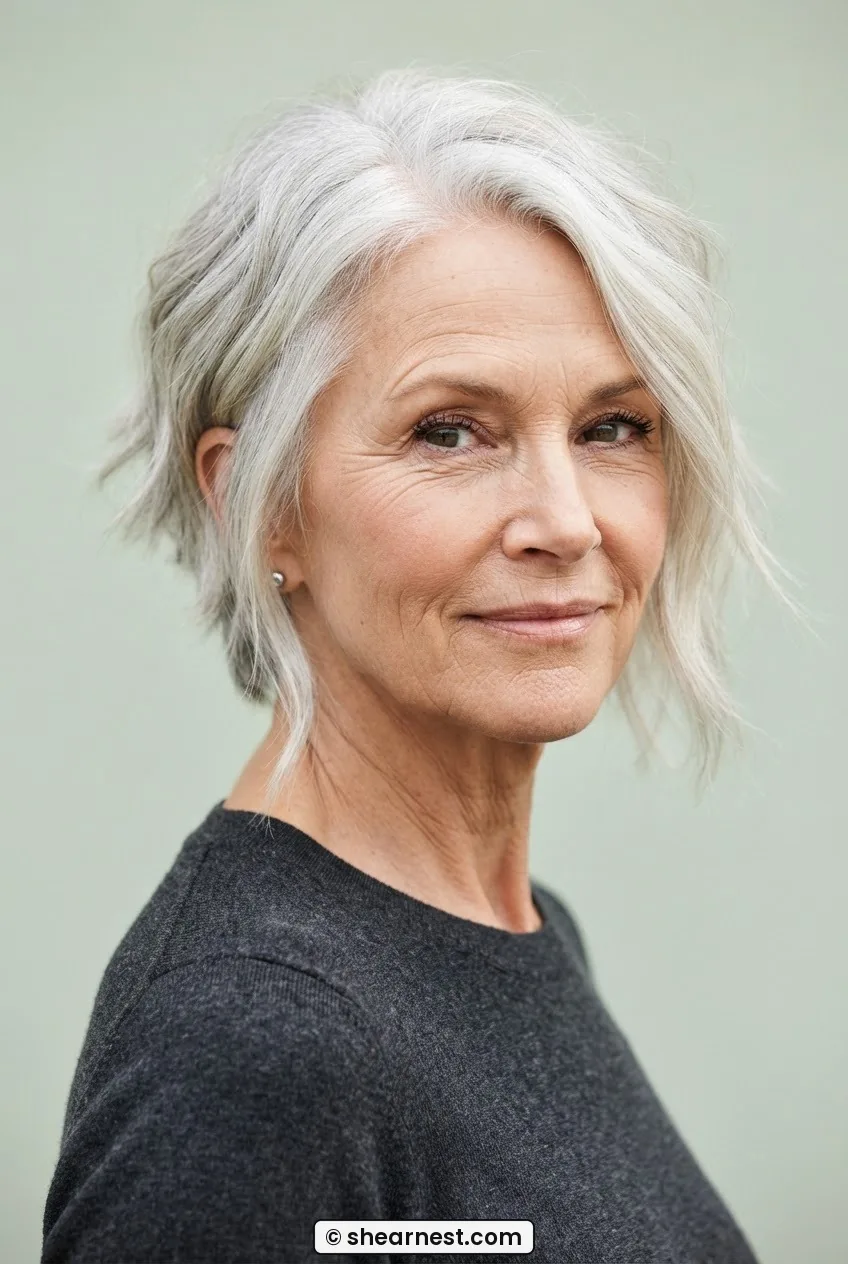
The bixie sits between a pixie and a bob — longer than a pixie at the sides and front, shorter than a bob at the back. What makes this version distinct is the disconnection: the front pieces are cut independently of the sides, leaving a visible length contrast rather than a blended graduation. The ends are point-cut into texture rather than blunt-cut clean. The result has an edge to it — it’s the most intentionally “done” cut on this list.
I genuinely love this for women who have strong facial features and want a cut that matches that energy. It also works well on wavy hair — if you have natural wave, the disconnected ends emphasize the texture beautifully and you don’t need to do much beyond scrunching some product in and letting it be. For more on wavy cuts at this stage of life, the article on wavy haircuts for women over 50 covers the nuances that most stylists don’t explain upfront.
Upkeep is every five to six weeks — it grows out fast at the back and loses the bixie character quickly. But when it’s fresh? Genuinely one of the most modern, confident shapes available for older women’s hairstyles right now. At the chair: “Bixie length, disconnected — I want a visible contrast between the front pieces and the sides, and point-cut ends throughout. No blending at the perimeter.”
Questions Before You Book
Do I need to bring a photo to the salon?
Yes — always bring a photo, but also read the description of the cut to your stylist. Photos show the result; the description tells them how to build it. Both together means far fewer miscommunications. Find someone whose hair looks similar to yours in the photo if you can, because the same cut looks different on fine hair versus thick.
Which of these cuts work best on thinning hair specifically?
The rounded crop, the chin-length bob with internal graduation, and the side-part lob are your strongest options. All three keep weight where it creates volume and avoid layers that expose the scalp. The key principle is: keep the perimeter dense and cut sparingly through the interior. Dramatic layering on thinning hair usually makes things worse, not better.
How often do I really need to go back to the salon for these?
It genuinely depends on the cut. Short cuts — pixie, rounded crop, bixie — need five to six weeks maximum or they lose their shape. Blunt bobs need six to seven weeks. Lobs and long layers are the most forgiving at ten to twelve weeks. If budget is a consideration, that’s worth factoring into which cut you choose, not just what looks good in photos.
Can grey or white hair handle the same cuts as pigmented hair?
Mostly yes, but with one caveat: grey and white hair often has a different texture — coarser, drier, sometimes more wiry — which means it behaves differently when cut. Your stylist should be cutting it dry or on your natural texture, not wet and straight, if they want an accurate result. And product choice matters more — hydrating styling products over volumizing ones, in most cases.
That’s the eleven. If one of them clicked for you — if you read the description and thought “yes, that’s exactly what I’ve been trying to ask for” — write down those cutting terms and take them with you. A good stylist will know exactly what you mean. And if you’re still browsing, take your time. The right cut for right now might be different from the right cut in two years, and that’s completely fine.