






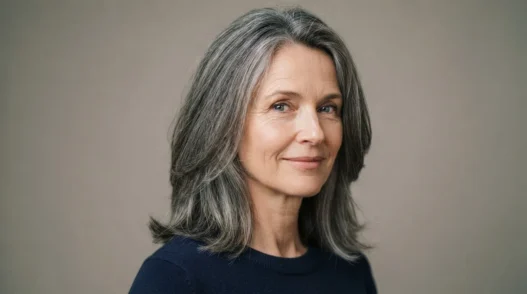
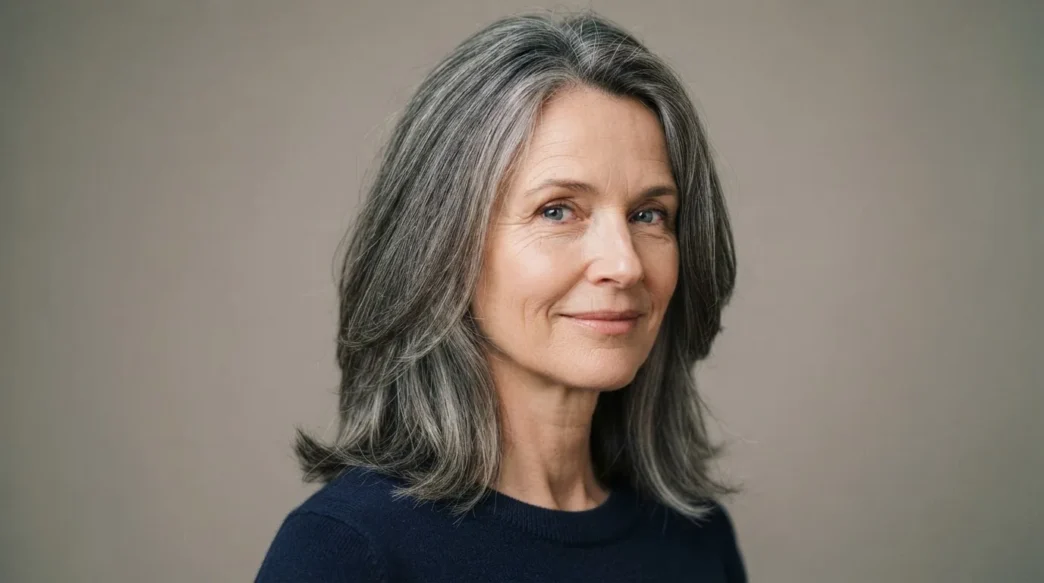
A client sat down in my chair a few years ago, slid her phone across to me, and said: “I have an oval face — just give me whatever works for that.” I’ve heard some version of this sentence hundreds of times. And every single time, I have to take a breath, because the answer is so much more complicated than the Pinterest boards suggest — especially once you’re past fifty.
The oval face shape gets sold as the golden ticket. The face shape that suits everything. And in your thirties? Maybe. But the face you had at thirty-five is not the face sitting in front of me at fifty-two. The bone structure is the same, yes. But the soft tissue — the skin, the way it drapes, the way gravity has quietly been doing its thing for two decades — that changes the entire equation.
I’ve been cutting hair for over thirty years. I’ve watched what happens to the same women across decades. And I want to talk honestly about what actually shifts, and why so many oval-face women over fifty end up with cuts that looked great on their younger inspiration photo and somehow flat on them. Let’s sort that out.
The Photograph Problem
Here’s what happens. A woman googles “oval face hairstyles” and she gets a wall of images — mostly women in their late twenties and thirties, faces tight, jawlines defined, cheekbones doing exactly what cheekbones should do. She picks one. She brings it in. The cut is technically correct for her face shape. And somehow it doesn’t land.
The photograph problem is that we’re matching geometry to geometry. Oval to oval. But a 52-year-old oval face isn’t the same geometric object as a 28-year-old oval face — even if the measurements are identical. The cheeks have softened. The jawline has blurred slightly. The temples may have thinned. The neck has changed. All of that affects how a cut sits and what it does for the face.
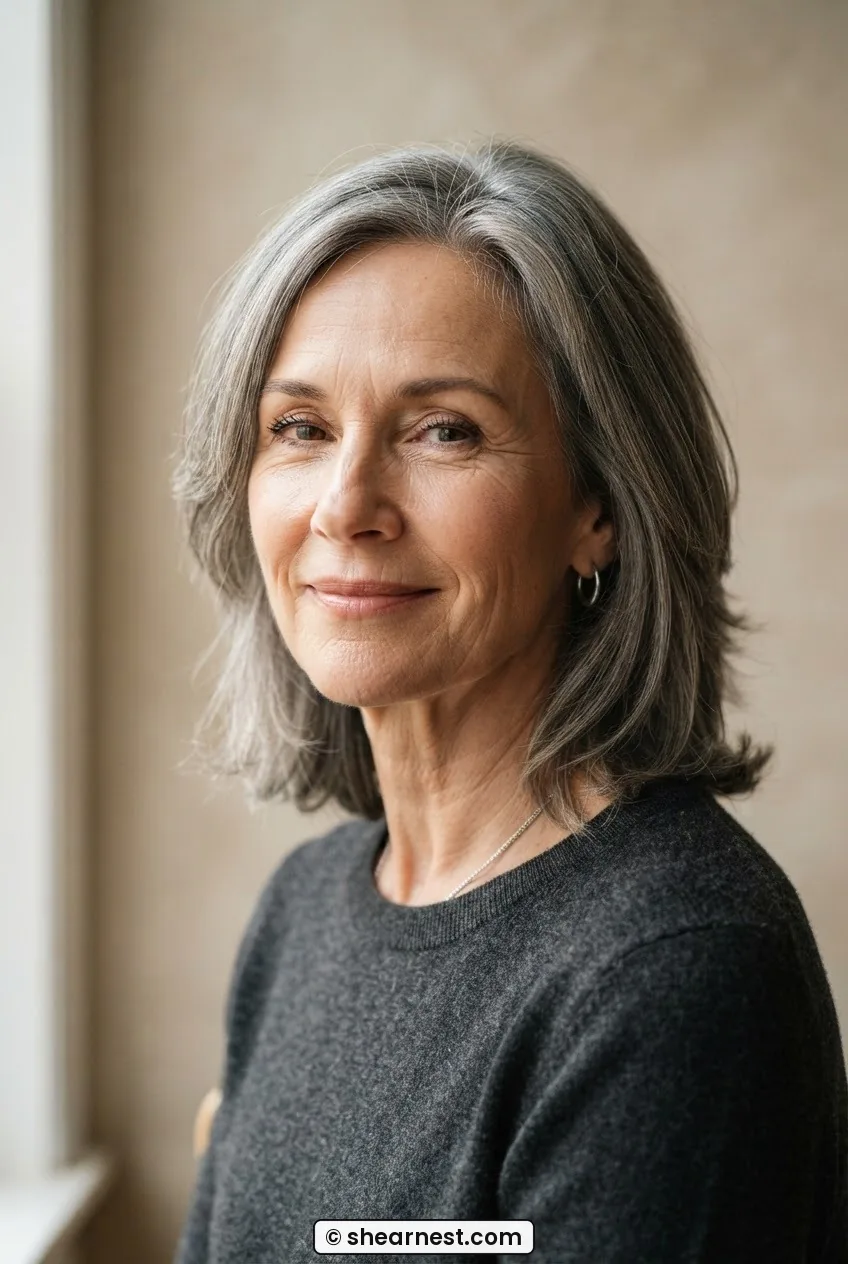
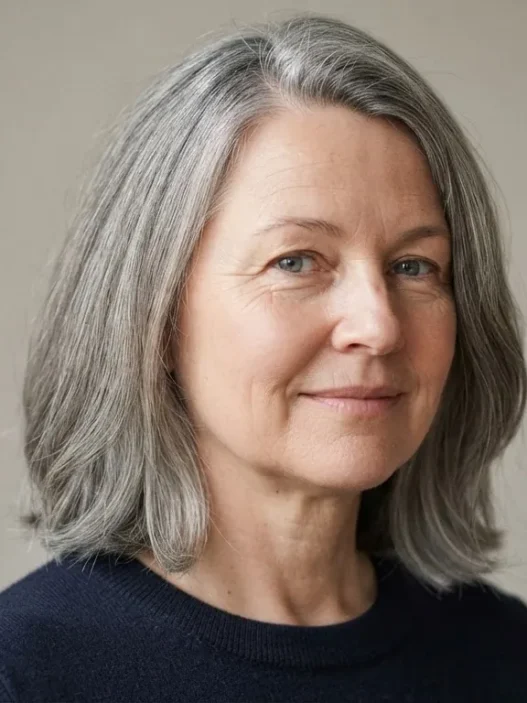
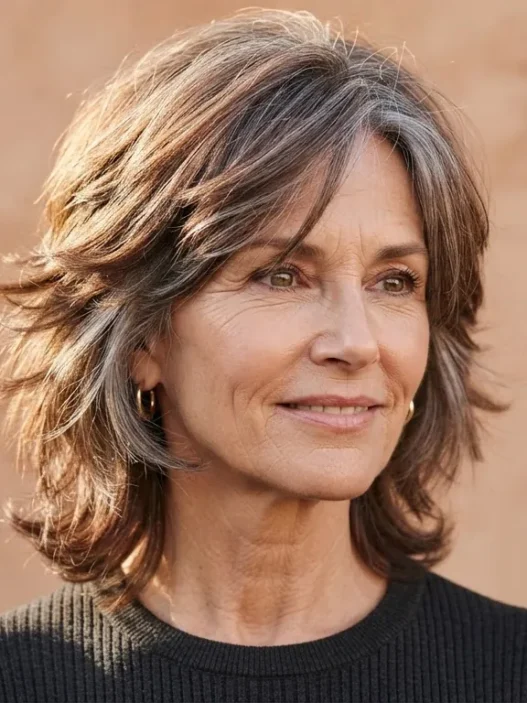
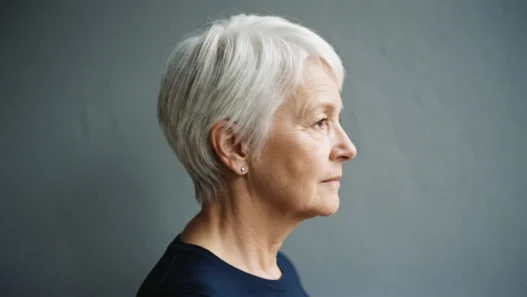
Look at her in this photo — the woman I’m pointing to has the same oval proportions you’d see in any face shape guide. But notice how the cut hits just past her jaw, and how that mid-length weight line creates a clean vertical suggestion even though her jaw has softened. That’s not an accident. That’s the stylist working with what’s actually there, not what a face shape chart says should be there.
The photograph problem gets worse when women bring in inspiration images of celebrities. Stars have lighting, makeup, and sometimes a little structural help that most of us are not walking around with on a Tuesday. I’m not being unkind — I’m being practical. The face in the mirror is the face we’re dressing.
What Nobody Tells You About Oval Faces After 50
The standard line is that oval faces are lucky because “any haircut works.” I’ve been saying a version of this myself for years and I’m ready to retire it.
Any haircut works on a young, full, taut oval face. That’s a specific condition, not a permanent one. What actually happens post-fifty — and I’m saying this without euphemism — is that the oval face begins to lose some of its definition at the edges. The widest point of the face tends to migrate. In youth, an oval face is widest at the cheekbones, narrowing gently at the forehead and jaw. After fifty, the jaw area often softens and the mid-face can appear less lifted, which means the widest visual point of the face can start to feel lower and broader.
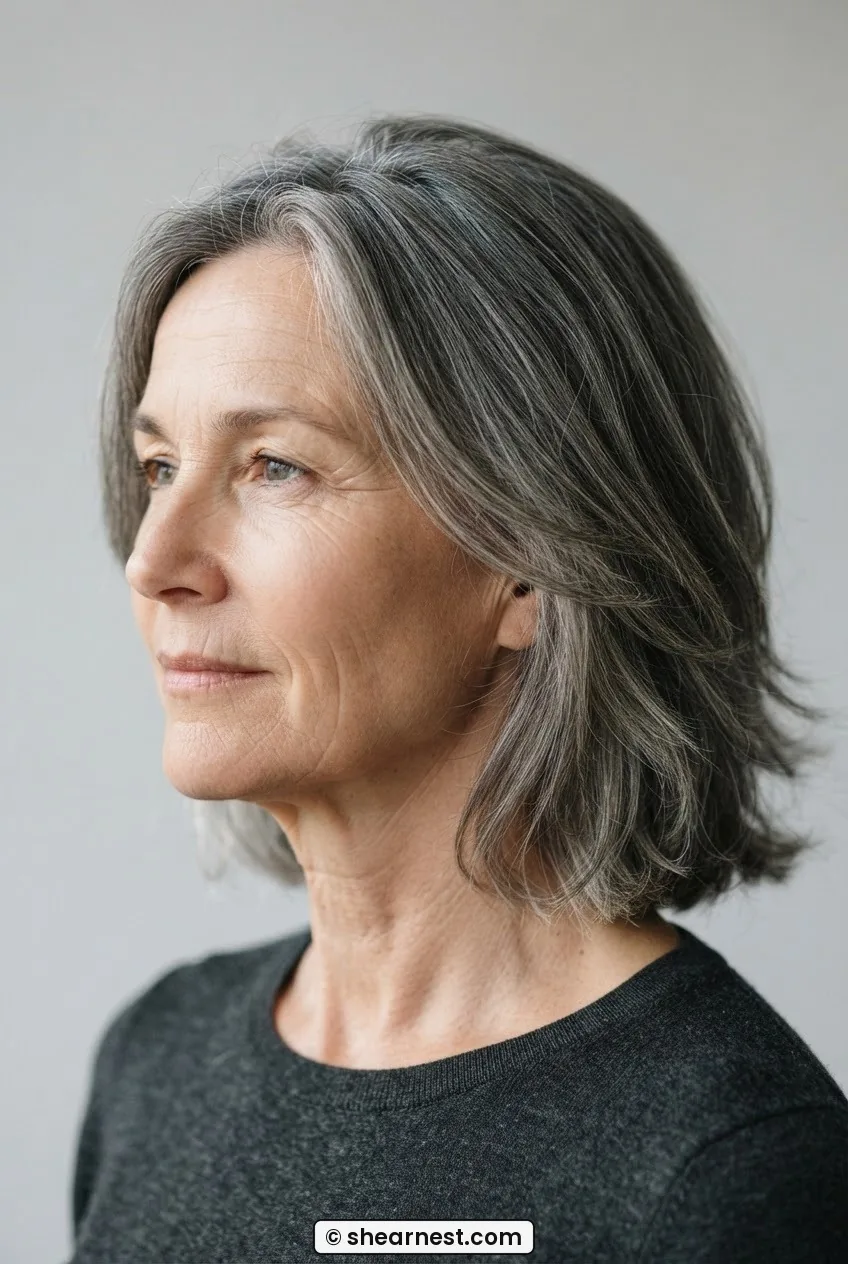
This is why cuts that were perfect at forty can start to feel heavy or ageing at fifty-three. It’s not that the cut is wrong for an oval face. It’s that the oval face has shifted and the cut hasn’t been adjusted to match.
Hair texture is the other thing nobody mentions. Fine hair — which becomes more common as we age — behaves completely differently under the same cut. The right haircut for fine hair over 50 is doing completely different structural work than the same silhouette in thicker hair. Fine strands can’t hold volume in the same places, which means the widest point of the cut falls differently, which circles back to the question of where it sits against your face.
Where the Weight Line Falls Changes Everything
This is the thing I spend more time on than almost anything else in a consultation. The weight line — the point in the cut where the hair has the most density and visual heaviness — needs to sit in deliberate relationship to the face.
For an oval face in younger years, you had flexibility. The weight line could sit at the chin, below the chin, at the collarbone — and each one looked fine because the face was providing its own structure. After fifty, I want the weight line to create a vertical suggestion rather than a horizontal one. Horizontal weight lines, especially ones that sit exactly at the widest part of a softening jaw, tend to widen the lower face visually. That’s not catastrophic — but it’s worth knowing.
The cuts that consistently work well for oval face hairstyles for women over 50 tend to share a few things: they have some movement or layering that breaks up any horizontal line, they don’t blunt-cut at the jawline unless there’s a very specific reason, and they allow the eye to travel vertically — either through the length of the hair or through the way the layers fall.
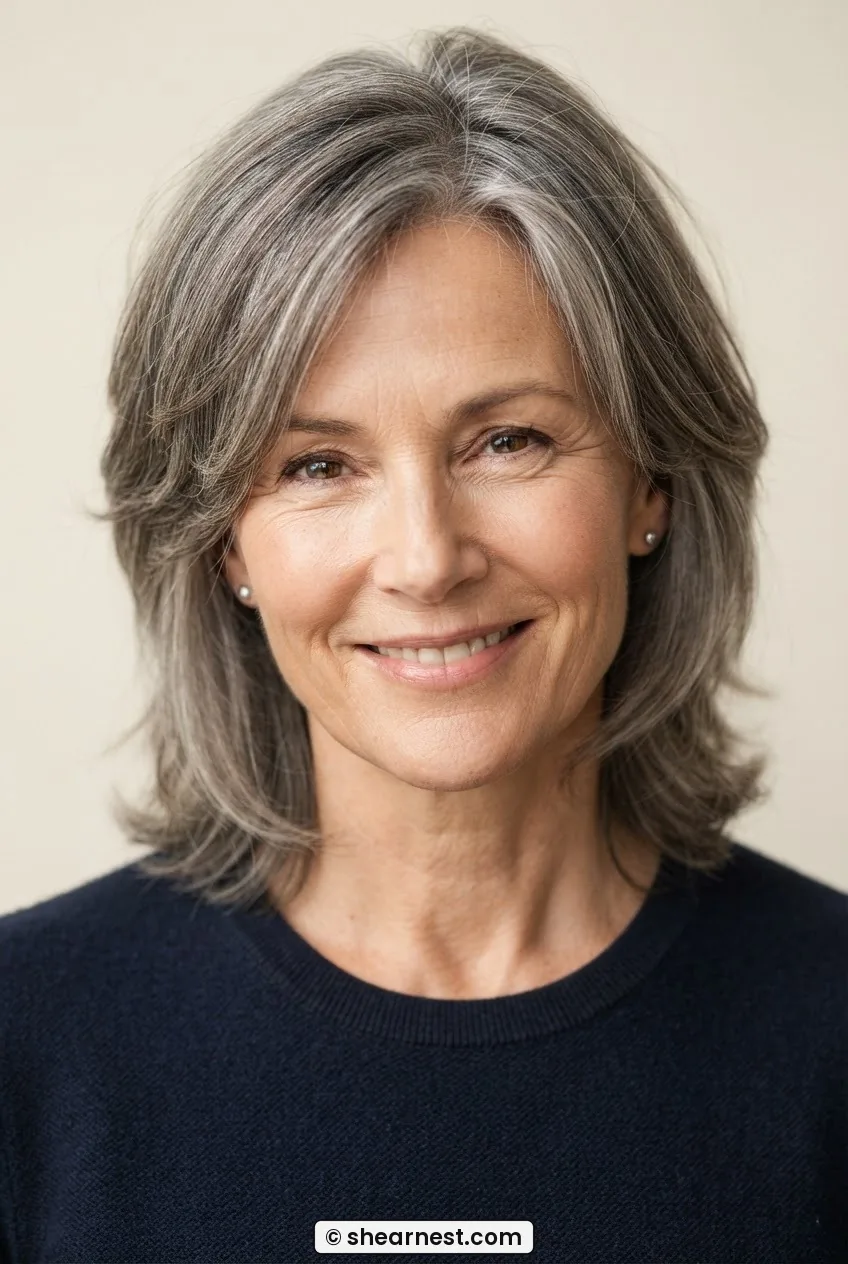
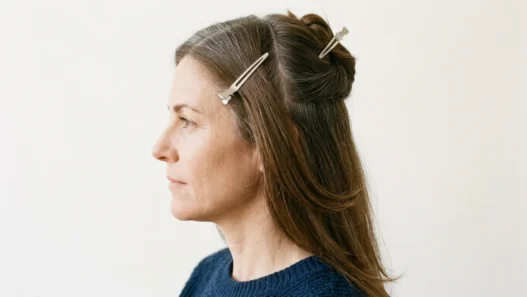
She’s wearing a mid-length cut in this photo — it grazes past her jaw, and you can see how the soft layers redirect the eye downward rather than across. That vertical movement is what I mean. It’s not dramatic. It’s subtle. But that subtlety is doing real structural work for the face. If you’re thinking about the difference between a straight cut and a layered one, this is a good place to also read about straight hair cuts for women over 50 — there’s a reason I reach for texture more than I used to.
See the Weight Line Technique in Action
What I Changed My Mind About
I used to tell oval-faced women to go short. Short pixie, short bob — the logic being that short hair lifts the face and shows off the bone structure. And for some women, that’s still exactly right. But I changed my mind about recommending it as a default, and here’s why.
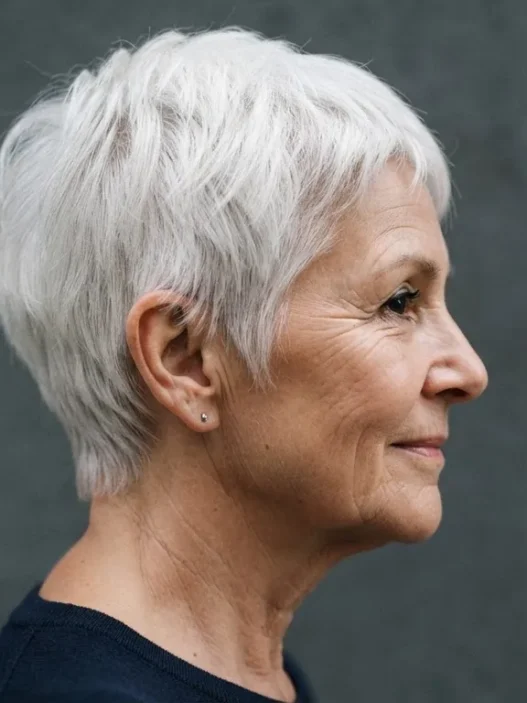
Very short cuts on a softened jaw can, in some cases, expose exactly what the woman doesn’t want emphasised. Without any length to create a vertical line alongside the face, you’re left with the face in full — which is beautiful, but it’s not always what the client is asking for when she sits down. I think the industry, including me, leaned too hard into “short is sophisticated” as a default answer for women over fifty.
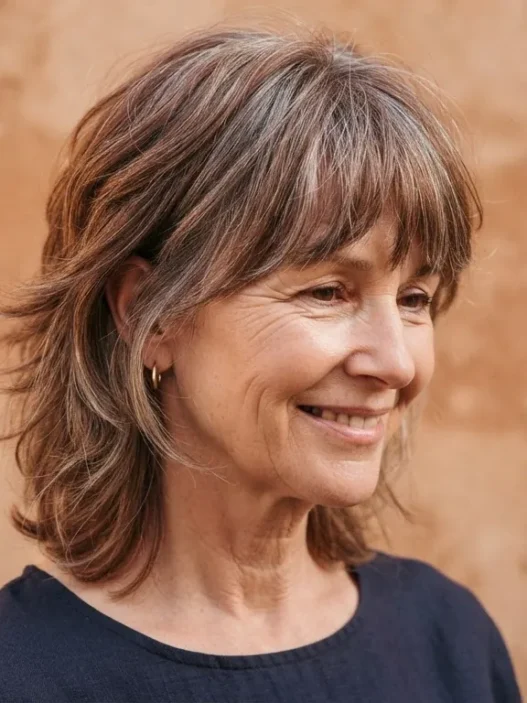
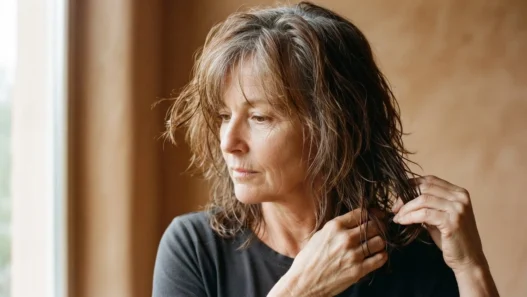
The other thing I changed my mind about: bangs. I used to be fairly cautious about full fringes on oval faces because the textbook rule is that oval faces don’t need bangs — the face is already well-proportioned. But I’ve seen curtain bangs do genuinely beautiful things for oval-faced women over fifty. They add softness at the temples (where hair often thins), they frame the eyes rather than drawing attention to the lower face, and they give dimension without shortening the face visually. A rigid reading of face shape rules would tell you not to bother. I no longer agree with that.
And honestly? The idea that there’s a correct answer that applies to all oval faces is the thing I most want to dismantle. Understanding face shape and hair structure is genuinely useful — but treating it as a fixed prescription is where things go sideways. Two women with identical oval face measurements can need completely different cuts based on how their hair grows, how their face has aged, and what they actually want to look like.
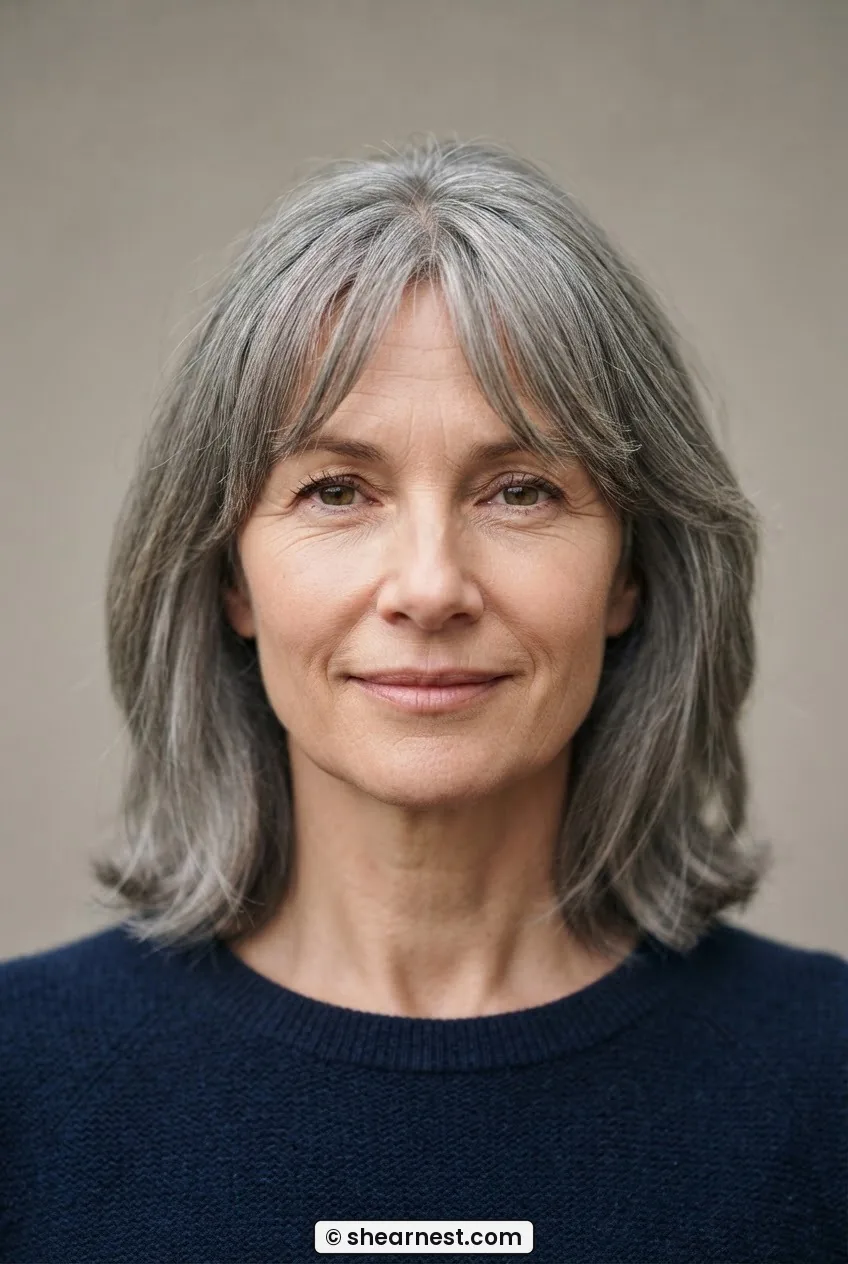
The Cuts I Actually Recommend Now
Not a listicle. But there are patterns I come back to again and again, and I want to give them to you honestly.
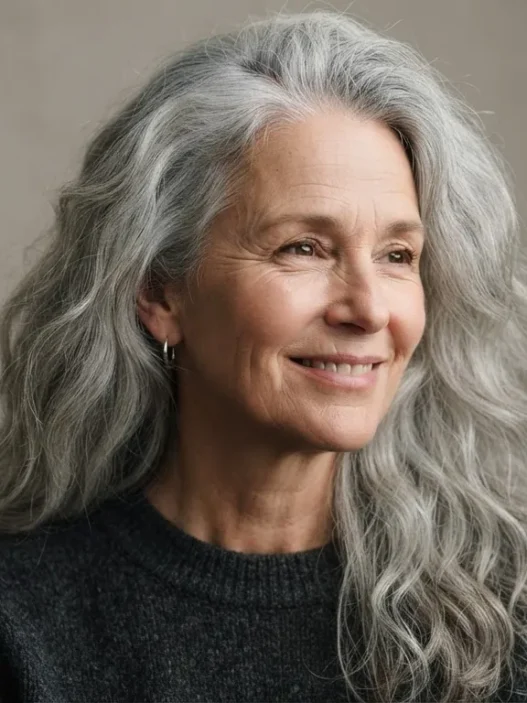
The mid-length cut past the jaw. Not a lob in the Instagram sense — a cut that has considered where it sits relative to the jaw specifically. On an oval face post-fifty, I often like to take the length just past the jaw rather than to the chin, so the jaw isn’t the endpoint of the hair visually. Some soft layering throughout keeps it from going flat. This is also where wavy hair absolutely shines — if you have any natural wave, mid-length cuts with soft layers are going to be your best friend. There’s a reason I recommend women read about wavy haircuts for women over 50 alongside their face shape research — the two questions are inseparable.
The textured bob that sits below the jaw. Not at the jaw. Below it. The distinction matters for the reason I described earlier — you want to avoid parking the widest point of the cut exactly at the widest point of a softening lower face. A chin-length bob on a tight jaw at 35 looks very different on a softer jaw at 55.
Layers that start at or above the cheekbone. This is the one I feel most strongly about. Face-framing layers that begin high — at the cheekbone or temple — redirect the eye upward and inward. They work with the face’s natural focal point (the eyes and cheekbones) rather than pulling attention down to the jaw area. Paired with good colour work, specifically face-framing highlights, these layers can completely change the way a face reads.
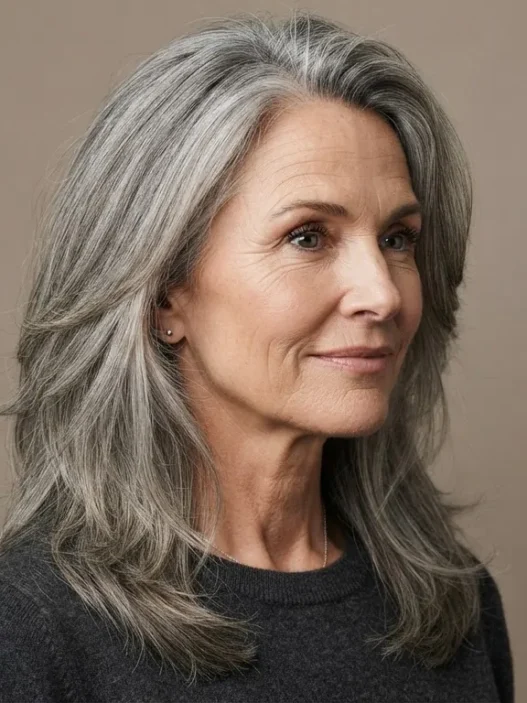
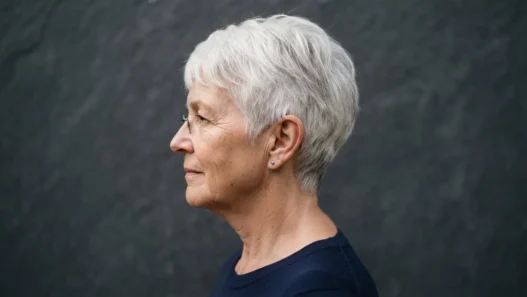
On grey hair specifically: grey and silver tones tend to recede visually, which can sometimes soften definition further. This isn’t a reason to colour your hair — that’s entirely your call — but it is a reason to think carefully about cut shape and density. Women with grey or transitioning hair might find that slightly more structured cuts help maintain definition. If you’re navigating that transition, it’s worth looking at how blonde hair over 50 approaches the same structural questions through colour rather than cut alone.
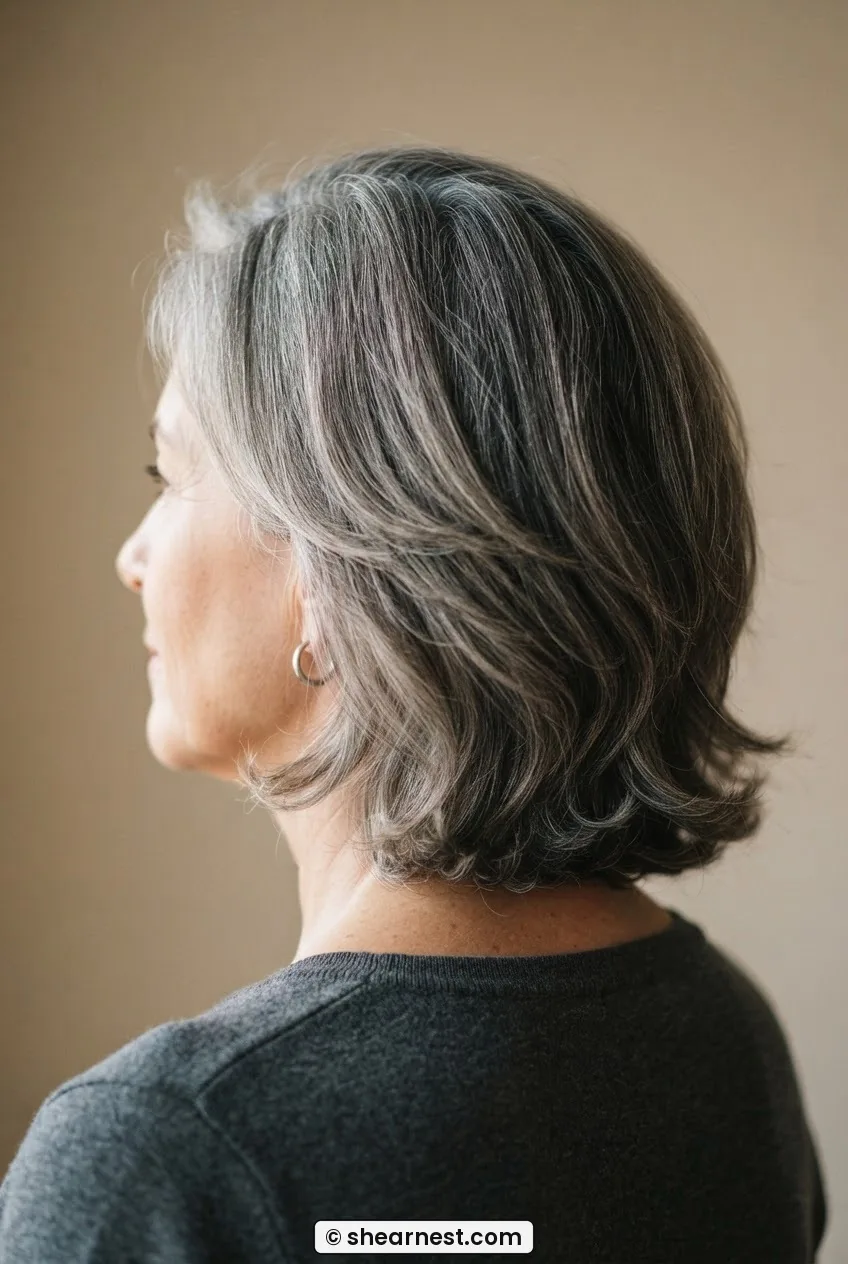
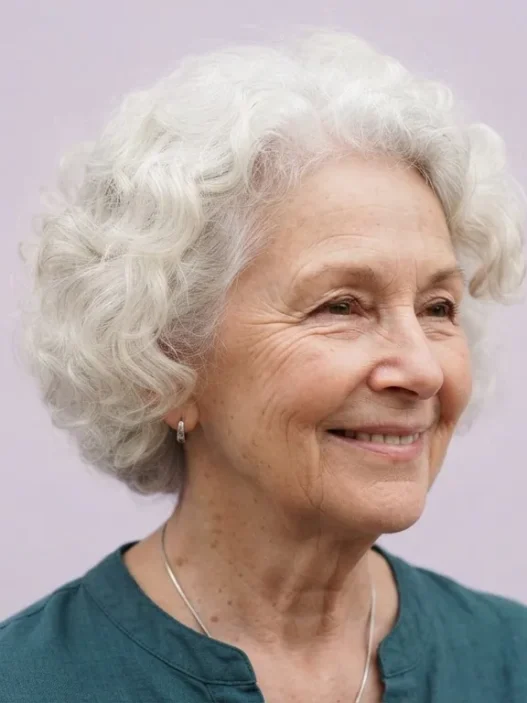
And for anyone reading this who is past seventy — the principles apply, but the priorities shift again. The hairstyles for women over 70 conversation is one I’ll go into properly elsewhere, but the short version is: weight line placement becomes even more critical, and density matters more than length.
Questions I Get About This
Does having an oval face really mean any haircut will work?
Technically, oval faces have the most flexibility — yes. But “works” is doing a lot of lifting in that sentence. A cut might be technically correct for an oval face and still feel wrong for your specific hair texture, the way your face has aged, or the look you’re going for. I’d rather you bring in a photo that reflects your current face than rely on a general rule.
Should I avoid cuts that hit at the jawline?
Not always — but I’d think carefully about it after fifty. A cut that ends exactly at the jaw can emphasise whatever is happening at the jaw, which may not be what you want. A tiny bit longer (below the jaw) or shorter (above it, at the cheekbone) tends to be more flattering for most women. It’s not a hard rule, but it’s worth trying before committing.
What if my face has changed shape and I’m not sure it’s still oval?
This is such a good question and nobody asks it enough. Faces do shift in their visual proportions over time — not because the skull changes, but because of how soft tissue redistributes. If you used to be oval and something feels different now, trust that instinct. Have an honest conversation with your stylist about where your face is currently widest and what you’d like the cut to do. That conversation is more useful than any face shape quiz.
Is there a cut that works for oval faces with fine, thinning hair?
Yes, and it usually involves some internal layering rather than a blunt perimeter cut. Blunt cuts on very fine hair can look sparse because the ends are thin and the weight line has nothing to hold it. Soft internal layers give the impression of more density. Mid-length tends to work better than very long, because the extra length can pull fine hair flat. It’s a balance, and worth discussing with your stylist specifically in terms of your texture.
I want to end with this: your face shape is useful information, not a verdict. Knowing you have an oval face tells you something — but it doesn’t tell you everything. What your hair does, how your face has changed, what makes you feel like yourself when you look in the mirror — those are the real variables. The best oval face hairstyles for women over 50 are the ones built around the actual person sitting in the chair, not the geometry on a chart. Bring in your real face. It’s a good one.