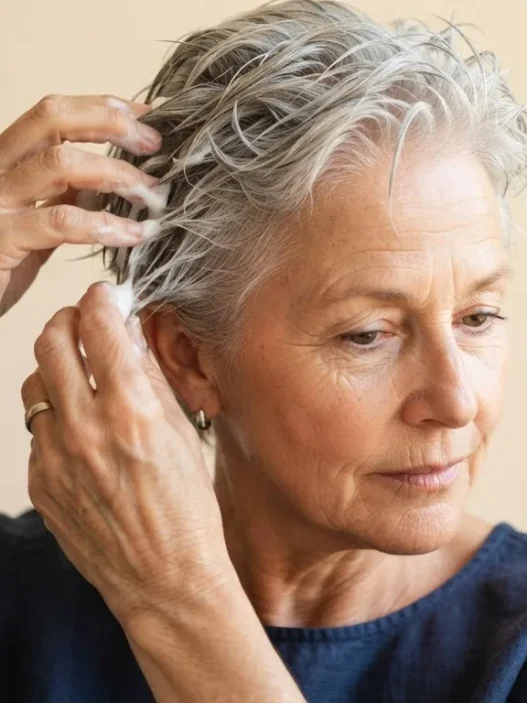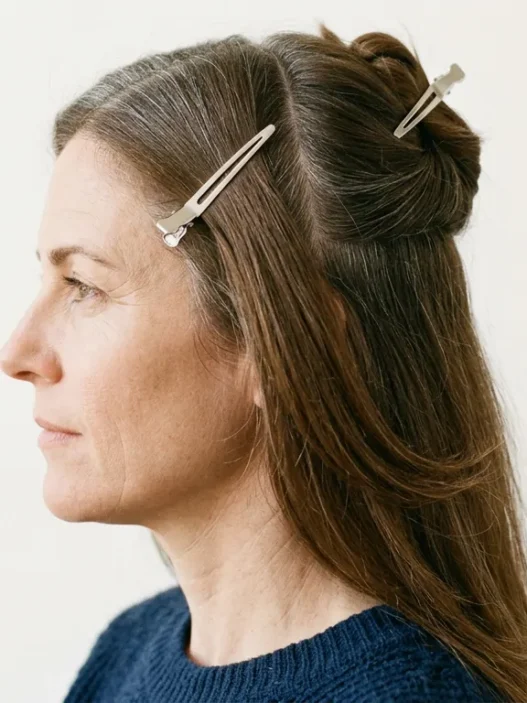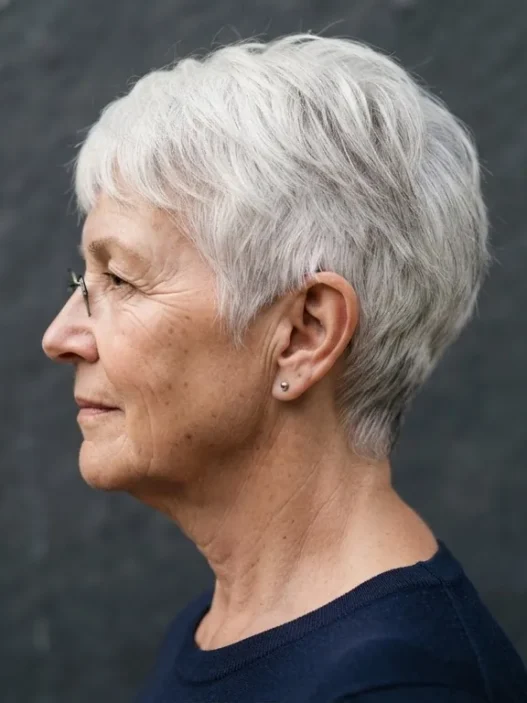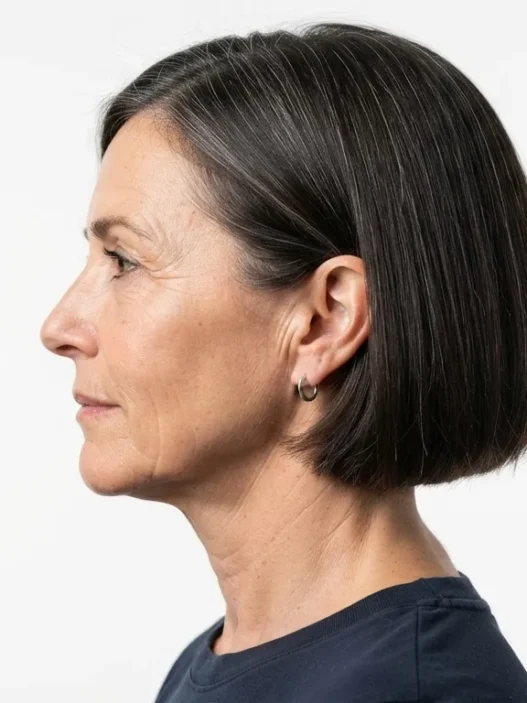









Thick hair over 50 is genuinely one of the more complicated things to get right at the salon — not because there are too few options, but because so many cuts that look great on fine hair just sit there on a dense mane like a helmet. I’ve been thinking about this a lot lately, partly because my own hair has been getting coarser every year, and partly because I keep seeing women come out of appointments with a blunt, unrelieved block of hair that their stylist presumably thought looked chic. Weight removal is the whole conversation with thick hair. It’s not about taking length off the outside — it’s about what happens underneath, inside, and through the mid-section. Below are eleven cuts I think are worth asking for, each built around a genuinely different internal construction.
What’s In This Post — Jump to Your Cut
- 1. The Long Layer With Interior Weight Removal
- 2. The Blunt Lob With a Bevelled Underside
- 3. The Disconnected Bob
- 4. The Soft Shag With Point-Cut Ends
- 5. The Graduated Bob for Coarse Texture
- 6. The Textured Pixie With Tapered Sides
- 7. The Curtain-Bang Lob
- 8. The Long Rounded Layer
- 9. The Stacked Bob With Slide-Cut Interior
- 10. The Modern Shag for Thick Waves
- 11. The Classic Collarbone Cut With Face-Framing Channels
1. The Long Layer With Interior Weight Removal
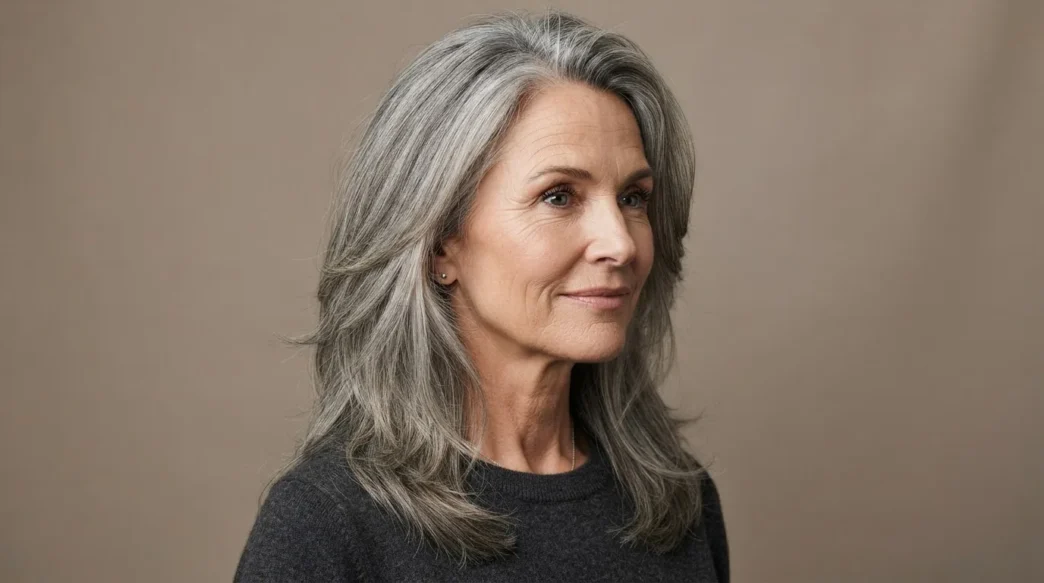
This is the cut I keep coming back to when someone with genuinely thick hair wants to keep length. The stylist takes the outer perimeter long — collarbone to mid-back depending on preference — but the work happens inside. They slice or point-cut through the mid-section in horizontal panels, removing bulk without disturbing the surface silhouette. The result is a curtain of hair that actually moves and doesn’t puff out at the sides like a triangle.
Look at the photo of her here — see how the hair falls in sheets rather than expanding outward? That’s what internal weight removal looks like when it’s done correctly. The exterior layers are long and fluid, but there’s been significant reduction through the underneath. It suits women who want length but whose hair normally sits like a tent from the ears down.
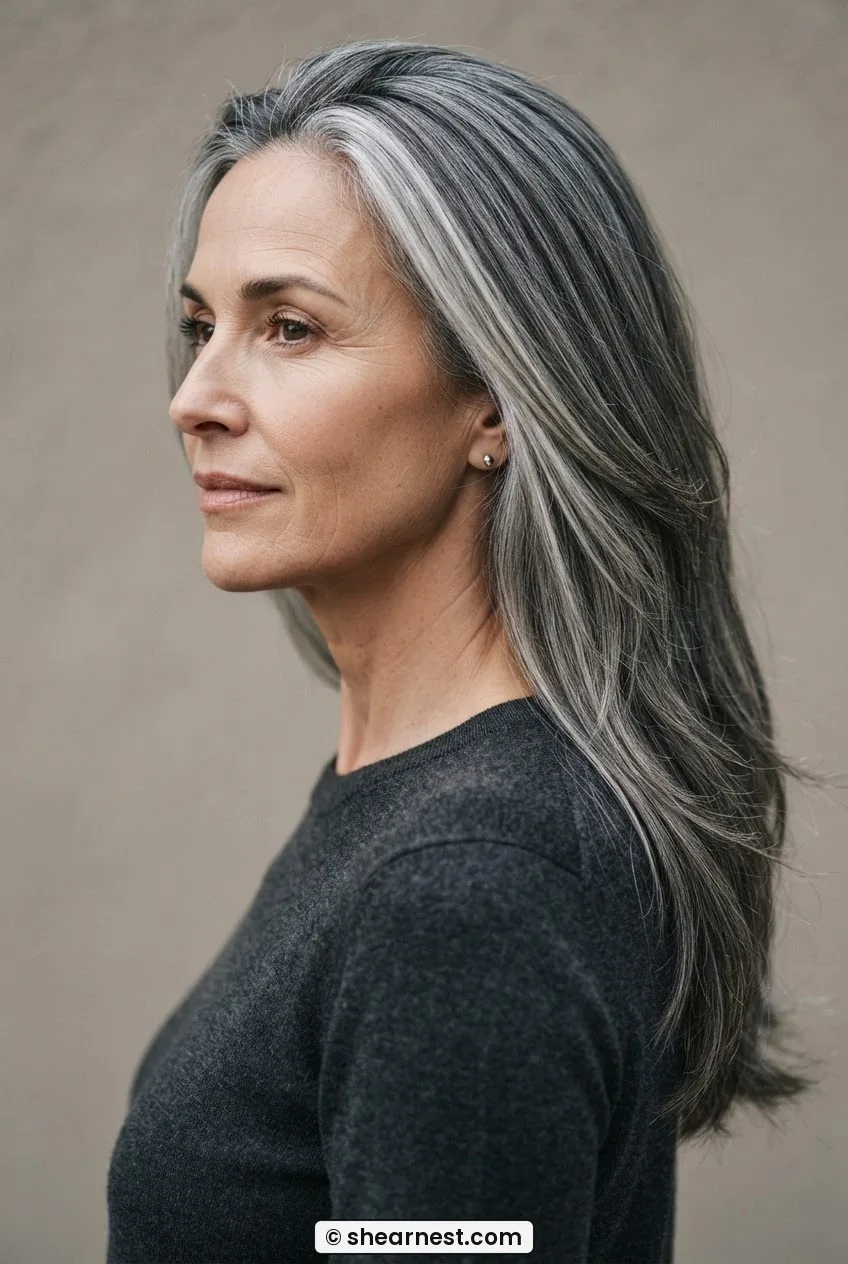
Upkeep sits at around twelve to sixteen weeks, because the shape doesn’t rely on a precise perimeter line. What to say at the chair: “I want to keep the length but I need bulk removed through the mid-section — not layers you can see on the surface, but slicing underneath to reduce weight.”
2. The Blunt Lob With a Bevelled Underside
Here’s the thing about blunt lobs on thick hair — they can look incredible or they can look like a door. The difference is whether the underside has been bevelled. Bevelling means the hair underneath the perimeter line is cut at a slight inward angle, so the ends tuck rather than flare. The top surface stays clean and graphic, which is the whole visual appeal of the blunt lob, but the underside doesn’t mushroom.

This suits women with thick, mostly straight or slightly wavy hair who want a polished, low-maintenance shape. The structure holds for eight to ten weeks before the underside starts to spread. What to say at the chair: “A blunt lob but please bevel the underside so the ends tuck inward — I don’t want the bottom flaring out.”
3. The Disconnected Bob
A disconnected bob has two sections that don’t meet in a continuous graduation — the top sits longer and is kept fuller, the underneath is cut shorter and sometimes almost undercut. For thick hair, this is actually a really smart construction because it eliminates the weight that normally builds up at the nape and behind the ears. The back sits flat, the top has movement.
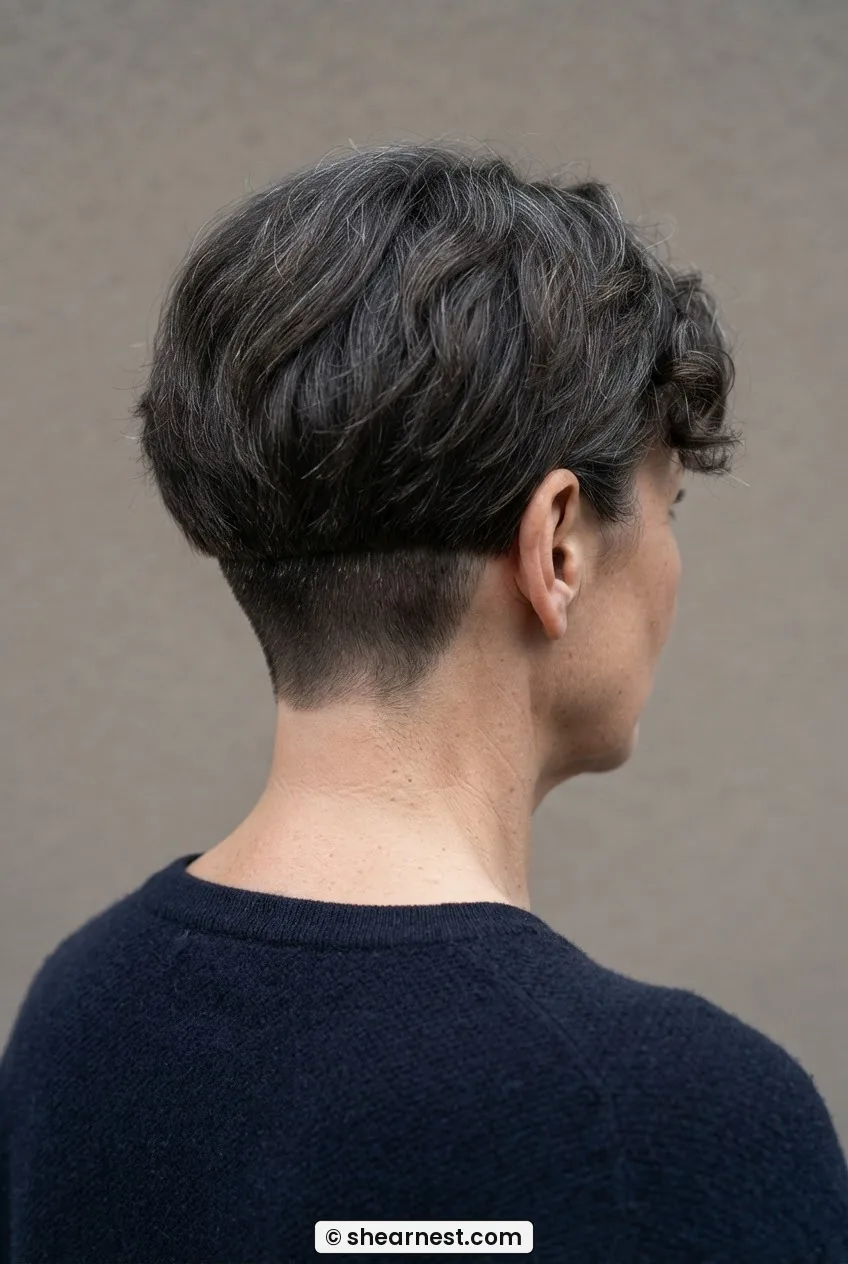
It’s a bolder choice — definitely more of an editorial shape than a classic one. But for women with very dense, coarse hair who find that every other bob eventually puffs into a trapezoid, this is worth a serious look. Upkeep is higher: six to eight weeks, because the contrast between the sections grows out visibly. What to say at the chair: “I want a disconnected construction — the underneath short and close to the head, the top kept longer and disconnected from it.”
4. The Soft Shag With Point-Cut Ends
The shag has had a serious moment in 2026 and for thick hair it genuinely earns its reputation. The key is that it’s built on layers that start high — at the crown — and the ends are point-cut rather than blunt. Point-cutting means the scissors go into the hair at a vertical angle, breaking up the edge so it doesn’t form a single dense line of weight at the bottom.
Thick waves in particular respond brilliantly to this cut. The layers give the wave somewhere to move instead of just sitting in a block. If you’re interested in how waves interact with layering specifically, there’s a lot more on that in my post about wavy haircuts for women over 50 — worth a read before your appointment.
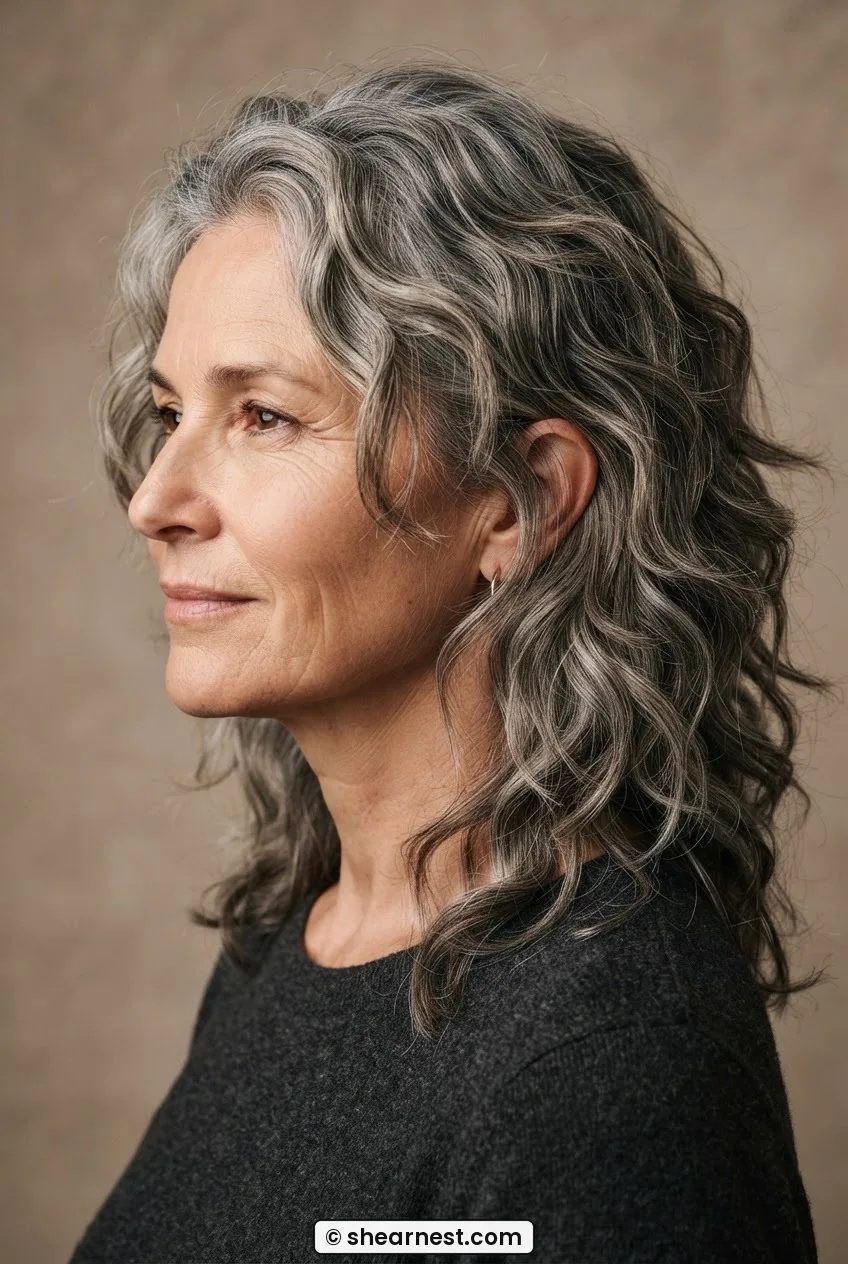
Suits medium to long lengths. Grows out beautifully, so upkeep can stretch to twelve weeks without looking neglected. What to say at the chair: “A shag with layers starting from the crown, and please point-cut the ends rather than blunting them — I need the edge broken up.”
5. The Graduated Bob for Coarse Texture
Graduation — where the hair is stacked at the back and angles longer toward the face — naturally removes interior weight as it builds structure. For coarse, thick hair specifically, the graduation compresses the back of the head instead of letting it expand. The front pieces are kept longer, which softens the face and prevents the back from looking overly round.
My personal pick for thick coarse hair that won’t cooperate. I had a client in mind — she’d been fighting her hair for twenty years, always ending up with a round ball at the back of her head. Her stylist finally did a proper graduated bob with thinning shears used internally through the back section, and it was honestly the first time I’d seen her hair lie down and behave. The graduation did the structural work; the interior thinning reduced the mass. If nothing else on this list appeals to you, try this one first.
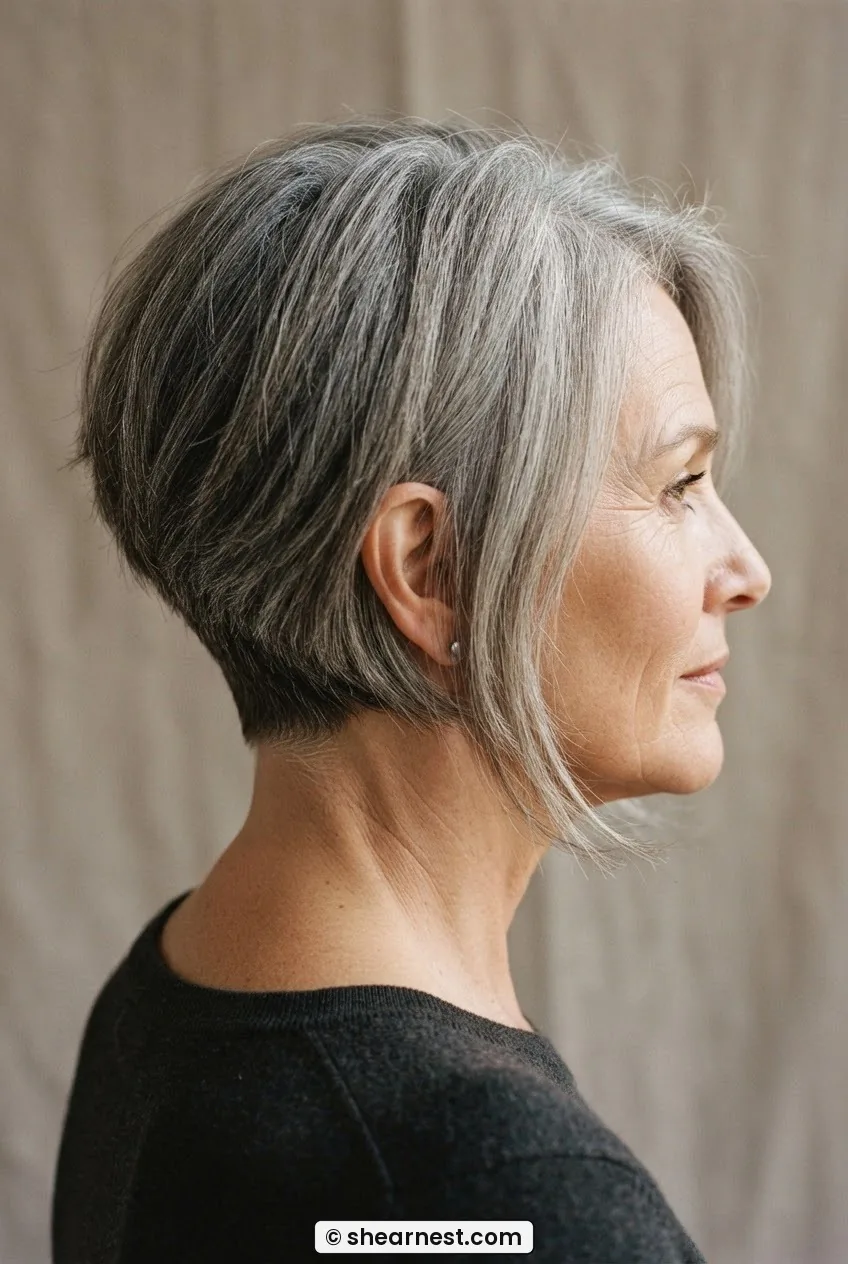
Upkeep is every eight weeks to maintain the stacked shape at the back. What to say at the chair: “A graduated bob with the graduation tight at the nape — and I want internal thinning through the back section, not thinning shears on the surface.”
Watch Internal Weight Removal in Practice
6. The Textured Pixie With Tapered Sides
Short cuts for thick hair are a genuine commitment — get it wrong and you end up with a mushroom. Get it right and thick hair is actually the best possible candidate for a pixie because it holds shape without product and doesn’t go limp by midday. The version that works on dense hair has tapered sides (scissors-over-comb or clipper-tapered from the temples down), with length and texture kept on top.
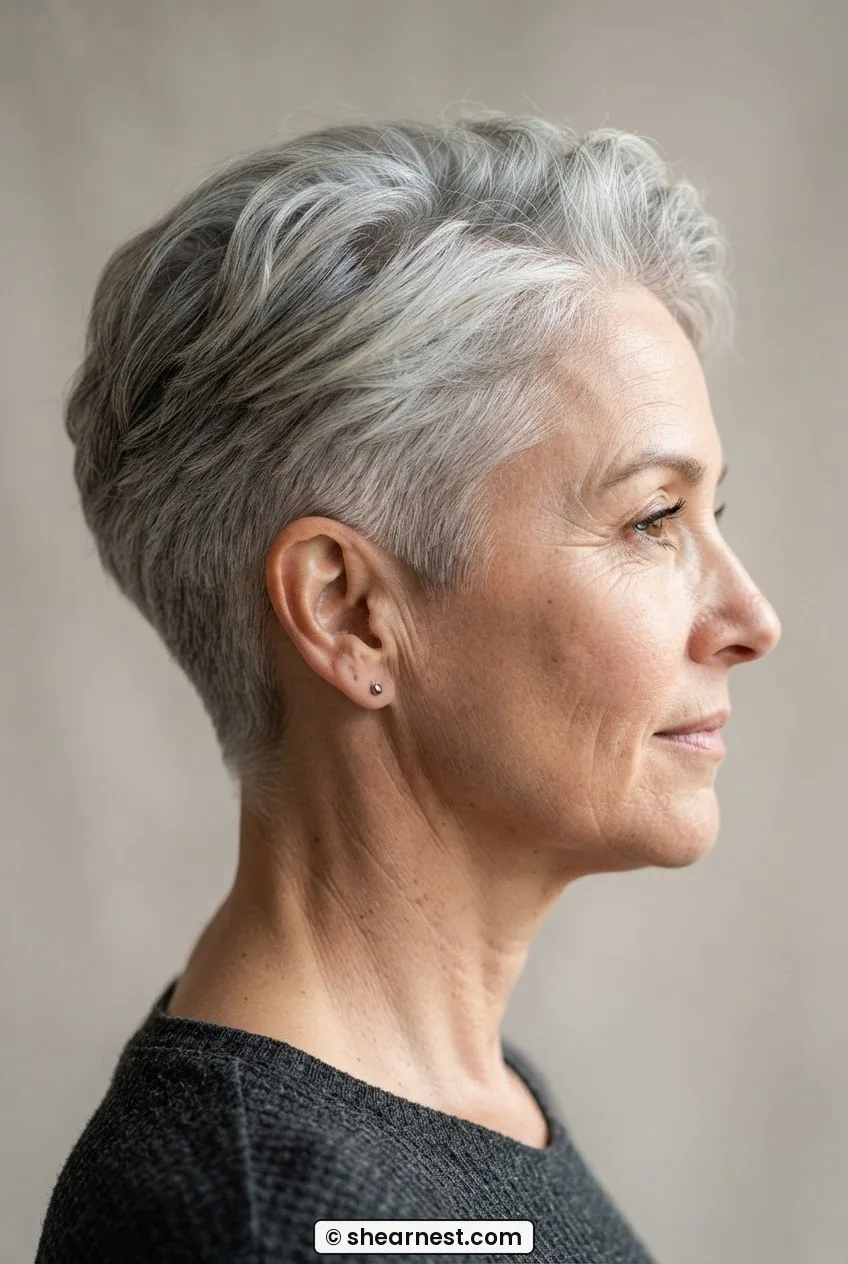
The taper does the weight-removal work at the sides, where thick hair most commonly expands and creates that triangular silhouette. The top is then point-cut to break up the density. There’s a lot of nuance in getting a short cut right on thick hair — my post on short haircuts for women over 50 goes into more detail on what to watch for. Upkeep: five to seven weeks. What to say at the chair: “Taper the sides close to the head and point-cut the top for texture — I want the sides sitting flat, not expanding.”
7. The Curtain-Bang Lob
Curtain bangs on thick hair require a specific approach: the bang section needs to be taken thin at the root and feathered toward the parting, otherwise you end up with a shelf of hair across the forehead rather than a wispy curtain. When they’re done correctly — and I mean really correctly — they’re one of the most flattering things thick-haired women in their fifties can ask for. They soften the forehead, break up the face vertically, and the rest of the lob sits with its weight removed through the mid-section underneath.

The construction: lob at collarbone length, interior weight removed with slicing, bang section thinned at the root and point-cut to feather toward the parting. Upkeep is every eight weeks because the fringe outgrows fastest. What to say at the chair: “Curtain bangs but please thin them at the root so they don’t sit as a block — I need them feathered, not heavy.”
8. The Long Rounded Layer
Different from long layers. A rounded layer means the cutting guide follows a curved line around the head — shorter at the top of the head, progressively longer as you move down — so the shape when finished has a slight dome rather than going flat on top. This sounds counter-intuitive for thick hair, but the dome at the crown actually stops the whole shape from going wide at the sides. Width at the sides is the enemy; volume at the crown is your friend.
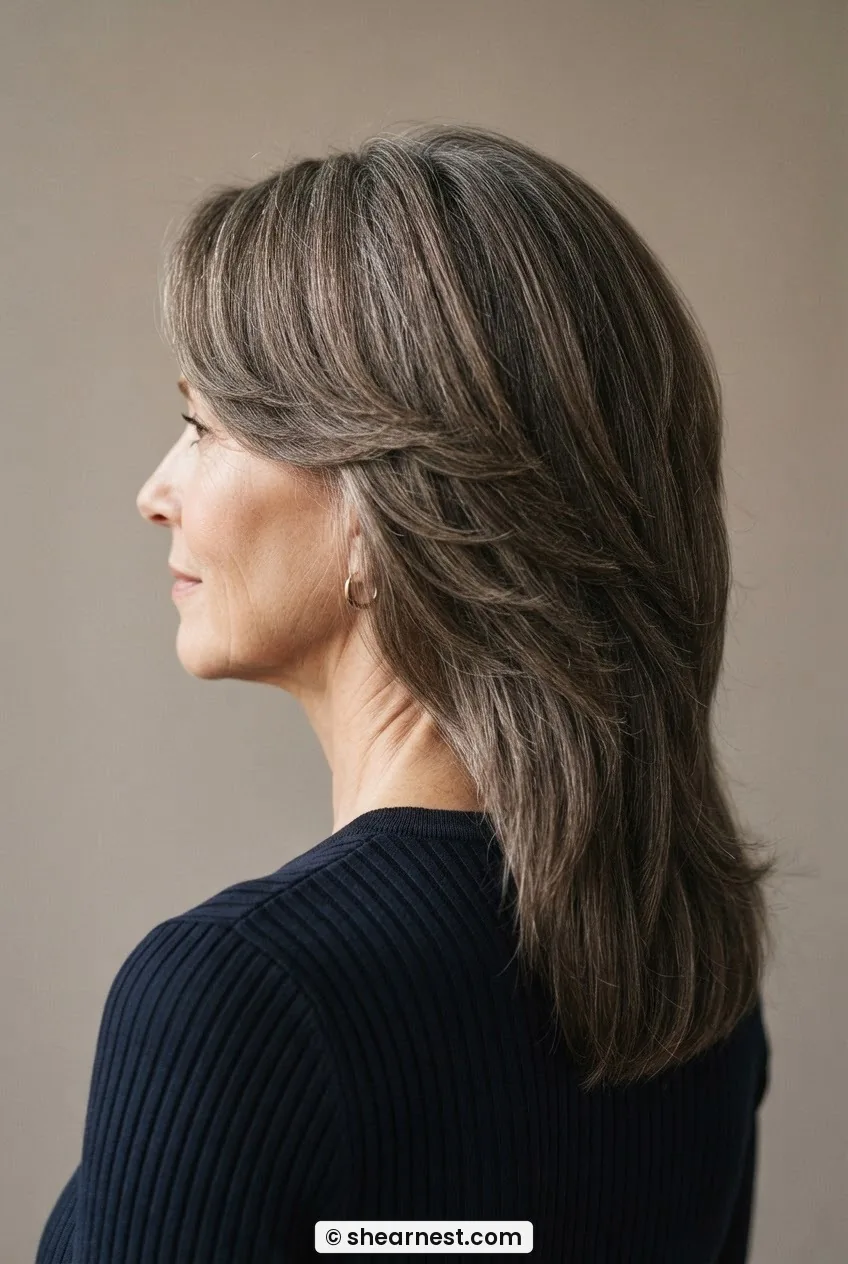
Works best on thick, straight or very slightly wavy hair at medium to long lengths. If you have straight hair specifically, you might want to cross-reference my thoughts on straight hair cuts for women over 50 before you commit — straight thick hair has some particular quirks that affect how layers behave. Grows out without losing the shape, so twelve to fourteen weeks between appointments is realistic. What to say at the chair: “A rounded layer — shorter at the crown following a curved guide, longer underneath — so the shape has volume at the top rather than at the sides.”
9. The Stacked Bob With Slide-Cut Interior
Stacking creates volume through graduation at the back. On thin hair that’s great; on thick hair it can make the back of the head enormous. The fix is a slide cut through the interior of the stacked section — the stylist runs the open scissors along the length of the hair from mid-shaft downward, which removes weight without removing length or disrupting the stacked shape on the surface.
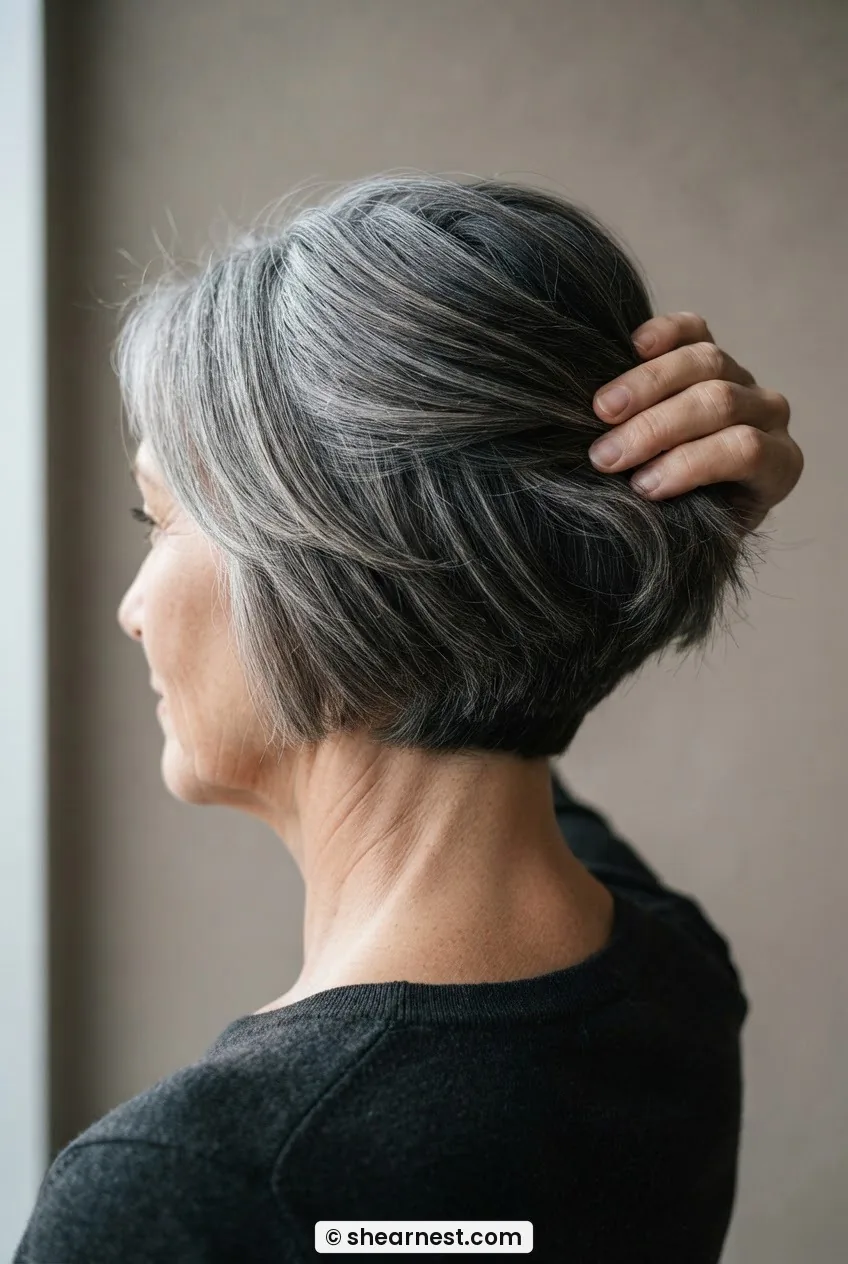
It’s genuinely different from a standard stacked bob — the surface looks the same, but when you pick up a section of the hair it’s significantly thinner through the interior. Suits women who want the neatness and definition of a stacked shape but whose hair has previously turned the back into a solid wedge. Upkeep every eight to ten weeks. What to say at the chair: “A stacked bob but with slide cutting through the interior of the stacked section — I need interior weight removed without losing the stacked shape.”
10. The Modern Shag for Thick Waves
This is a different animal from the soft shag at number four. The modern shag for waves uses a razored or heavily point-cut technique through the ends and specifically targets the perimeter to shatter it rather than leaving a clear line. The layers start even higher on the head and there’s often a short crown layer that creates a slight mullet silhouette when dry. On thick waves this looks incredible — the texture fills in and softens what would otherwise be a severe shape.

It’s a lot of cut. If you’re not sure your waves are actually waves and not just thick straight hair with a slight bend, I’d recommend reading up on what your actual hair texture is before you book, because a razor on truly straight thick hair can create frizz rather than softness. For wave-specific guidance on how the construction changes, check what I wrote about wavy haircuts for women over 50 — it covers the texture distinction in detail. Upkeep: ten to twelve weeks. What to say at the chair: “A modern shag with the layers starting high at the crown and the perimeter shattered rather than blunt — I want the ends razored or heavily point-cut.”
11. The Classic Collarbone Cut With Face-Framing Channels
The simplest shape on this list, and possibly the most underrated. The perimeter sits at collarbone length. The distinguishing element is channels: the stylist takes narrow vertical sections from the hairline back toward the ear on each side and cuts them slightly shorter and thinner than the rest — these are the face-framing pieces. On thick hair they prevent the hair from sitting as a uniform curtain with no movement around the face, and they work with the natural way thick hair parts and falls.

It’s a really wearable shape for women who aren’t sure about dramatic cutting techniques but whose hair genuinely needs something done about its weight. The interior of the mid-section gets sliced during the cut, which is what I’d describe as internal thinning with scissors rather than thinning shears on the surface — a distinction worth mentioning to your stylist because thinning shears on the surface of thick hair can create porous, frizzy texture rather than removing bulk cleanly.
If you have a round face shape and are weighing up whether collarbone length actually works for your proportions, there’s a good breakdown in my piece about the haircut for round face shape over 50. Upkeep is comfortable at twelve to fourteen weeks. What to say at the chair: “Collarbone length with face-framing channels around the front hairline — and internal weight removal through the mid-section using slicing, not surface thinning shears.”
Questions About Thick Hair Cuts Over 50
Should thick hair be thinned or layered — what’s the actual difference?
Thinning removes bulk from within a section without changing the length of the outermost hairs. Layering changes the actual length at different sections of the head so shorter pieces sit on top of longer ones. Thick hair often needs both — layering to create shape and movement, internal thinning to reduce the actual density that makes the layers puff rather than fall. One without the other is usually half the answer.
Are thinning shears bad for thick hair?
Not inherently, but placement matters enormously. Thinning shears used on the surface of thick hair — especially coarse or colour-treated thick hair — can create a frizzy, porous texture at the ends. Used internally, mid-shaft, they remove bulk without that effect. Always ask your stylist where they’re planning to use them before they start.
Can thick hair look good short, or does it always go wide?
It absolutely can look great short — but it needs a cut that’s specifically designed for density, not just scaled down from a fine-hair pixie. The key is close tapering at the sides and nape combined with internal weight removal on top. Done well, thick hair holds a short shape better than fine hair because it doesn’t go flat. Done carelessly, yes — it goes wide. The construction is everything.
How often does thick hair actually need a cut to stay in shape?
Shorter cuts — pixie, graduated bob — need attention every five to eight weeks because the tight shape at the sides and nape grows out fast and visibly. Longer cuts where the shape relies on internal weight removal rather than a precise perimeter line can comfortably stretch to twelve to sixteen weeks. Worth factoring into your decision when you’re choosing between options.
That’s the full eleven. If I had to point someone to a starting place, I’d say the graduated bob with interior slide cutting (number nine) for anyone who wants something classic that will genuinely behave, and the soft shag (number four) for anyone whose thick hair also has wave or movement. And if you’re navigating all of this alongside fine hair rather than thick — a completely different puzzle — my post on the haircut for fine hair over 50 covers that side of things. Go armed with specifics. Your stylist will thank you for knowing what internal weight removal actually means — and so will your hair.