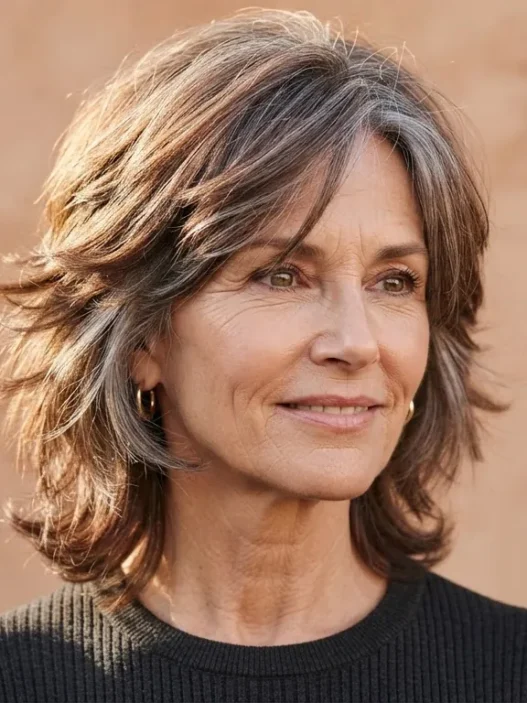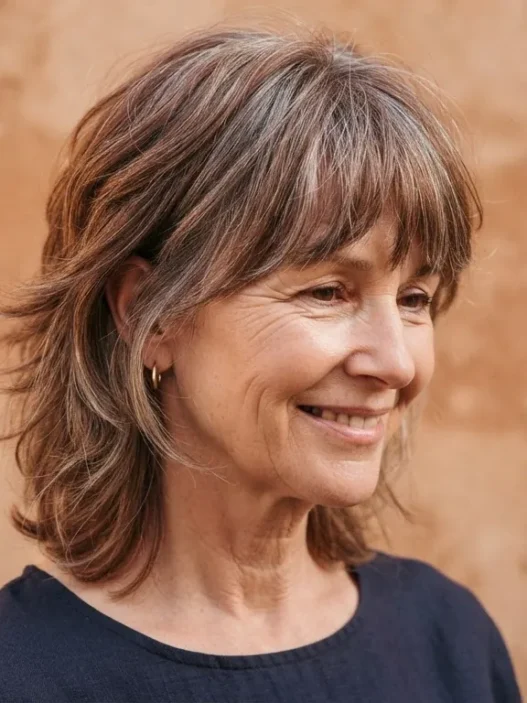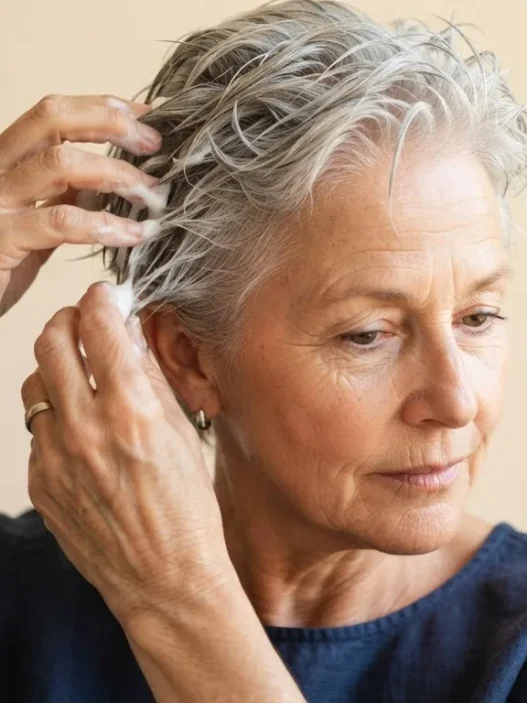







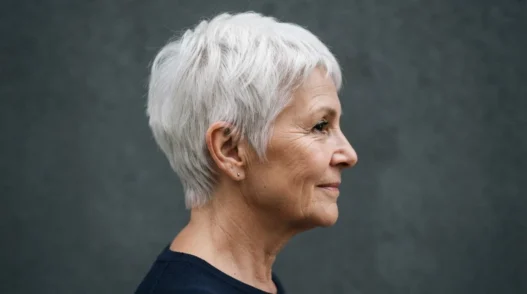
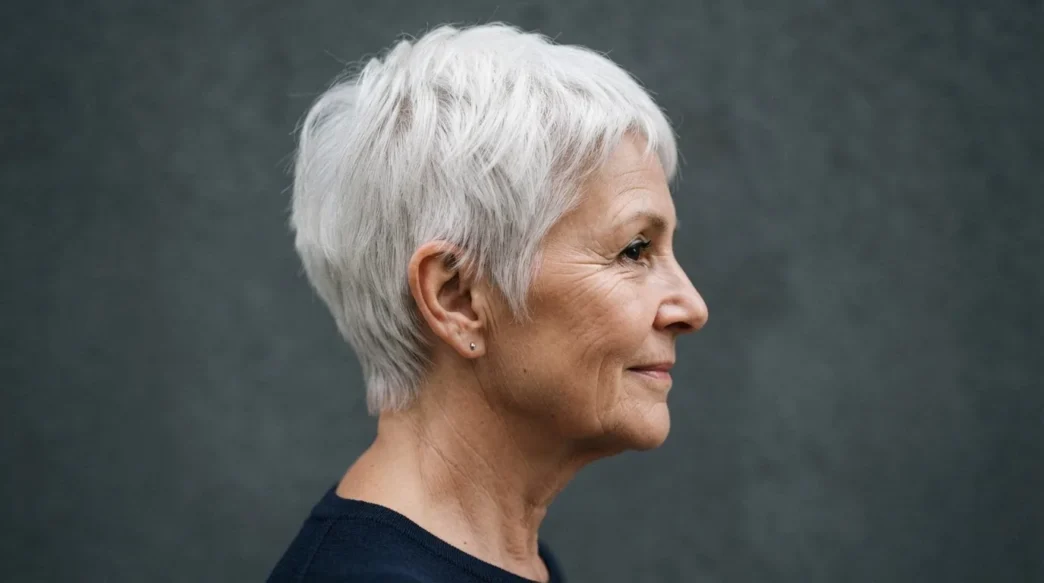
She came in with a photo torn from a magazine — a sharp, geometric pixie on a woman who looked about thirty-two. She was sixty-one. And she wanted exactly that. I’ve been cutting hair for a long time, and I remember the pause I took before I said anything, because what I was about to tell her wasn’t what she’d come to hear. Short haircuts for women over 50 are genuinely brilliant — but not every short haircut, and not for the same reasons you might think.
This isn’t about looking younger. I don’t believe in that framing, and I’ve never sold it. This is about cuts that actually work with what your hair is doing now — the texture changes, the density shifts, the way it falls differently than it did ten years ago. Those things are real. Pretending they aren’t doesn’t help anyone.
The Appointment That Changed How I Think About Short Hair
The woman with the magazine photo — her name was Rosemary — had fine hair. Not thinning exactly, just genuinely fine in diameter, the kind that’s always been there but never been particularly cooperative. The pixie she’d pointed to was cut for someone with a completely different density. It had been texturised heavily on top to create lift, and the sides were tapered tight. On thick hair, that contrast is incredible. On fine hair, it can read as flat on top with nothing happening at the sides.
We talked for probably twenty minutes before I even picked up a comb. That conversation changed how I approach every consultation with a woman over fifty who wants to go short. Because the instinct toward short hair at this stage of life is usually right — it’s just the specific cut that needs calibrating.
If you have fine or thinning hair, the deeper dive on haircut choices for fine hair over 50 is worth your time before you book anything. The mechanics matter more than most stylists explain in a standard appointment slot.
What Nobody Tells You About Weight and Width
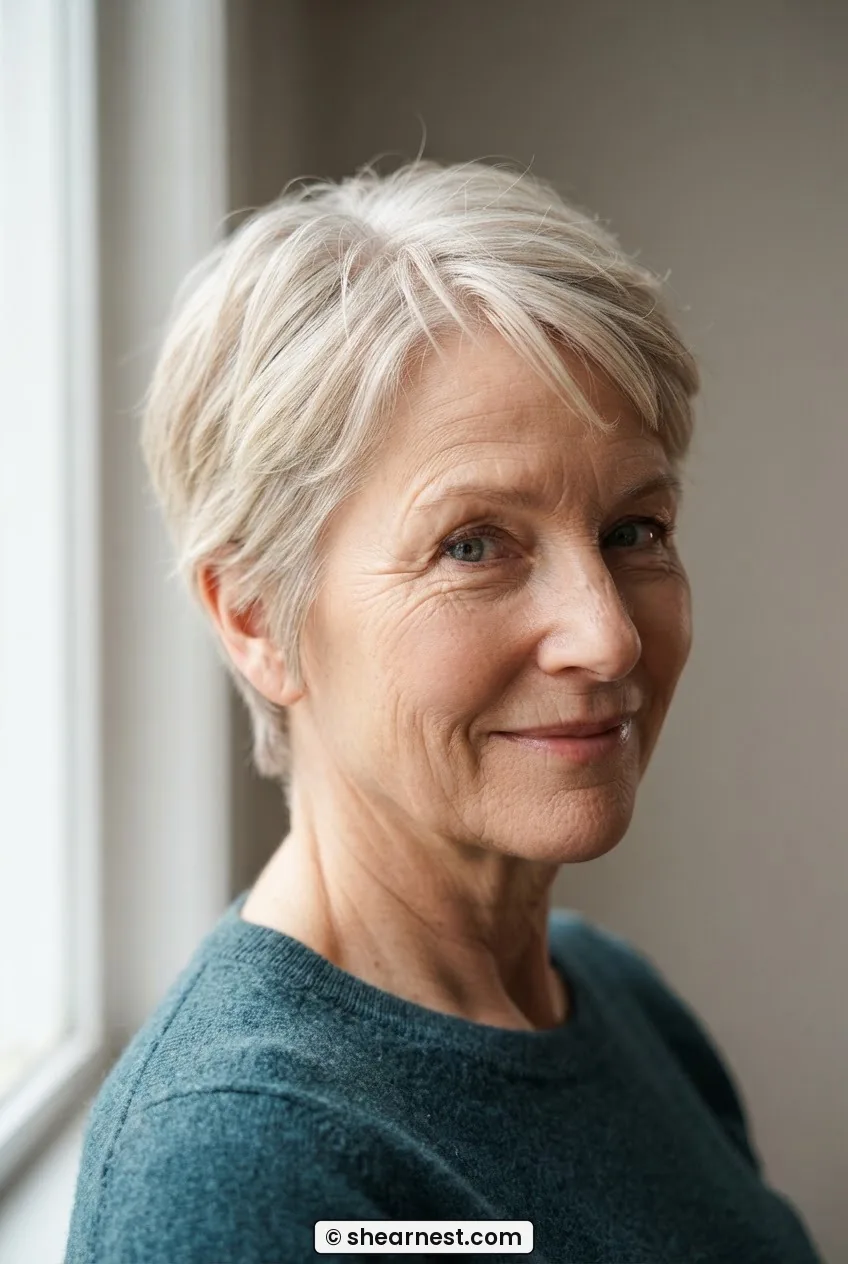
Here’s the thing about hair after fifty that nobody says out loud: it often gets finer in diameter at the same time as it gets coarser in texture. Those two things sound like they cancel each other out, but they don’t — they just make each other more confusing. The strand is thinner, so there’s less of it visually. But the surface of each strand has changed, so it can behave more randomly, more wiry in places, less cooperative overall.
Weight in a haircut is not about how heavy the cut feels. It’s about where the bulk of the hair sits. A blunt bob, for example, holds all its weight at one horizontal line. That can be brilliant for creating the illusion of density. It can also make fine hair look like it’s trying very hard and not quite managing. The question I always ask is: where do we want the eye to go?
Removing weight from the interior — soft layers, disconnected sections — is what creates movement without sacrificing perimeter density. This is why a layered pixie with a solid outline often looks fuller than a heavily layered shag on the same woman. The outline holds. The movement happens inside it. Fine hair needs that boundary.
Width at the sides is the other factor most consultations gloss over. If your face has become softer around the jaw over the years — and most of ours do, mine included — then a cut that adds horizontal volume right at the temple-to-ear zone can work in your favour. It creates visual balance. But a cut that’s flat on the sides and fluffy only on top does the opposite. So I look at where the volume is before I decide where to put it.
The Perimeter Is Everything
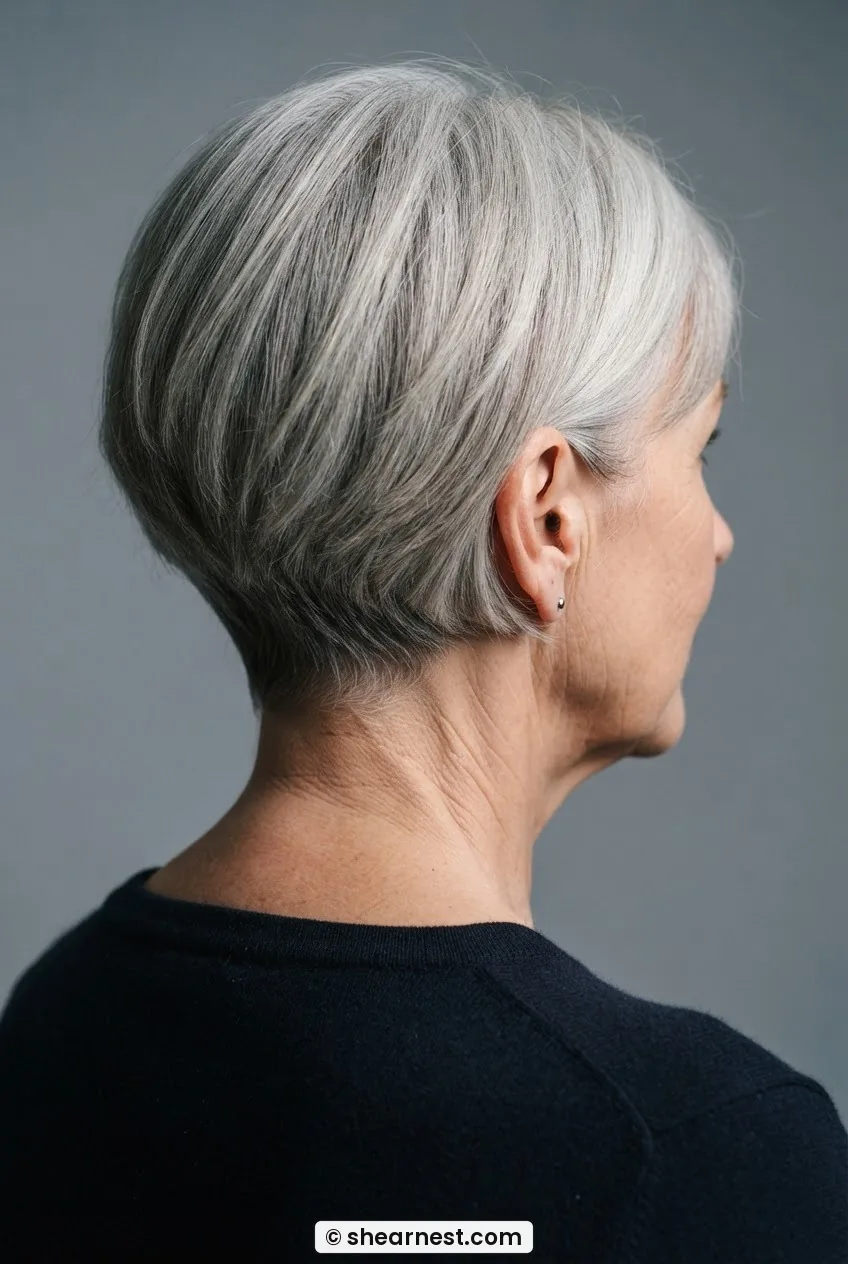
I’d argue the single most important decision in any short haircut on a woman over fifty is the neckline. Not the fringe. Not the layers. The neckline.
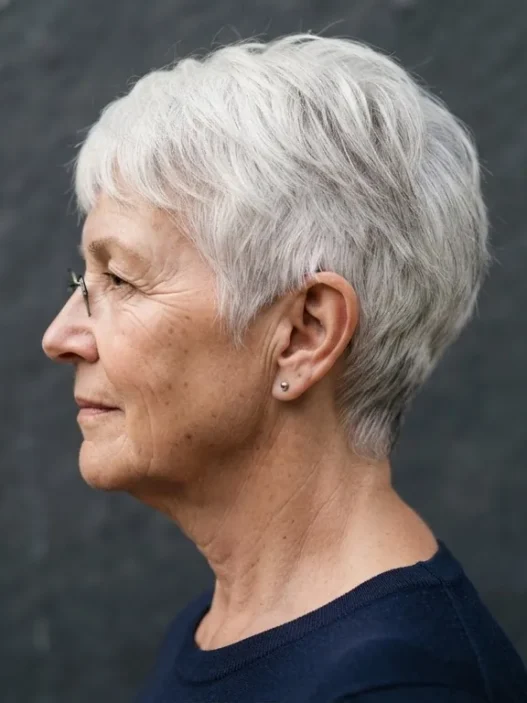
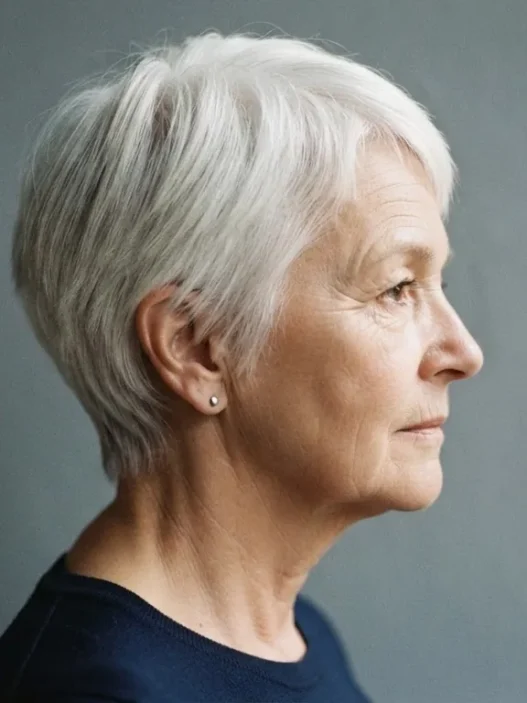
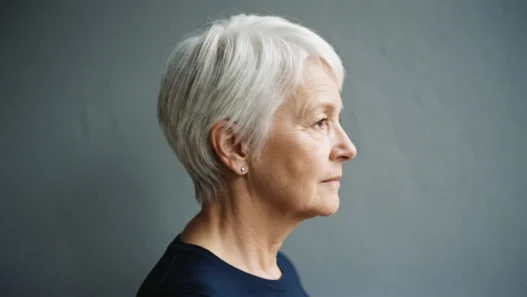
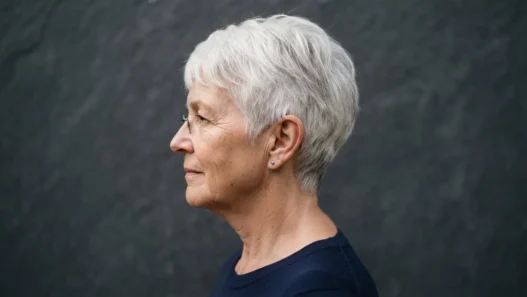
Look at the woman in this image — notice the taper through her nape, how cleanly it sits. That’s not an accident. That line is doing real work. A tapered neckline that’s kept up (every four to six weeks, genuinely) gives the whole cut its structure. Let it grow out and the shape reads soft in a way that’s less intentional, more tired. A squared neckline can be equally sharp but reads differently — slightly more graphic, slightly more modern.
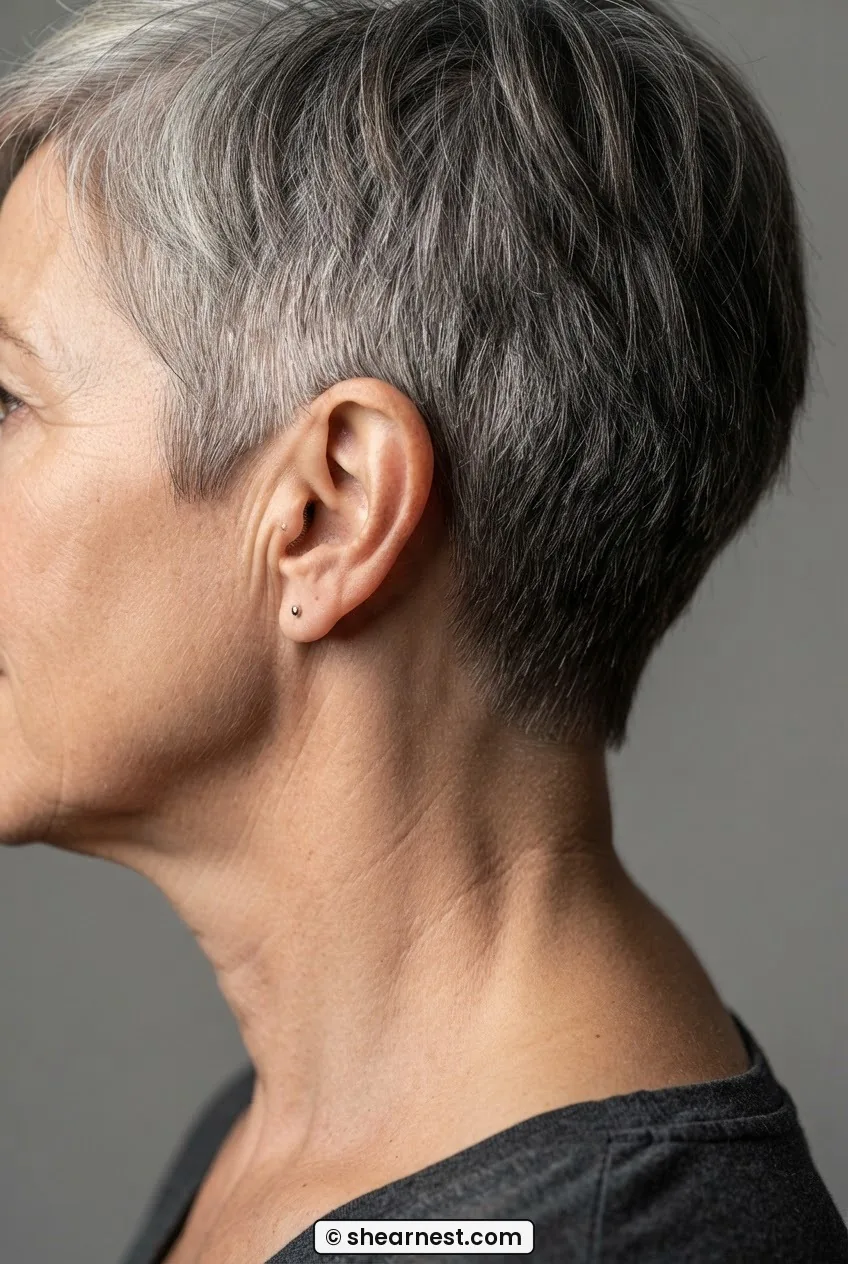
The nape also changes with age. The hairline itself can become more irregular — some women notice growth patterns shift, sparse patches appear, or the hairline recedes slightly at the corners. A good taper can manage all of that with the right angle. But it requires a stylist who actually looks at your neckline, not just assumes it’s the same as the last client.
The hairline around the ear matters equally. Whether you tuck behind, cut around the ear for a clean outline, or let a small piece fall forward — each reads differently on camera, in person, and in different lights. I always ask my clients to think about whether they’ll be tucking or not, because the cut has to support whatever habit they already have. Asking someone to change a lifelong habit with their hair is a losing battle.
If you have naturally straight hair, understanding how straight hair behaves when cut short makes a real difference to the conversation you have with your stylist. For straight hair specifically, perimeter sharpness is even more critical — there’s no wave to add softness where the cut ends.
I also always point women toward reading about straight hair cuts for women over 50 if that’s their texture, because the perimeter principles there apply with double force.
A Stylist Breaks Down the Neckline Decision
What I Changed My Mind About
I used to think the pixie was the bravest and best short haircut option for older women. I recommended it constantly. It’s low maintenance, it’s clean, it photographs beautifully when cut well. I still love it. But I’ve changed my position on it being the default recommendation, and here’s the slightly controversial opinion: I think the bob — particularly a chin-length or just-below-the-ear bob — does more work for more women over fifty than the pixie does.
This will annoy pixie devotees. I understand. But here’s my reasoning.
The pixie is an exceptional cut. But it requires your bone structure to carry it almost entirely on its own. When our faces were at their highest density in terms of subcutaneous fat — essentially, our thirties — the angles were sharper, the planes were more defined, and the pixie had architecture to play against. After fifty, the face softens. That softening is genuinely beautiful. But a very short pixie sometimes has less to work with, and the result is a cut that looks technically correct but somehow falls flat in the mirror.
A bob — especially one with some movement, some texture, a piece or two that grazes the jaw — gives the face something to rest against. It frames. And for women with an oval face, that framing conversation gets especially interesting, which is why I always recommend reading about oval face hairstyles for women over 50 specifically — the rules that applied at thirty genuinely shift.
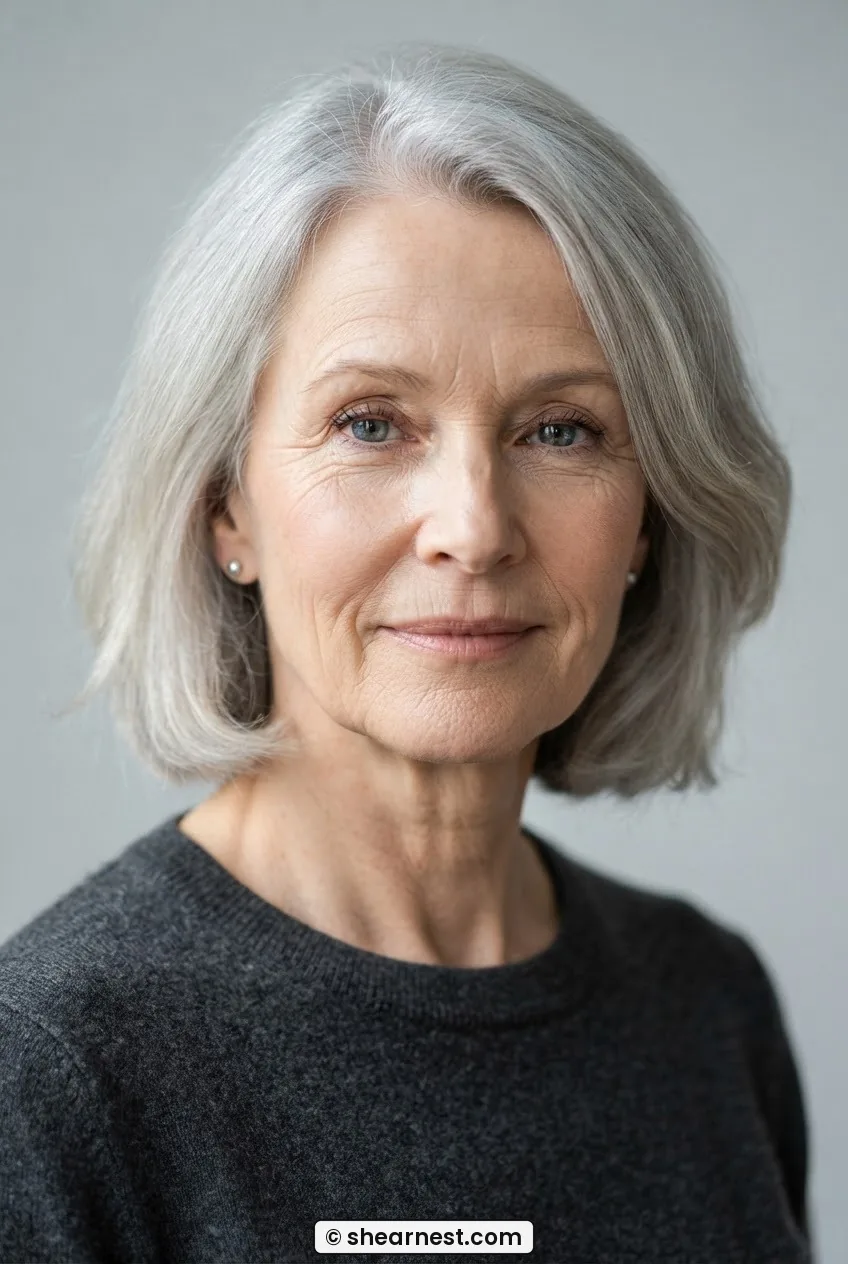
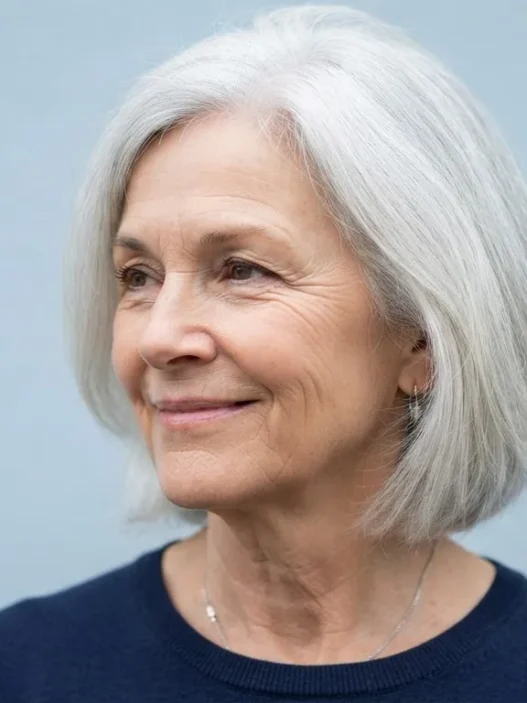
I’ve also changed my mind about grey hair and short cuts. I used to think silver and platinum shades worked better at longer lengths — something about the way the light catches it. Now I think the opposite. Short grey hair, when it’s got the right texture and shape, is among the most striking things I see come out of my chair. The colour itself becomes a design element. Don’t fight it. Use it.
And if you have waves, the whole calculation shifts again. The relationship between curl pattern and short haircut length is its own topic entirely — one that wavy haircuts for women over 50 covers far better than I could fit here.
The Photograph Problem
Every client who comes in with an inspiration photo has encountered the photograph problem, they just don’t know it yet. The photo shows a finished result — a cut on a specific person, lit a specific way, possibly styled for an hour before the shutter went. What the photo doesn’t show is the hair type, the maintenance routine, or what that same cut looks like on day three when nobody’s touched it.
The question I ask now is: “What’s your Monday morning routine?” Not Saturday. Monday. After the weekend, before the week starts, with probably eight minutes and possibly no coffee yet. What can you actually do with this cut on that morning? Because that is the cut’s daily life, not the salon result.
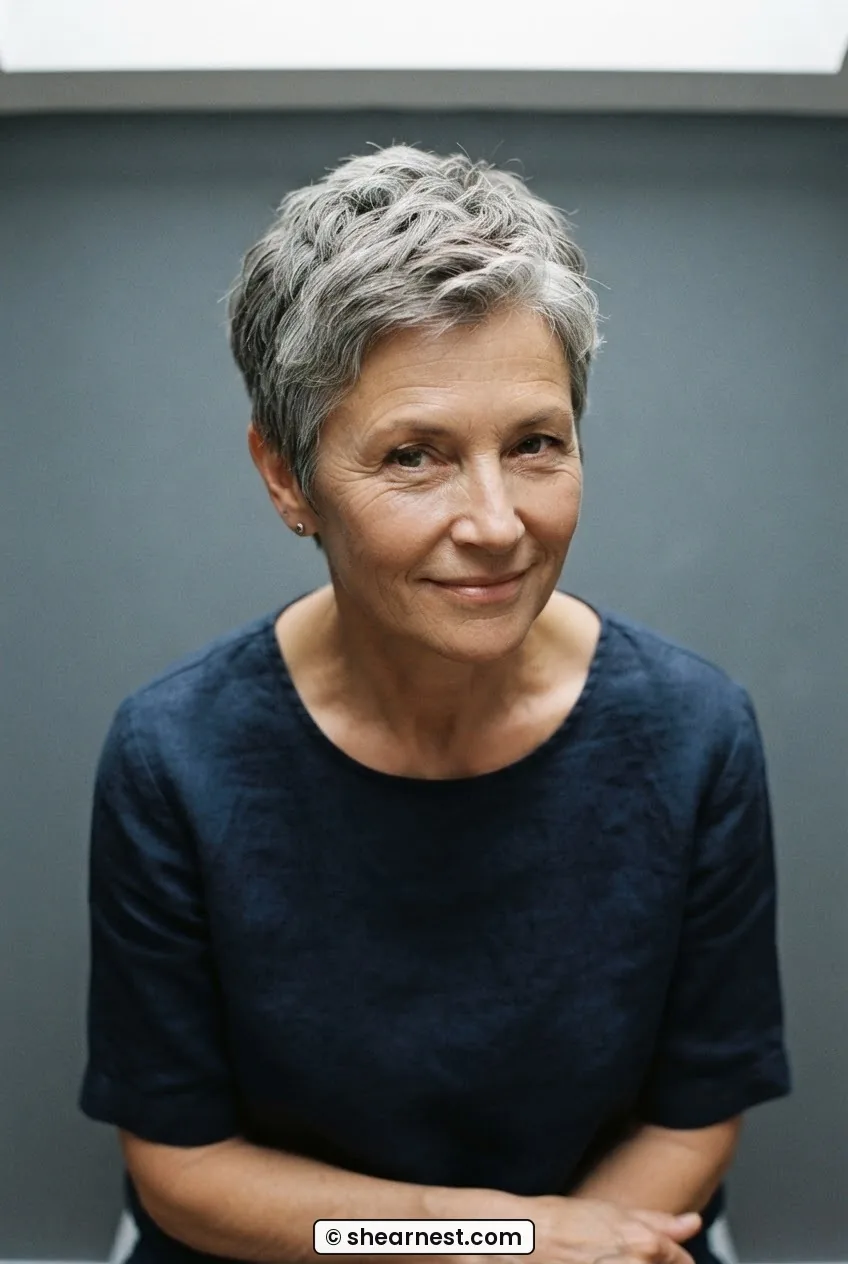
Short hair is often sold as low maintenance. And it can be — genuinely. But some short cuts require more styling effort than a longer style pulled back into a clip. A heavily textured crop needs product to behave. A blunt bob requires a round brush and a dryer to look intentional rather than helmet-ish. A long pixie needs product application that many women have never learned because they’ve worn long hair for decades.
None of that is a reason not to go short. It’s a reason to ask honest questions during the consultation. Styling a pixie without heat is a genuine daily need for many women, and knowing the technique before you commit to the length is a smart move.
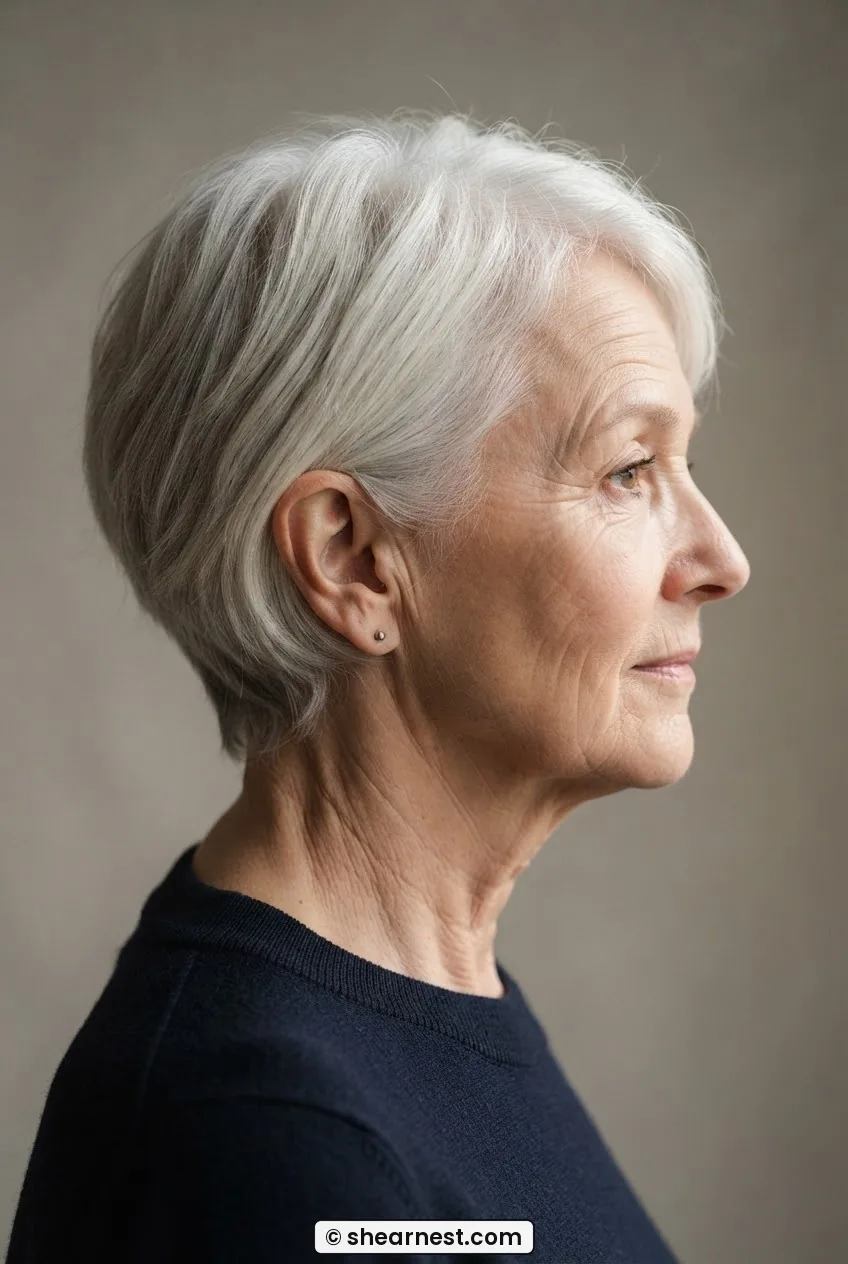
When women come to me with photos of older women in short styles, I look at the hair in the images rather than at the overall impression. See how her weight sits — whether the volume is at the crown or at the sides, whether the neckline is clean, what’s happening with the texture at the temple. That reading tells me far more than the headline impression of the photo. That’s what I try to teach clients to do, too.
And for women considering what happens as they move into the next decade — whether the same principles hold — the piece on hair styles for women over 70 is a genuinely useful read. Because the progression is real, and knowing what’s coming means you can plan a cut that evolves gracefully rather than one you’ll be fighting against in five years.
Questions I Get About This
Does going short actually suit everyone over fifty?
Not every specific cut suits everyone — but short hair as a category suits far more women over fifty than they give themselves credit for. The error is usually in choosing a cut that doesn’t work with their particular texture, density, or face shape, not in going short itself. The fit between cut and person is the variable, not the length.
How often do I really need to go back to the salon?
For a sharp pixie or tapered neckline, every four to five weeks is honest. A longer pixie or textured bob can stretch to six or even eight weeks if the shape is forgiving. The trade-off with short hair is that the maintenance appointments are more frequent than with longer styles — but each one is usually shorter and less expensive. Plan for that rhythm before you commit to the cut.
Will short hair make my face look rounder?
It can — if the cut adds width at the widest point of your face without any height or length to balance it. But a well-designed short cut actually gives you more control over that than a longer style does. Height at the crown, a piece that angles toward the jaw, a side part instead of a centre — small choices with real impact on how the face reads.
Is grey hair harder to cut short than coloured hair?
Grey hair is often more textured and can be coarser in feel, which means the cut behaves slightly differently — it may hold a shape well but can also want to do its own thing at the ends. That’s not a problem, it’s just something a stylist needs to account for. Grey hair cut well is frankly stunning in a short style. The texture works for you rather than against you once you stop fighting it.
Rosemary left with a modified version of her magazine photo — a pixie, but with a longer top section, more weight kept at the sides, and a softer neckline than the original. She came back six weeks later and said it was the first haircut in years that she hadn’t immediately wanted to grow out. That’s the goal. Not a transformation. Just a cut that feels like it belongs to you.