






She came in with a photo of herself at forty-three. Not a magazine cut, not a celebrity — herself, laughing at someone’s wedding, hair falling loose past her shoulders. She wanted that back. I’ve been cutting hair for thirty years and I sat there for a moment before I said anything, because I knew what I was about to tell her wasn’t what she wanted to hear. And I also knew it was the most useful thing I could say.
That conversation is the reason I keep writing about this. Hair for older women over 50 is a genuinely different conversation than it was for them at thirty. Not worse. Different.
The Appointment That Changed How I Think
I had a client — I’ll call her Margaret, though that’s not her name — who came to me every six weeks for years. I gave her the same soft layered bob we’d landed on in her late forties, and she always left happy. Then one day she arrived and said she felt invisible. Same cut, same color, same everything. But something had shifted and the cut wasn’t keeping up.
What changed wasn’t the haircut. It was the face. The jaw had softened slightly. The temples had thinned. The hair itself had changed texture — finer, drier, with a different growth pattern at the crown. The cut that had worked beautifully at forty-eight was fighting against her at fifty-five. And I had kept cutting the same thing on autopilot.
That was the appointment that made me rethink everything I thought I knew about cutting hair for women in this chapter of life. The goal isn’t to recreate an earlier version. The goal is to find what actually works now — with the face you have today, the hair density you have today, the amount of time you actually want to spend in front of a mirror today.
The Photograph Problem
The photo you bring to the salon is almost never the problem. The problem is the age of the photo. I cannot count how many times a woman has handed me an image of herself from ten or fifteen years ago — and I understand the impulse completely. That was a good hair day. That version felt right. But the face in that photo and the face sitting in my chair are different faces now, and a haircut is designed to work with a face.
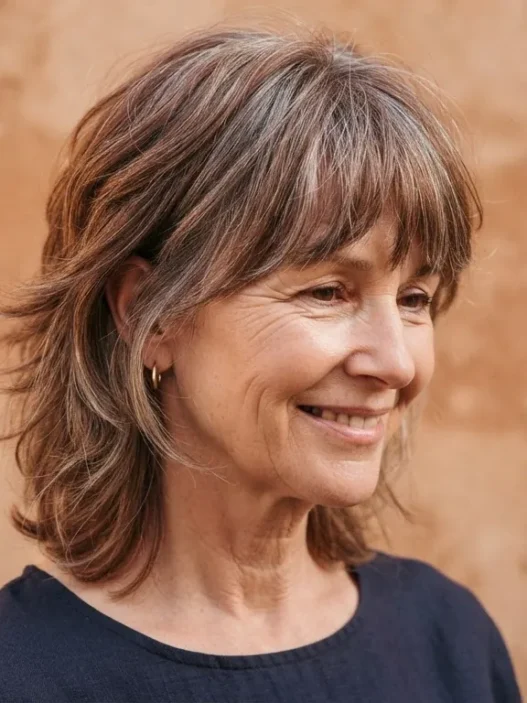
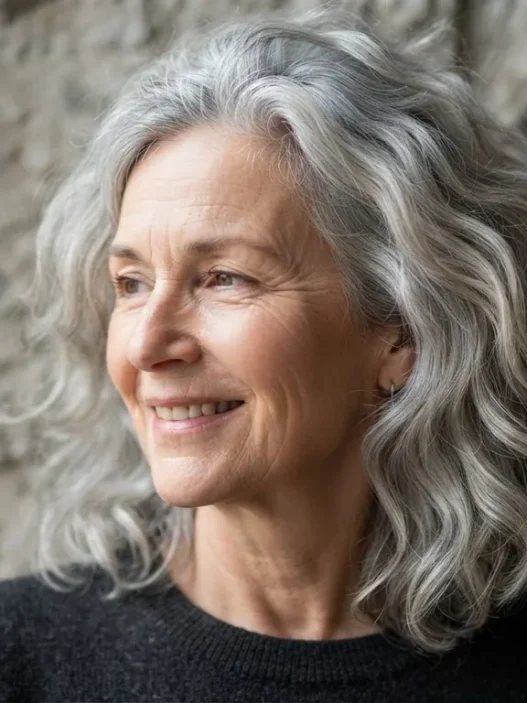
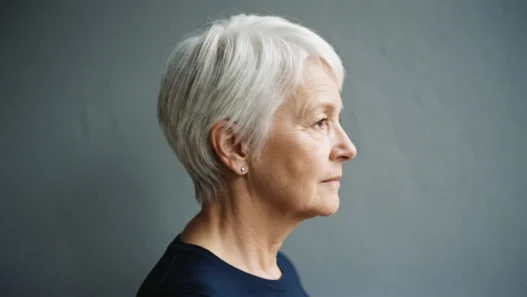
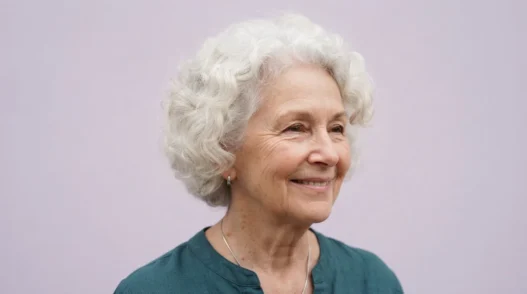
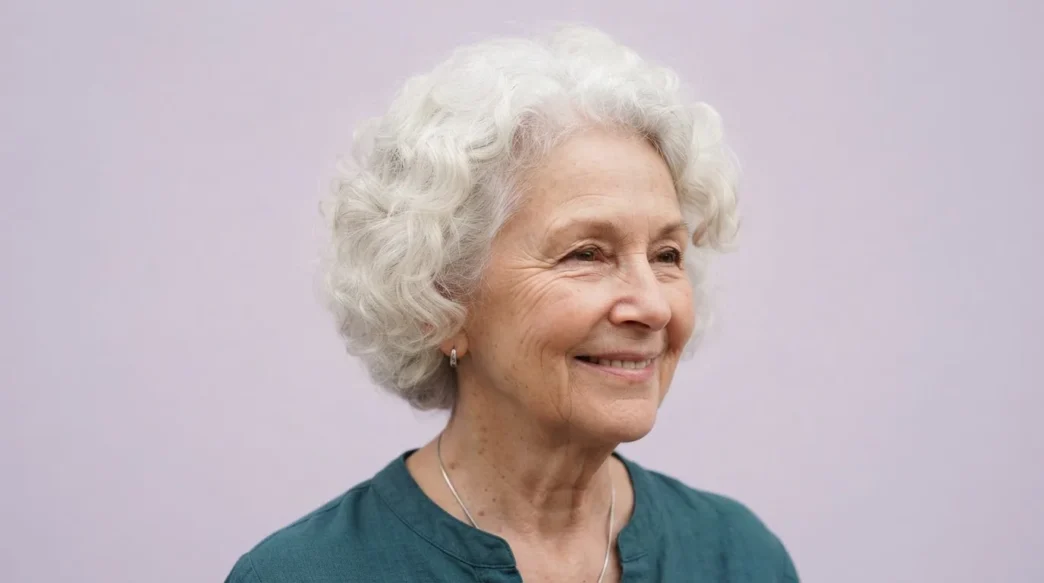
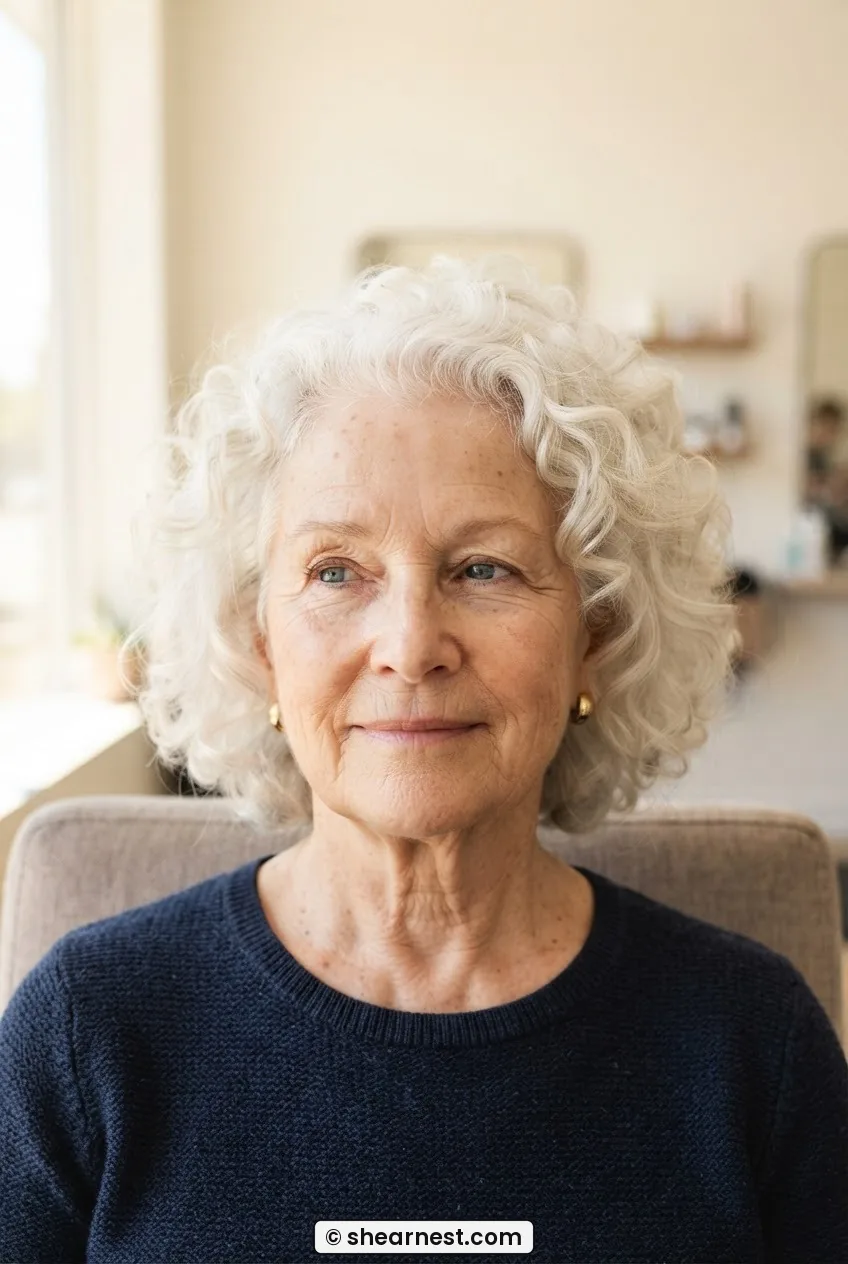
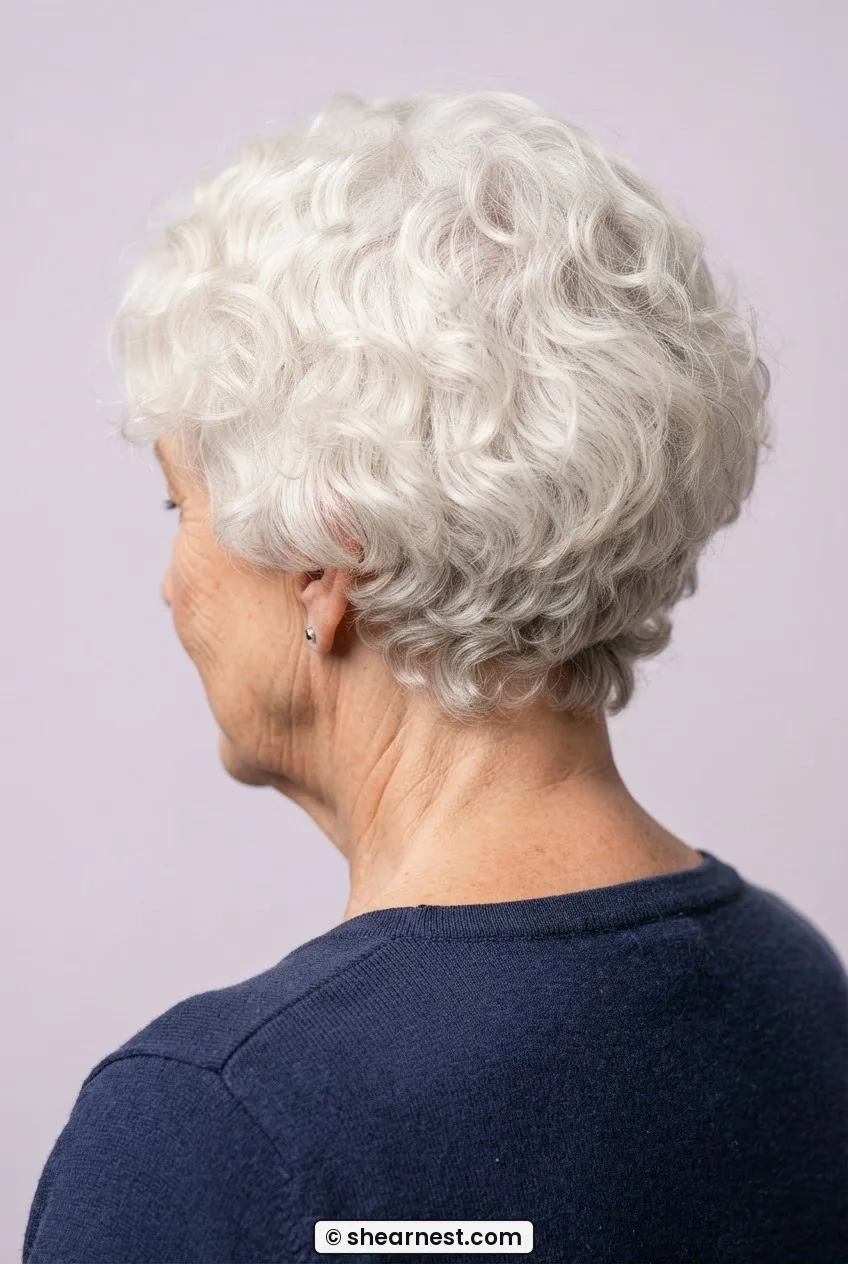
Look at the woman in this image — notice how the soft roundness of her white curls works with the shape of her face rather than against it. That’s not an accident. That silhouette was chosen. The fullness sits where it needs to, and the overall effect is one of ease rather than effort.
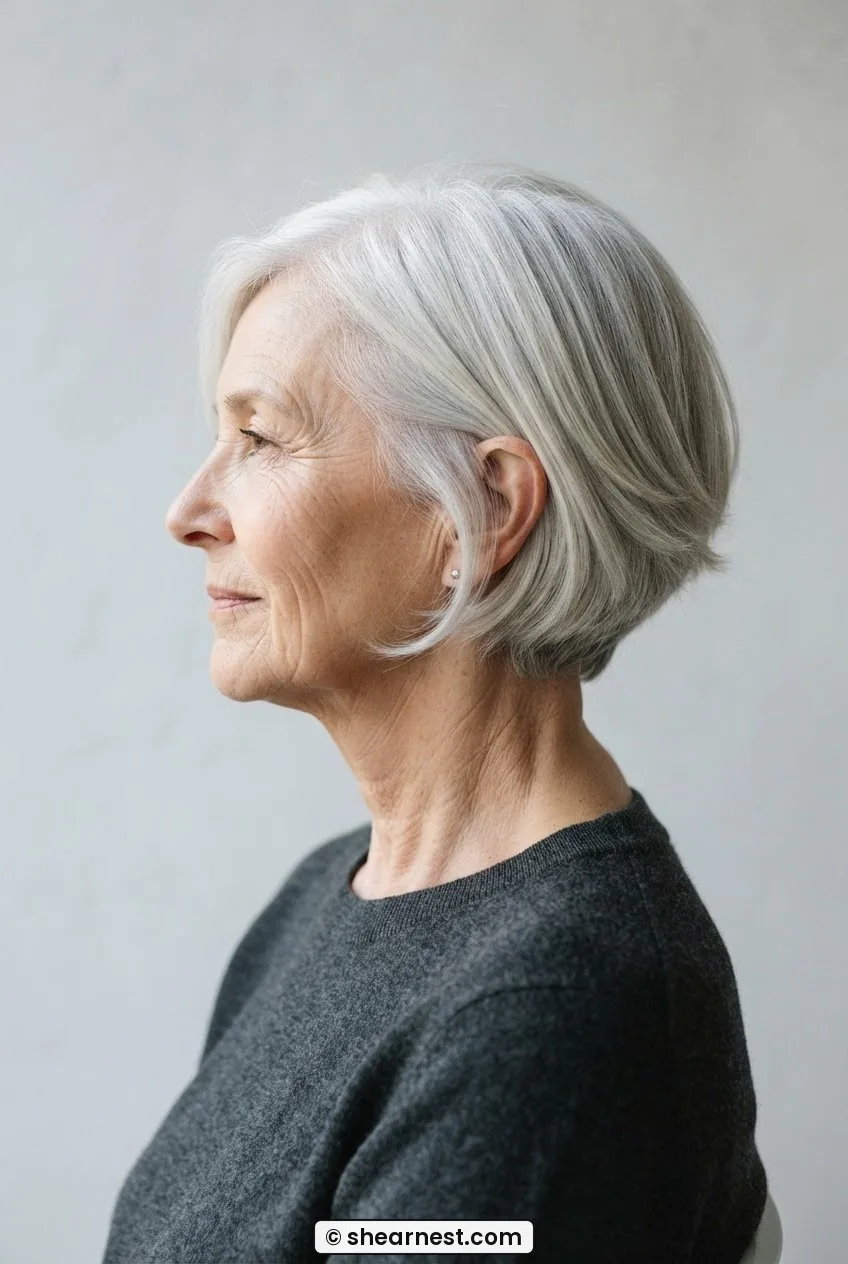
When you bring a photo, bring one of someone roughly your age — or better, someone with your face shape at your age. Pinterest is genuinely useful for this, if you search honestly. Look for images of women who look like they might actually be you, not women who look like a better-lit version of who you were. The most useful consultation photos I’ve ever received have been the ones where a woman says: “This. This is what I mean by easy. I don’t care if my hair looks exactly like hers — I want it to feel like that.”
That’s the right question. How does it feel to wear? Not how does it look in the photo on a twenty-eight-year-old who had a professional blowout before the shoot.
What Actually Changes After 50 (And It’s Not What You Think)
Here’s what I wish stylists would just say plainly: the hair shaft itself changes. It gets drier. The cuticle doesn’t lie as flat. Density decreases — often not dramatically, but enough to notice when you’re holding a section in your fingers. The hairline shifts. Grey and white hair tends to have a coarser texture while simultaneously being more fragile. It wants to do different things. It has opinions.
At the same time, the face changes. The jaw softens. Volume shifts downward. The temples thin in a way that’s very specific — it’s not the same as general thinning, it’s a particular delicacy at the sides. If you want to understand what this means for your specific face shape, I’ve written in more depth about oval face hairstyles for women over 50, because the oval face is often held up as the “easy” case — but it still requires rethinking after fifty.
None of this is catastrophic. But it does mean the cut that worked at forty-two is probably not doing the same job at fifty-four. The most common mistake I see? Women staying with exactly the same cut out of habit, loyalty to their past hair, or fear of getting it wrong. The second most common mistake? Cutting everything off as a reaction, when what was actually needed was a small, specific adjustment.
If you have straight hair that has become finer over time, the considerations are genuinely different from someone with natural curl. I’ve covered both in detail — see my thoughts on straight hair cuts for women over 50 and, separately, on wavy haircuts for women over 50 — because the structural approach is different for each. Not harder or easier. Just different.
Why the Perimeter Matters More Than You’ve Been Told
This is the thing I wish I had understood earlier in my career, and the thing most women have never been told: after fifty, the perimeter of the cut — the outermost edge, the shape — matters more than what’s happening in the interior layers.
Why? Because as density decreases, the interior becomes less relevant to the overall shape. It’s the silhouette — what you see from across the room — that creates the impression. A haircut with a beautiful, deliberate perimeter will look polished even on thinner hair. A haircut that relies on masses of interior layering to create volume? It loses its effect almost immediately when the hair changes.
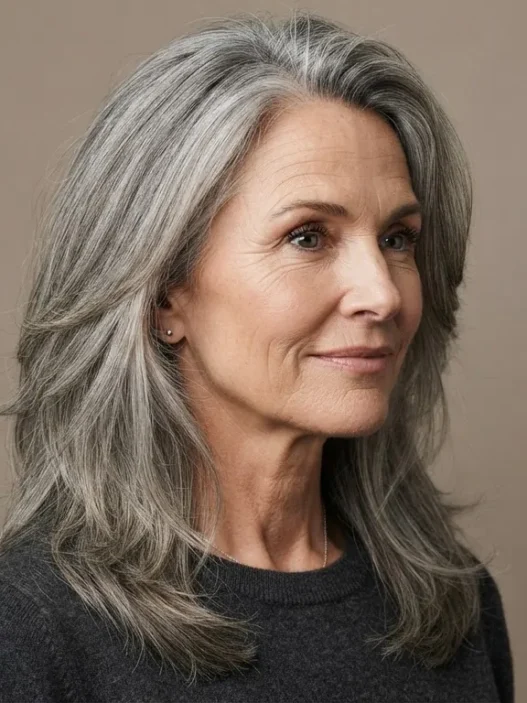
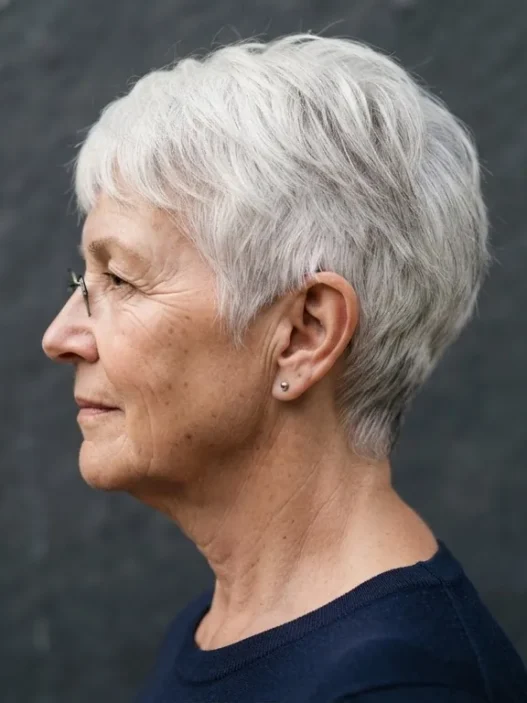
Look at her again in this photo — see the way the shape holds its roundness from crown to nape? There’s a cleanness to the silhouette. That’s not product. That’s a well-considered perimeter. Whether you wear your hair short, medium, or long, ask your stylist specifically about the perimeter shape. Not just “can you add some layers” — ask what shape the outside of the cut will hold between appointments. That’s the question that actually matters.
For women dealing specifically with fine or thinning hair, the perimeter question becomes even more critical. The instinct is often to add volume through layers, but aggressive layering on fine hair can actually reduce the appearance of density by removing the weight that holds the shape. I’ve written about this in more detail for anyone navigating a haircut for fine hair over 50 — and the section on perimeter weight is the one I always point people to first.
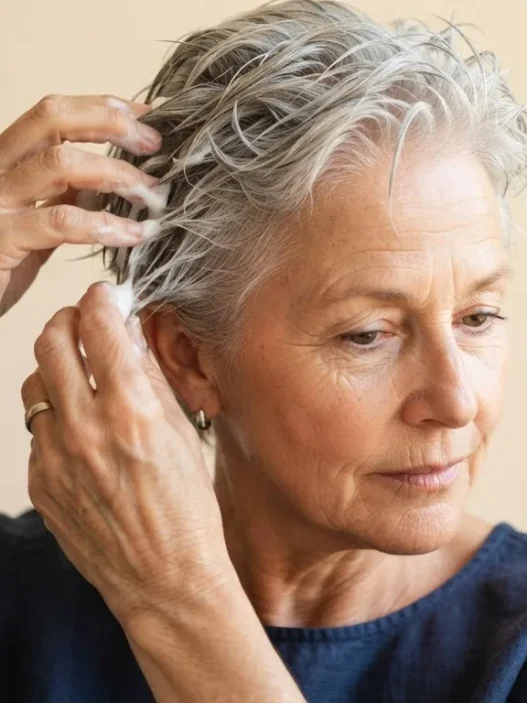
A Stylist Shows the Perimeter Difference Live
What I Changed My Mind About
I used to tell women to go shorter as they got older. Not dramatically, not cruelly — but I had this quiet assumption that shorter was more manageable, more modern, more appropriate. I was wrong, and I want to say that clearly.
Appropriate for what, exactly? The idea that women’s hair should get progressively shorter as they age is a convention, not a rule, and it’s one I’ve seen make women feel erased rather than refreshed. I have clients in their sixties and seventies with longer hair that is genuinely beautiful — not beautiful “for their age,” just beautiful. The relevant question is whether the length suits the texture, the density, and the lifestyle — not whether it suits a number.
The relevant question is never “is this too young for me?” It’s “does this work with my actual hair, today?”
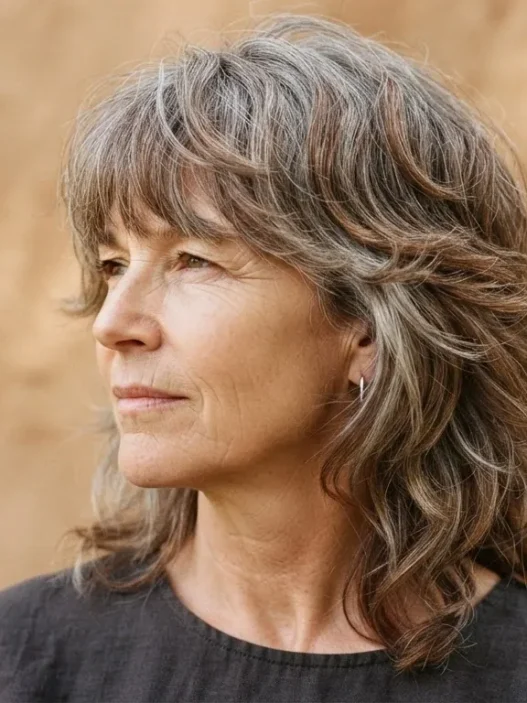
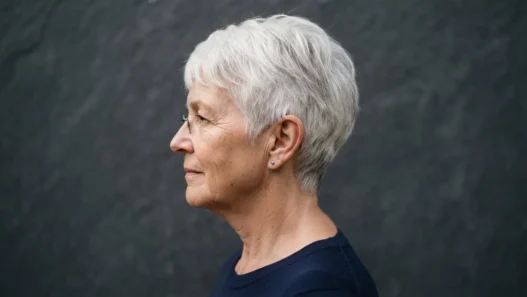
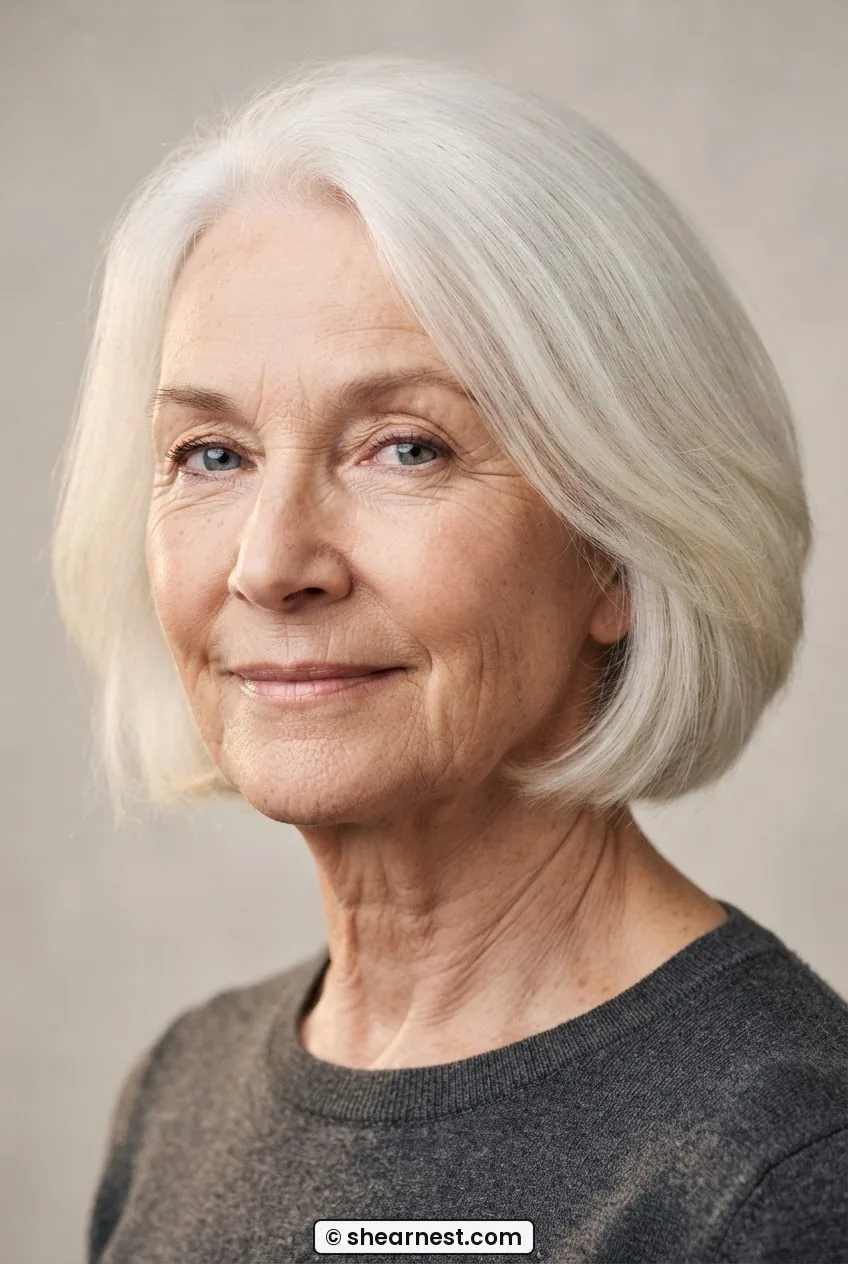
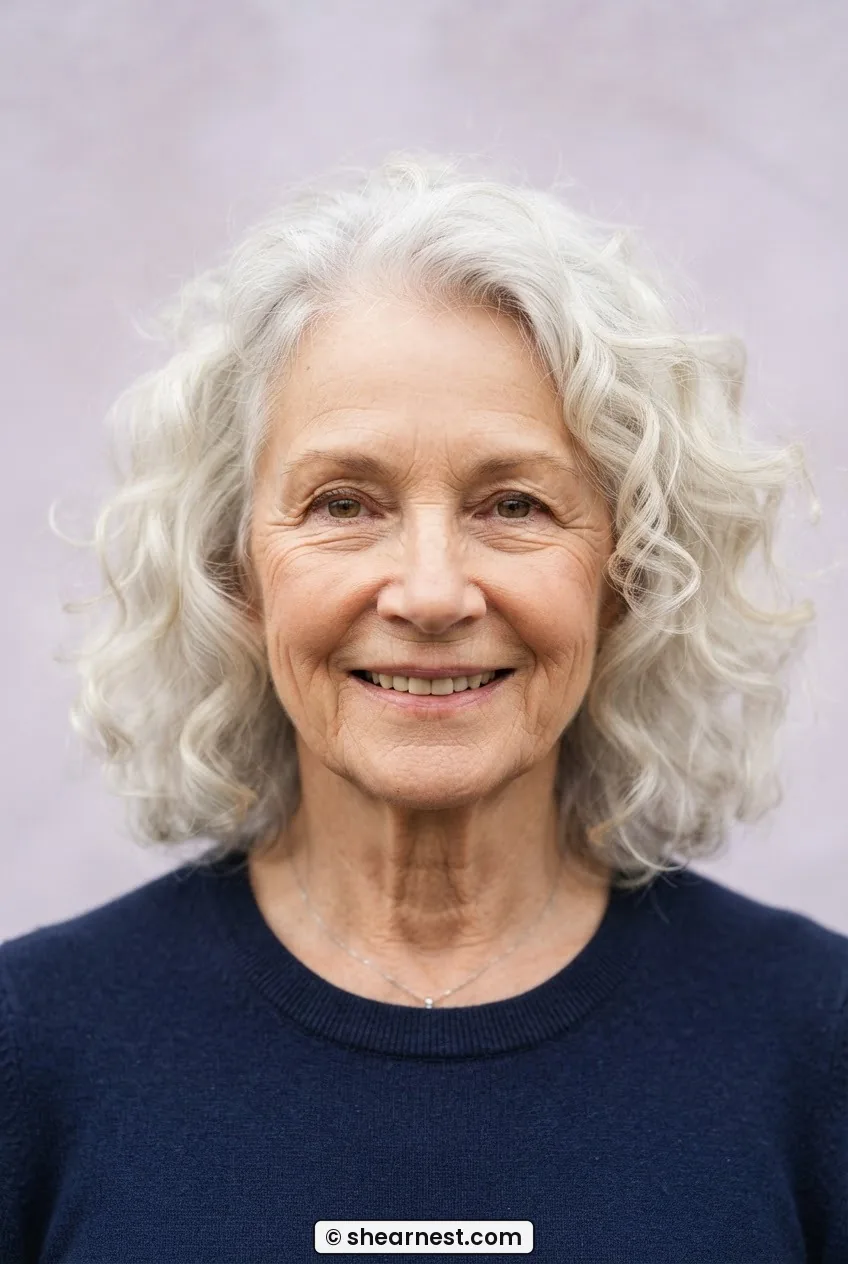
I also changed my mind about grey. I spent years helping women cover it, and I still do that when that’s what they want. But I’ve watched enough women make the transition — some gracefully, some with enormous frustration — to know that the reason matters. If you’re covering grey because you love your color and it makes you feel like yourself, that’s a completely valid choice. If you’re covering it because you’re afraid of looking old, I’d gently push back. White and silver hair, when it’s cut well and the texture is looked after, can be extraordinary. The woman in these photos is a good example of what I mean — look at how that soft white carries light.
There’s also a conversation worth having about hair over seventy specifically, because it’s treated as a subset of “older women’s hair” when it actually has its own distinct considerations. I’ve written separately about hair styles for women over 70, and if that’s your stage, the piece on texture management in that post is worth reading on its own.
The caring for grey hair texture conversation is one that doesn’t get nearly enough airtime at the salon — most stylists focus on the cut and the color and skip the bit about how white and grey hair behaves differently in humidity, in dry weather, and with heat. Understanding that your hair’s chemistry has changed isn’t vanity. It’s maintenance, the same way your skin routine shifted after fifty.
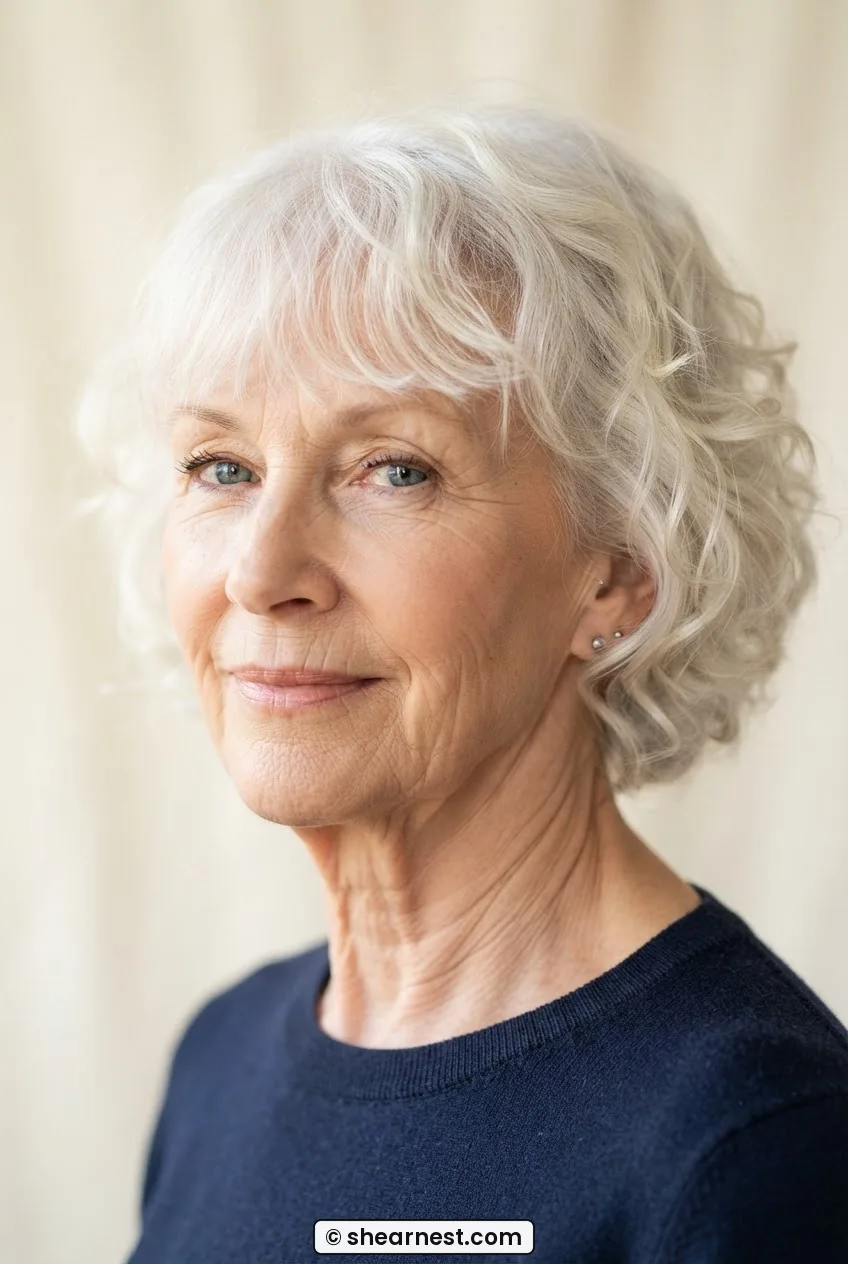
And one more thing I changed my mind about: bangs. I used to be fairly conservative about recommending them on women over fifty, mostly out of a vague anxiety about them looking “too much.” Now I think a soft fringe on fine hair can actually be one of the most flattering choices in this decade — specifically a wispy, face-framing fringe that doesn’t demand military precision to maintain. The key is making sure your hair has enough density at the front hairline to support it, and that the rest of the cut is working with it rather than independently of it.
Questions I Get About This
My hair is much thinner than it used to be — does that limit my options?
Less than you’d think. Thinning hair benefits from a really considered perimeter cut and, sometimes, slightly more weight left at the ends than you might expect. The mistake is going very short to “make it look fuller” — often that just exposes the scalp at the crown more. A chin-length or collarbone-length cut with a clean edge can look incredibly full on fine hair if the shape is right. Ask your stylist about cutting techniques for volume specifically — some stylists are much more experienced with this than others.
How do I describe what I want without bringing in the wrong photo?
Talk about how you want your hair to feel and behave rather than how it looks in a photo. “I want something I can shake out and go” is more useful than a picture of a runway blowout. “I want the shape to last three weeks without me having to do much” tells me more than “I want this.” Then let your stylist translate that into a cut that works with your actual hair. The more honest you are about your real routine, the better the result.
Should I go shorter as I get into my sixties and seventies?
No, not automatically. Shorter might genuinely suit you better, and if it does, go for it. But shorter because of some unspoken rule about age? I’ve long since let that go. The right length is the one that works with your density, your texture, your lifestyle, and your face shape — in that order. Age doesn’t come into it.
Is it ever too late to start wearing my hair differently?
No. I’ve had clients in their mid-seventies try something genuinely new — a different length, a different texture approach, embracing their natural curl pattern for the first time — and find that it was the right call years earlier and they just hadn’t tried it. Hair grows. Cuts change. And honestly, the women who come in willing to have a real conversation about what might work tend to leave with the best results, regardless of age.
If any of this resonates, I hope it gives you something useful to take into your next appointment. Not a specific cut — just a better set of questions. That’s usually where the good results start.