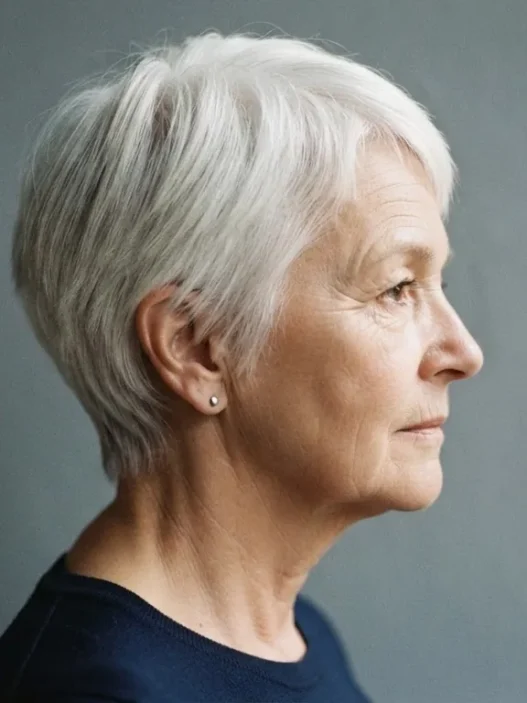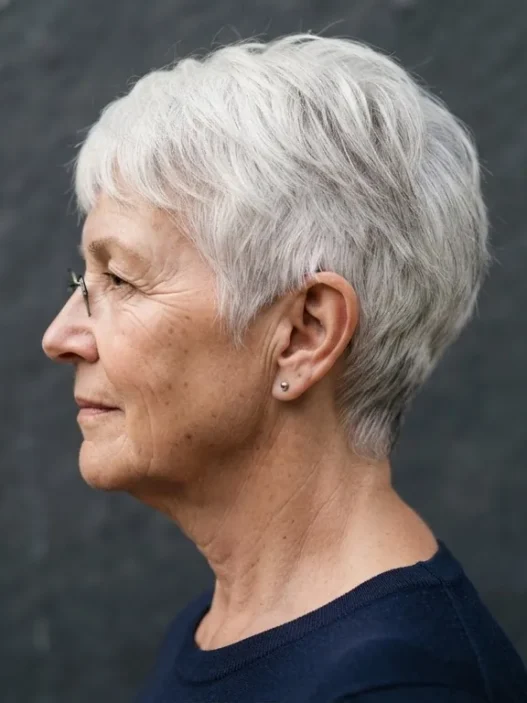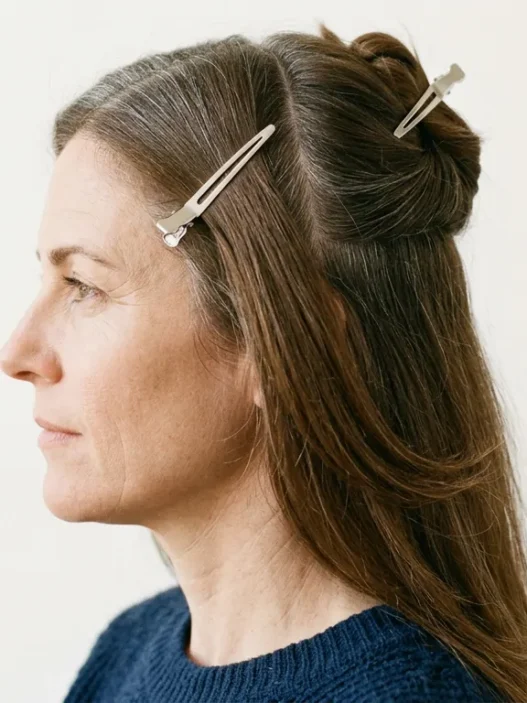








Fine hair and volume are a lifelong negotiation, and somewhere around 50 or 60 the negotiation gets a little more urgent. The strands thin. The scalp shows faster. The cut you’ve had for twenty years suddenly stops doing its job. I’ve spent a lot of time standing behind women in the salon chair watching what actually works — and more importantly, what the cutting decisions look like underneath all the styling product. So this list is about construction: where the weight sits, where the graduation goes, and what you actually say to get it.
What’s In This Post — Jump to Your Cut
- 1. The Blunt Bob That Stacks at the Nape
- 2. The Graduated Lob That Lifts at the Crown
- 3. The Layered Pixie With Weight at the Top
- 4. The Soft Shag With Disconnected Layers
- 5. The Beveled Bob That Swings
- 6. The Textured Crop With a Heavy Fringe
- 7. The Round-Layered Mid-Length
- 8. The Invisible-Layer Cut for Fine Silver Hair
- 9. The Feathered Lob With Face-Framing Graduation
1. The Blunt Bob That Stacks at the Nape
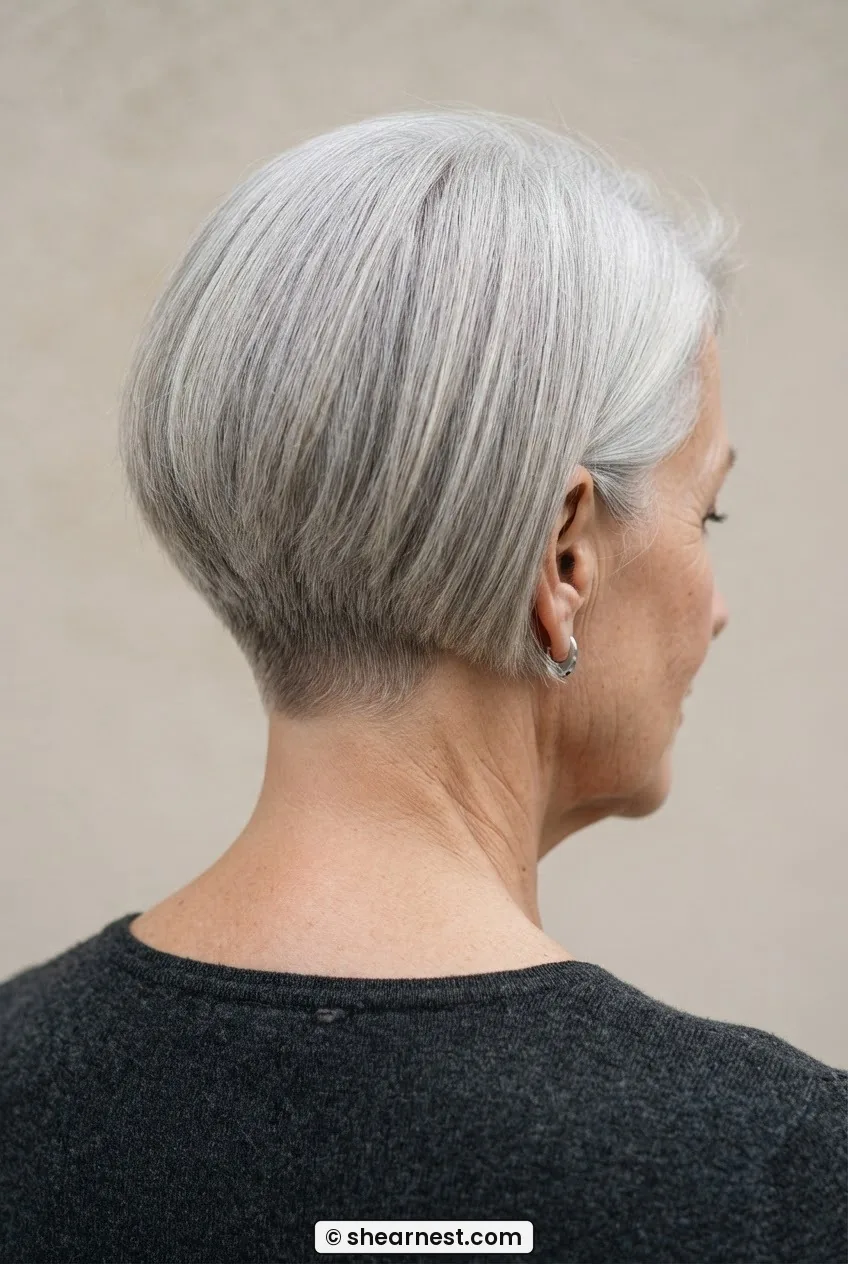
This is the one I keep coming back to. The perimeter is cut blunt — one clean line sitting just below the jaw — but all the volume work happens at the back: a stacked graduation from the nape that builds density and pushes the hair outward and upward from the occipital bone. The sides stay heavy. No layers on the surface, which means fine strands have something solid to cling to.
It suits anyone whose hair has lost diameter but still has reasonable length elasticity. Upkeep is every six weeks — that blunt line dulls fast and the stack collapses without regular shaping. What to say: “Stacked nape graduation, blunt perimeter at the jaw, no surface layers.”
2. The Graduated Lob That Lifts at the Crown
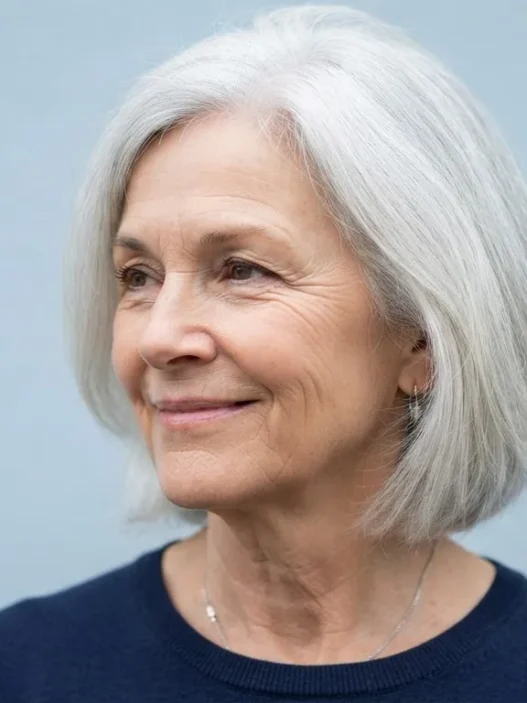
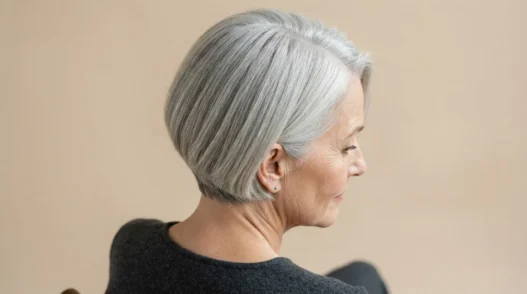
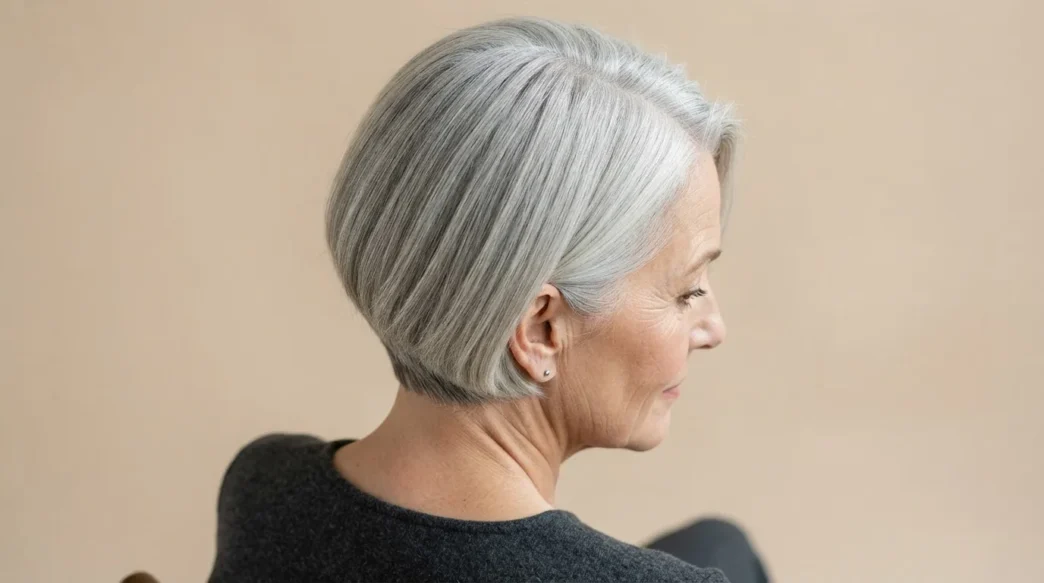
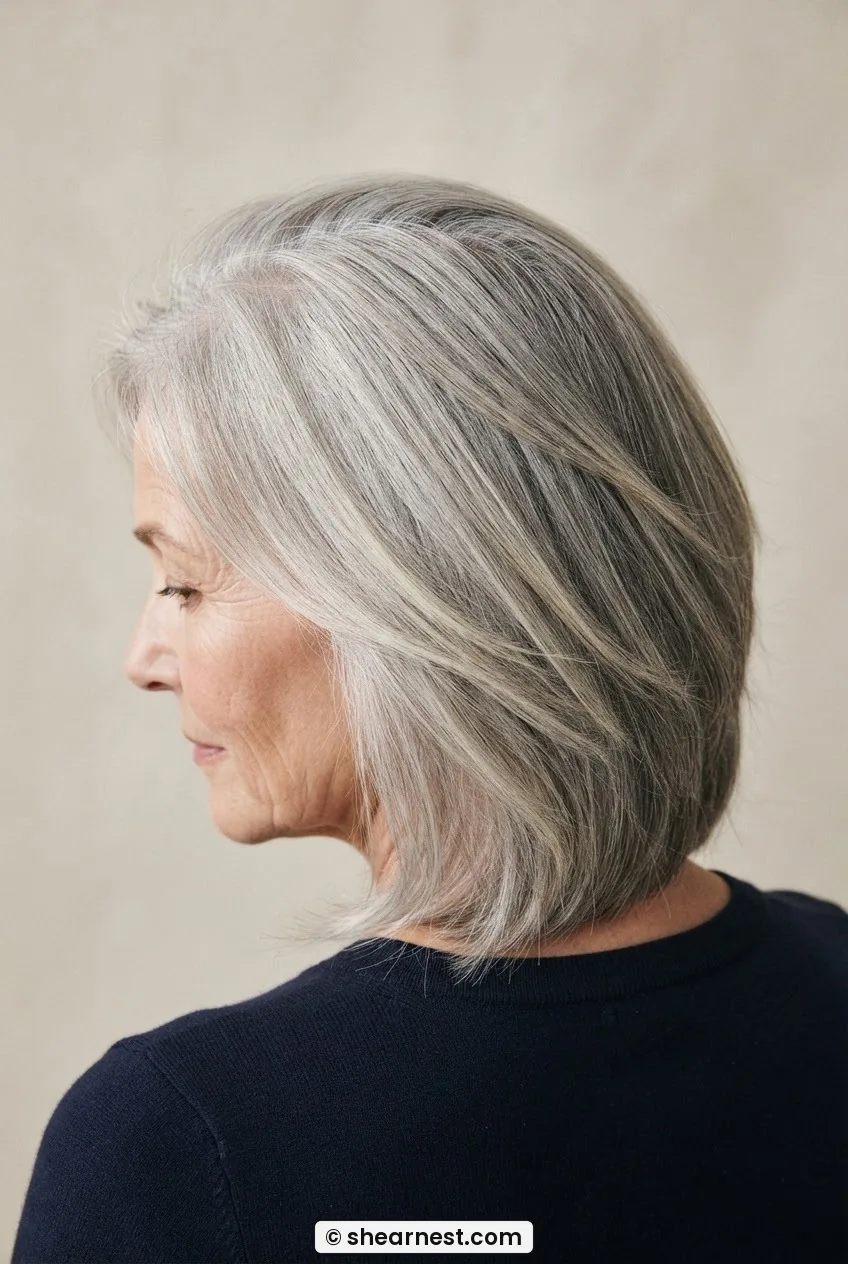
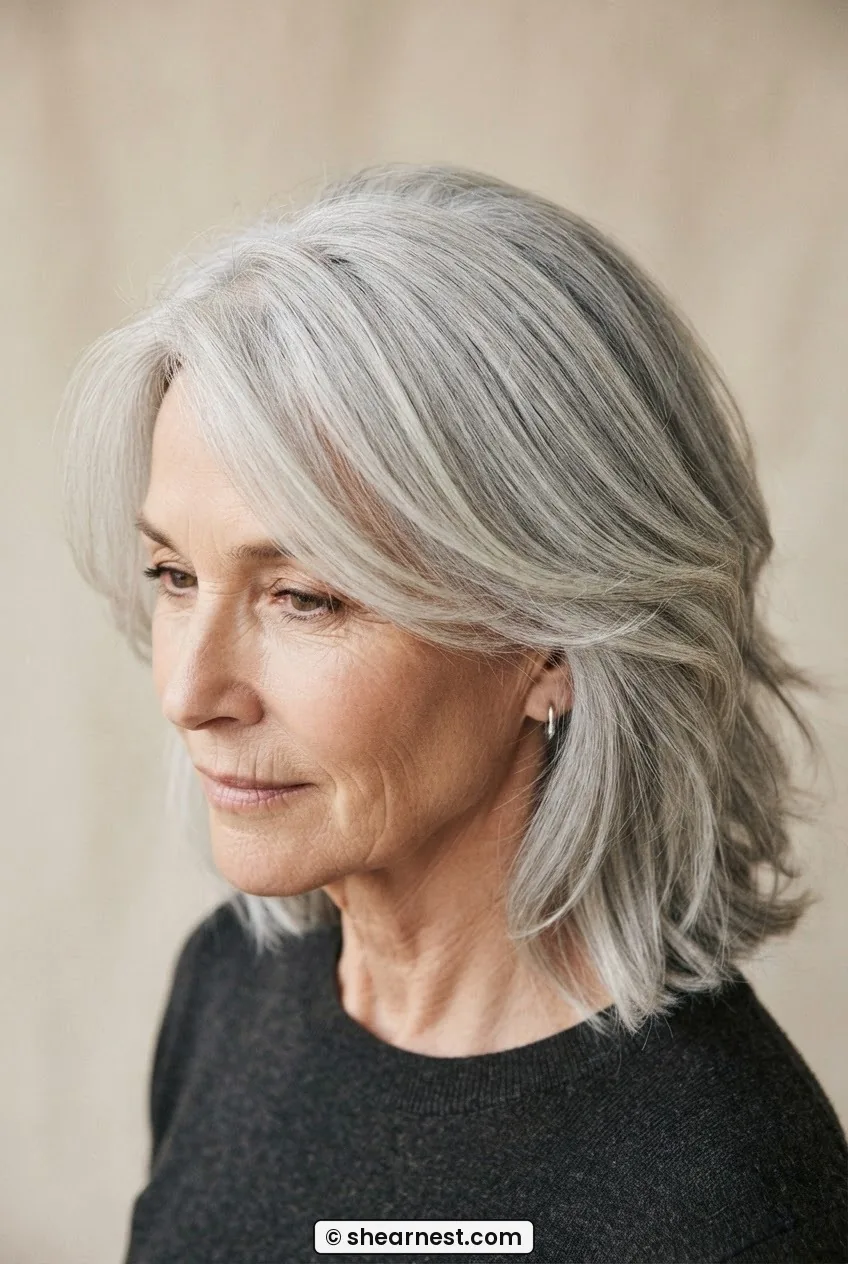
Longer than the bob — hitting anywhere from the collarbone to mid-neck — but the graduation here runs from the nape up through the back of the crown section. Your stylist cuts the under-layers shorter so they push the top layers up rather than dragging them down. It’s a subtle interior architecture that photographs beautifully. Look at how she’s wearing hers in the image — see where the hair is sitting away from her head at the back? That’s the graduation doing exactly what it should.
Best for women who want length but are losing density at the crown specifically. Upkeep every eight weeks is workable. At the chair: “Interior graduation through the back crown, longer through the front, no razoring on fine hair.”
3. The Layered Pixie With Weight at the Top
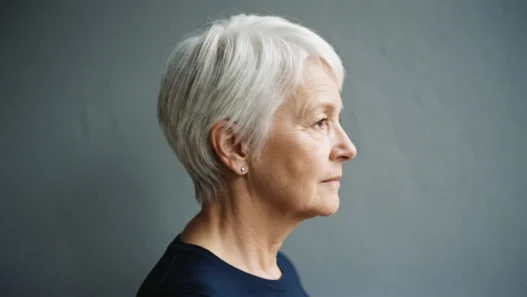
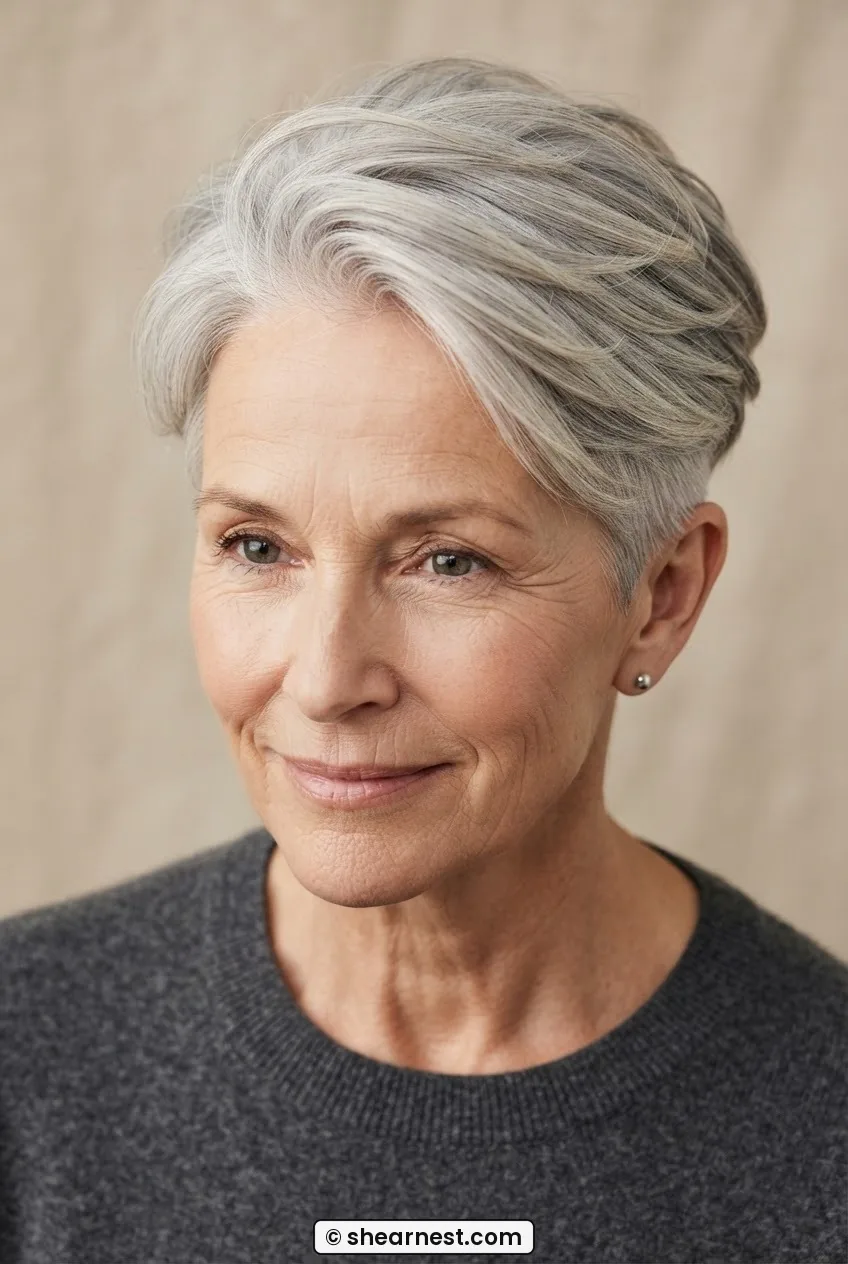
Not all pixies are created equal for fine hair. The version that adds volume keeps the top section longer — two to three inches — with soft layers cut into it that fall back on themselves rather than flopping forward. The sides and nape are kept close. All the mass sits on the top of the head, which is exactly where you want it when the crown is thinning.
I think this is honestly one of the most flattering approaches for women over 60 whose hair has genuinely thinned. You can read more about how the best haircuts for fine hair over 50 manage this balance between weight and movement. Upkeep is high — every five to six weeks. Say: “Long pixie, weight kept at the top section, layers that fall back not forward, close at the nape.”
4. The Soft Shag With Disconnected Layers
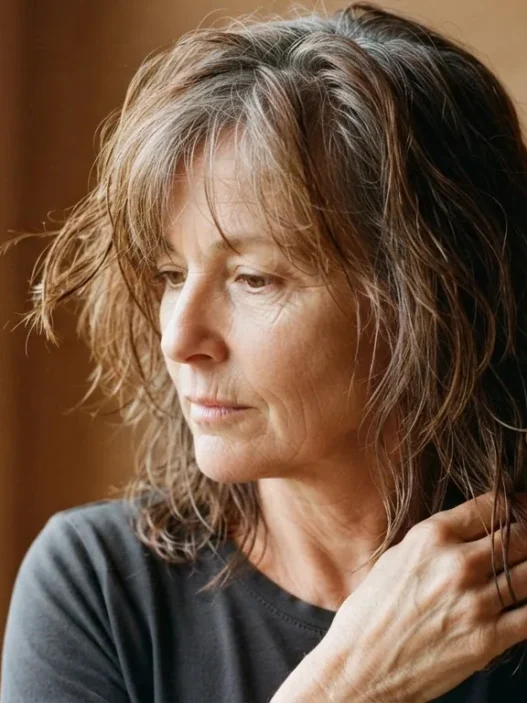
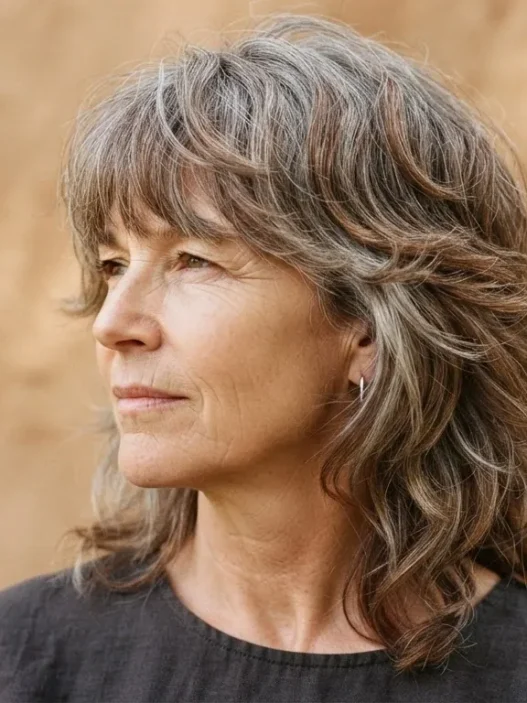
The shag divides opinion, and honestly I get it. Done wrong on fine hair it just looks stringy. But a soft shag with disconnected layers — meaning the layers aren’t blended into each other but cut at distinct lengths — creates actual air pockets in the hair that read as volume. The shortest layers sit at the crown, medium through the mid-section, and the perimeter is left longer with minimal graduation.
This works on women with more than one texture in their hair — common as silver grows in alongside finer strands. The disconnect catches the different textures and makes them look intentional. Upkeep around eight weeks. At the chair: “Soft shag with disconnected layers, shortest at the crown, no razor, point-cut ends only.”
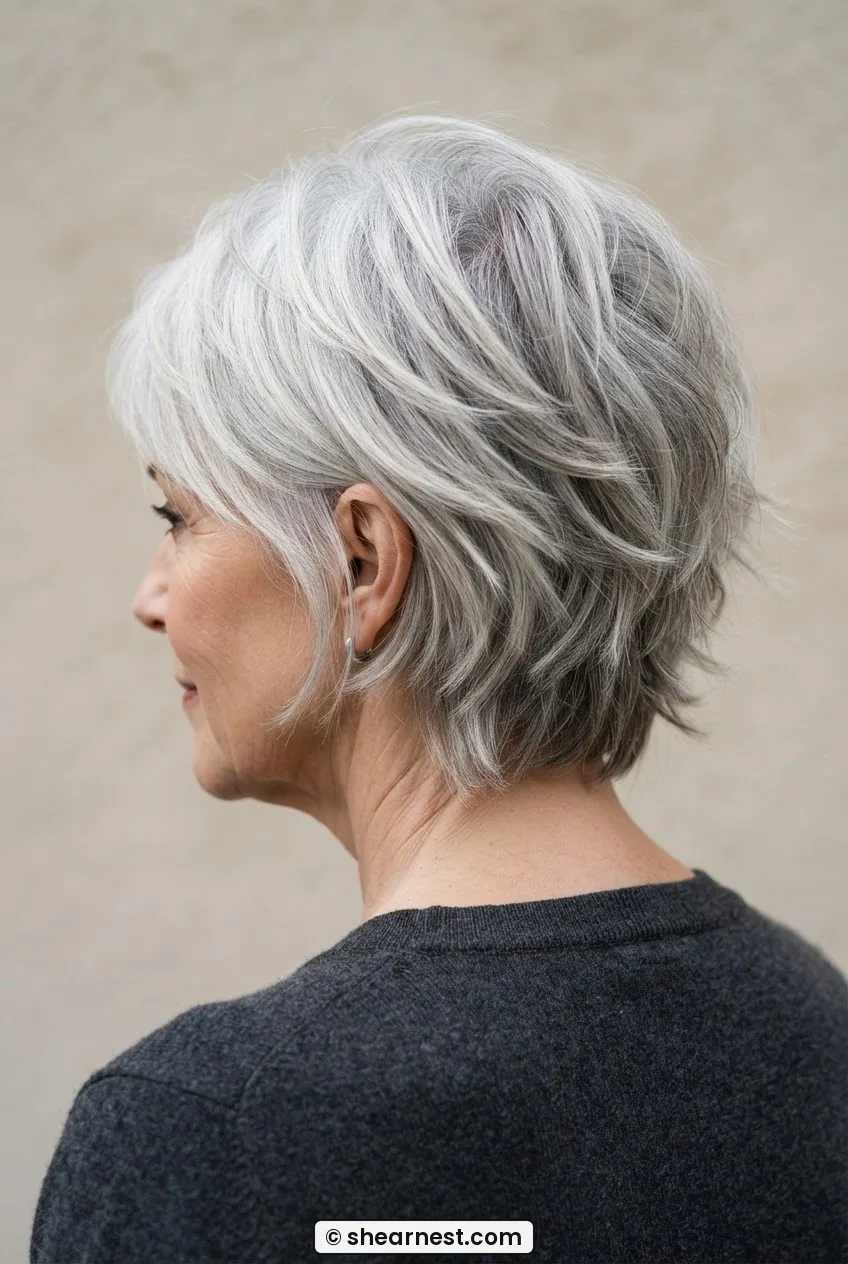
My personal pick is the disconnected shag on women with mixed silver-and-pepper hair. The contrast of textures actually does half the volumizing work before you’ve touched a diffuser. I’ve seen it transform flat, resistant hair into something genuinely interesting — and it gets better between appointments rather than worse.
5. The Beveled Bob That Swings
Think of the beveled bob as the blunt bob’s more animated cousin. The perimeter is still one clean line but the cut angles slightly under at the ends — a small bevel that causes the hair to curve inward and then flick. That curved movement creates the optical illusion of thickness because the ends are always moving slightly away from the head.
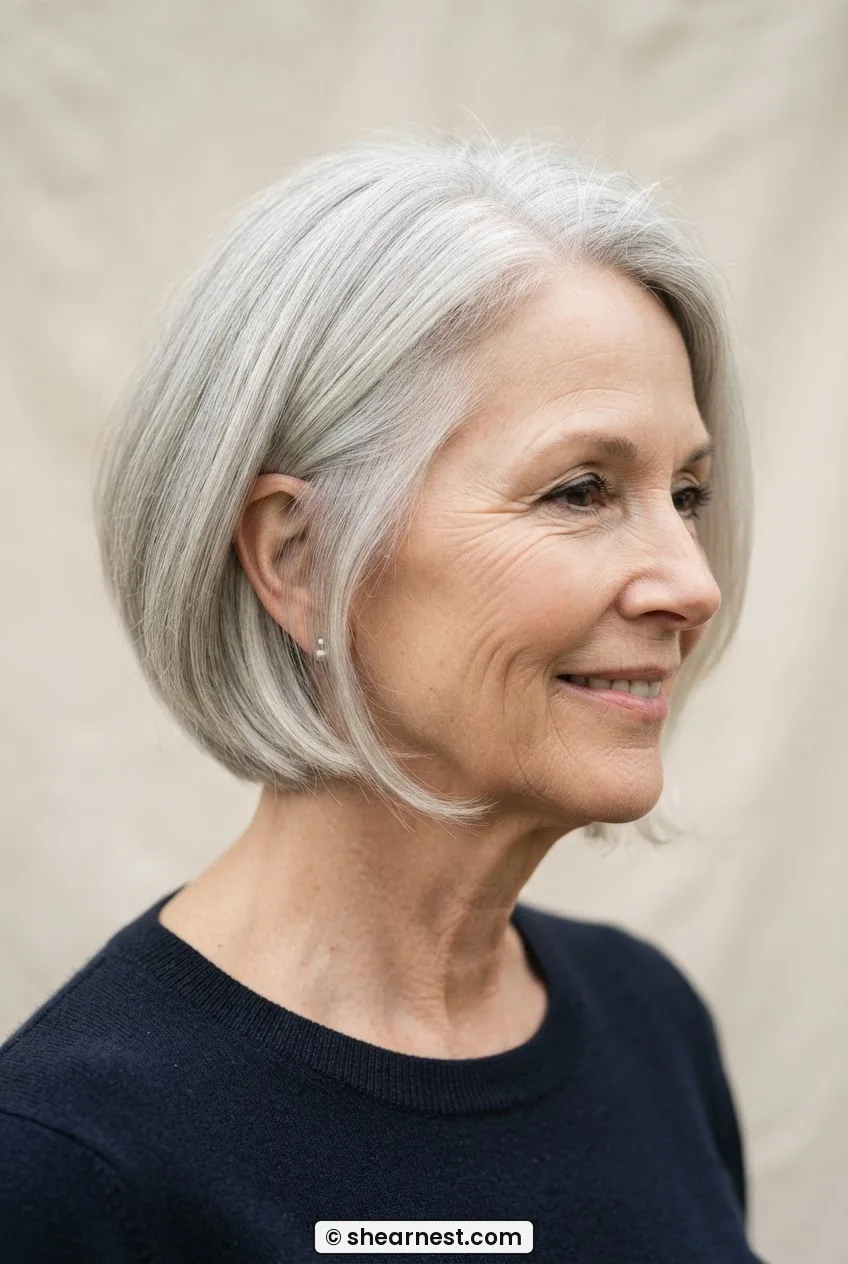
She’s got a similar face shape to someone I styled last spring, and honestly this cut looked incredible on her. The swing you get from the bevel adds liveliness that flat, fine hair desperately needs. Best for straight or slightly wavy hair — it works against curl. Say: “Beveled undercut at the perimeter, chin to jaw length, no layers through the top section.” Six to seven week upkeep.
6. The Textured Crop With a Heavy Fringe
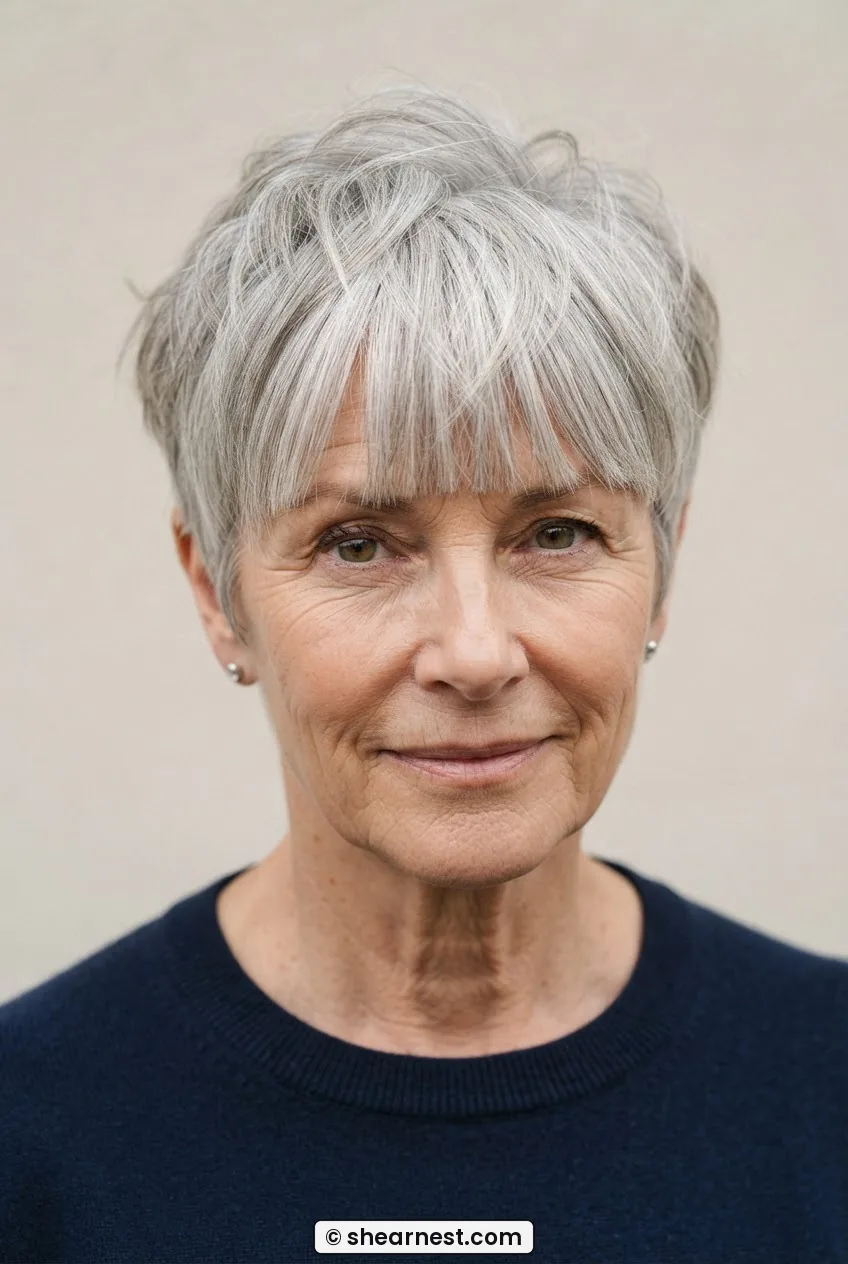
Short. Decisive. Very good at its job. The body of the crop is texturized through the crown using point cutting — so the hair sits away from the scalp rather than lying flat — and a heavy, blunt fringe is cut across the forehead at brow level. The fringe does two things: it creates a visual anchor that makes the rest of the cut look more intentional, and it draws attention to the eyes rather than the hairline, which many women find useful as the temporal areas thin.
Low styling effort once you’re past the first blowout. The fringe needs trimming every four weeks — the rest can go seven or eight. What to say: “Textured crop, point-cut through the crown, blunt fringe at the brow, no graduation at the sides.”
7. The Round-Layered Mid-Length
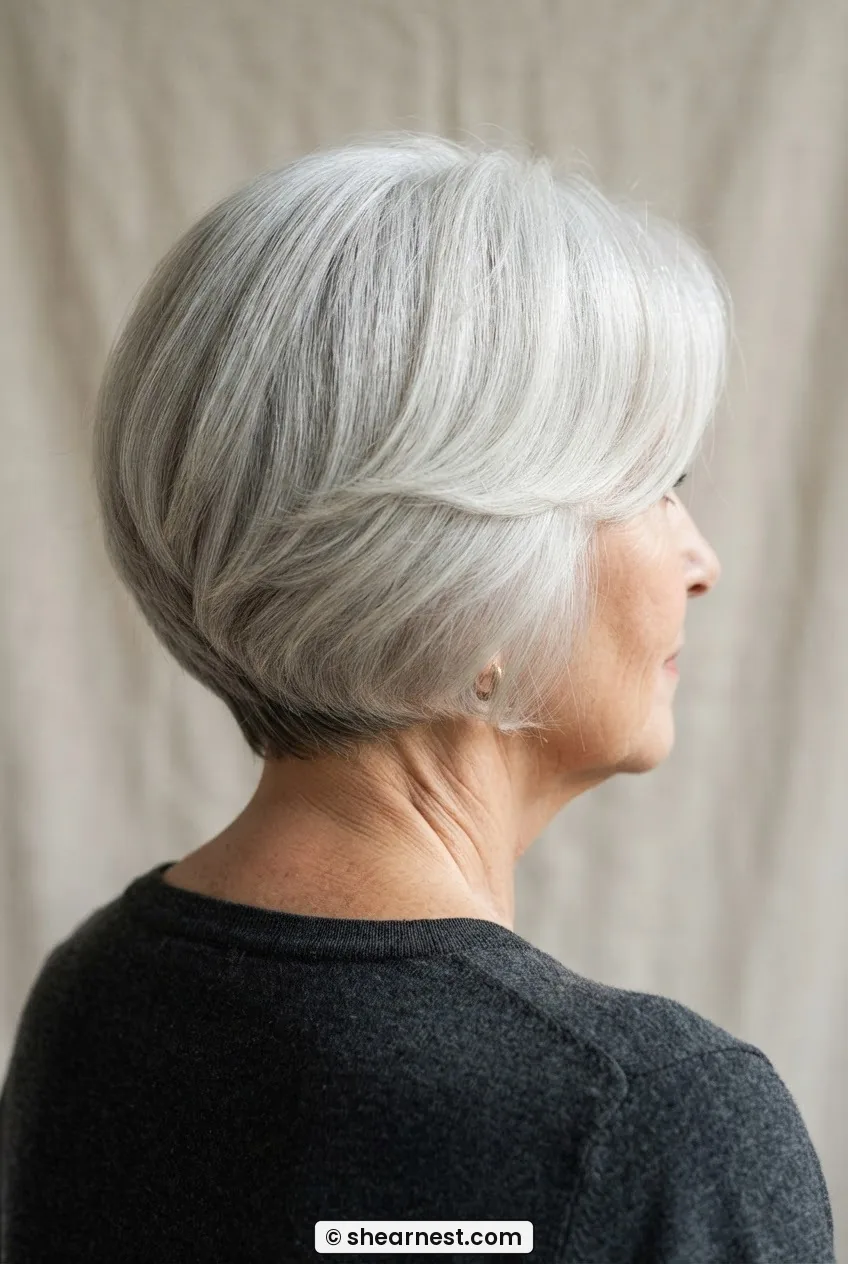
Round layering — where the layers are cut in a curved shape rather than in flat horizontal sections — creates a dome of volume that sits above the ear and through the crown. The hair on the surface looks uniformly long but the under-structure is all shorter layers pushing up from beneath. It’s the haircut equivalent of underfloor heating: you can’t see the mechanism but you definitely feel the warmth.
This is the cut I’d recommend for women who have good density but whose hair has lost elasticity and just hangs. The round shape breathes movement back in. It also works well for wavy hair over 50 where natural texture can amplify the round shape without much product. Upkeep every eight to ten weeks. At the chair: “Round layering through the crown and sides, perimeter kept at collarbone, no blunt lines.”
8. The Invisible-Layer Cut for Fine Silver Hair
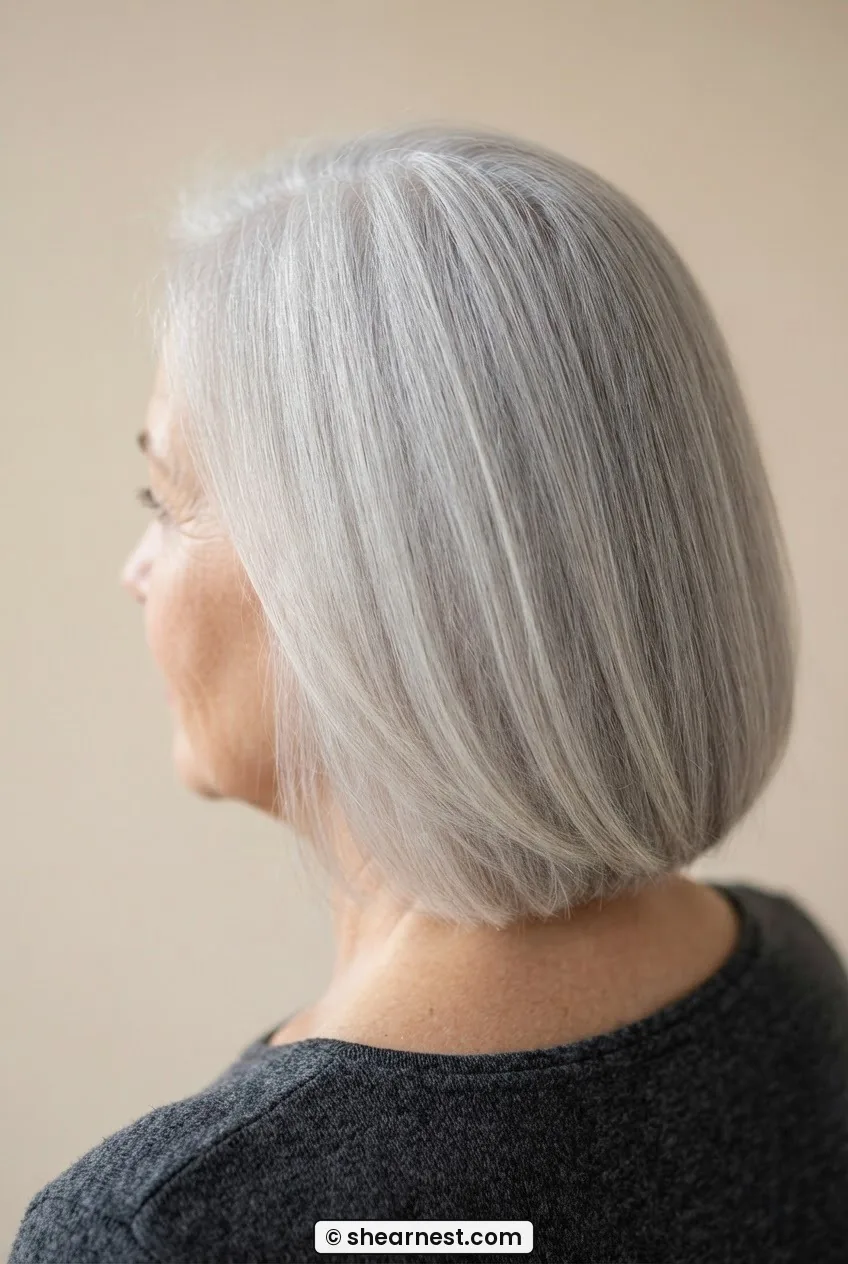
This one is specifically for very fine silver hair — the kind that’s translucent in direct light and shows the scalp clearly at the part. The technique involves cutting invisible or micro-layers: extremely subtle graduation through the internal sections, with no visible layering on the surface at all. The perimeter looks one length. But from inside, there’s enough graduated structure to allow the hair to sit away from the scalp rather than gluing itself flat.
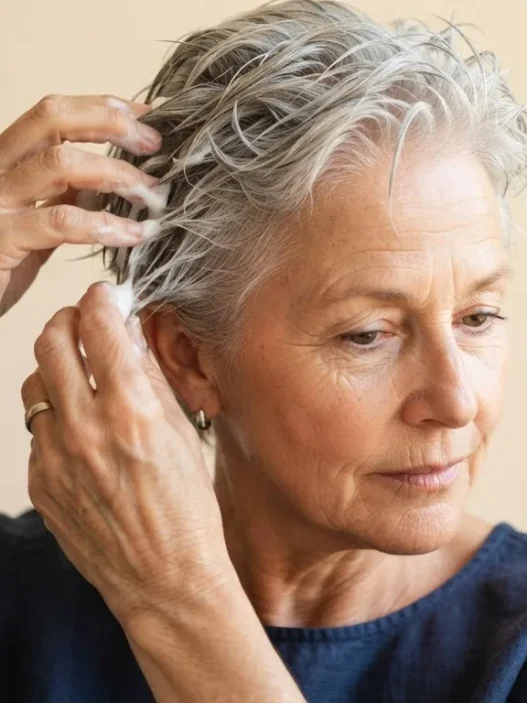
The right volumizing techniques between cuts — root lifting sprays, the right diffuser technique, blow-drying upside-down — do compound the effect significantly. But the micro-layer foundation is what makes those techniques stick. Without the cut, the product just weighs the hair down. This is also the approach covered in detail over at haircut options for fine hair over 50, if you want a deeper read. Say to your stylist: “Micro or invisible layering through the interior, one-length appearance on the surface, no texture at the ends.” Upkeep every ten to twelve weeks.
A Stylist Explains the Micro-Layer Technique
9. The Feathered Lob With Face-Framing Graduation
The feathered lob sits at the collarbone and has layers cut into the front sections that graduate shorter as they move toward the face — so the shortest pieces land around the cheekbone. This frames the face while simultaneously pulling the eye upward and outward, which is flattering when the jawline has softened. The layers are feathered (not blunt) so they move easily.
This length works brilliantly on oval and long face shapes — if that’s you, the post on oval face hairstyles for women over 50 goes much deeper on why. The back is kept fuller with minimal layering to balance the face-framing graduation at the front. This is the length I’m talking about in the image — see how it hits just at her collarbone and the face-framing pieces add that lift around the cheeks? Upkeep every eight weeks. At the chair: “Feathered lob, face-framing graduation to the cheekbone, fuller through the back, no razor.”
Quick Answers
Does short hair always look better on fine hair over 60?
Not necessarily. Short hair can actually reveal a sparse scalp more obviously if the cut isn’t constructed correctly. What matters more is where the weight is placed and how the graduation is designed — a well-built mid-length can outperform a badly executed pixie every time.
Should I avoid layers altogether if my hair is very fine?
Avoid heavy, over-blended layers — they strip weight from hair that has none to spare. But interior or micro-layering is different: it builds structure from within without removing surface density. The key word when talking to your stylist is internal.
Can silver or grey hair hold volume the same way pigmented hair does?
Grey and silver hair tends to be coarser in texture than pigmented fine hair, which is actually helpful — it can grip product and hold a blowout better. The challenge is that it’s often drier and more porous, so it needs a lightweight conditioner to stay manageable without losing lift. Think moisture-light, not moisture-heavy.
How does volume hair change as you get into your 70s?
The cutting priorities remain similar but the upkeep tolerance often changes — many women want longer gaps between appointments. The post on hair styles for women over 70 covers how the approach shifts when you’re managing scalp visibility and texture changes together.
Volume hair for older women really comes down to one thing: what does the cut do when there’s nothing in it? Product can only build on a good foundation, and that foundation is entirely about where the graduation lives and how the weight is distributed. Take this list to your next appointment and start a proper conversation about construction rather than just pointing at a photo. Your stylist will love you for it — and your hair might actually do what you’ve always wanted it to do.