










I’ve stopped judging my hair at 9am. Fresh from the dryer, everything looks hopeful. The truth shows up around 4pm, when my very fine strands have decided what they actually think of the cut.
And I have very fine hair. Not just thin, but baby-fine, slips-out-of-a-bobby-pin fine. If you’re in the same club, you know there’s a huge difference between cut volume and styled volume. One is built in. The other rinses out.
So I started paying attention to where the lift was actually coming from. Was it cut into the roots? Was it an illusion from a strong perimeter? Or was it 100% blow-dryer and hope? These 9 cuts are sorted exactly that way.
All photographed on real women in their late 50s and 60s, all ash grey or silver like mine. No teasing, no extensions, just what holds.
What Survives Until 4pm? My 9-Cut Lineup
- 1. Clipped Pixie With a Razored Crown
- 2. Tapered Pixie-Bob With Short Nape
- 3. Blunt Micro-Bob With Internal Layers
- 4. Chin Bob With a Stacked Back
- 5. French Bob With a Full Perimeter
- 6. Collarbone Lob With Blunt Ends
- 7. Side-Part Crop That Lives on Blow-Drying
- 8. Airy Shag That Needs Diffusing
- 9. Long Pixie That Only Works Styled
LIFT CUT INTO THE ROOT: The first three cuts cheat in the best way. The volume isn’t sprayed on, it’s cut in with graduation, tapering, and short layers that push each other up. On my hair type, this is the only kind that still looks awake at 4pm without a refresh.
1. Clipped Pixie With a Razored Crown — Lift Cut Into the Root
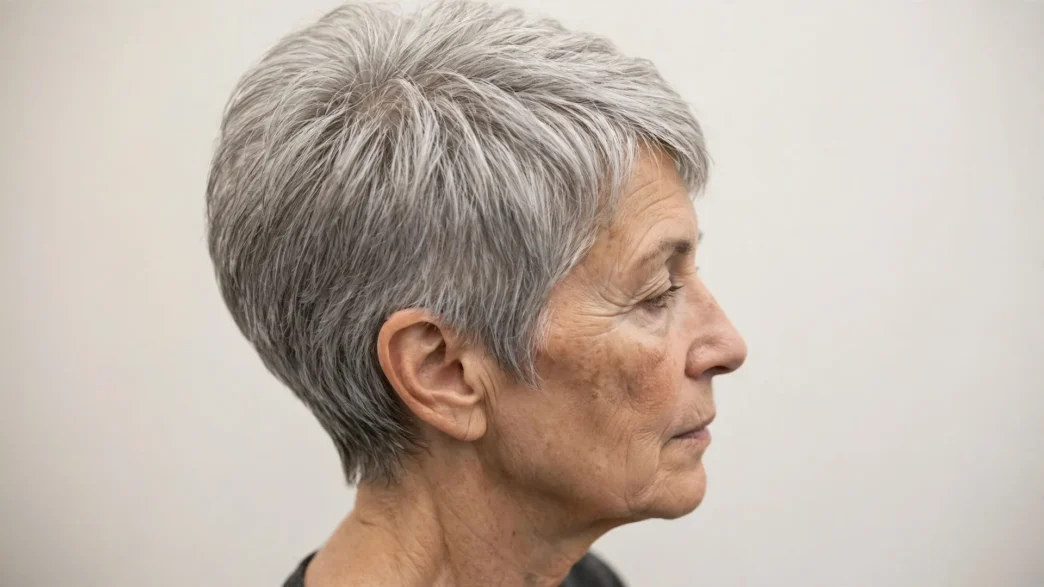
This is my everyday haircut, so I’m biased. But honestly? It’s the most honest haircut for very fine hair I own. My stylist keeps the crown at about two inches, razored underneath so the top pieces literally stand off each other. No bulk, just lift.
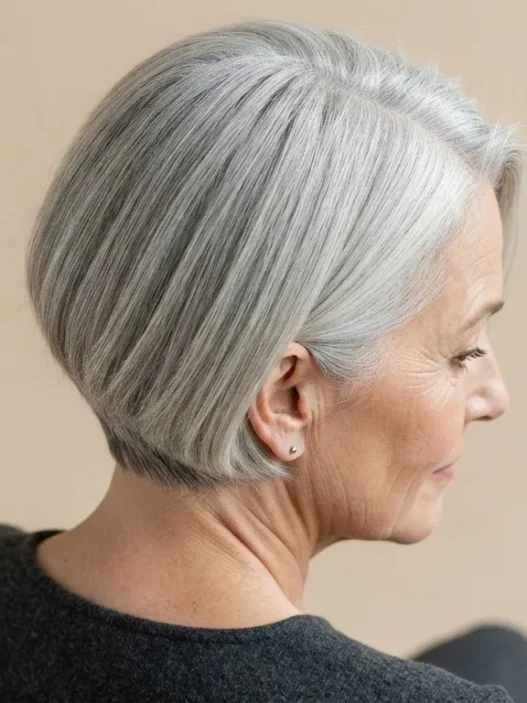
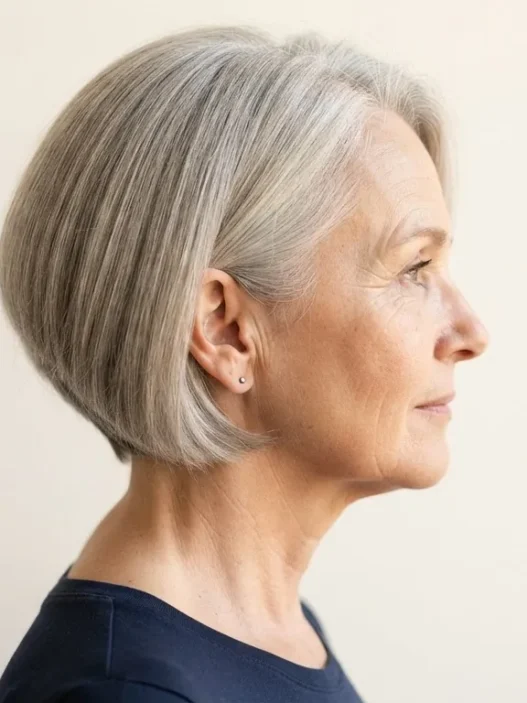
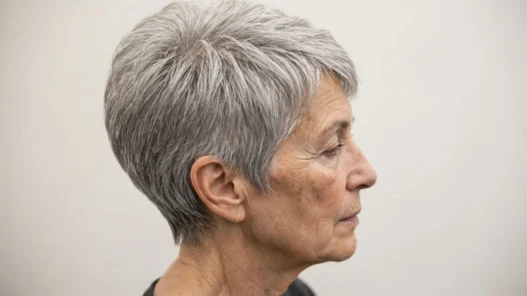
Look at how she’s wearing hers in this side view — see that little kick right at the crown? That’s not backcombing. That’s short hair pushing up longer hair. I love that angle because it holds even after I wear sunglasses on my head, which usually kills everything.
At 4pm, this still looks like a style. Flatter, sure. But not sad. I can ruffle it with dry fingers and it pops back. I learned to ask for point-cutting through the top instead of blunt chopping, after reading about how pixie layers create lift in the chair while she worked, and it made a huge difference for regrowth too.
If you hate styling, start here. It air-dries decently, it takes about three minutes with a dryer, and it doesn’t separate into strings by lunch like longer fine cuts do.
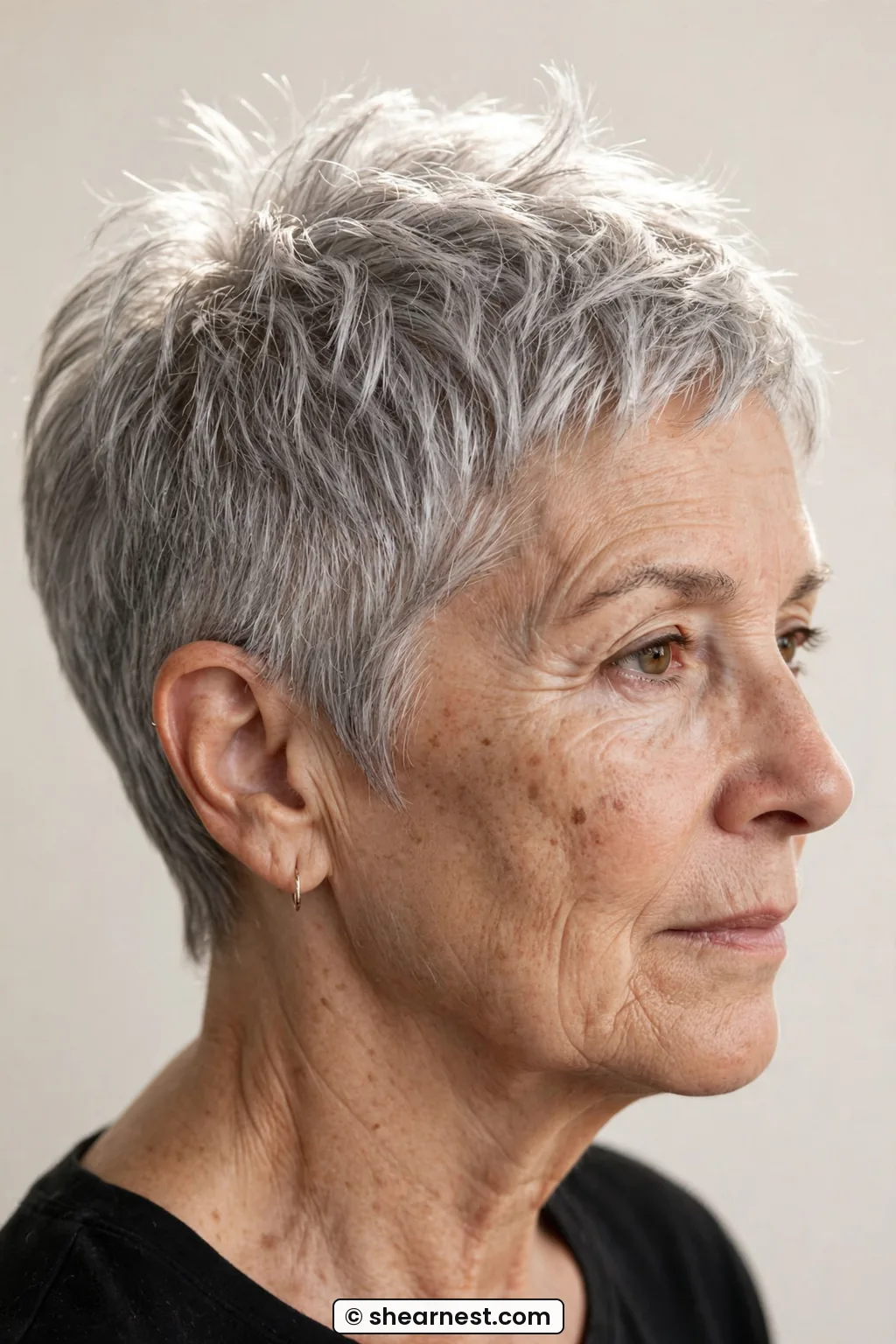
2. Tapered Pixie-Bob With Short Nape — Lift Cut Into the Root
Think pixie in back, bob in front. The nape is tapered close, almost like a men’s cut, and then the top and sides are left long enough to tuck. That contrast is what gives it legs.
She’s got a similar density to mine — you can see scalp if you look hard — and yet from the side her head shape looks round and full. That’s the taper doing its job. It removes that wispy, overgrown-duckling weight at the neckline that drags everything down by afternoon.
When I tried this last spring, I was shocked at how little I needed to do. Wash, pea of mousse, rough dry upside down. Done. At 4pm the sides had tucked behind my ears (they always do), but the back was still lifted. This is also one of the best haircuts for fine hair if you don’t want to rely on a whole shelf of product.
Fair warning: you need a trim every 5 weeks. Once that nape gets shaggy, the whole illusion collapses.
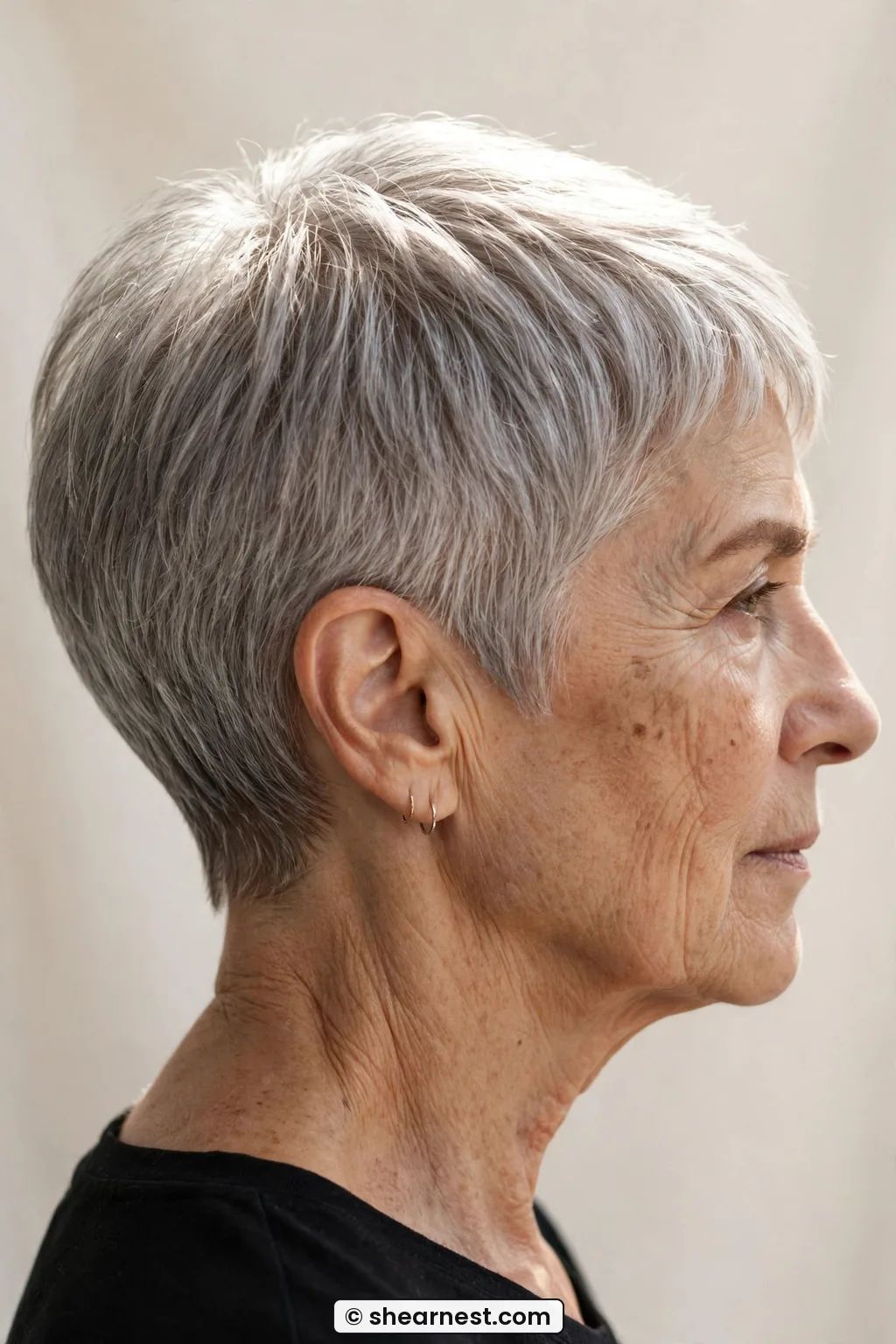
3. Blunt Micro-Bob With Internal Layers — Lift Cut Into the Root
A jaw-skimming bob sounds scary for fine hair, right? Too heavy? This version isn’t one-length. It’s blunt on the outside, secret layers on the inside. My stylist calls it invisible graduation.
This is the length I’m talking about. See how it hits just below her chin in the photo but the underlayer is shorter? That underlayer acts like scaffolding. I stared at this cut for a week before I got brave enough to try it.
Why it survives to 4pm: there’s no weight pulling from below the jaw. Shorter equals lighter, and lighter equals longer lift. I could actually get second-day hair out of it, which never happens for me with longer styles. Just a puff of dry shampoo at the part.
If your hair is very straight as well as fine, ask for a touch of undercutting at the very back. Not shaved, just stacked. It keeps the silhouette from going triangle by dinner.
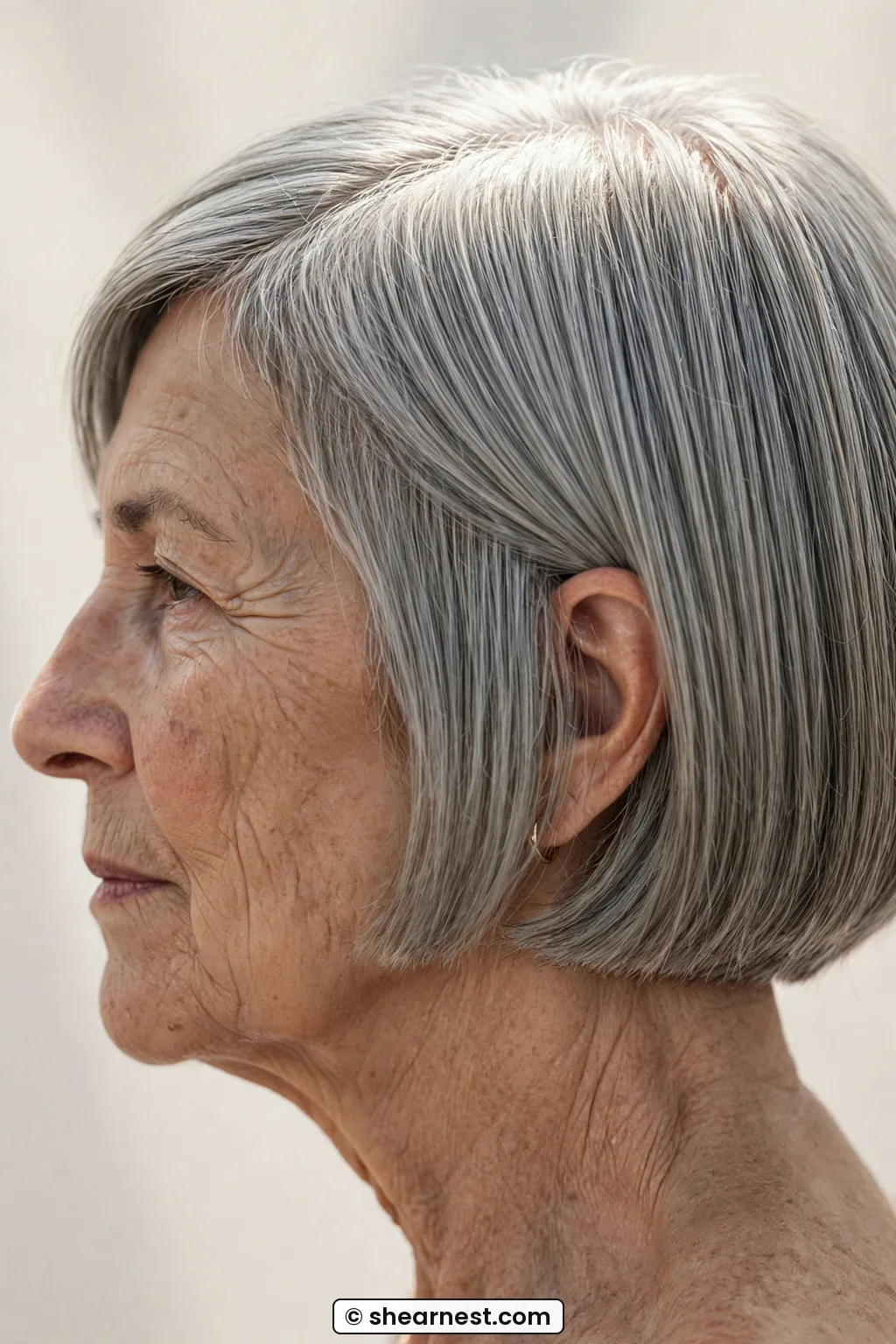
LIFT FROM THE PERIMETER: This next group doesn’t lift from the roots at all. It looks thicker because the bottom edge is cut thick and clean. From across the room, density reads as volume. Up close at 4pm? The crown may be flat, but the shape still holds. And sometimes that’s enough.
4. Chin Bob With a Stacked Back — Lift From the Perimeter
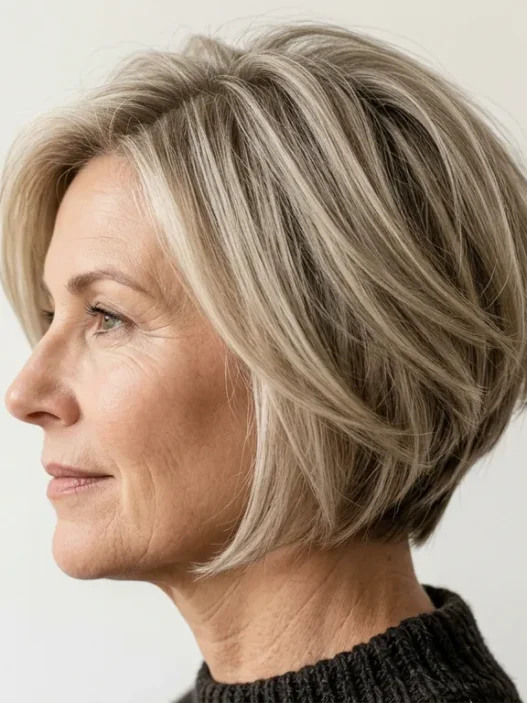
Classic short bob, slightly stacked, chin-length in front. I wore this for two years in my mid-50s and I still have a soft spot for it. It’s tidy. It makes grey hair look expensive.
Look at her side profile — that solid line from ear to chin is the whole trick. My favorite is how the back is built up in layers while the front stays heavy. You get height without losing that thick edge. For anyone hunting short haircuts that still feel feminine, this is the sweet spot.
At 4pm, let’s be honest: the crown is flat. Mine always was. But the perimeter still swings, it still tucks nicely, and it doesn’t look stringy. I would call this a 70% cut. It gives you shape even when lift is gone. A quick flip of the part revives it.
Pairs beautifully with face-framing highlights if your grey is still blending, but on full silver like hers, keep the edge sharp. That’s where the thickness comes from.
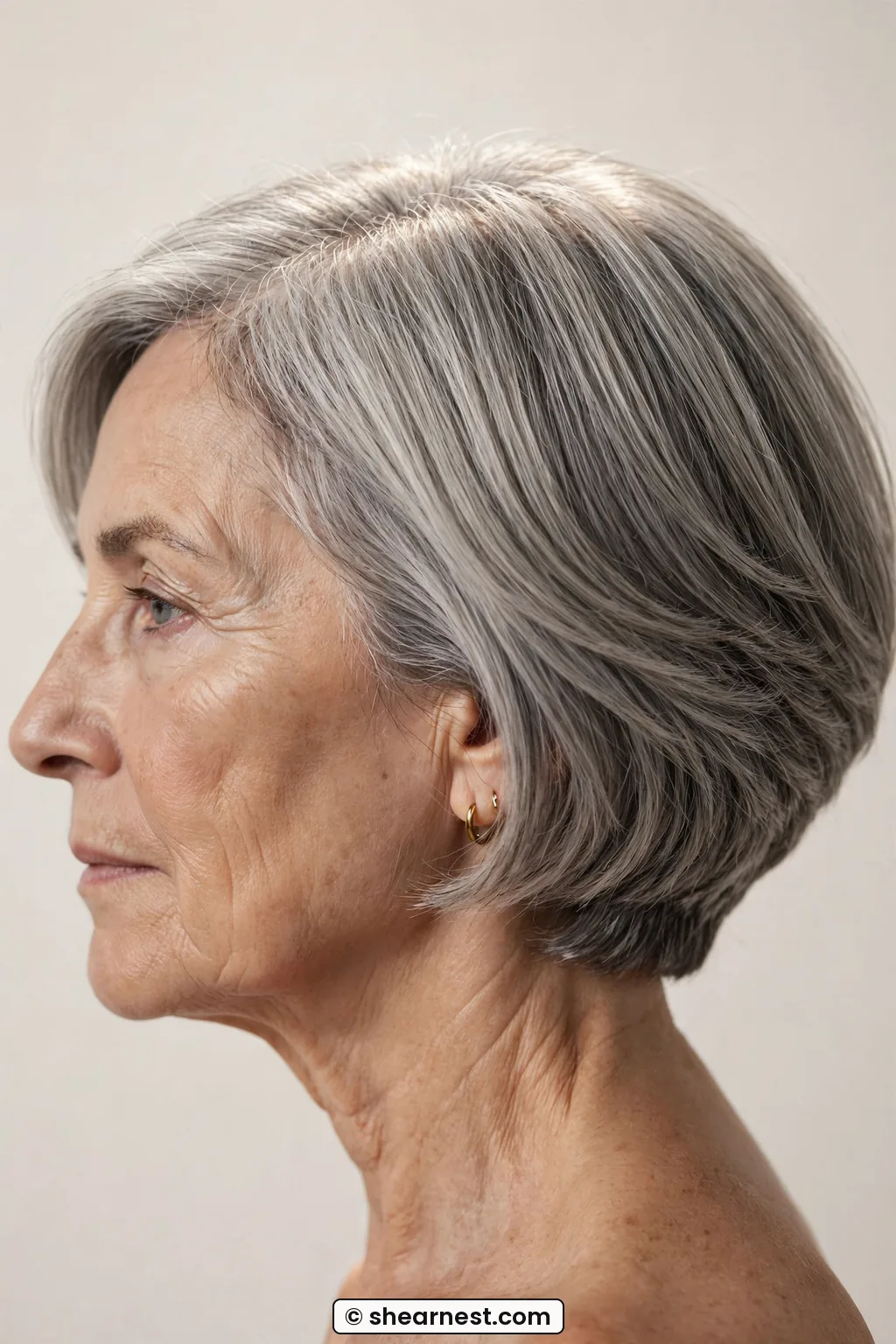
My personal pick for lazy weeks is No. 4. It never looks messy, just a little flatter — and I can live with that.
5. French Bob With a Full Perimeter — Lift From the Perimeter
Short, cheeky, a little Parisian. The French bob lives or dies on that thick bottom inch. No feathering, no wispy ends — just a clean line that hits at the lip or chin.
She wears it with almost no styling in the photo, just air-dried with a side part, and you can see why I included it. The ends look twice as thick as they are. When my hair was this length, strangers thought I had more hair. Nope. Just a good perimeter.
Does it have root lift at 4pm? Not really. Mine would lie close to the head by mid-afternoon, especially in humidity. But because the shape is so strong, it reads as intentional. Sleek, not limp. There’s a difference, and this cut knows it. I found the same idea explained well in a piece on volume for fine hair — sometimes fullness is an edge, not height.
Best if your fine hair is also straight. Waves will flip this out in a cute way, but you’ll lose that graphic line.
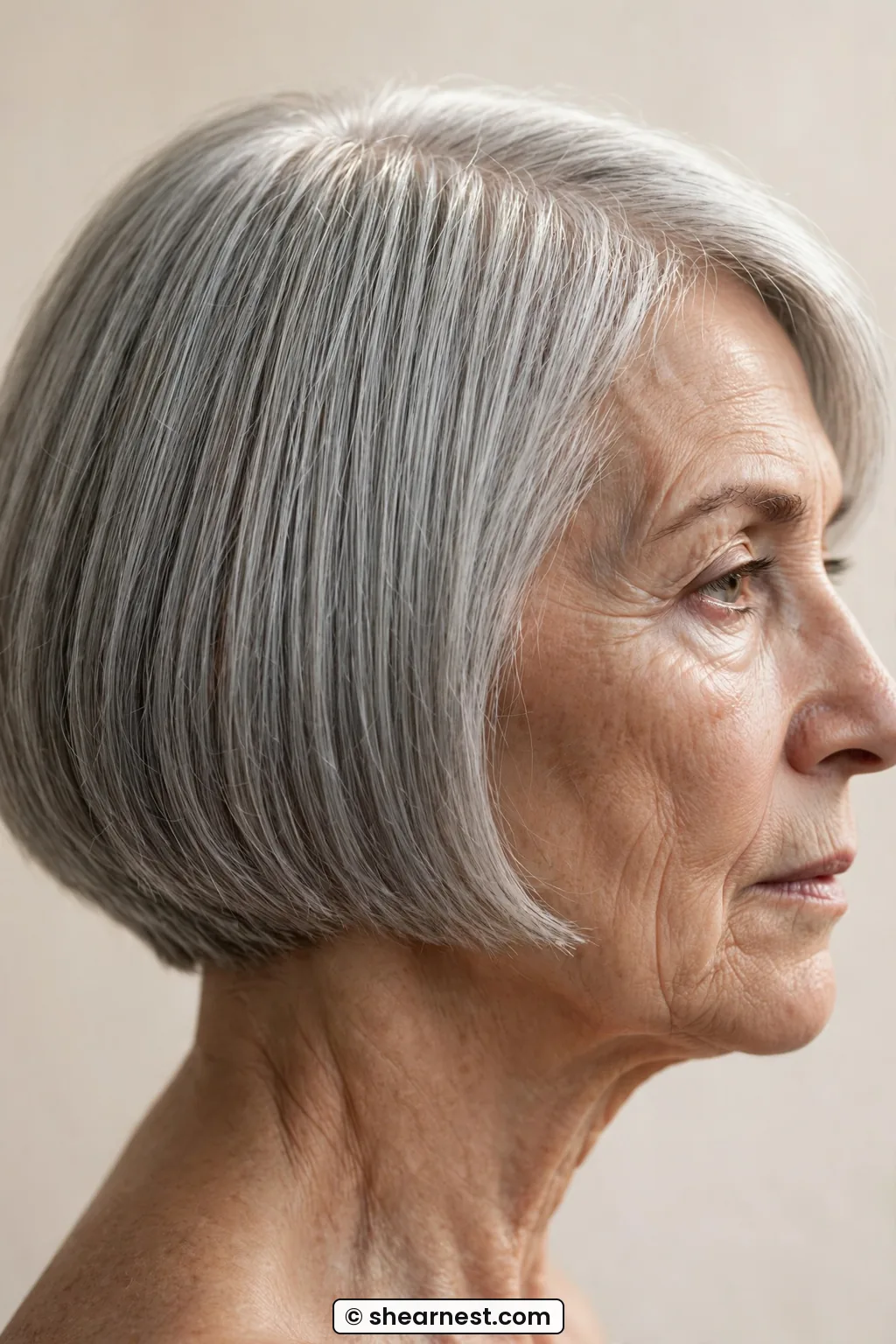
6. Collarbone Lob With Blunt Ends — Lift From the Perimeter
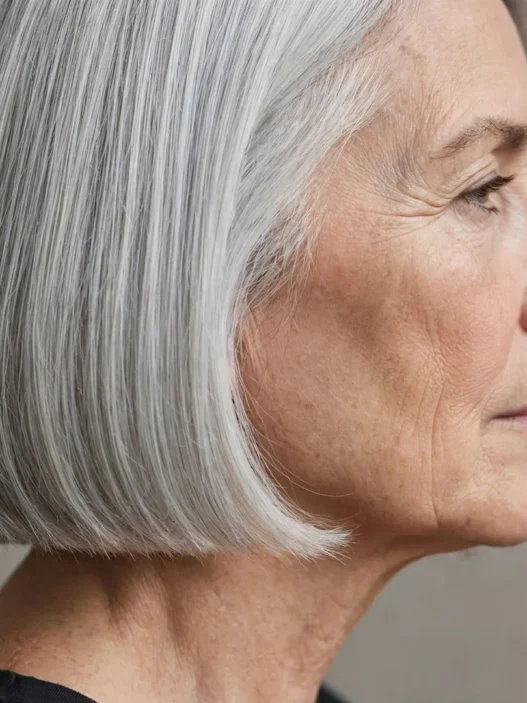
Okay, the longest cut on this list. I include it because so many of us don’t want to go short, and I get it. A collarbone lob with zero layers can work for very fine hair — but only if you accept what it is.
See how her ends hit right at the collarbone and stay one length? No thinning shears, no layers sliding off. That blunt perimeter is doing all the heavy lifting to keep it from looking see-through. I tried to grow mine out last year and this was my holding pattern for months.
Morning versus 4pm is dramatic, though. Morning: soft, bouncy blowout. 4pm: flat on top, thicker curtain at the bottom. It separates if it’s too clean, so I learned to sleep in a loose low bun to keep a bend. You can read up on blowout techniques that add fullness before your next cut, because technique matters more than product here.
If you love a haircut for fine hair over 50 that still pulls back into a tiny ponytail, this is your compromise. Just don’t expect root lift without help.

LIFT THAT COMES ONLY FROM DRYING: Last group, and I’m going to be blunt because I wish someone had been blunt with me. These three cuts are gorgeous at 10am after a proper blow-dry. At 4pm? Without morning styling, they fall flat. That doesn’t make them bad — it makes them high-maintenance. Go in with eyes open.
7. Side-Part Crop That Lives on Blow-Drying — Lift That Comes Only From Drying
Deep side part, longer top swept over, short sides. On Instagram it looks like massive volume. In real life on very fine hair, that volume is 90% dryer direction and root spray.
Don’t get me wrong, she looks fantastic in the photo — that sweep over the forehead lifts her whole face. And I do this exact style when I have somewhere to be. Round brush, dryer up and over, cool shot to set. It holds for photos, for lunch, for a meeting.
But 4pm? The sweep drops. Fine hair can’t hold a deep part against gravity all day without help. Mine splits and shows scalp by late afternoon. Fix is easy — flip to the other side for instant lift — but it’s styling, not cut. If you live for fine and thinning hair tricks like part-flipping and velcro rollers, you’ll be fine. If you air-dry and go, skip this.
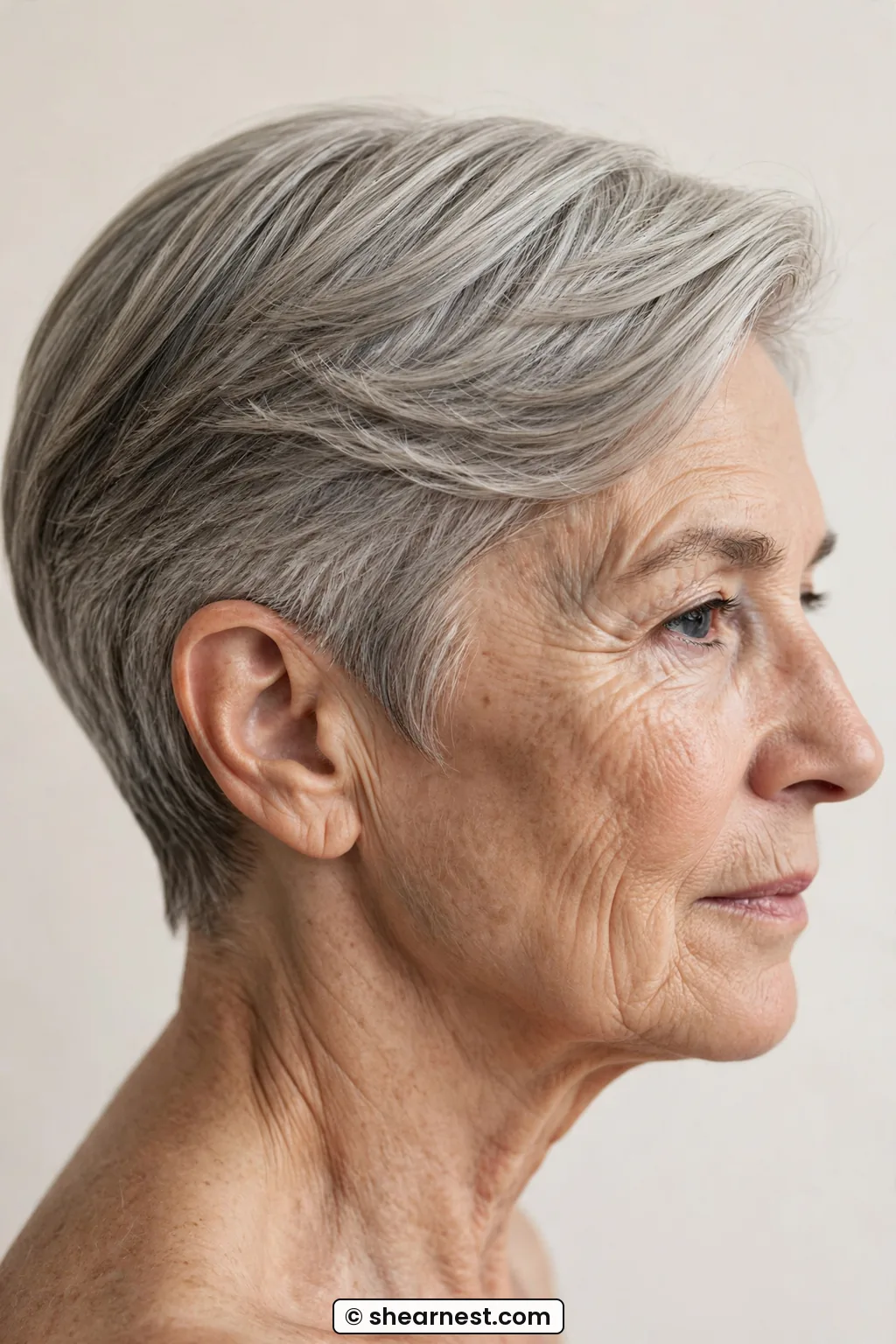
Blow-Dry Lift That Actually Holds
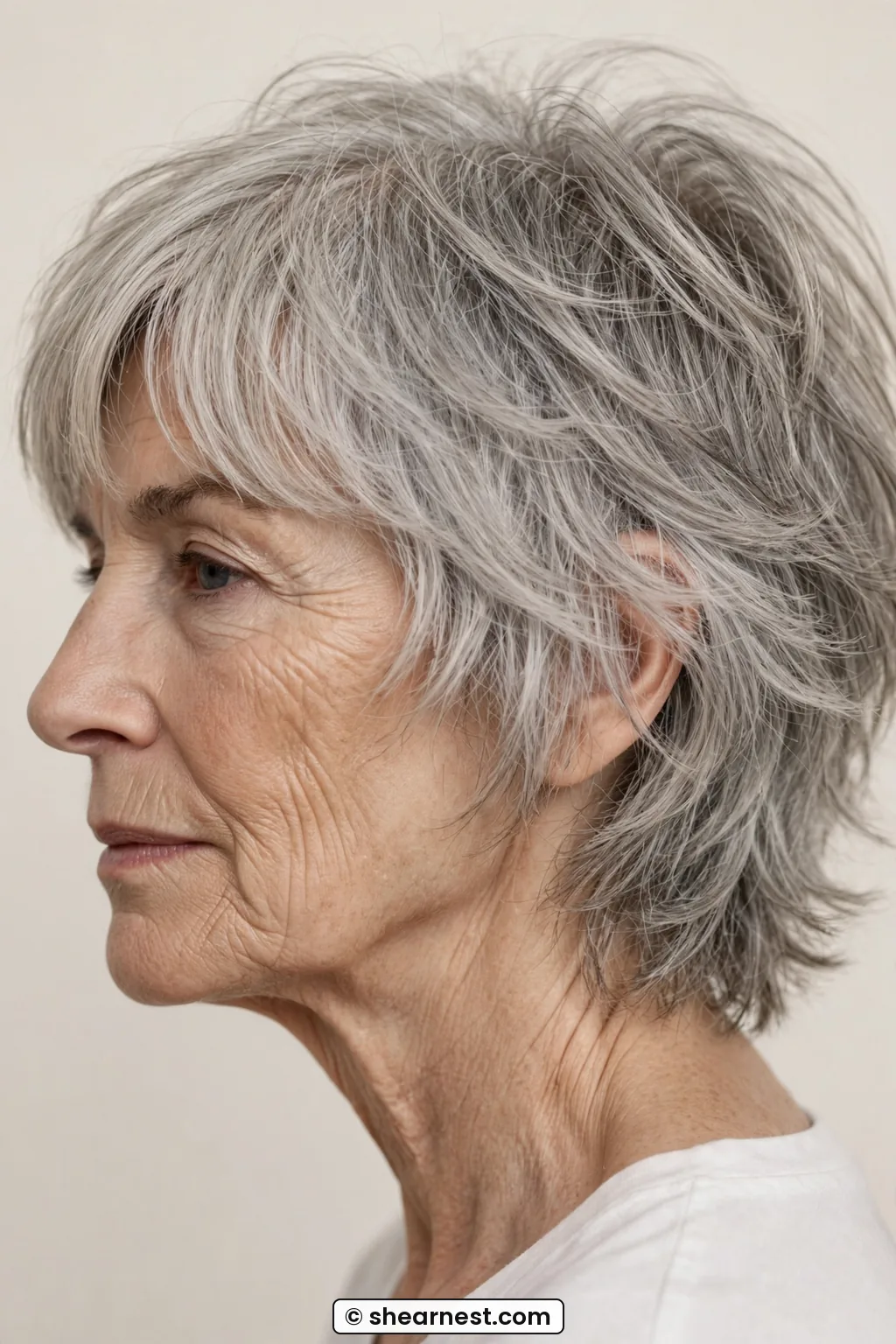
8. Airy Shag That Needs Diffusing — Lift That Comes Only From Drying
I wanted to love the shag. Layers, movement, that cool French-girl texture. On thick hair it’s effortless. On very fine hair? It’s a styling project.
Her shag in the picture is perfect — feathered ends, soft curtain fringe, airy around the cheeks. What you can’t see is the 15 minutes of diffusing underneath. I tried air-drying this cut once and I looked like a damp kitten. Diffused with mousse? Cute. Big difference.
By 4pm the layers separate and go a bit stringy, especially if you touch your hair a lot (I do). The crown drops first. Dry shampoo helps, but it also makes fine shags gritty fast. This is a weekend-when-I-have-time cut, not an everyday cut for me anymore.
That said, if your fine hair has natural wave, you have an advantage. Wave holds a shag longer than pin-straight does. Straight + fine + shag = daily styling, no way around it.
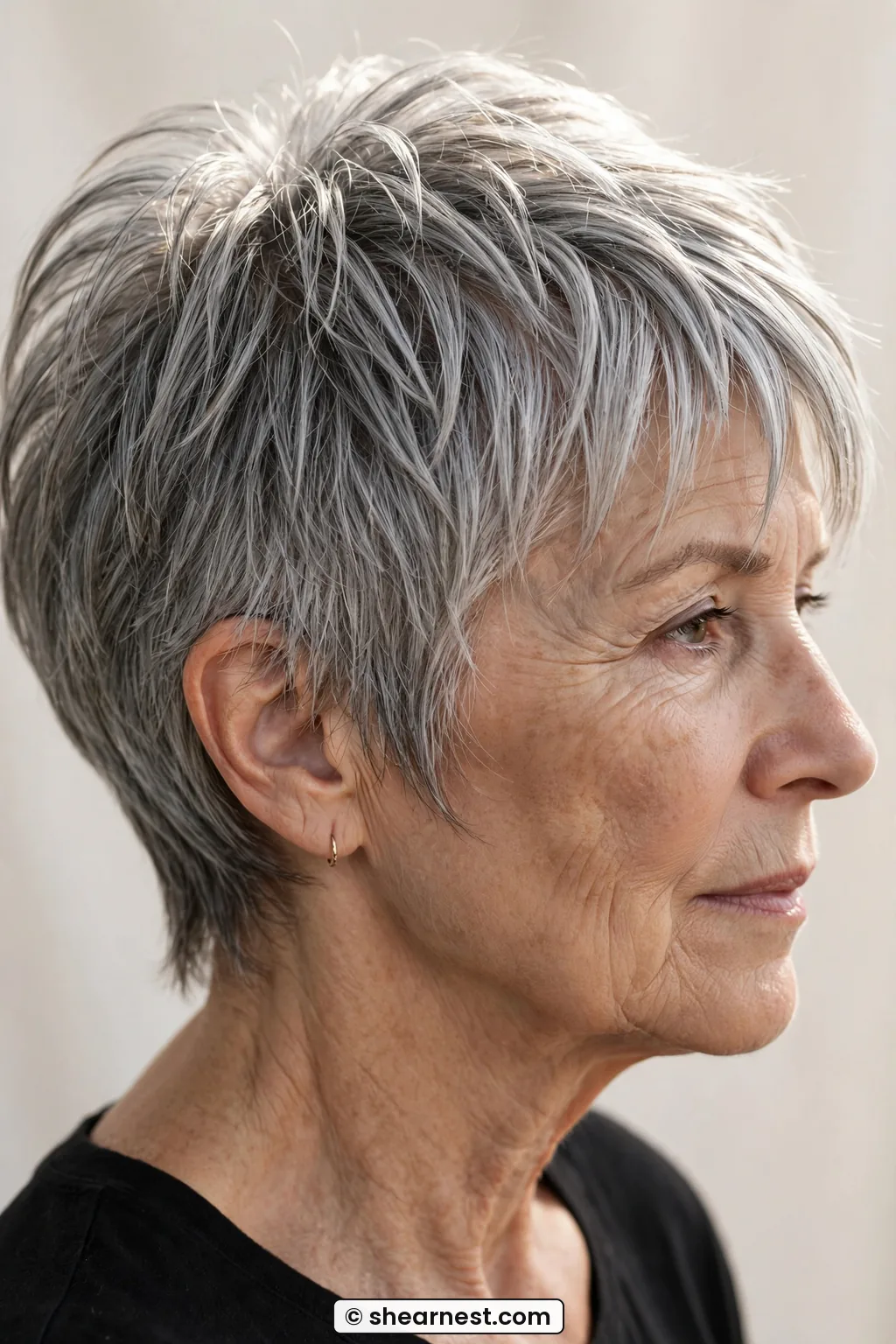
9. Long Pixie That Only Works Styled — Lift That Comes Only From Drying
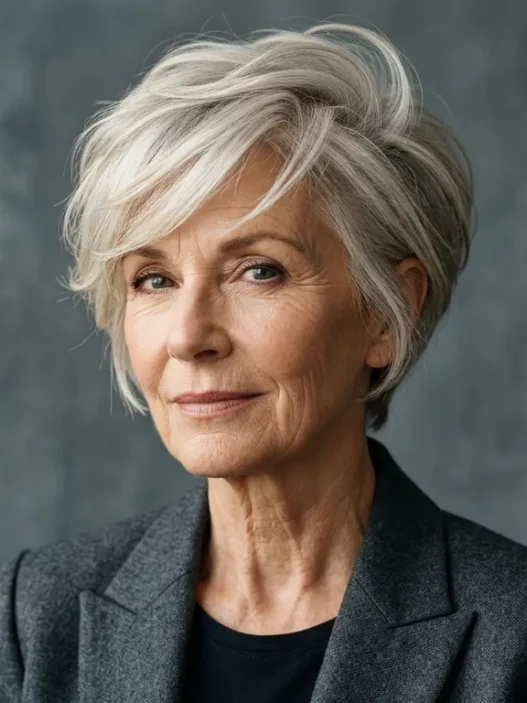
The long pixie, the bixie, the in-between grow-out — whatever you call it, this length is the trickiest for very fine hair. Too long to stand up on its own, too short to weigh itself down smoothly.
She’s styling hers beautifully here, pushed forward with piecey texture on top. Look at that lift at the front hairline — that’s all blow-dryer up and forward plus a little wax. I do the same and I feel great leaving the house.
Come 4pm, though, the pieces get soft and collapse onto the forehead. If I wear glasses, it’s worse — they dent the sides. I keep a tiny travel brush in my bag for this cut, and I don’t mind a midday fluff. But you should know going in: this one is styled volume, start to finish. You can also compare notes with haircuts for thin hair over 50 if you’re deciding between this and a shorter pixie — shorter almost always holds longer.
Stylist tip that saved mine: ask for texture only on the very top, keep the sides solid. Over-texturizing fine hair just makes it disappear faster.
What I Ask For Now Before I Book a Trim
So what’s the only source that survives a whole day on very fine hair? Cut-in structure. Shorter layers over shorter backs. Tapered napes. Blunt edges with hidden support underneath. Not mousse, not round brushes, not hope.
I still use styling — of course I do. A little mousse, a fast upside-down dry. But I want a cut that looks okay even when I skip it. That’s my 4pm test, and after trying all nine, the pixies and the micro-bob pass it. The perimeters fake it pretty well. The dryer-dependent ones? Only when I have time to play.
If you’re booking soon, bring a 4pm selfie, not a fresh-blowout selfie, to show your stylist. That changed everything for me. She finally saw what I see at the end of the day, and we cut for that — not for the first hour.
Fine Hair 4pm Questions I Actually Get
Can very fine hair ever hold volume all day without product?
Cut-in lift can, styled lift usually can’t. A tapered pixie or stacked bob will still have shape at dinner, while a shag or long pixie will need a refresh. I use a pea of mousse at most now.
What’s the biggest mistake with a haircut for very fine hair?
Over-layering and thinning shears. It feels lighter at first, then the ends go see-through by week three. Ask for blunt perimeters with hidden internal layers instead.
Should I grow it out if my fine hair goes flat?
Longer usually means flatter on baby-fine texture because weight pulls roots down. If you love length, keep it at the collarbone max with a blunt edge, and plan on daily styling for the crown.
How often should I trim very fine grey hair?
Every 5-7 weeks for pixies and stacked bobs, 8-10 for lobs. Grey fine hair shows split ends faster, and ragged ends kill that thick perimeter illusion immediately.
Tell me — are you team cut-it-short-and-forget-it, or are you holding onto length? I’m back to my little razored pixie for fall, and honestly my dryer and I are both relieved. See you in the next one.