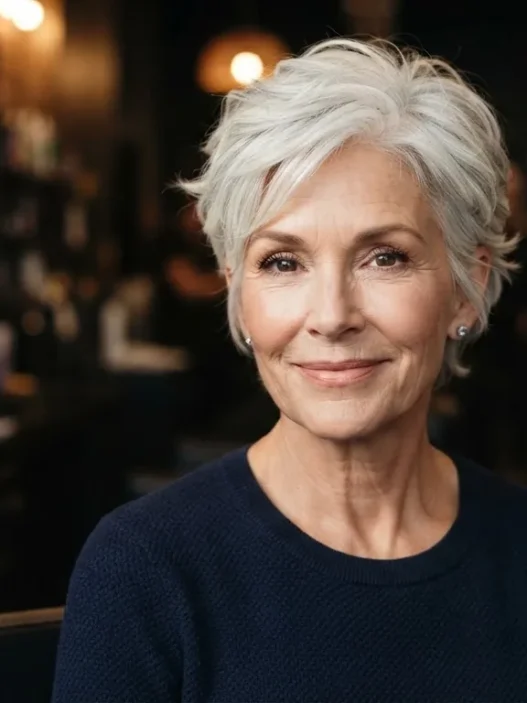








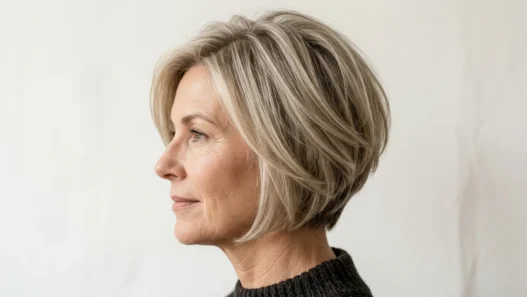


Fine hair and I have a long, complicated relationship. I spent a solid decade buying every volumising mousse, root spray, and texturising powder on the market — and by two in the afternoon, my hair was always flat against my head like it had given up on life. It wasn’t until a stylist finally said to me, “The product isn’t your problem, the cut is,” that everything changed. The right cut creates lift mechanically, through the angle of the blade, the removal of weight, and the way the hair falls on itself. These ten cuts do exactly that — and most of them will still look like something at 5pm, product or not.

What’s In This Post — Jump Ahead
- Cut Volume vs. Styled Volume
- 1. The Blunt Bob With a Graduated Back
- 2. The Cropped Pixie With a Tapered Crown
- 3. The Bevelled Nape Lob
- 4. The Stacked Back Short Bob
- 5. The Disconnected Fringe
- 6. The Concave Bob
- 7. The Textured Crop With Interior Weight Removal
- 8. The Long Pixie With a Lifted Crown Section
- 9. The Soft-Layer Lob With Perimeter Weight
- 10. The Precision-Cut Chin Bob
- Fine Hair Cuts — Your Questions Answered
Cut Volume vs. Styled Volume
There’s a fundamental difference between volume that comes from a blowout and volume that comes from the actual architecture of the cut. Styled volume is lovely — but it’s also temporary. The moment humidity hits, or you sleep on it, or you simply don’t have forty minutes in the morning, it’s gone. Cut volume, on the other hand, is structural. It’s baked into the shape of the hair itself: the angle at which the back is stacked, the way weight is distributed around the perimeter, the internal graduation that makes the hair spring away from the scalp rather than lie flat on it.
For fine hair specifically, this distinction matters enormously. You can read more about the mechanics of volume for fine hair if you want to go deeper on the theory — but for now, I’ve sorted these ten cuts by where that lift actually originates. Some create it at the root. Some create it from the perimeter. And one, in my opinion, is the only cut that reliably delivers lift all the way through to the end of the day.
1. The Blunt Bob With a Graduated Back
Lift from the perimeter
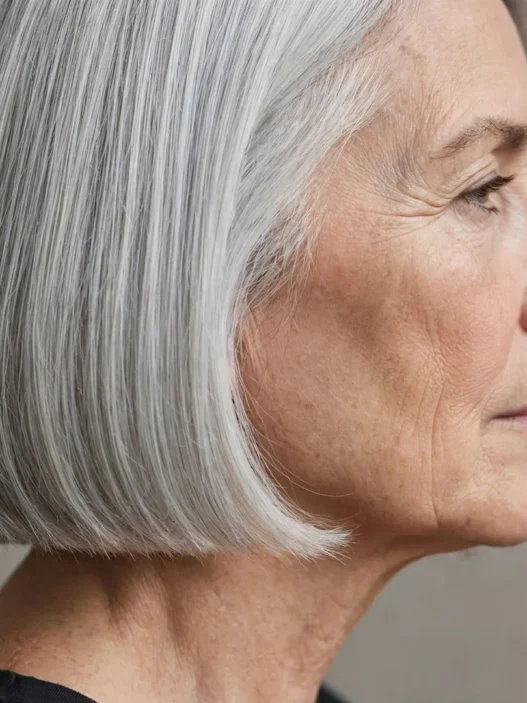
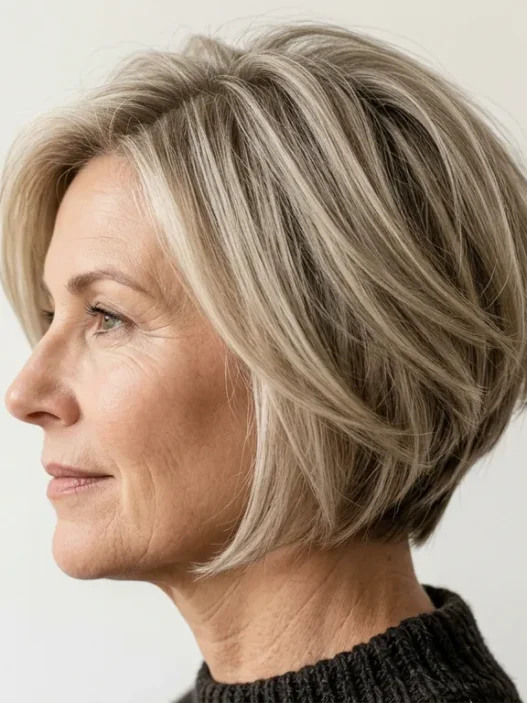
A blunt perimeter sounds counterintuitive for fine hair — surely all that weight will drag it flat? But when the back is graduated (cut shorter underneath, longer on top), the upper layers have nowhere to go except outward and upward. The blunt edge at the front creates the illusion of density. You see more hair because you’re seeing the full cross-section of it, not tapered ends that disappear into air.
Look at how she’s wearing hers in this photo — that slight outward curve at the ends is entirely the cut. No round brush, no heat. The graduation in the back is doing all the work, pushing the top layer away from the nape and giving the whole shape a solidity that fine hair rarely gets to feel.
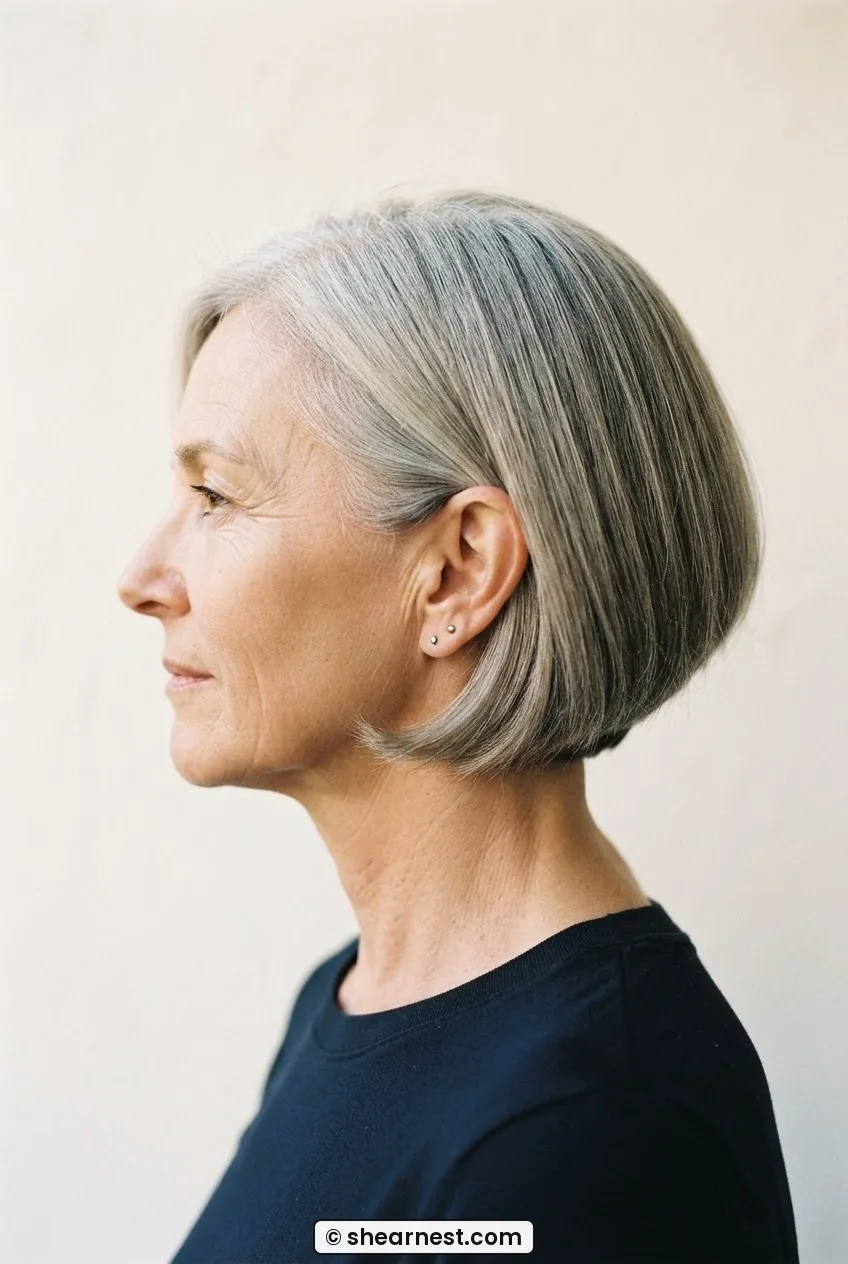
This is a great starting point if you’re nervous about going short. The length sits somewhere between the chin and the shoulder and it suits almost every face shape because you can angle the front pieces slightly longer to flatter or frame however you need.
2. The Cropped Pixie With a Tapered Crown
Lift cut into the root
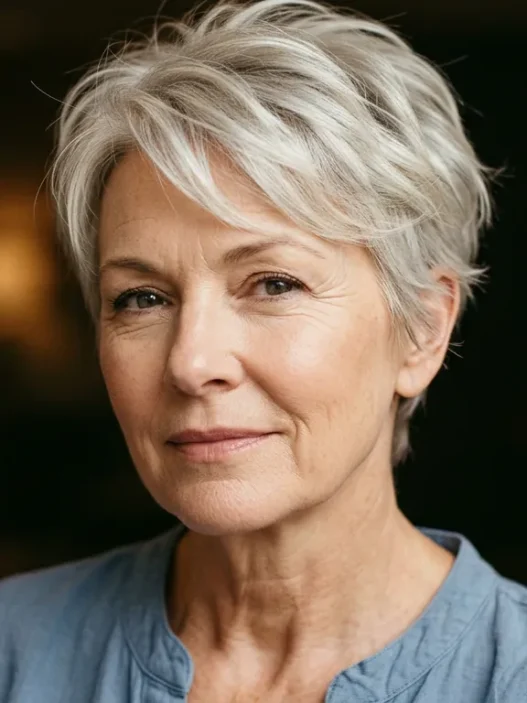
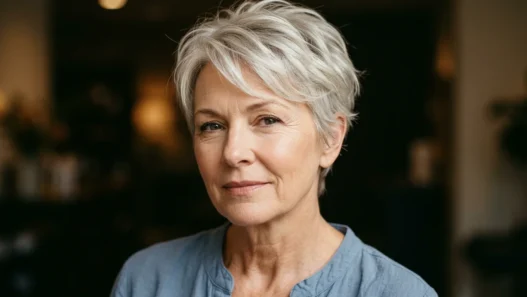
Pixie cuts for fine hair are almost unfairly good. When the crown is cut short but left slightly longer on top — and tapered rather than blunt at the sides — the hair at the root has physical freedom to lift. There’s nothing pulling it down. Nothing lying on top of it. It just goes up, because that’s what released hair does.
The version I’m talking about is not the blunt, severe pixie. The crown section is kept at roughly an inch to an inch and a half. The taper at the sides keeps it from looking boxy. And the result is a silhouette with genuine height that requires — genuinely requires — almost nothing. Air-dry it. Run your fingers through it. You’re done.
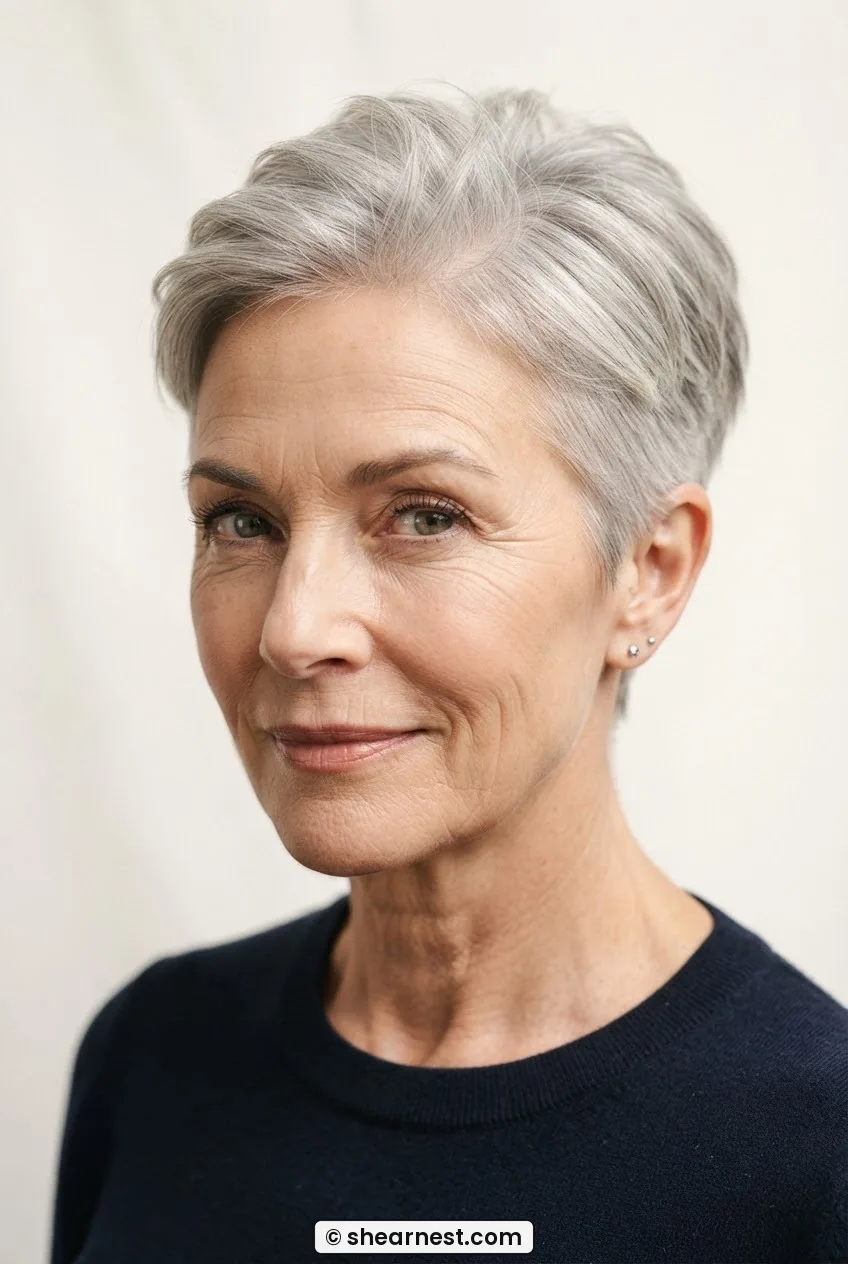
If you’ve been thinking about a pixie but worrying it’ll look flat on your fine hair, a tapered crown is specifically what you want to ask for. The tapering is the key word. A blunt pixie on fine hair can look a bit helmet-like. A tapered one looks intentional and modern.
3. The Bevelled Nape Lob
Lift from the perimeter
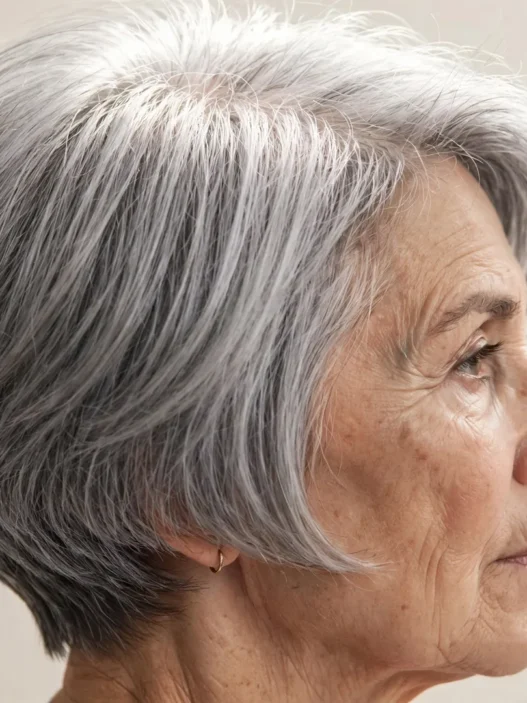
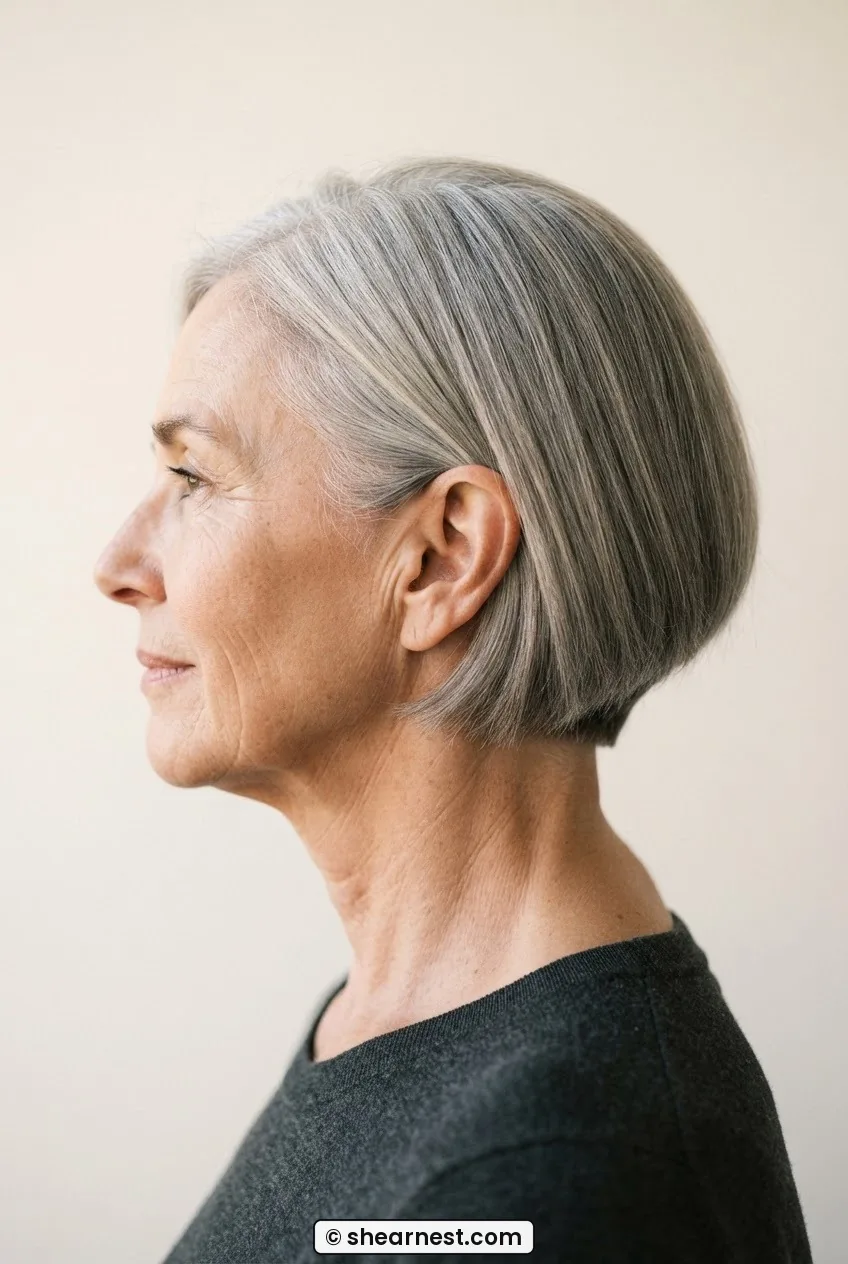
A lob (long bob, sitting around the collarbone) is one of the most flattering lengths for women over 40 with fine hair. The danger with a standard lob on very fine hair is that it can hang limp and stringy by midday. The bevelled nape version solves this with a specific technique at the back: the nape hair is cut shorter and bevelled inward, creating an invisible internal structure that lifts the rest of the hair sitting on top of it.
She’s got a very similar texture to what I see all the time on women in their fifties and sixties — ash, fine, and with a tendency to hug the neck. Notice how her hair in this photo is sitting away from the nape rather than lying flat against it. That gap between the hair and the skin? That’s the bevel at work. It’s a quiet piece of craftsmanship that most people won’t notice — but you will feel the difference.
4. The Stacked Back Short Bob
Lift cut into the root
This is the one I recommend most often when someone tells me they want volume but they also want low-maintenance. A stacked back bob is cut shorter at the nape and progressively longer toward the crown — the layers in the back are stacked tightly, almost like a graduated fan. The top sits on top of that stack and gets pushed upward and outward. It’s basically an architectural lift system built directly into the haircut.
The reason it works so well for fine flat hair specifically is that the stacking replaces the bulk that fine hair simply doesn’t have. You get visual fullness from the layered structure rather than from the hair itself needing to be thick. It also means the shape holds as the hair grows — the stack stays intact longer than a standard bob would.
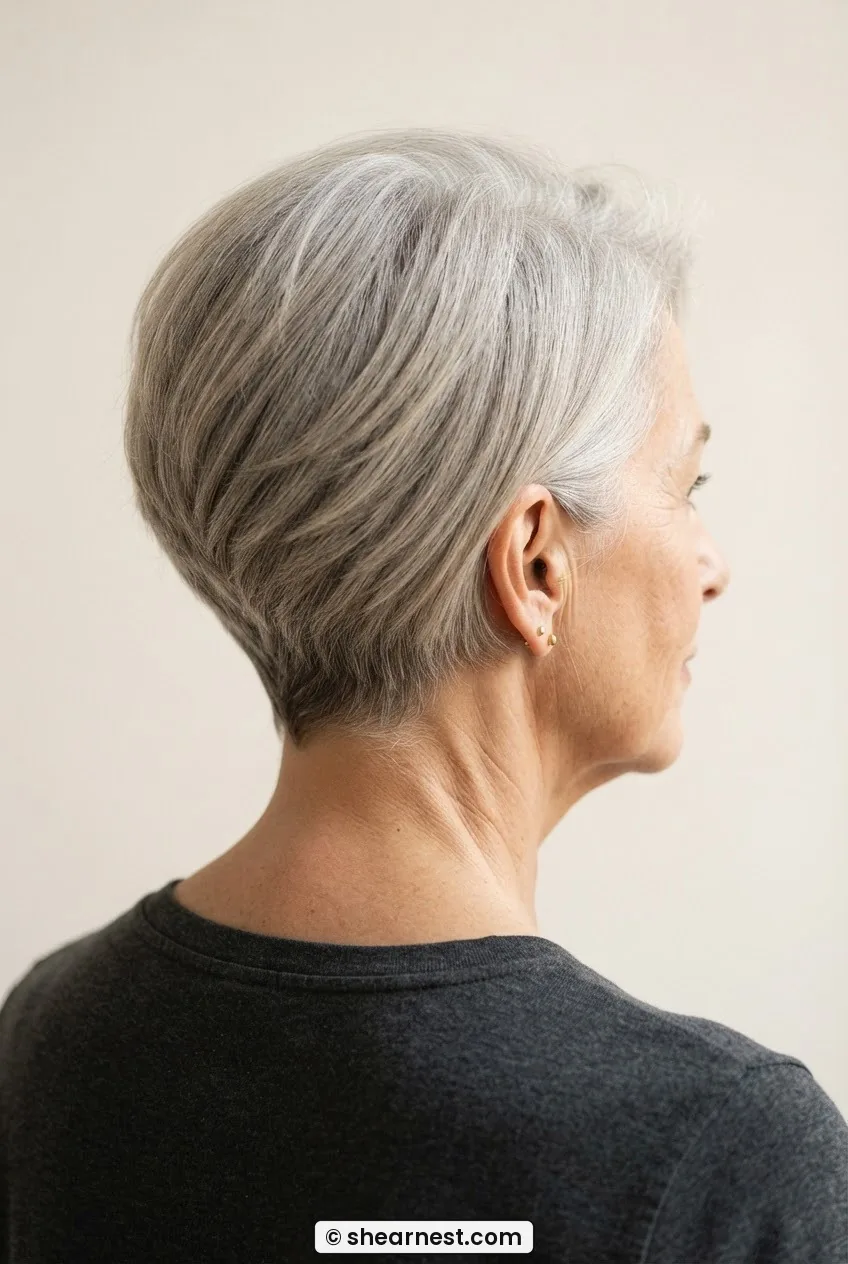
My personal pick of all ten is this one. I’ve recommended the stacked back bob to more women with fine hair than any other cut, and the response is almost always the same: “Why did no one tell me about this sooner?” It’s the cut that does the most work without asking anything of you. If I had to choose only one for a woman who air-dries and wants to look put-together — it’s this. Every time.
See How a Stacked Bob Is Actually Cut
5. The Disconnected Fringe
Lift that comes only from drying
A word of honesty: a fringe is the one entry on this list where you cannot fully escape a tiny amount of technique. The fringe itself needs to be dried forward to sit correctly — but that’s thirty seconds with a brush, not a full blowout. The reason I’ve included it is what it does for the rest of the hair.
When a fringe is cut disconnected from the sides — meaning there’s a clear line where the fringe ends and the side lengths begin — it creates the appearance of volume and fullness at the front of the head. Particularly on fine hair that has started to thin at the temples, this reframes the face and draws the eye to the fringe rather than to the temples. The wispy, feathered version of this fringe is especially kind to very fine hair because the lightness suits the texture.

Ask your stylist about how wispy bangs are cut before you commit — the technique matters as much as the length here. A blunt fringe on fine hair often looks too heavy. The disconnected, wispy version is the one that plays nicely with the texture.
6. The Concave Bob
Lift from the perimeter
The concave bob — sometimes called the A-line or inverted bob — is cut shorter at the back and longer at the front, creating a diagonal line from nape to chin. That diagonal is not just aesthetic. It means the back of the hair, which is the heaviest section on most heads, is cut away. What remains at the back is short and lifted. The longer front pieces frame the face.
For fine hair, removing back length is one of the smartest things a cut can do. Long, fine hair at the back just sits there, weighing everything down. The concave bob eliminates that problem entirely. And it does so in a way that looks intentional and contemporary rather than simply short.
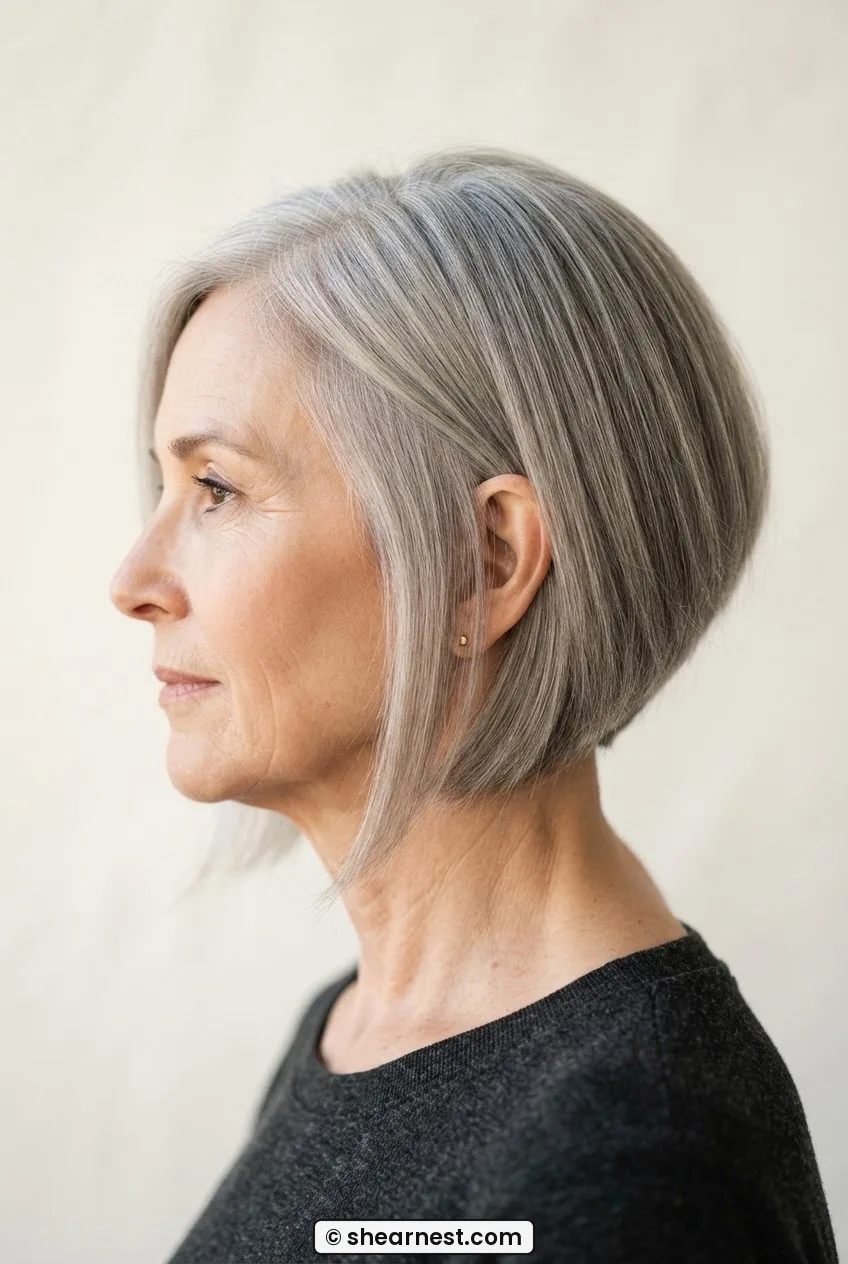
This cut also photographs exceptionally well from the side — you see the full geometry of the angle, and it reads as a very deliberate, editorial shape. If you want something that looks like you made an effort without actually making much of one, the concave bob is a very strong candidate.
7. The Textured Crop With Interior Weight Removal
Lift cut into the root
This is one for the women who’ve been told their hair is “too fine” for texture. That’s wrong, and I feel strongly about it. Interior weight removal — using a razor or point-cutting technique to remove bulk from inside the layers rather than from the perimeter — creates movement and lift in fine hair without reducing its apparent density. In fact, done correctly, it increases the appearance of density because the hair moves more freely and takes up more space.
A textured crop with this technique applied throughout will look different every day in the best possible way. The texture creates micro-movements in the hair that catch light differently depending on how it dries. No two days are exactly the same, which makes it feel effortless rather than rigidly styled.
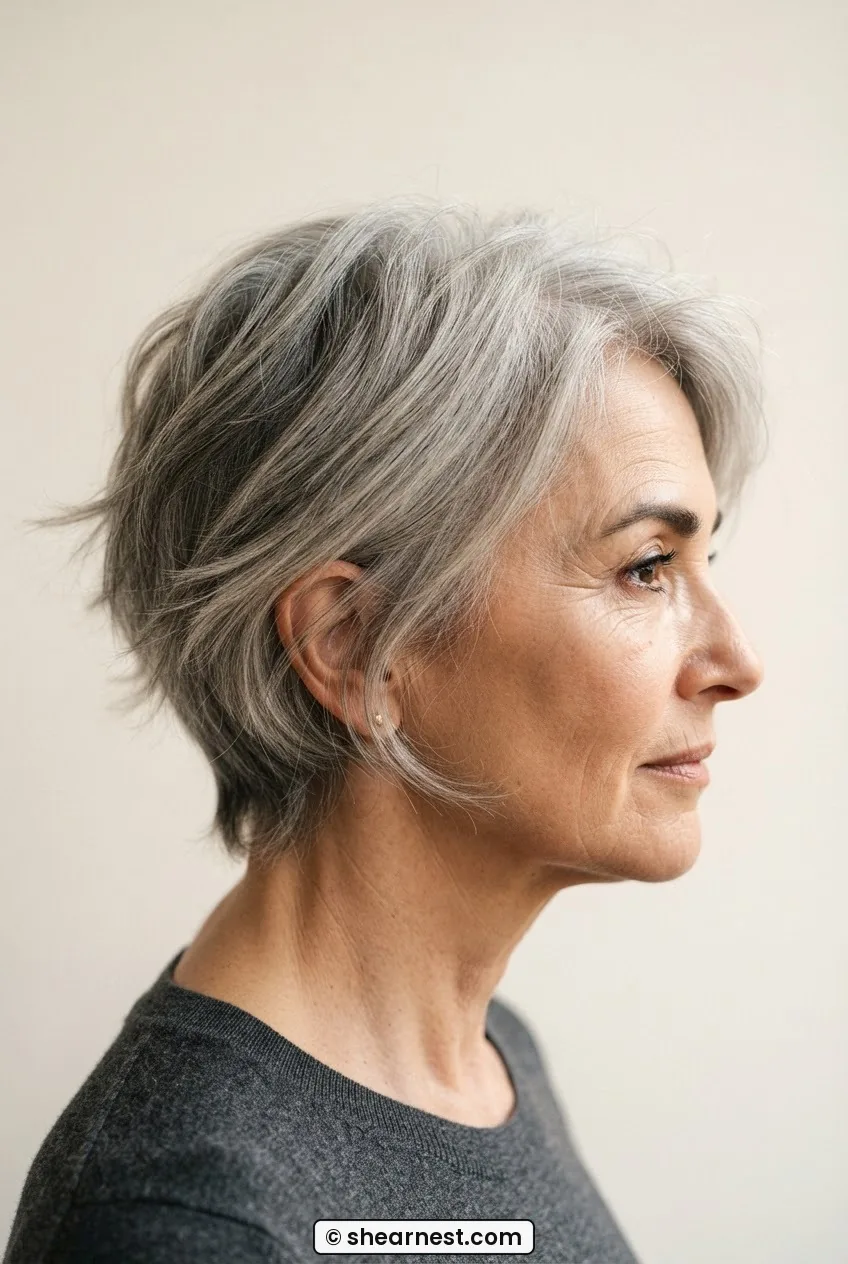
The caveat: find a stylist who is specifically experienced with razor or point-cutting on fine hair. Over-texturing fine hair is a real risk — it can leave the ends looking sparse. The skill is in knowing how much to remove and where. If you want to see examples of what this looks like at its best, the fine thinning hair archives have some excellent reference points.
8. The Long Pixie With a Lifted Crown Section
Lift cut into the root
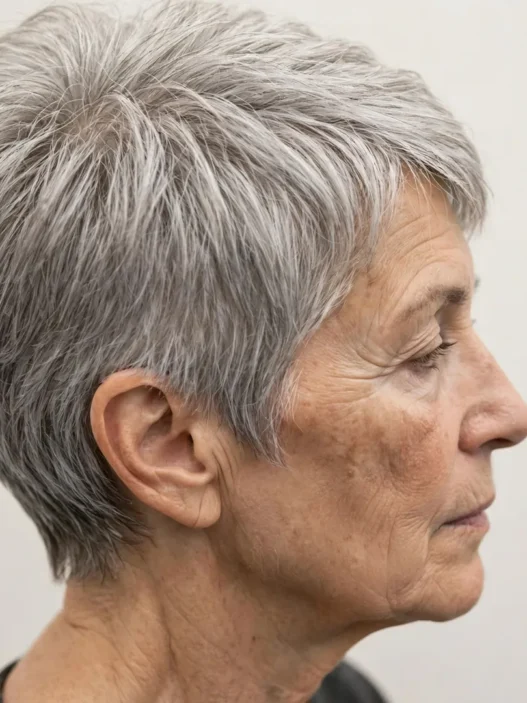
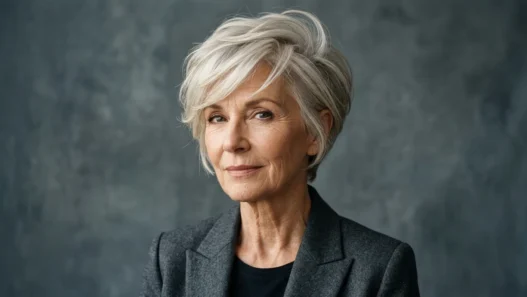
Somewhere between a pixie and a crop lives the long pixie — and it’s one of the most underrated cuts for fine hair in your fifties and sixties. The sides and nape are kept short and close. The crown section is left longer: usually two to three inches. That contrast in length means the crown hair can be styled upward and will stay there, because the short sides aren’t competing with it.
If you look at her in this photo — see how the crown section has actual height? That’s not product. That’s the crown length sitting up because it has a short, tight undercut holding it in place. The shape is almost sculptural. And it requires, at most, a quick once-over with a diffuser to set the direction. Then it just stays.
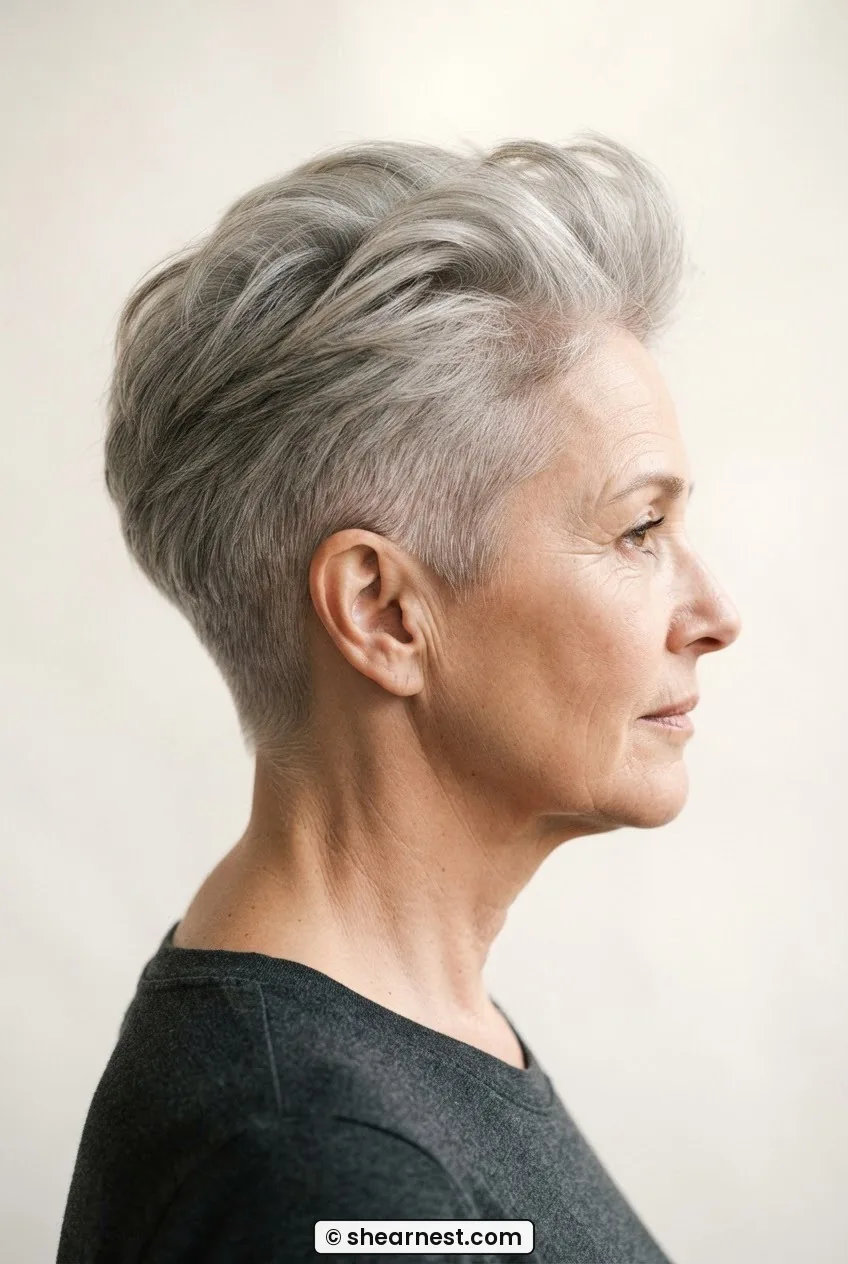
I find the long pixie particularly well-suited to women who’ve gone grey or ash, because the shorter sides show off the colour gradation beautifully. If your grey has interesting dimension to it, this cut puts it on display in the best way. You can explore more options in the haircut for fine hair over 50 guide if you want to see how different lengths interact with this texture at that life stage.
9. The Soft-Layer Lob With Perimeter Weight
Lift from the perimeter
This one is the compromise cut — the one I point people toward when they want length but they also want their hair to do something. The soft-layer lob keeps the perimeter weight intact (no feathering or thinning at the ends) while adding light, long layers through the mid-section. The layers create movement internally. The weighted perimeter keeps the ends looking full and solid rather than wispy.
It’s an important distinction from over-layered versions of the lob, which can make fine hair look scraggly at the ends. The rule I’ve always followed: the longer the hair, the fewer layers fine hair can carry. At lob length, two or three long, sweeping layers are plenty. More than that and the ends start to disappear. For a comprehensive look at what works at this length, the roundup of haircuts for thin hair over 50 covers this in detail alongside some useful comparisons.
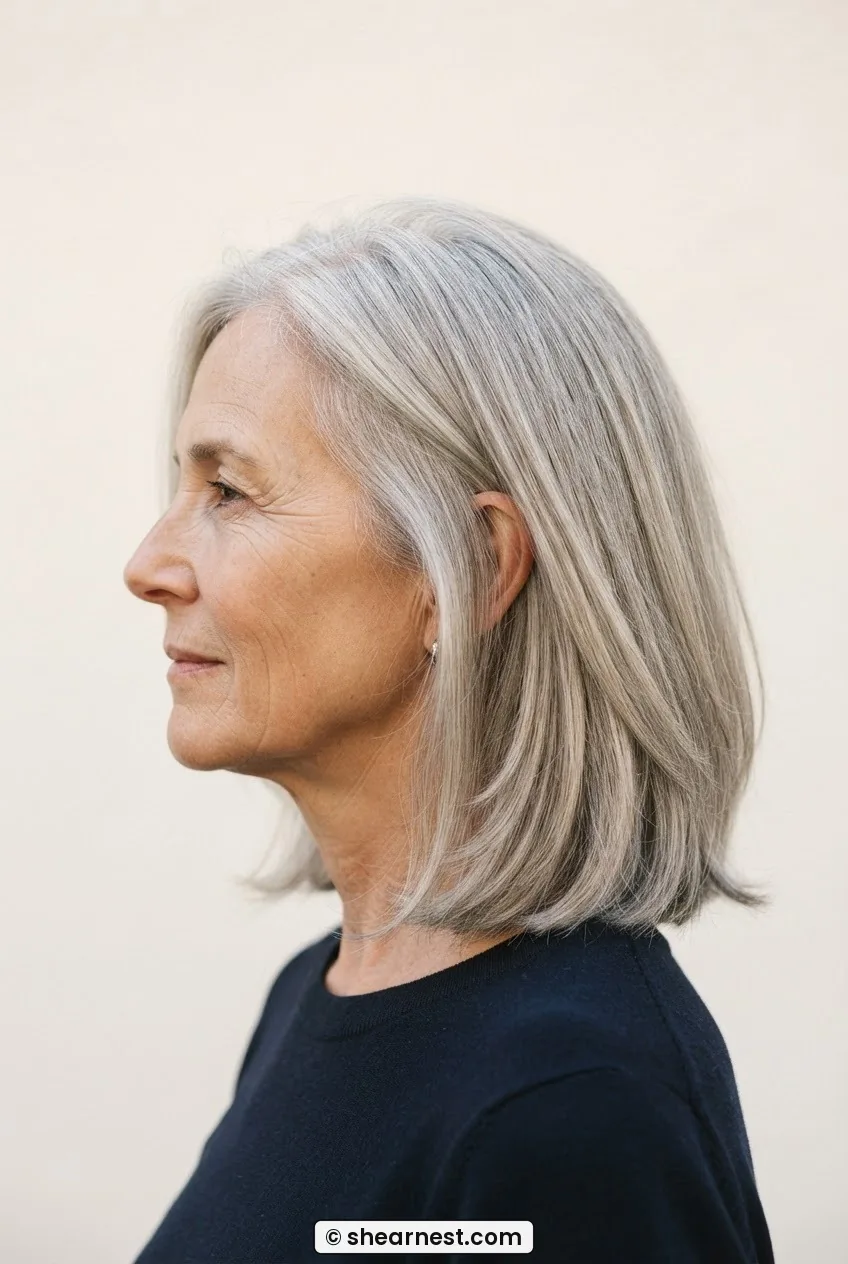
The lift from this cut comes from the perimeter weight acting as a base. The layers bounce off it. Think of it like a shelf — the solid bottom holds everything above it in shape, and the movement happens in the upper layers while the ends stay put.
10. The Precision-Cut Chin Bob
Lift that survives a whole day
And here it is — the one that survives the whole day. The precision-cut chin bob. Not a layered bob. Not a textured bob. A precision-cut one, where every section is cut to exactly the same length with no variation, and the perimeter is perfectly clean. It sounds boring. It is, in fact, the hardest-working haircut in the repertoire of the best haircuts for fine hair.
Here’s why it lasts. When every strand is the same length, they all behave the same way. There are no layers that loosen and fall as the day progresses. There’s no graduated section that relaxes as humidity increases. The whole cut moves as a single unit, and a single unit is much harder to disturb than a layered structure that relies on each piece behaving perfectly in relation to the others.
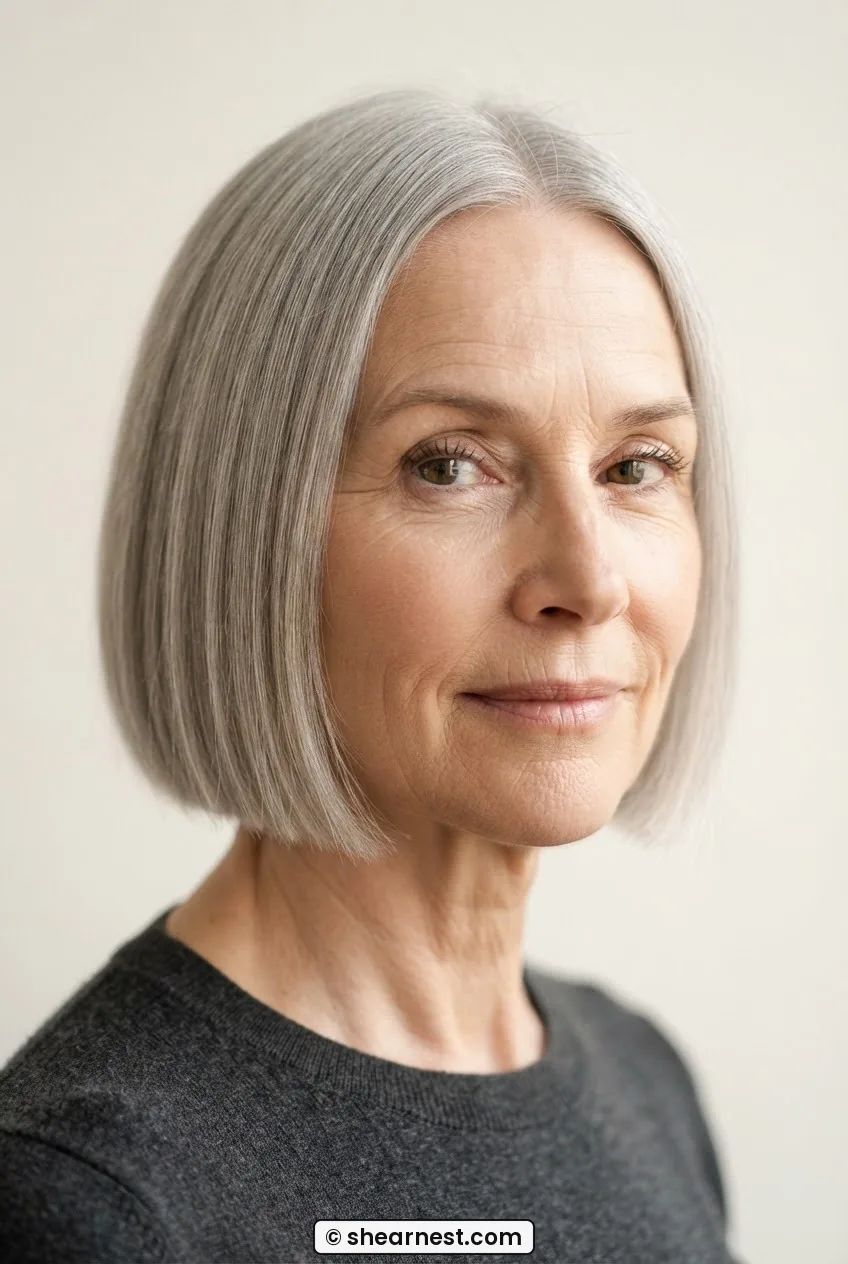
The chin length is important. It’s short enough that the hair doesn’t have enough weight to drag itself flat, but long enough that the single solid mass of it looks deliberate and full. This is the cut I genuinely think of as the holy grail for very fine, flat hair that is done — completely done — fighting with product by lunchtime. You can learn about what to tell your stylist regarding a precision blunt cut so you’re both on the same page before the scissors come out.
Fine Hair Cuts — Your Questions Answered
Will a blunt cut make my fine hair look thicker?
Yes — and this is probably the most reliable trick in fine hair cutting. A blunt perimeter shows the full cross-section of your hair rather than tapered ends that taper into nothing. It creates the optical illusion of more hair simply by letting you see all of it at once. The effect is strongest on shorter cuts like a chin bob or a blunt lob.
Should women over 60 with fine hair avoid longer styles entirely?
Not entirely, no — but length has to be earned by the cut underneath it. A lob with a bevelled nape or solid perimeter weight can look beautiful on fine hair over 60. What genuinely doesn’t work is hair past the shoulder that’s been over-layered. That’s the combination that gives you the stringy, see-through ends that age the look. Keep the layers minimal and the perimeter clean and longer styles can absolutely work.
How often does a precision cut need to be trimmed to stay looking sharp?
More often than a layered cut, honestly — every six to eight weeks rather than ten to twelve. The precision cut works because every strand is the same length. As it grows, the perimeter line blurs and you start to lose the clean weight line that makes the cut work. A six-week trim is shorter than people expect, but the trim itself is very fast because there’s no reshaping involved, just maintaining the line.
Can I get lift at the root without using a root spray?
Yes, and the cuts on this list that I labelled “Lift Cut Into the Root” are your answer. The stacked bob, the tapered crown pixie, and the long pixie all create physical root lift through the cut angle rather than through product. If you flip the hair forward and dry it briefly with a diffuser, you set that lift in place — and it will stay without any spray needed. The product extends the lift slightly; it doesn’t create it from nothing.
If you’ve spent years chasing volume with your bathroom cabinet, I genuinely hope one of these cuts makes that stop. The right architecture in your haircut does more for fine hair than any product I’ve ever tried — and it keeps doing it long after the mousse has worn off. Pick the one that matches your lifestyle, bring a reference photo, and tell your stylist specifically what you want in terms of where the lift comes from. They’ll know exactly what you mean. And if you want even more options to bring to your appointment, the full volume for fine hair category is worth a browse — lots of useful context in there for conversations with your stylist.