







My first bob teacher loved a razor. I did too, until my own fine hair started snapping off at chin level and I had to admit the wispy ends I was creating on everyone else weren’t soft — they were just thin. It took me nine years behind the chair to say it out loud.
And if you live in bob hairstyles for fine hair like I do, you know that sinking feeling when it looks great wet in the salon and then disappears by Tuesday.

What I Got Wrong About Fine-Hair Bobs
What I Was Taught
I was taught that fine hair needed to be lightened up. Take weight out. Slide-cut the ends. Add lots of little layers so it could move.
Sounds logical, right? Except on hair that is already light, taking anything out just takes it away.
- Thin with a razor for softness — which gave us frizz, not softness.
- Stack layers high at the back for volume — which collapsed by lunch.
- Keep the perimeter shattered so it wouldn’t look blunt — which made the bottom third look see-through.
I did that formula on repeat. You can also read up on Volume For Fine Hair that doesn’t depend on teasing, because I wish someone had handed me that idea in year two instead of year nine.

The Head That Broke the Rule
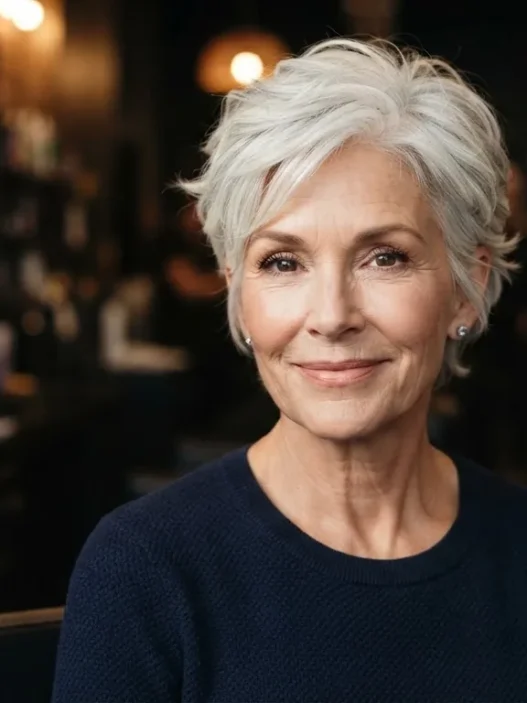
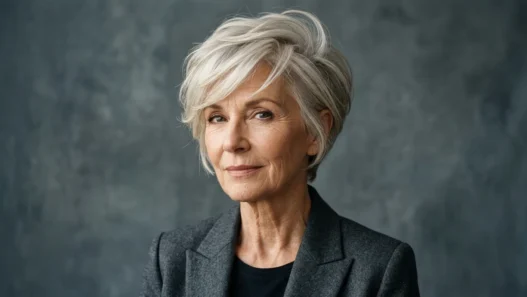
She was 62, silver, fine as spider silk, and she came in with a screenshot of a pixie bob haircut for fine hair. Tapered nape, longer front, lots of texture on top. Very cute on the 28-year-old in the photo.
I did my usual thing. Razor through the ends, interior layers, point-cut the front until it swung. She left happy. She came back three weeks later and her nape had vanished. Just… gone. The top separated into little wispies and the front hung in two lonely strings around her chin.
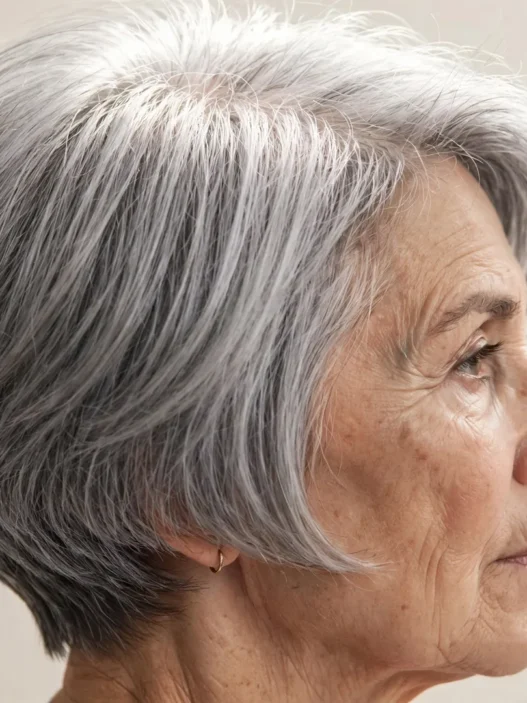
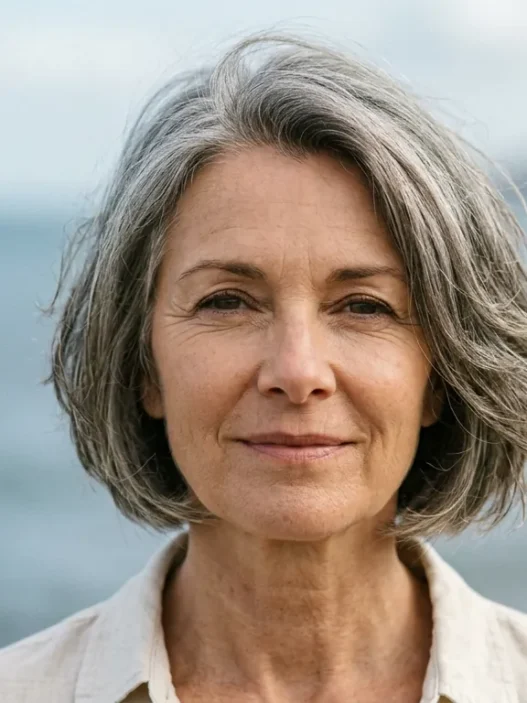
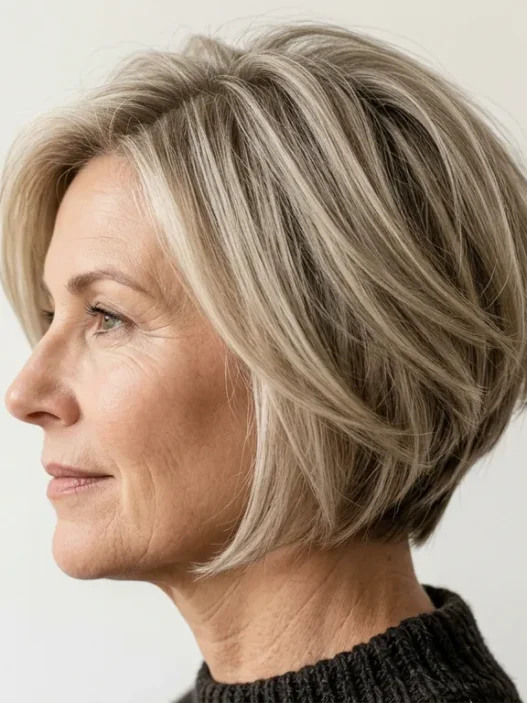
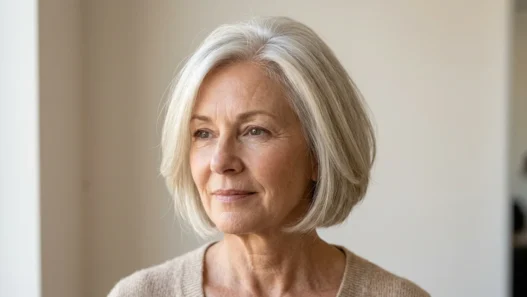
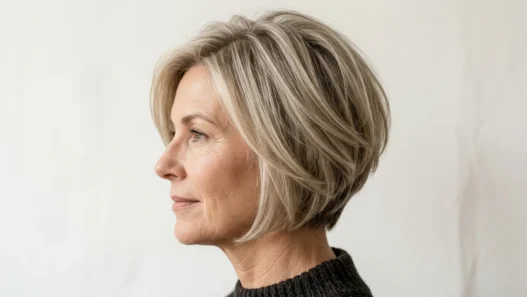
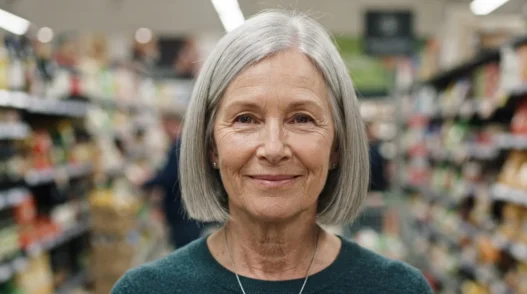
I felt sick. I re-wet her hair and just looked at it. No styling, no dryer tricks. And I could see exactly what I’d done — I’d cut away the only hair she had. That was the day I stopped blaming her hair texture and started blaming my training. Look at how she’s wearing hers in this photo — that angle is exactly what I mean about jawline framing. This is the length I’m talking about. See how it hits just below her chin?

I learn more these days from reading about 10 Best Haircuts for Fine Hair That Don’t Rely on Product than I ever did from those old layering charts, because density has to be built into the cut, not sprayed on after.
What I Do Instead
Okay, here’s my unpopular opinion, and other stylists get mad when I say this: most women over 60 with fine hair should not have layers. At all. Not really.
I know. Everyone says layers create volume. On thick hair, yes. On fine hair after 60? Layers mostly create air where you desperately needed hair. Give me a clean, almost-blunt perimeter over a shaggy bob any day.
Q: But won’t a blunt bob look heavy and flat? A: Only if you cut it long and one-length to the shoulders. Kept at chin to jaw, blunt reads as thick.
Q: What about the best bob haircuts for fine hair with no styling? A: That’s my whole goal now. If it needs a round brush and three products to survive, it’s the wrong cut.
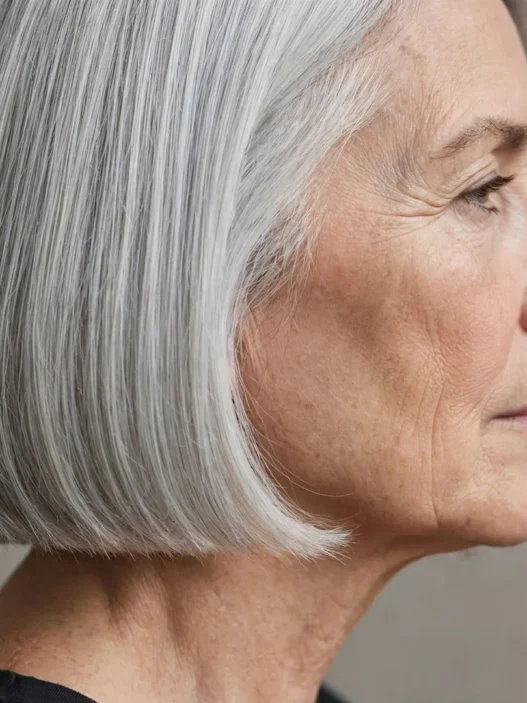
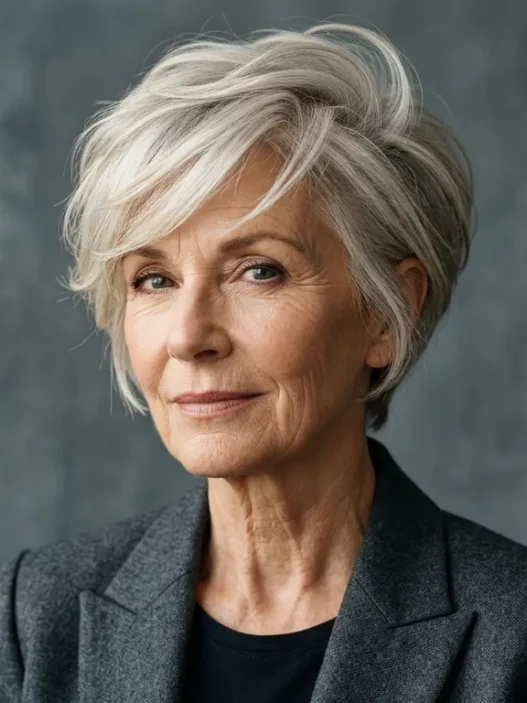
What fixed things for me was learning about cutting a clean baseline and styling for lift at the roots with techniques like those explained in articles about blow-dry methods for lift that actually last past noon, and I stopped using a razor on silver hair completely after I saw how frayed it looked under the salon lamp. She’s got a similar face shape to mine, and honestly, this cut looks incredible on her — no wisps, just that solid edge.

If your crown is the problem area more than your ends, my notes on Fine Thinning Hair will make more sense than anything I was taught in school.
See the Blunt Perimeter Technique Live
What I Teach Now
Blunt versus textured? For fine bob cuts after 60, I’m picking blunt 9 times out of 10. Here’s how I think about it now:
Old way: shattered perimeter, lightweight mousse, fingers. It looked airy for an hour, then separated. New way: solid chin-length line, minimal interior shaping only at the crown, matte paste just at the roots. It looks denser for three weeks, not three hours.
For bob cuts for fine hair, length is everything. Chin to jaw is the sweet spot — long enough to tuck, short enough to hold a bend. Go much past the collarbone and gravity wins. Go pixie-short and you lose the weight that pushes the sides out. I talk clients out of the super-stacked inverted shape more than I cut it now, because that graduation eats the nape on fine hair. A soft, straight line grows out so much better.

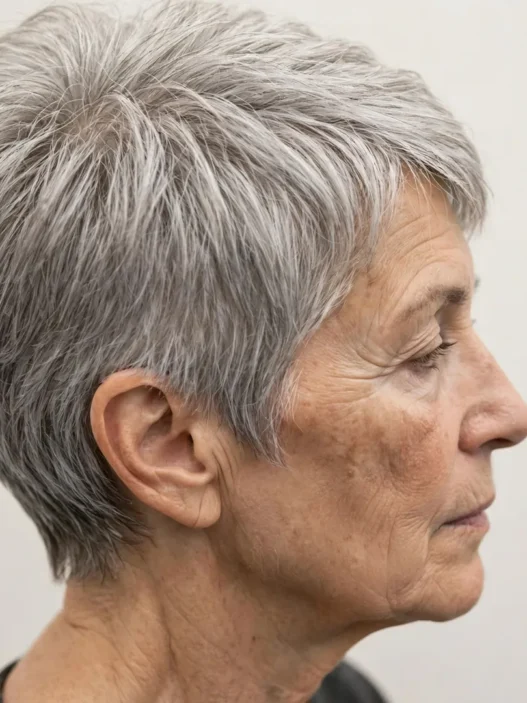
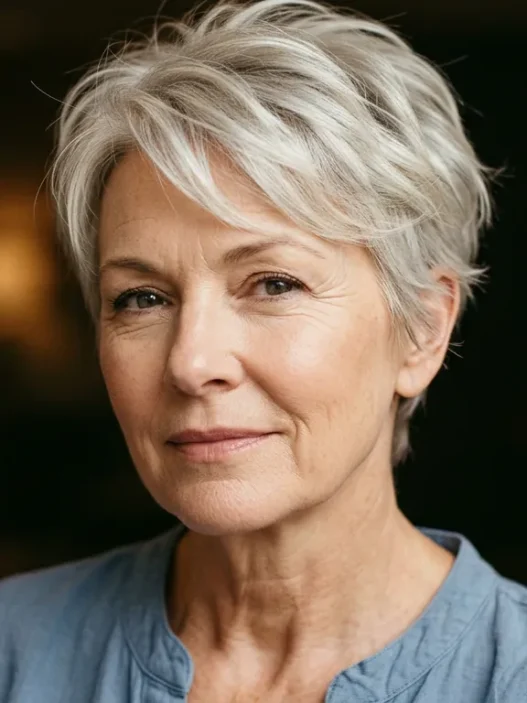
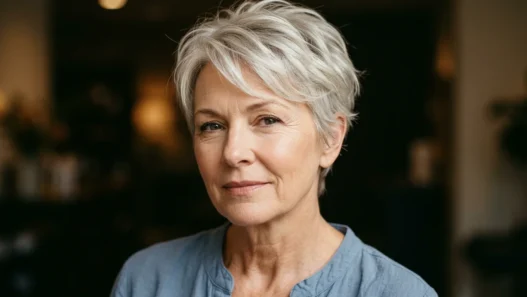
Last spring a client in her late 60s asked for Haircut For Fine Hair Over 50: 10 That Read Thicker by Week Three energy but for her age, and we landed on a jaw bob with a barely-there undercut — no visible layers. She sends me supermarket selfies now. This photo reminds me of her, standing in that flat overhead light and still having a real hemline. That’s when you know it works.
I also stopped over-thinning with texturizing shears by studying precision methods for density on real models with sparse ends instead of thick-haired mannequins, and honestly my grow-outs got cleaner almost immediately.

Bob Questions That Come Up In My Chair Every Week
Do bob haircuts for women over 60 with fine hair need layers for volume?
Not in my chair, no. I keep the perimeter solid and add lift only with crown shape and root direction. Layers through the ends just make fine silver go see-through faster.
How short should I go if my hair breaks easily?
Chin to jaw is safest. It takes the old, fragile length off while leaving enough weight to fake thickness. I only go shorter if you love styling every morning.
Can I air-dry a fine-hair bob after 60?
Yes, if the baseline is blunt. I have clients tuck one side behind the ear while damp and let the other fall forward. It sets a natural bend without heat.
Anyway, I’m still unlearning stuff. But if your bob disappears by wash day three, it’s probably not your hair — it was probably my old haircut. Ask for the line to stay. Your silver will thank you. — M.