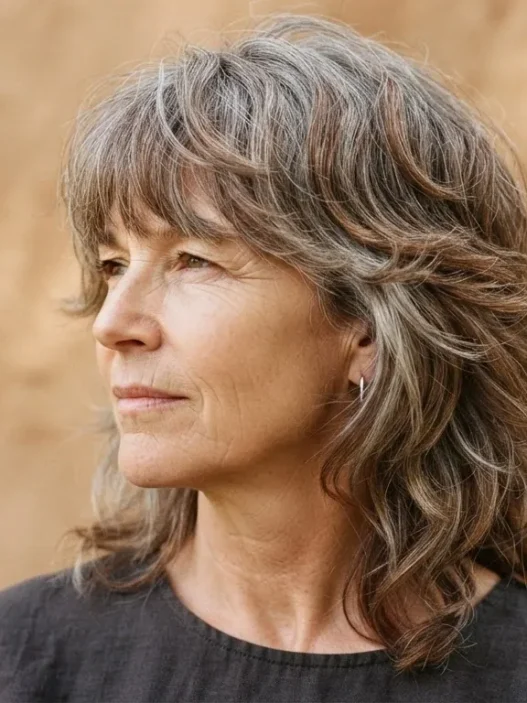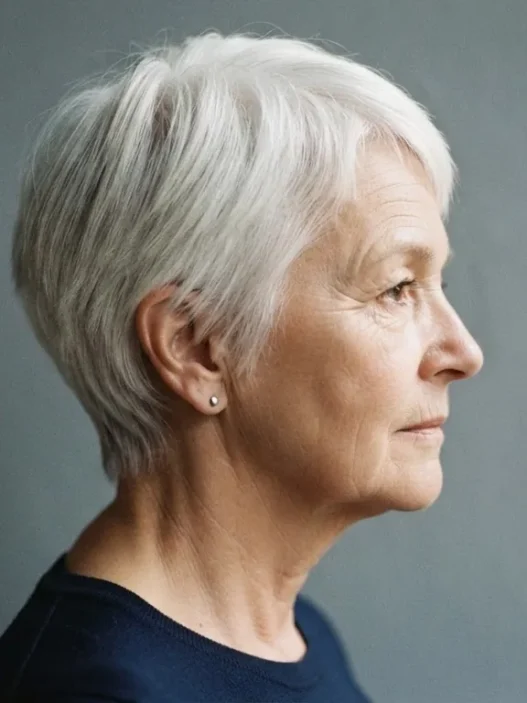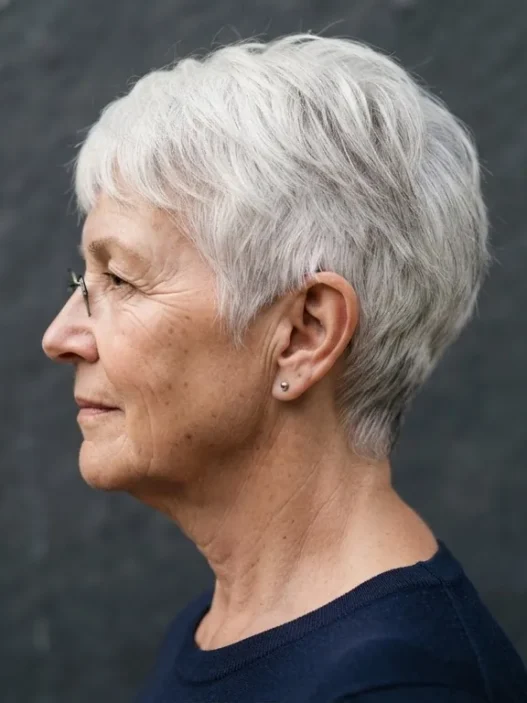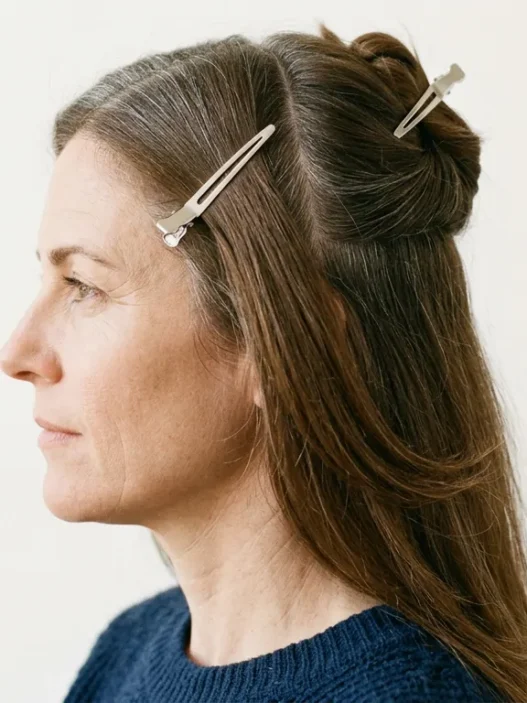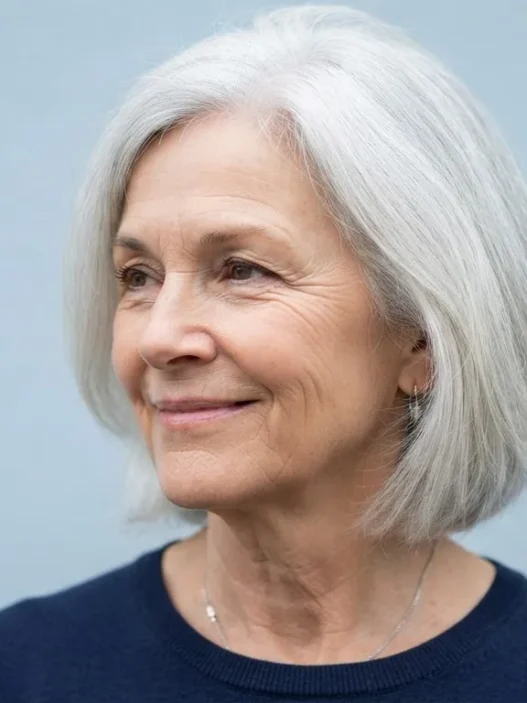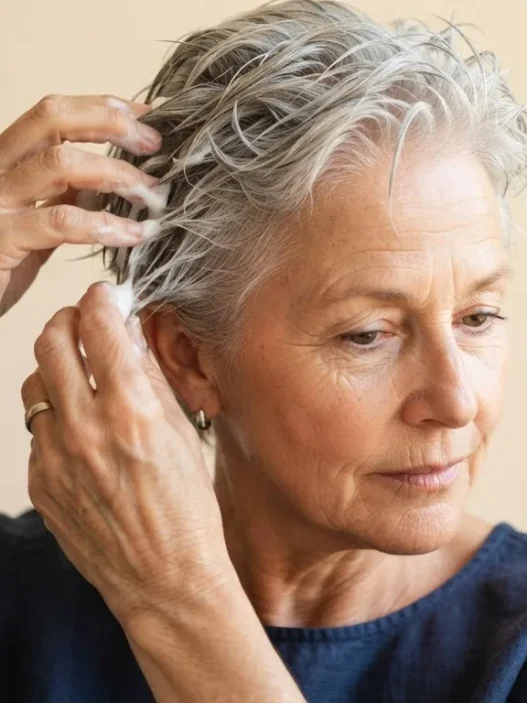




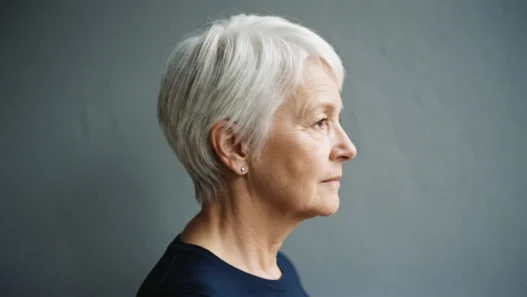




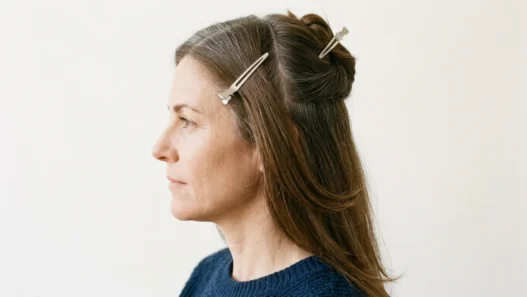
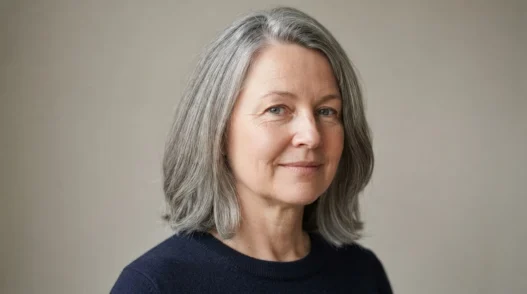
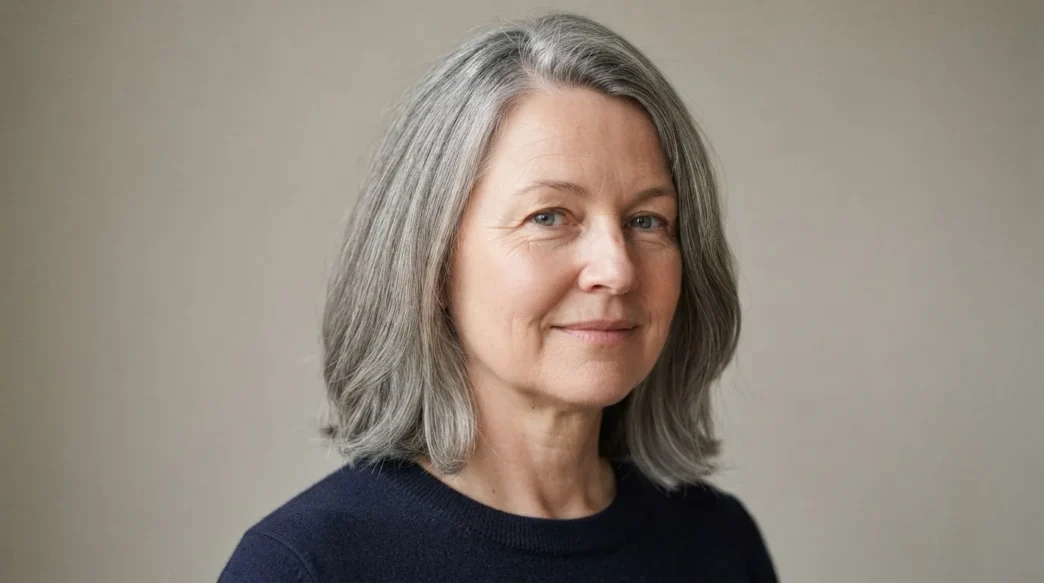
I’ve sat across from a lot of women in their fifties who’ve been told the same thing their whole lives: “avoid anything that adds width at the cheeks.” Fair enough — but that advice usually stops there, with no explanation of which cuts actually do the job and why. So this is the list I wish someone had handed me earlier. Nine cuts, each built differently, each doing a specific thing to redirect the eye away from the widest point of a round face. If you’re after the right haircut for a round face shape over 50, the construction matters more than the trend.
9 Haircuts for Round Faces Over 50 — What’s Inside
1. The Disconnected Lob
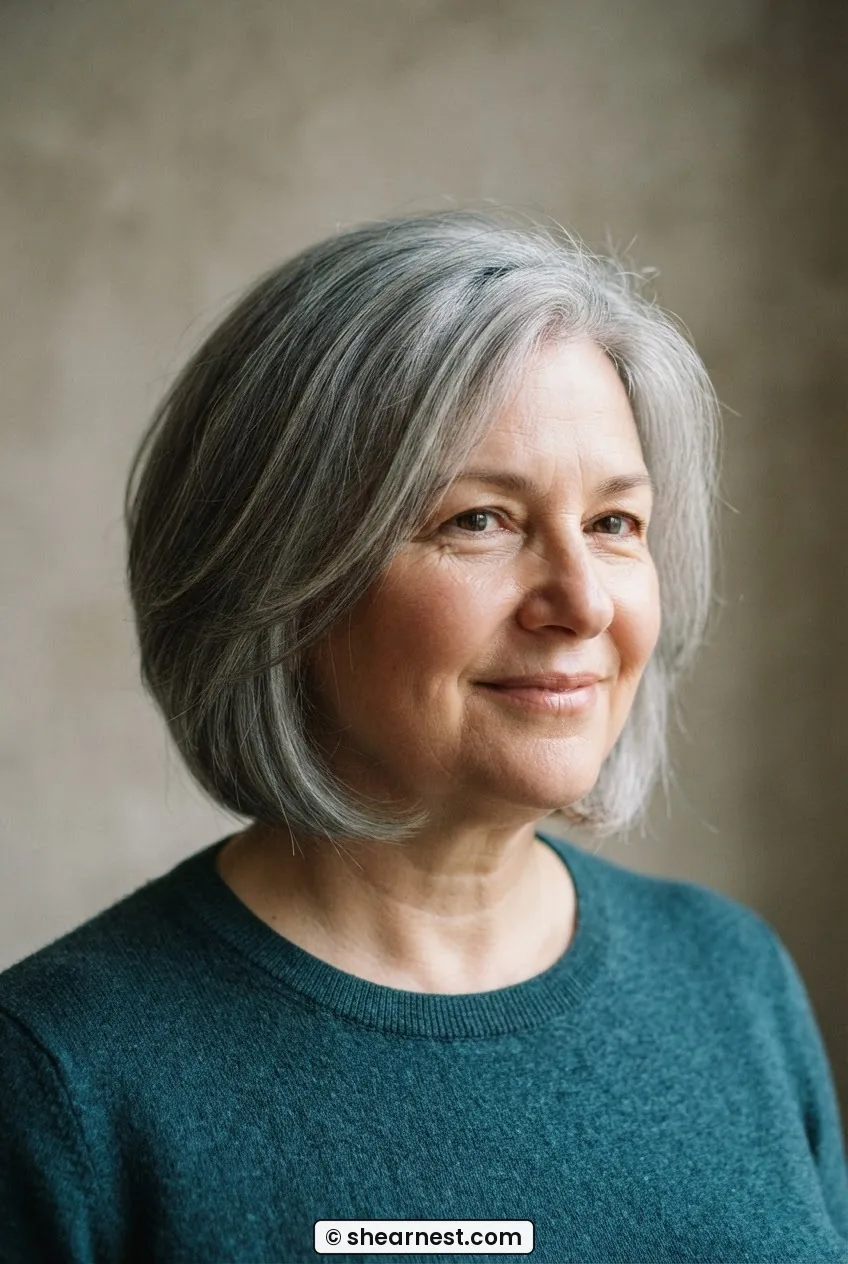
This is the one I find myself recommending most. The weight sits below the chin — usually two to three inches — with the perimeter cut blunt, and then the top section is point-cut or razor-finished to disconnect it visually from the length below. That gap between the cheekbone area and where the density starts is doing all the work. It draws the eye downward past the jaw, which is exactly what a rounder face shape needs. The disconnection also means the sides don’t cling to the face the way a standard lob sometimes can.
It suits fine-to-medium hair better than thick, because thick hair can fill that disconnected zone and lose the effect. Upkeep is every seven to nine weeks to keep the blunt perimeter sharp. At the chair: “I want a lob with the weight held below the chin, blunt perimeter, and the top section disconnected — no graduation connecting the top to the length.”
2. The Stacked-Back Bob
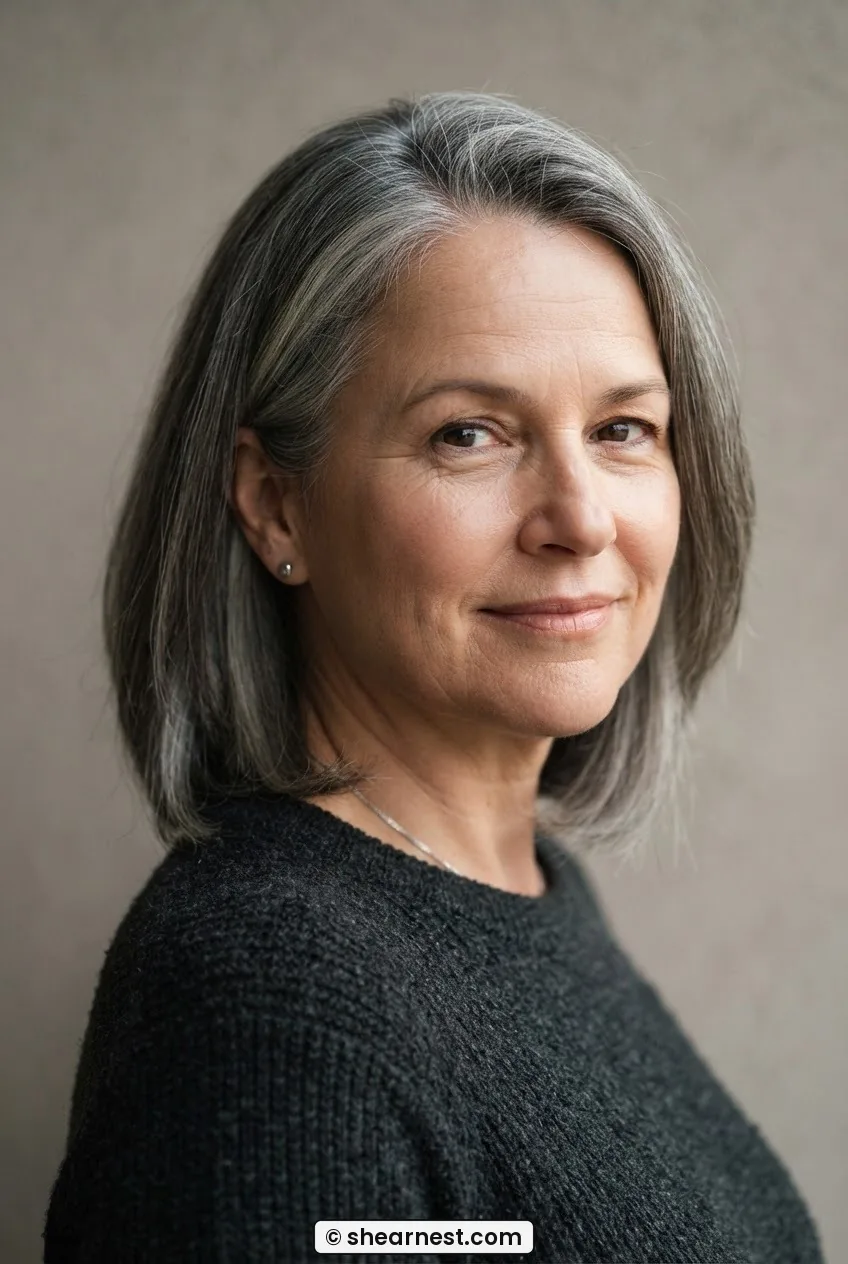
The stacking lives entirely at the back — close-graduated from the nape up to the occipital bone — while the front lengths are left longer, angling forward toward the chin or just past it. The result is that the silhouette narrows at the back (no width added there) while the longer front pieces frame downward alongside the face rather than fanning outward. For a round face shape, that forward angle is crucial. It creates the illusion of a longer oval.
Works beautifully on straight and slightly wavy hair. Thick hair can make the stack puff, so your stylist might need to point-cut into it to knock out some bulk. Maintenance: six to eight weeks, because the stacked nape grows out faster than everything else. At the chair: “Stacked graduation at the back, occipital and below only, with the front lengths angled forward past the chin.”
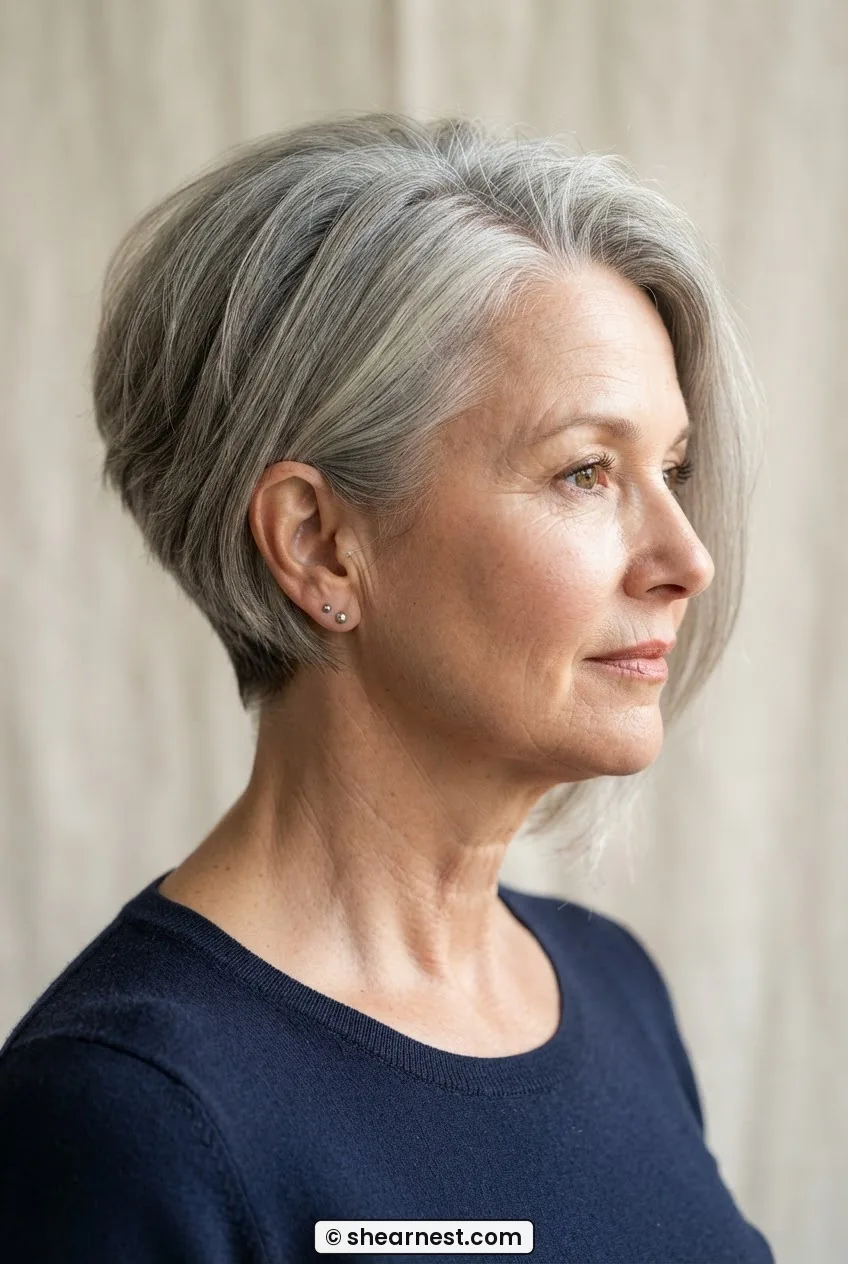
3. The Long Curtain-Bang Cut
Curtain bangs on a round face are misunderstood. The mistake is cutting them too short — anything above the brow can actually widen the face by shortening its apparent length. The version that works here is a long curtain fringe, cut to cheekbone level or longer, parted softly in the centre and swept outward. The centre parting creates a vertical line right through the face. The sweep creates two diagonal lines moving away from centre. Both lines elongate.
Pair this with a mid-length cut — anywhere from chin to collarbone — and keep the sides falling straight rather than curling in. This is one of the few cuts that genuinely suits fine hair because the fringe adds the appearance of density at the front without bulk at the sides. Grows out relatively gracefully, so you can stretch appointments to ten weeks. At the chair: “Long curtain fringe, cheekbone length minimum, centre part, feathered outward — not cut above the brow.”
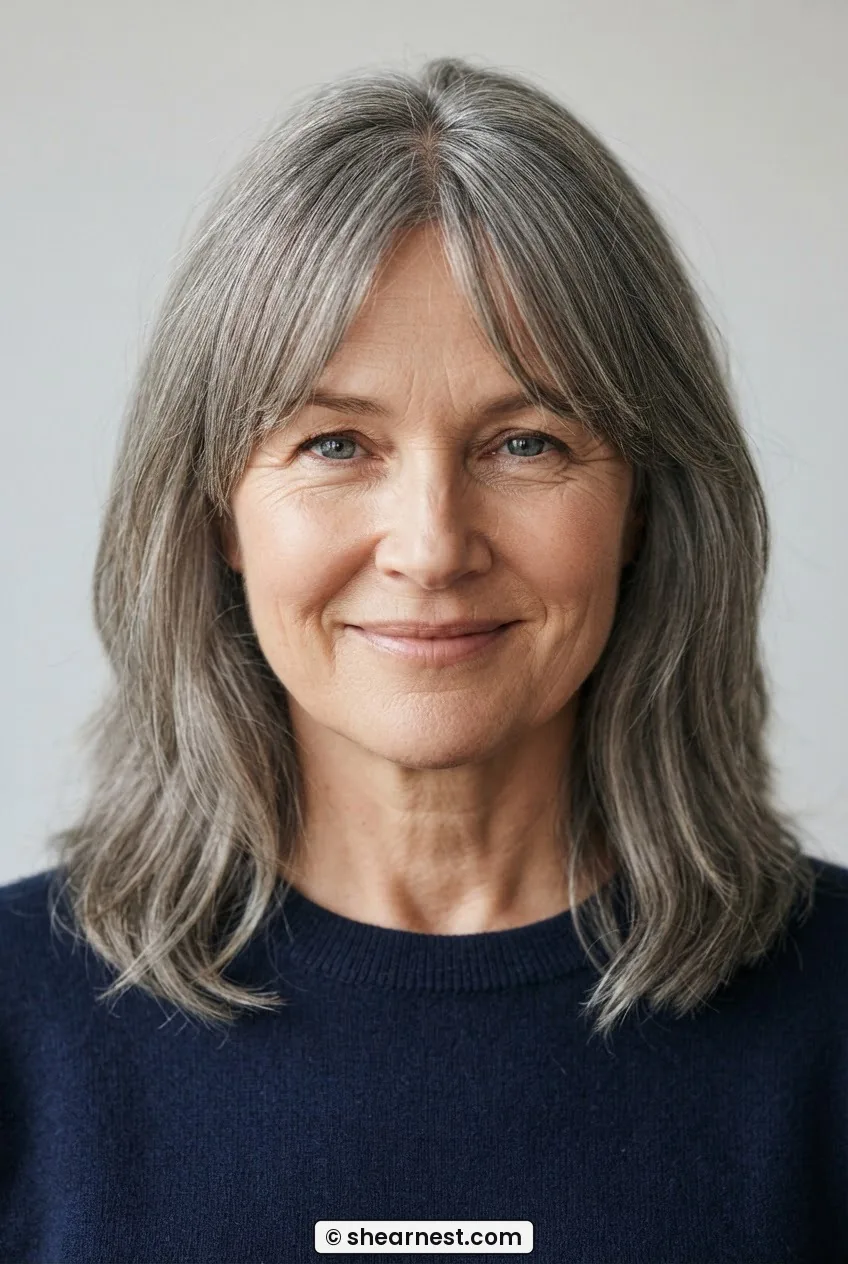
4. The Textured Shag with Face-Framing Layers
The shag is having a long moment and honestly it earns it — but for a round face over 50, the construction needs to be specific. The face-framing layers should start no higher than the cheekbone and be cut at an angle pointing downward toward the chin, not outward toward the ears. Layers that fan sideways add width. Layers that point down create a chevron effect that narrows the face visually. The rest of the shag — the internal layers and the curtain fringe if you want one — does its usual job of adding movement and reducing bulk.
This works best on medium to thick hair. Fine hair can end up looking thin and wispy with too many layers. For wavy haircuts for women over 50, this is honestly one of the most flattering options because the wave texture fills out the layers without adding width at the cheeks. Maintenance every eight weeks to keep the face-framing layers intentional. At the chair: “Shag cut, face-framing layers starting at cheekbone and pointing downward toward chin — not fanned toward the ears.”
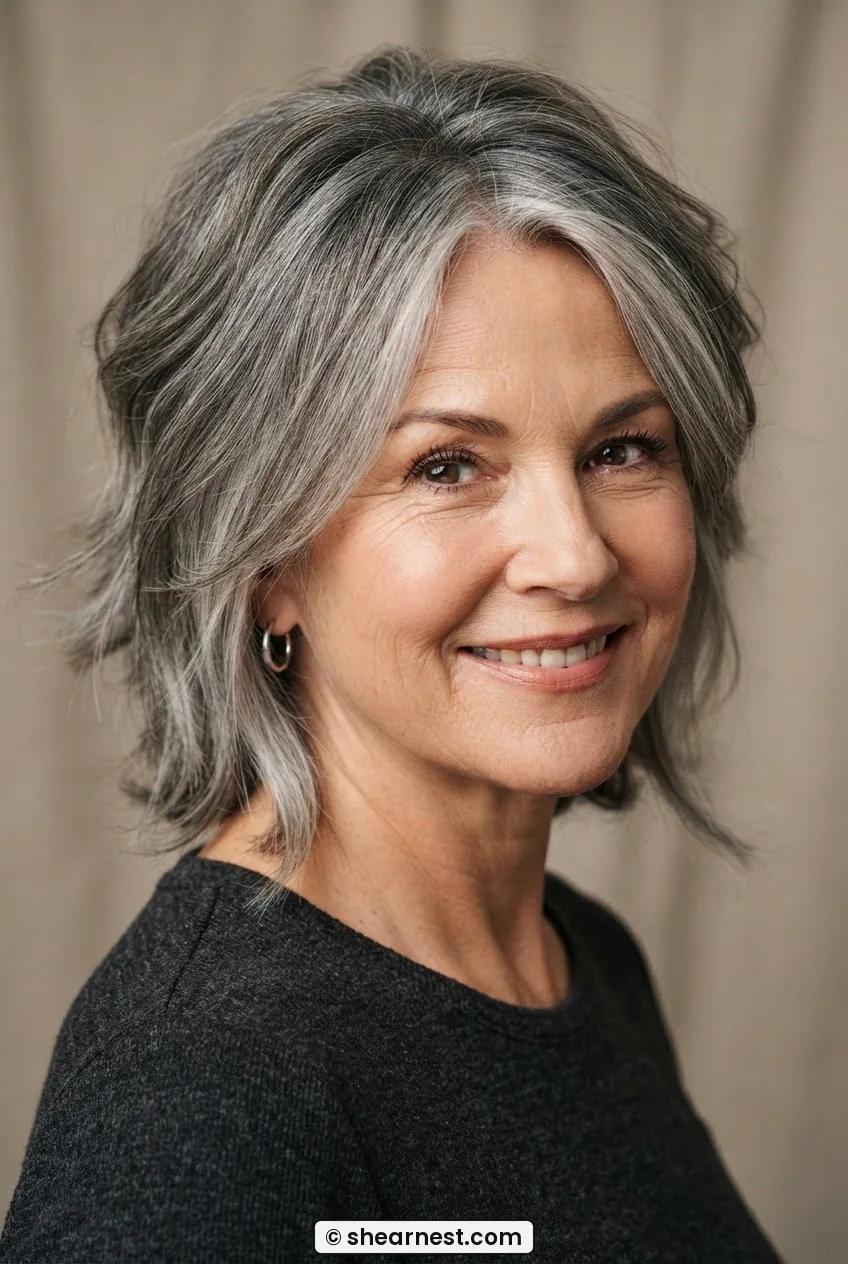
5. The Blunt One-Length Past the Jaw
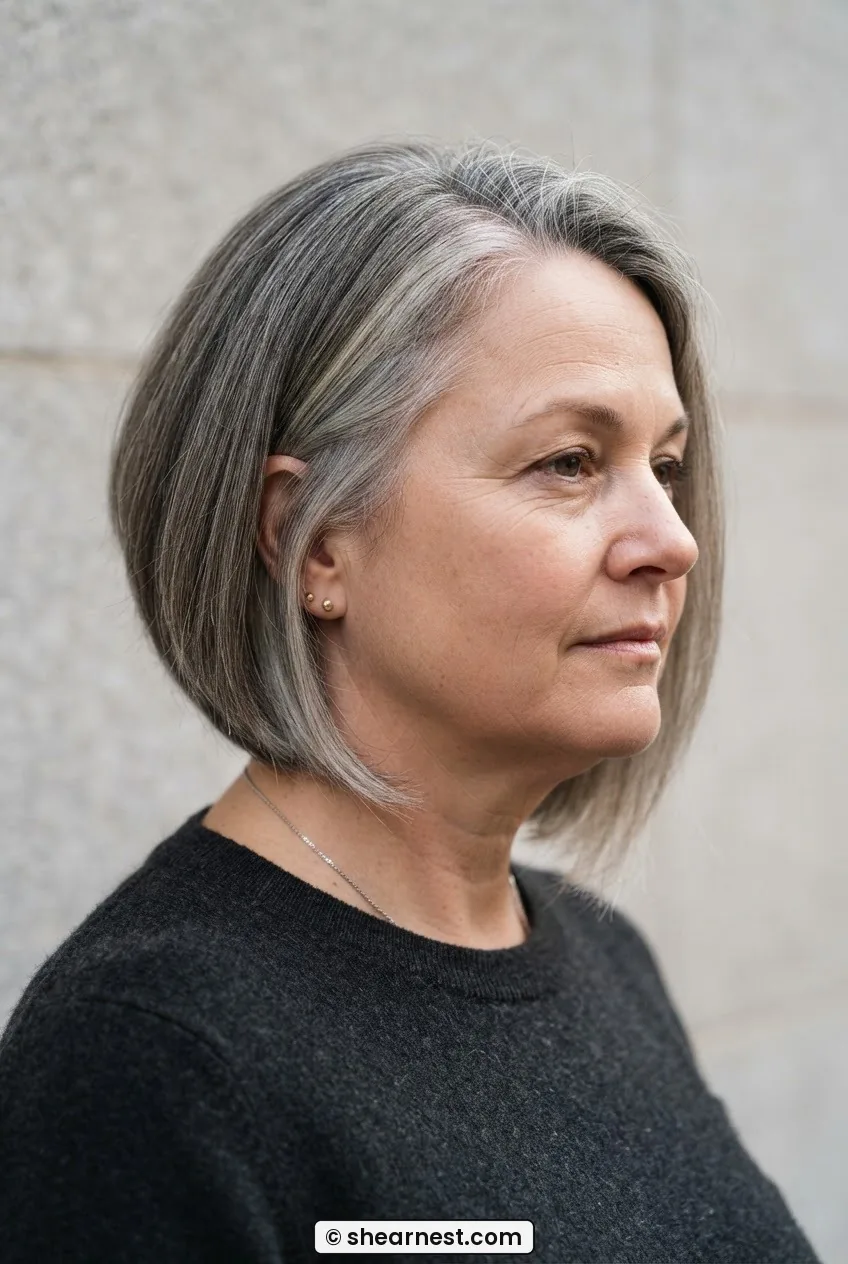
Simple. Underrated. Look at the woman in the photo here — see how the blunt line sitting just below her jaw creates a clean horizontal that draws the eye to the neck rather than the widest part of the face? That’s the whole mechanism. One length, no graduation, no layers. The bluntness of the cut gives the hair density it might not actually have, and the length past the jaw means the widest part of the face sits inside the hair rather than at the edge of it.
This is a particularly strong choice if you’re working with straight hair — you can read more about why construction matters so much in my post on straight hair cuts for women over 50. For wavy or curly hair, the blunt line can get lost in texture. Upkeep every six to eight weeks because the blunt perimeter chips fast. At the chair: “One-length blunt cut, just below the jaw, no graduation, no layers, perimeter only.”
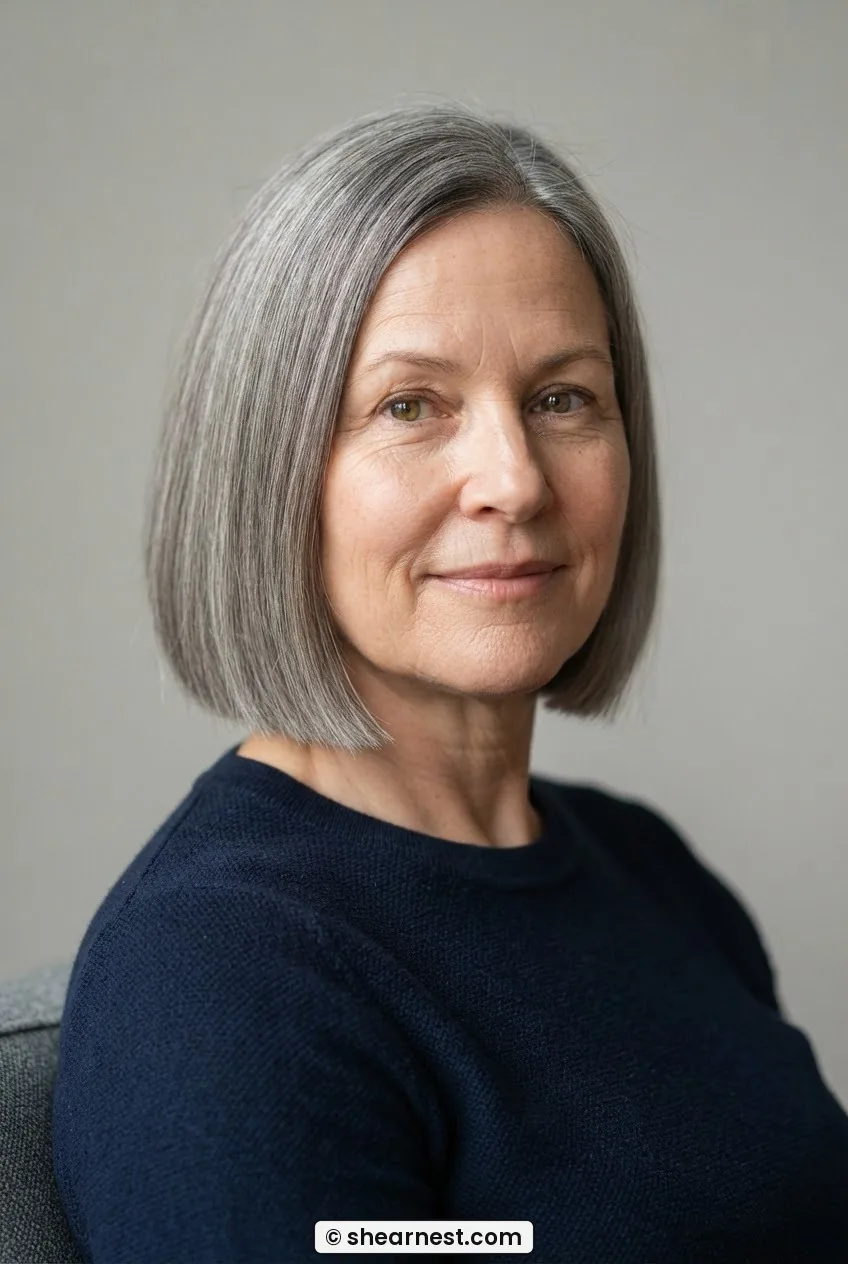
My personal pick is actually this one — the blunt one-length past the jaw. I had a client in her mid-fifties with a soft round face and medium-density hair who’d been layering everything for years trying to add “lightness.” We went blunt, past the jaw, dead straight. She cried. I mean that in the good way. Sometimes less construction is the whole answer.
6. The Asymmetric Bob
One side longer than the other. Sounds simple, sounds almost gimmicky — but the geometry here is doing something genuinely useful for a round face. The longer side creates a diagonal line that runs from the ear down toward the chin, and diagonals are the opposite of round. The shorter side, typically cut to just below the ear or at the jawline, breaks the symmetry that can make a round face look more circular. Your eye follows the longest point, which is always angled downward.
Keep the longer side at chin length or below — going shorter than the chin on the long side defeats the purpose. This suits medium and fine hair well. Very thick hair can make the longer side feel heavy unless the interior is thinned. Grow-out can look intentional up to about eight weeks before the asymmetry starts to look unplanned. At the chair: “Asymmetric bob — longer side chin length or just below, shorter side at the jaw or ear, clean perimeter on both sides.”
7. The Soft Pixie with Height
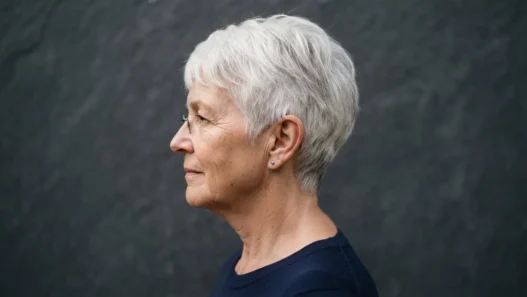
The pixie is the one that makes people nervous when they have a round face. And a badly built pixie absolutely can make things worse — specifically one that’s cut close on top with no volume and left full at the sides. The version that works here is the opposite: volume and height built into the crown through longer lengths on top (two to three inches), with the sides tapered close and the nape kept tight. Height = length added vertically. A rounder face looks less round when the overall shape is taller than it is wide.
This is genuinely one of my favourite cuts for fine hair over 50 because the close sides make the most of whatever density is there, rather than spreading thin hair across a wider surface. If fine hair is something you’re dealing with specifically, the post on haircut for fine hair over 50 covers the full picture. Upkeep is every five to six weeks — pixies grow out fast. At the chair: “Soft pixie with length kept on top for volume and height, tapered close on the sides and nape — I want the crown taller, not wider.”
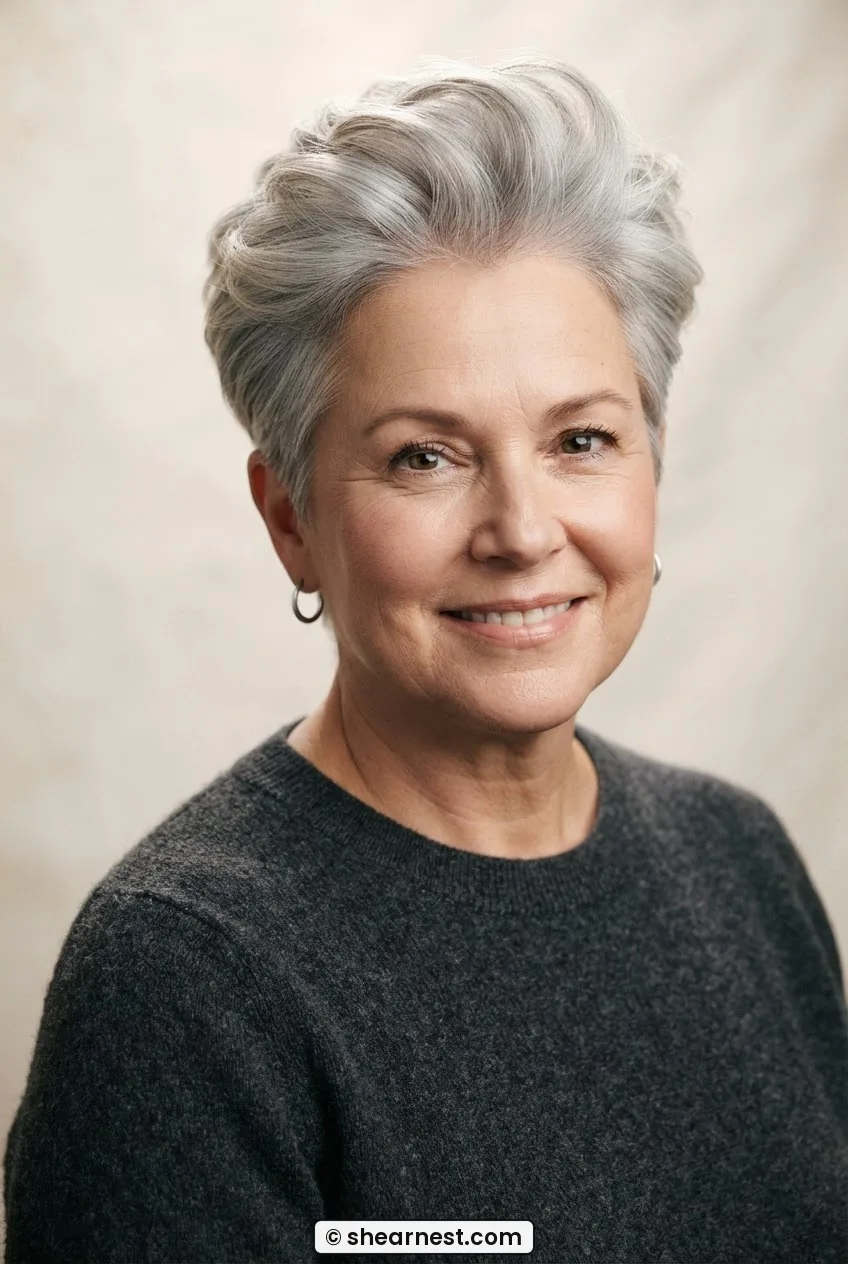
A Stylist Demonstrates the Crown-Height Pixie
8. The Side-Parted Mid-Length
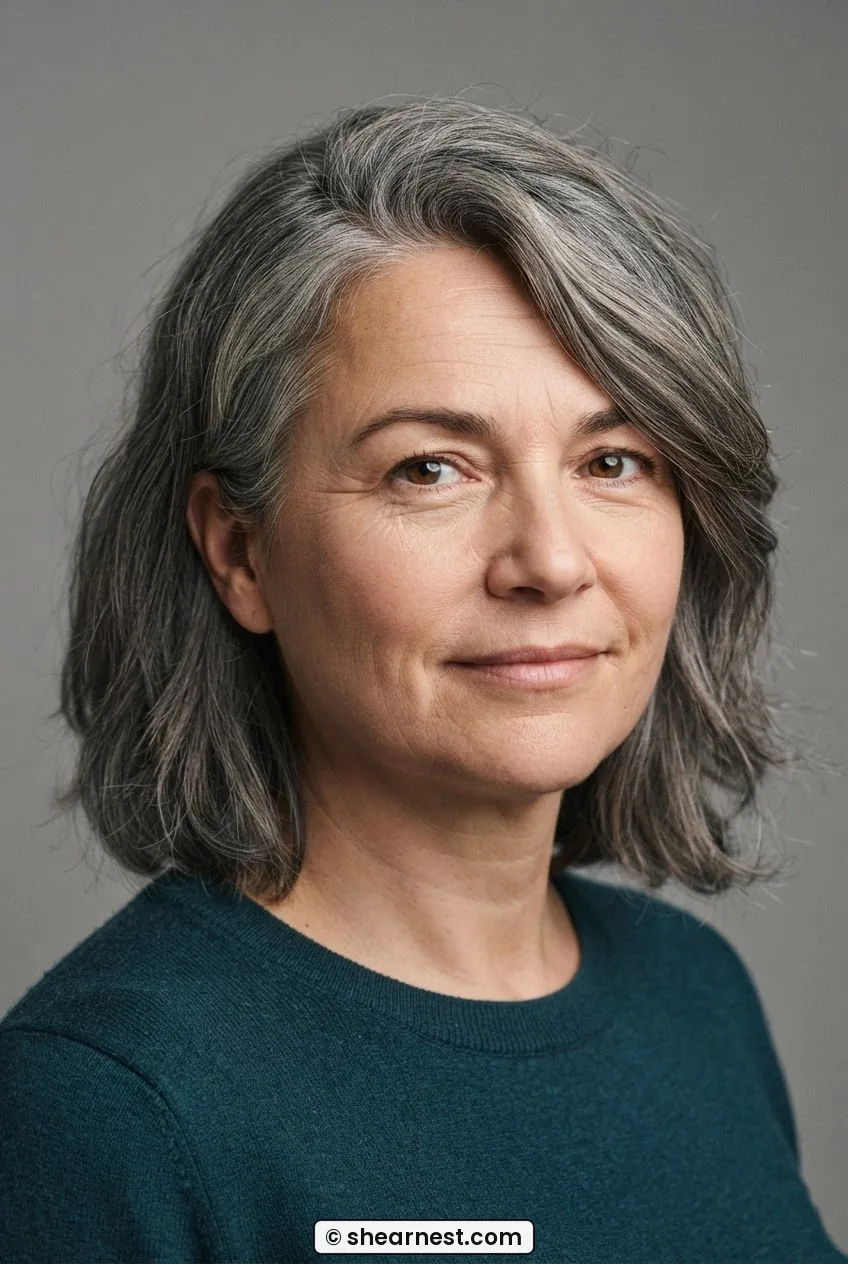
The part does more work than the cut here. A centre part on a round face creates a vertical line, which helps, but a deep side part does something slightly different — it creates asymmetry across the top of the head, which breaks the rounded silhouette. The weight of hair falling across one side of the forehead reduces the visible width there, and the hair on the other side sits closer to the head. The length sits between chin and collarbone, with soft layers through the interior only — not at the face frame.
This is the most low-maintenance option on the list. The side part can be encouraged with a blow-dry rather than cut in, which means it grows out gracefully and you can stretch to ten or twelve weeks between appointments. It works on almost every hair type. At the chair: “Mid-length cut between chin and collarbone, soft interior layers only, set up for a deep side part — keep the face-framing pieces long.”
9. The Layered Cut for Thick Hair
Thick hair on a round face has a specific problem: it can build width at exactly the wrong place — the cheeks and ears — if the layers are cut horizontally or if there’s too much bulk retained through the sides. The cut that solves this removes weight through the interior (not the perimeter) using point-cutting or channel cutting, keeps the exterior lengths intact, and directs any remaining layers to fall vertically rather than horizontally. The perimeter stays at or below the jaw. The sides are kept flat against the head.
It’s also worth thinking about colour here — face-framing highlights can reinforce the vertical lines the cut creates. Face-framing highlights placed correctly along the front sections pull the eye downward and inward, which works with the cut rather than against it. If you have an oval face shape as well as thick hair, the approach shifts slightly — I covered that separately in my post on oval face hairstyles for women over 50. Upkeep every eight weeks. At the chair: “Interior weight removal through point-cutting, perimeter kept below the jaw, layers directed vertically — I want the sides flat, not wide.”
Quick Answers
Does a bob always work for a round face over 50?
A standard bob can work — but only if the length hits below the jaw. A chin-length or shorter bob that ends at the widest point of the face tends to emphasise roundness rather than reduce it. The stacked-back bob and the asymmetric bob on this list are the two constructions that reliably avoid that problem.
Can I wear my hair up if I have a round face shape?
Yes — and updos can actually be very flattering on a round face because gathering hair off the face removes the side width entirely. The key is to add height at the crown rather than width at the sides. A loose chignon positioned high rather than low at the nape does this well. For a special occasion like a wedding, updo styles for round faces that keep volume vertical are the direction to go.
What should I avoid asking for?
Avoid chin-length one-length bobs (weight at the widest point), heavy side-swept volume, and layers that start above the cheekbone and angle outward toward the ears. Also avoid very short crops where the overall silhouette is as wide as it is tall — unless you’re building height into the crown, like the soft pixie above.
Does going grey change which cut I should choose?
Grey hair is often coarser and drier than pigmented hair, which changes how it behaves after cutting — it can expand outward more than it falls downward. This makes the blunt perimeter cuts (the disconnected lob, the blunt one-length) particularly useful, because the weight line counteracts that outward expansion. You can also read up on how grey hair texture affects cut choice when you’re talking to your stylist about construction.
That’s the nine. None of them are trends — they’re constructions, and constructions don’t go out of style. The one thing they all have in common is that they move weight away from the widest part of the face and create length somewhere the eye can follow. Pick the one that matches your hair type and your maintenance window, write down the language in the “at the chair” note, and go ask for exactly that. Your stylist will know what you mean.