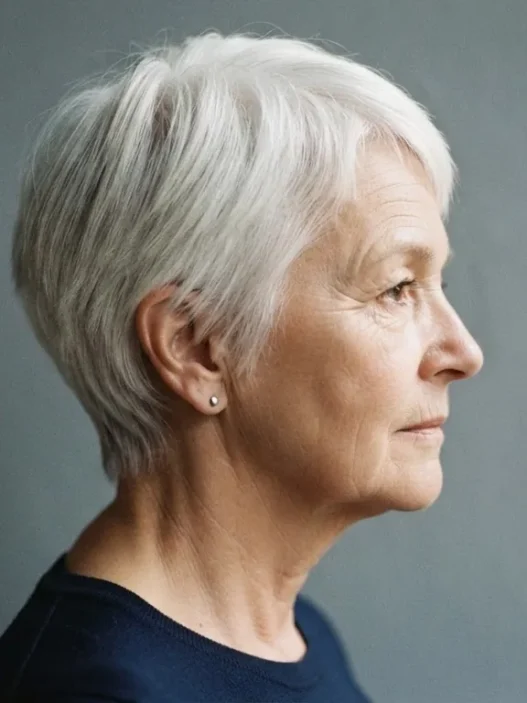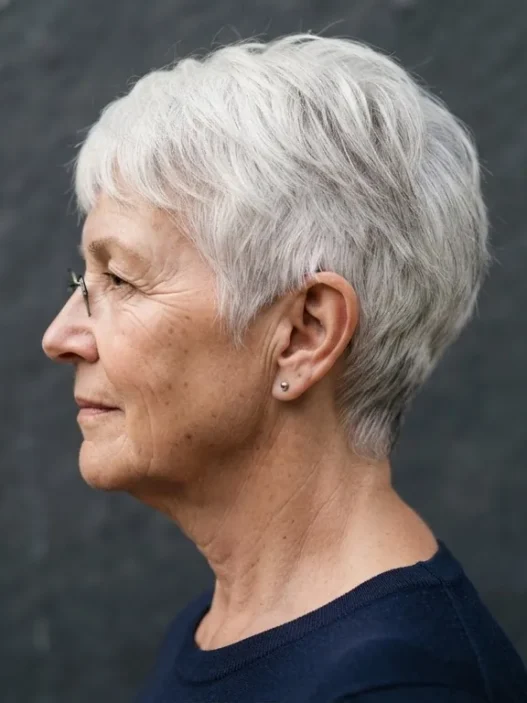







A client came in a few years ago with a photograph torn from a magazine — a gorgeous side-swept fringe, heavy and glossy, dramatic diagonal landing just past the cheekbone. She was 58. She wanted it exactly. I remember pausing before I said anything, because the woman in that photo had three things my client didn’t: thick 30-year-old hair, strong overhead studio lighting designed to eliminate shadows, and about forty minutes of professional styling before anyone pressed the shutter. That pause I took? That’s where this whole post comes from.
What’s In This Post — Skip Ahead If You Like
The Photograph Problem
Here’s the thing nobody says out loud: most reference photos for side bangs hairstyles are shot in conditions that erase exactly the things that matter after 50. Cowlicks. Fine temples. The way hair now grows in slightly differently at the hairline. The way a heavy bang, when it loses its blowout after day two, starts to separate and sit in a way it never did at 35.
I’m not saying side bangs don’t work. They absolutely do — I think they can be one of the most flattering fringe options for women past midlife, honestly more forgiving than a straight blunt fringe. But the version that works is often meaningfully different from the version in the photo. Lighter. More feathered into the length. Starting further back from the crown. The mechanics shift.
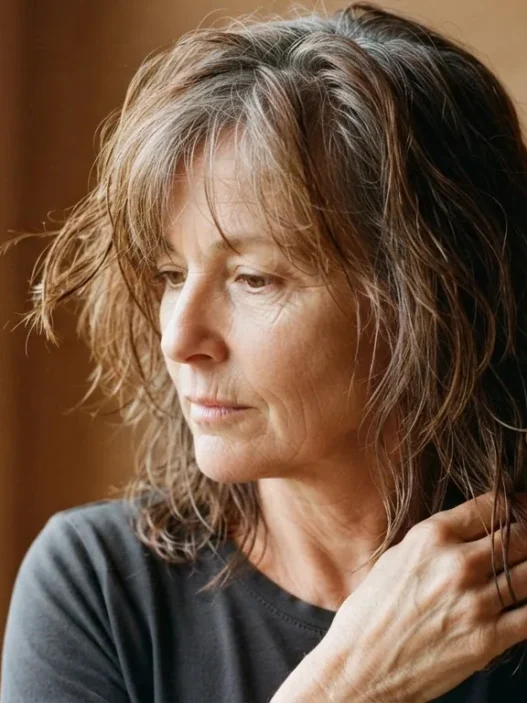
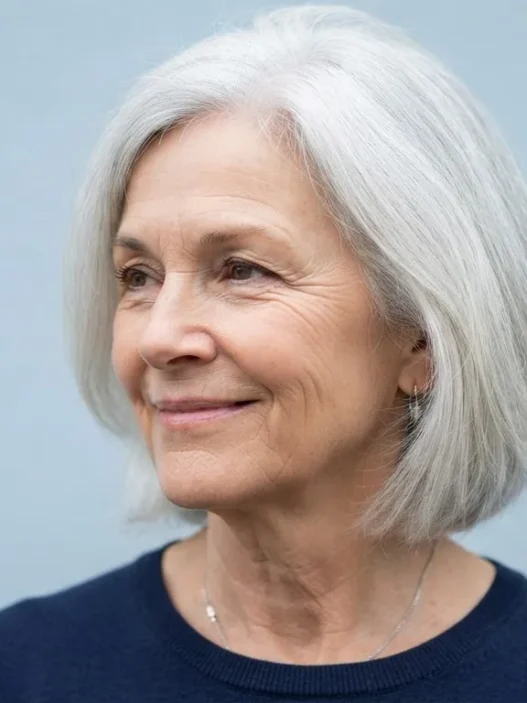
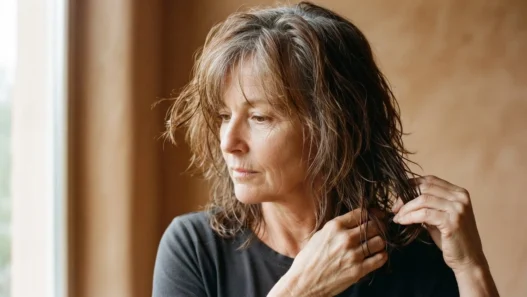
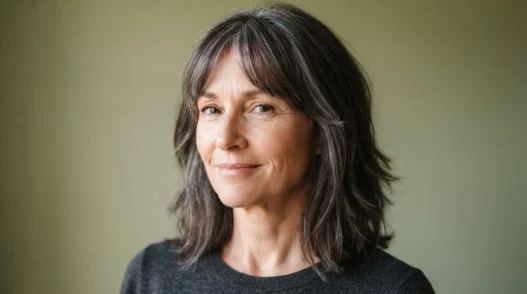
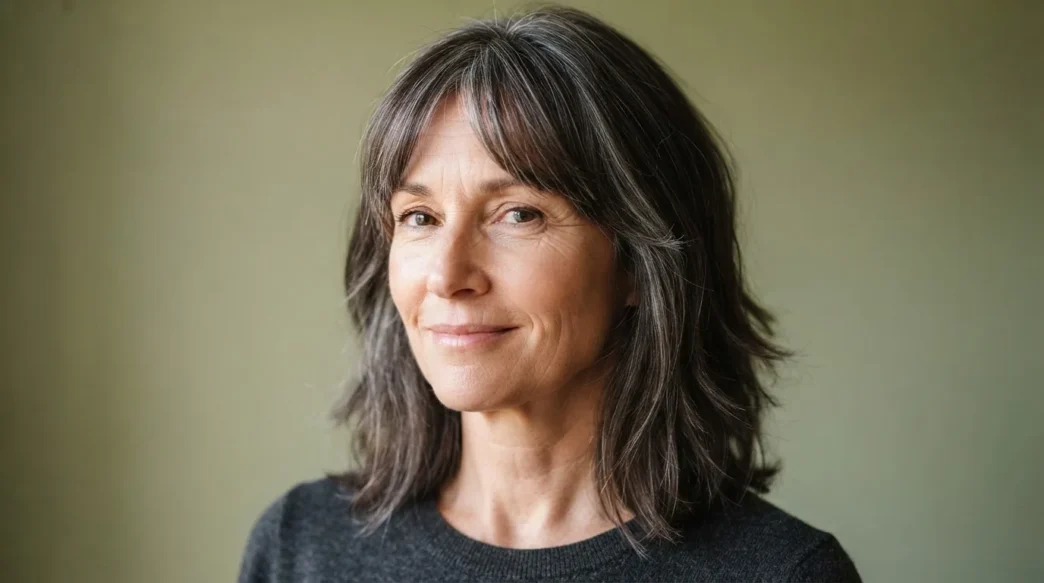
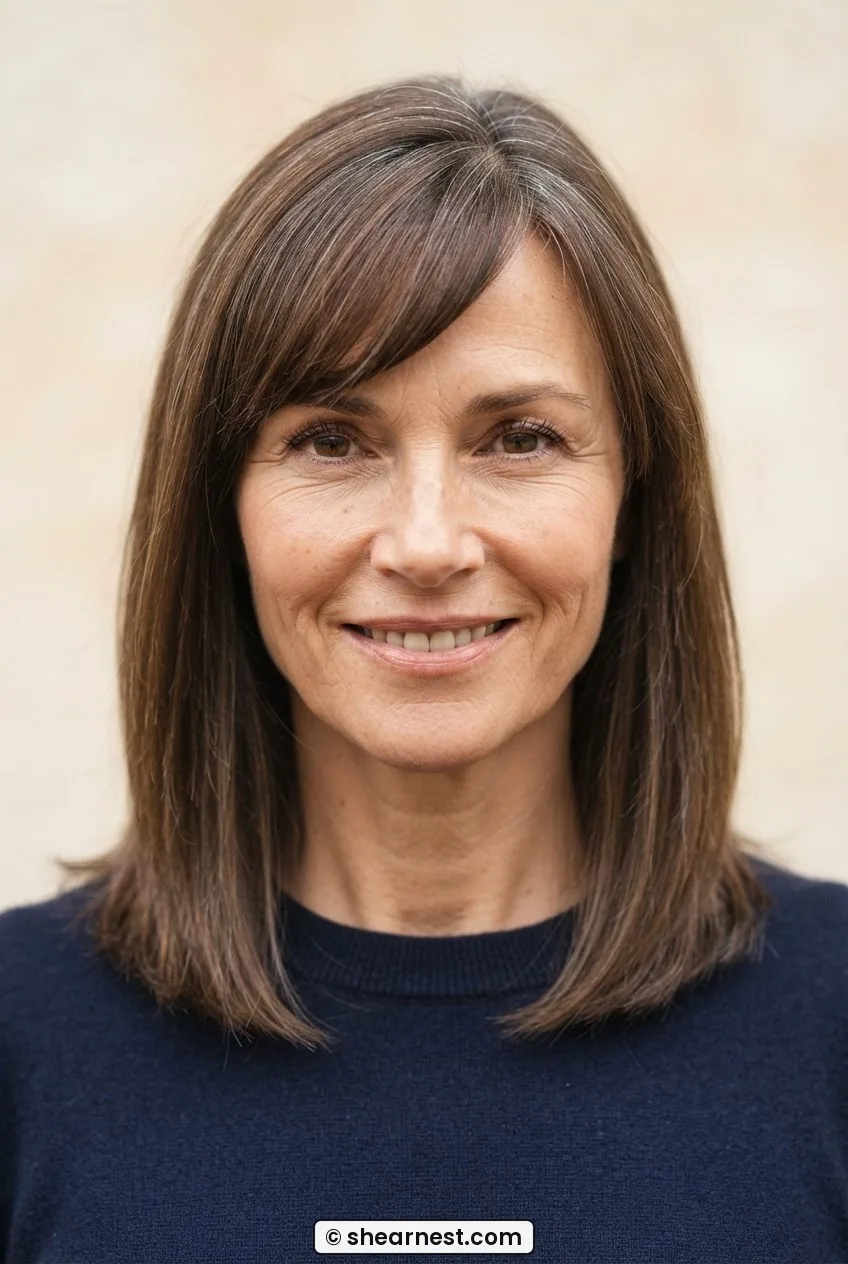
Look at her in the image below — that soft, wispy diagonal across the forehead, blending into the mid-length around her collarbone. Notice how it doesn’t actually start very far back on her head. The weight is concentrated toward the front quarter of the bang, not distributed across the whole section. That’s what I mean. The shape is doing work that a thicker, heavier bang simply can’t replicate when the hair at the temple is finer or starting to silver.
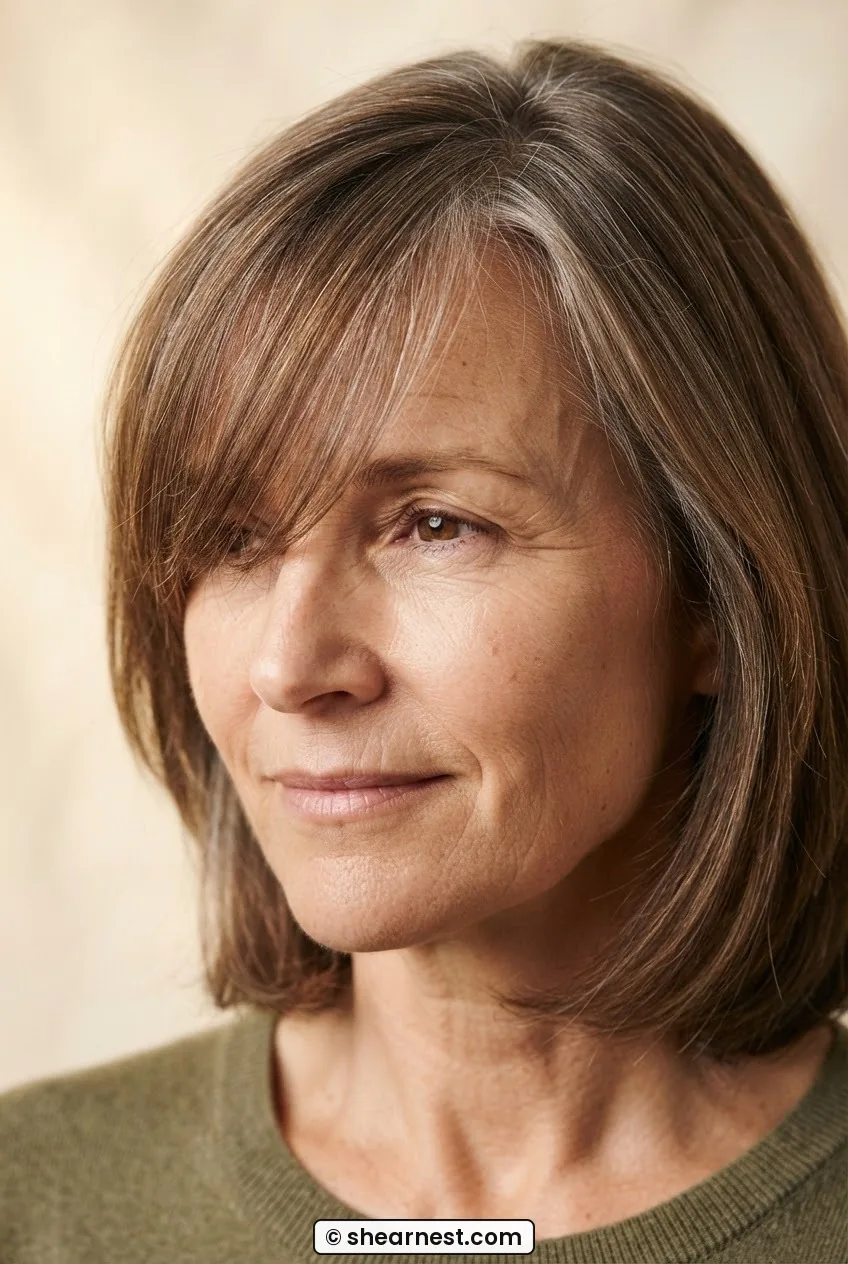
When I look at before-and-after photos from my own chair — and I’ve been doing this long enough that I have a lot of them — the women who are happiest with their side-swept fringe past 50 are the ones who let go of the magazine photo and described how they wanted to feel instead. That’s when we get somewhere real.
Why the Sweep Direction Is Everything
The direction a side bang sweeps isn’t decorative. It’s structural. And after 50, with a softened jawline and sometimes a slightly fuller face through the middle, that direction becomes genuinely consequential in a way it just isn’t when you’re younger and bone structure is doing most of the work for you.
Sweeping toward a stronger or higher cheekbone draws the eye upward. Sweeping toward the jaw does the opposite — it can pull attention downward and widen the lower face, which is rarely what anyone wants. I’ve had clients come in convinced they need to sweep the bang toward their dominant side (usually the left, for some reason — I’ve never fully understood this preference), and when I actually map where their cheekbones sit relative to their temples, the opposite direction would serve them so much better.
A simple test I do in consultation: I hold a section of dry hair at a diagonal and just ask the client to look at both directions in the mirror. Not for long. Three seconds each. Nine times out of ten they immediately know which one. The eye just responds. Trust that response — it’s not about symmetry rules or face shape categories, it’s about actual light and shadow landing on actual features.
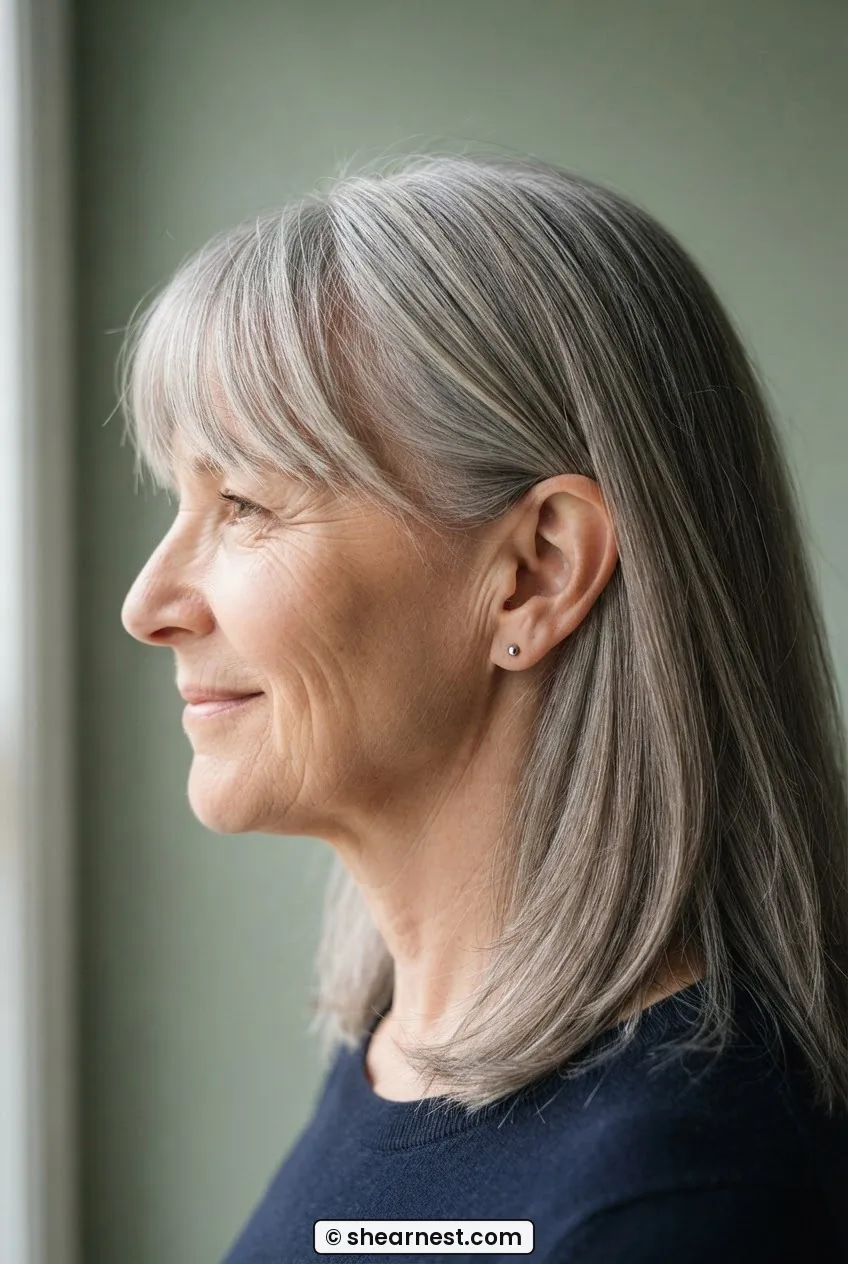
One thing worth knowing: if you have any crown thinning happening — and a lot of us do, quietly, from about 52 onwards — the side bang section needs to start further forward than you’d think. Pulling from the crown to create volume in the fringe will only make the thinning more visible when the bang eventually moves. Keep the section front-weighted. Your stylist should be thinking about this even if you aren’t asking directly. If they’re not, worth asking.
What I Changed My Mind About With Fine Hair
I used to tell clients with fine hair to avoid side bangs altogether. I was wrong about that. Not embarrassingly wrong — there was a real logic to it, because fine hair doesn’t hold a sweep the way medium or thick hair does, and an unsupported fine bang can go flat and limp by ten in the morning. But I overcorrected. I was steering women away from something that, with the right execution, is actually better suited to fine hair than a blunt fringe is.
Here’s what changed my thinking: I had a client — fine, straight hair, very silvery at the temples by the time she was 55 — who asked for a side-swept fringe despite everything I’d said previously. She’d done her own research. She’d found that if the bang was cut in long, disconnected points rather than a clean diagonal line, it actually moved and separated beautifully. Like it was meant to be that way. The texture that I’d always treated as the problem became the whole point.
For fine hair, the key shifts are: longer overall length on the bang (so it has more weight at the tip), a razor or point-cut finish rather than scissors-over-comb, and — this is the part most stylists skip — a very light hold product applied before drying, not after. Touching fine hair with product after it dries just weights it down immediately. If you want to read more about how cut technique plays into this for fine hair overall, I’ve written about it separately in my piece on haircut for fine hair over 50, which goes deeper into this territory.
Also worth saying: the volume techniques for fine hair conversation is relevant here too. Side bangs on fine hair styled with a round brush and low heat actually hold surprisingly well — better than the same bang dried without tension. The physics of it make sense once you think about it. You’re building in the memory of the curve before the hair sets.
A Tutorial That Showed Me I Was Wrong
The Lob Connection
Side bangs and a lob are one of those combinations that seems almost too obvious once you’ve seen it work, and yet I’m surprised by how many women arrive in the chair with one but not the other. The lob — that collarbone-grazing length — creates a perimeter that gives the side-swept fringe somewhere to fall into. Without that length, the bang can feel disconnected, like a separate decision from the rest of the cut rather than part of one continuous shape.
The reason this pairing works so well specifically past 50 is that the lob is long enough to soften the jaw while the side fringe redirects attention upward toward the eyes. You get a double movement: down at the length, up at the fringe. It creates visual interest without effort, which is frankly what all of us want from a haircut at this point in life. I don’t want to think about my hair for thirty minutes in the morning. I want it to just work.
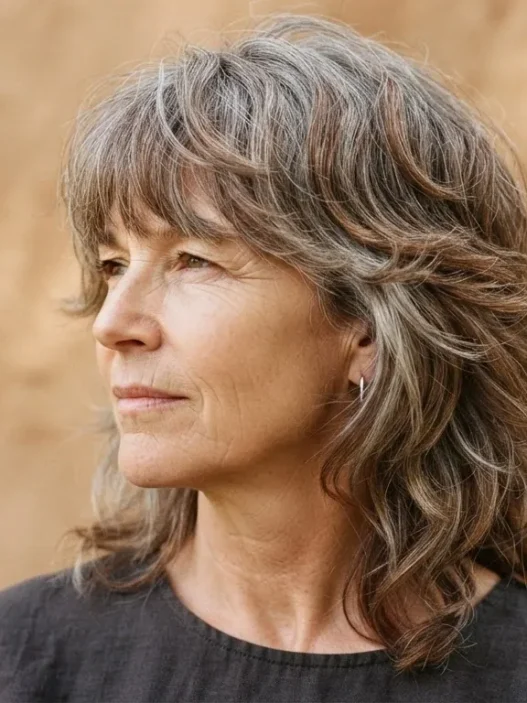
If the hair is naturally wavy or has some texture, this combination becomes even more interesting. The side bang softens what can sometimes be an abrupt edge at the lob’s perimeter, and the waves add body that makes the fringe look intentional rather than accidental. I’ve written about this pairing from a different angle in my post on wavy haircuts for women over 50 if that’s your hair texture — the specific adjustments are worth knowing about.
One thing I want to say clearly: if your hair is straight and medium-density, a lob with a side bang is possibly the most effortlessly flattering haircut available to you right now. I know that sounds like a strong claim. But I have put this haircut on a genuinely extraordinary number of women in their 50s and 60s over the years, and the repeat clients who keep coming back for the same thing are largely keeping this shape. That tells me something. You can also look at my thoughts on lob cuts after 50 if you want more on the length specifics before you commit to a full cut. And if straight hair is your texture, the piece on straight hair cuts for women over 50 covers the maintenance side in more detail than I can fit here.
When the Updo Comes Into It
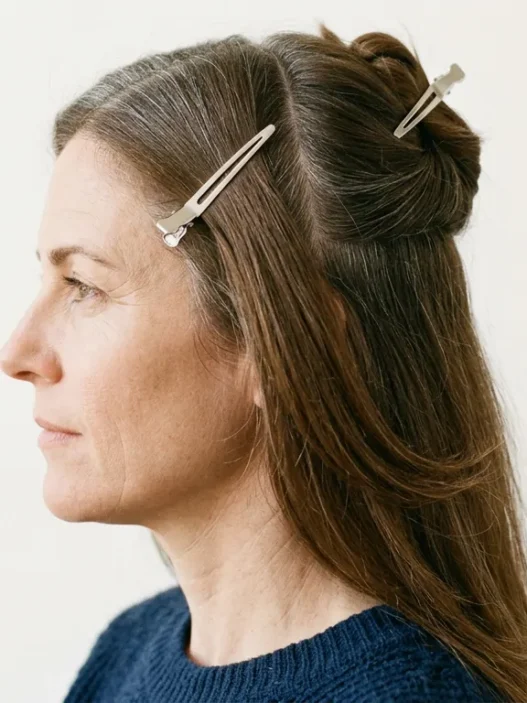
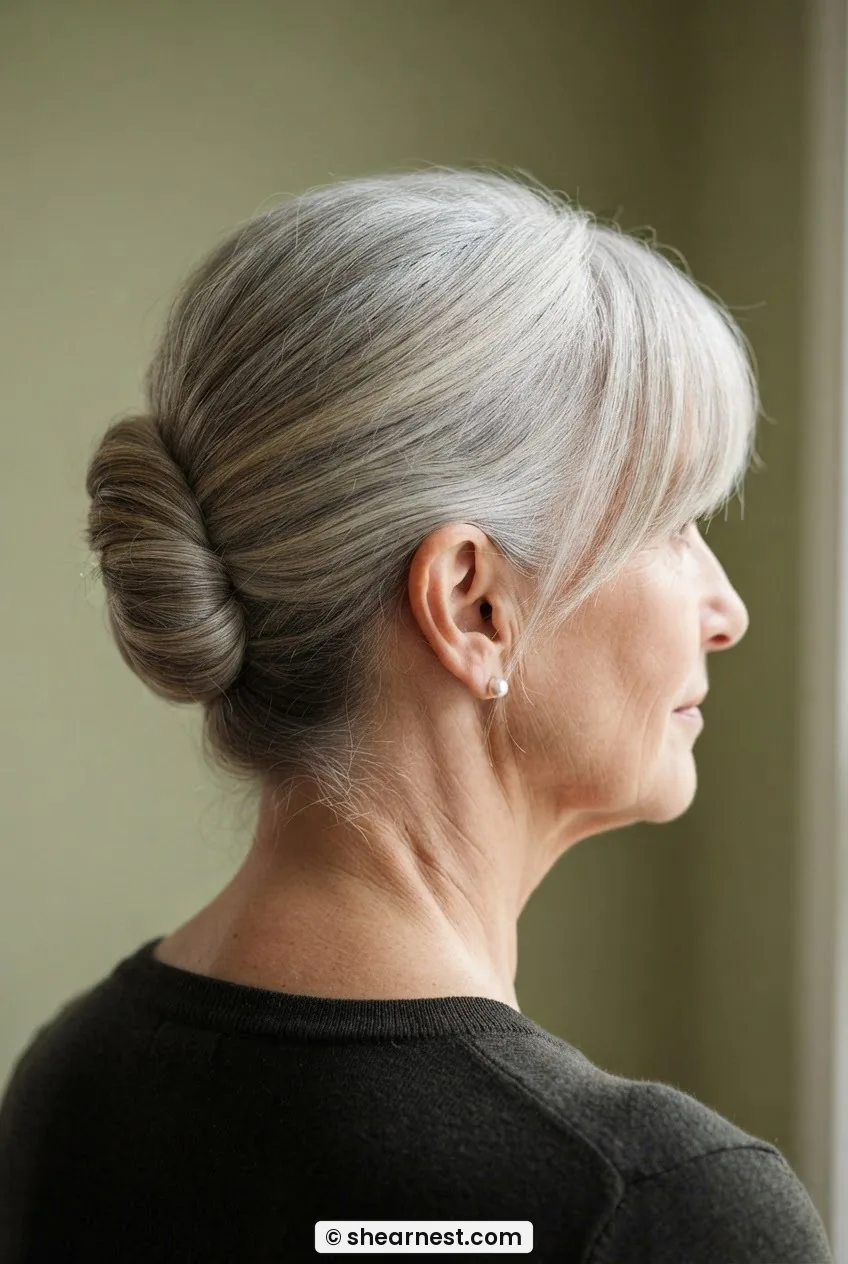
Here’s where I get a lot of raised eyebrows: side bangs with an updo. Most women assume that once you put your hair up, the bang becomes a liability — something that sticks out, won’t tuck away, creates that awkward half-in-half-out situation at the temples. And yes, a heavy or blunt side bang can absolutely do that. But a well-cut, feathered side-swept fringe? It actually finishes an updo in a way that nothing else quite does.
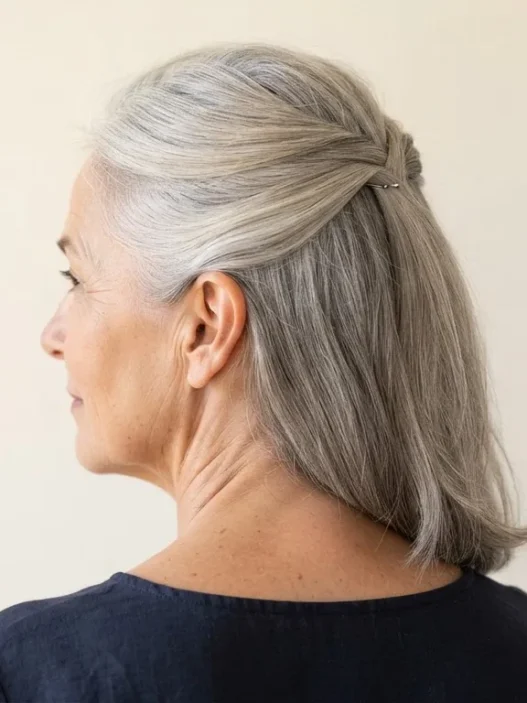
Think about a French twist — that clean, architectural shape at the back — with a soft diagonal fringe sitting across the forehead. The contrast between the smoothness of the updo and the softness of the fringe does something really lovely for the face. It avoids the slightly stern look that an updo can create when the whole face is exposed. I’ve pinned updos on clients for weddings, for events, for just-because Saturdays, and a side-swept fringe makes the whole thing feel less constructed, more like the person rather than the hairstyle.
If you’re thinking about updos specifically, my post on the 60+ French twist updo method walks through the technique slowly — it’s worth a read before you assume a French twist is too formal or too fussy. And for women who are into this territory, the broader hairstyles over 70 section on this site has a lot of examples of side-swept fringe with pinned styles that might surprise you with how wearable they are day-to-day.
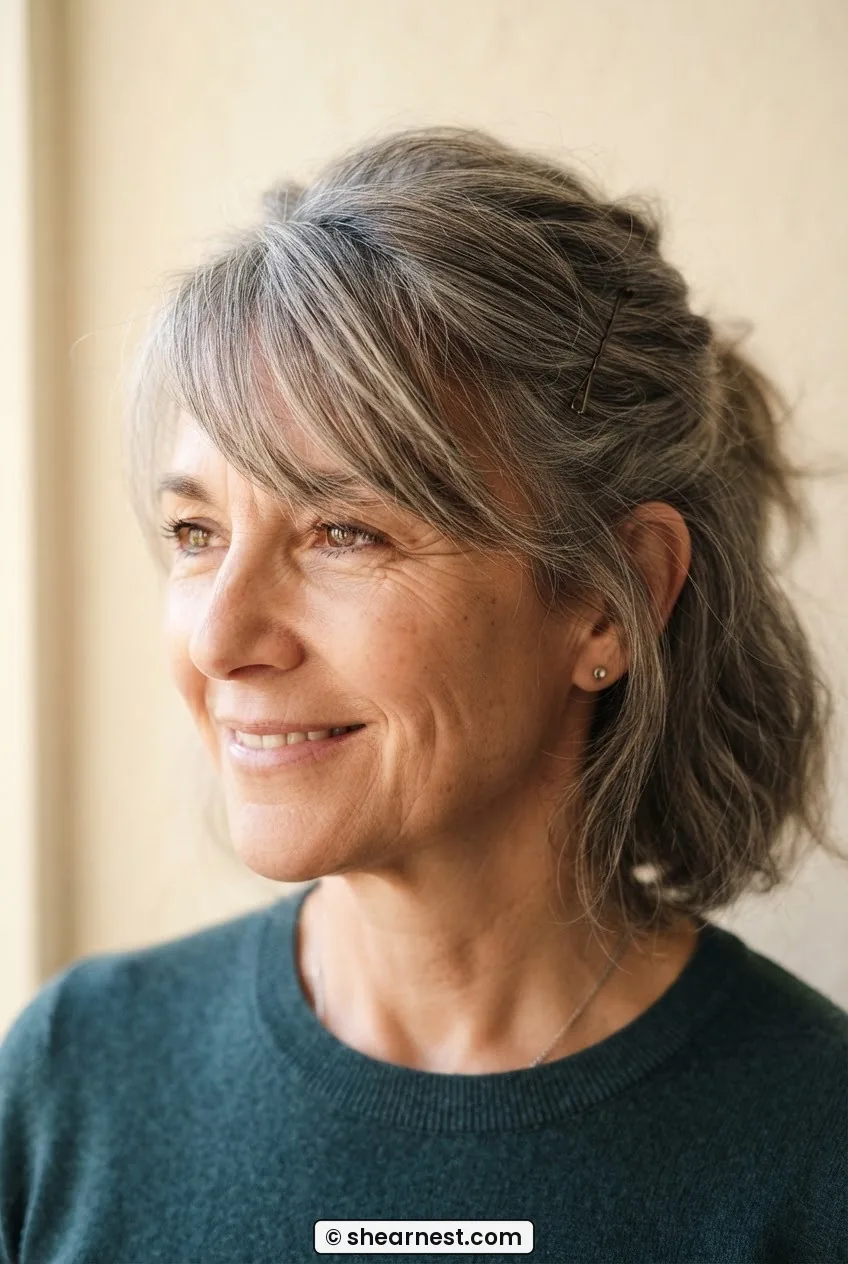
The practical thing to know: if you want the flexibility to wear your hair both down and in an updo, communicate that specifically when you’re having the bang cut. It changes how the stylist will handle the length and the layering within the bang itself. A bang cut purely for wearing down is a different bang from one cut for versatility. This is a five-second conversation that most people don’t have, and it makes a significant difference in whether you’re happy with the style across a whole week rather than just on wash day.
One genuinely unpopular opinion before I wrap this section: I think the side-swept updo look is actually more elegant and more modern than a fully styled-down look for most formal occasions past 55. There. I’ve said it. The down-and-flowing approach requires a level of hair thickness and condition that not everyone has anymore, and chasing it often ends in disappointment. The updo with a side fringe takes what you have and makes something deliberate out of it. Updo techniques for mature women cover this well if you want specific pinning strategies before your next event.
Questions I Get About This
Will side bangs make me look older?
Not if they’re cut correctly for your hair density and face shape. A heavy, blunt side bang can emphasize a low forehead or add weight to a soft jawline — that version might not be serving you. A feathered, longer side sweep that blends into the length almost never ages anyone. It’s really a question of weight and placement, not the fringe itself.
How often do side bangs need trimming?
More often than the rest of the cut, honestly. Expect to come in every four to six weeks just for the fringe, even if the length can go eight or ten weeks. A bang that’s grown out past the eye — especially a finer, feathered one — can start to do strange things with your hair’s natural wave or cowlick. Keeping it at the right length isn’t vanity, it’s maintenance.
Can I pull off a side bang if I have a cowlick at my hairline?
Sometimes a cowlick actually helps — it can give the bang a natural lift and direction that you’d otherwise have to create with a round brush. The key is having an honest conversation with your stylist about exactly where the cowlick sits before anyone picks up the scissors, because cutting against a strong cowlick creates a fringe that fights you every morning. Working with it, though? Can be genuinely wonderful.
Do side bangs work with grey or silver hair?
In my experience, they look especially beautiful with silver or salt-and-pepper hair. The fine, lighter strands at the temples that come with greying actually soften a side-swept fringe naturally — you get that wispy, blended look without having to chase it with a razor. If anything, I think grey hair and a good side sweep are underappreciated together.
If any of this has you reconsidering that magazine photo you’ve been carrying around — good. Not because the photo is wrong, but because the right version of it, built for your actual hair and your actual face, is going to look so much better than a straight copy ever would. That’s the whole point of having someone in the chair with you instead of just pointing at a page. Go ask for the conversation. You might be surprised what’s possible.