







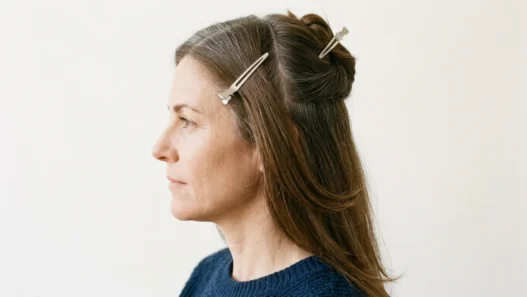
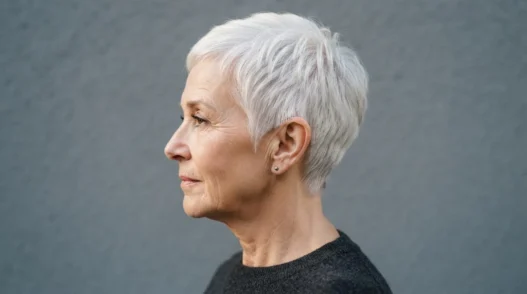
I keep a folder on my phone of grey cuts that stopped me mid-scroll — and I will tell you right now, almost none of them are the fluffy permed styles that used to feel like the default. The cuts landing for women in their sixties right now are sharper, more considered, and genuinely interesting. Shape is doing work that a bottle of colour used to do. And that, honestly, is a good trade.
What I want to do here is lay out eleven specific styles — described by how they’re actually cut, not by vague adjectives — so you can walk into a salon knowing what you want and why it will work for your hair. Some are short. Some sit at the jaw. One goes long. All of them are worth knowing about.
Your Quick Guide Through This Post
- 1. The Precision Pixie
- 2. The Disconnected Undercut Bob
- 3. The Soft Tapered Nape Crop
- 4. The Blunt Lob That Holds Its Line
- 5. The Layered One for Thick Silver Hair
- 6. The Cropped Shag for Fine Grey Hair
- 7. The Classic Chin Bob with a Weight Line
- 8. The Grown-Out Pixie That Needs Nothing
- 9. The Graduated Bob for Volume at the Back
- 10. The Curly Grey Cut with Interior Layers
- 11. The Long Silver Layer for Wavy Hair
1. The Precision Pixie
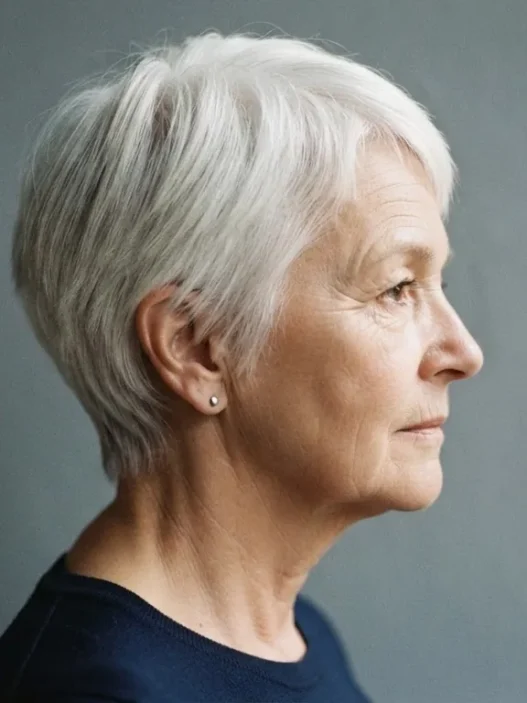
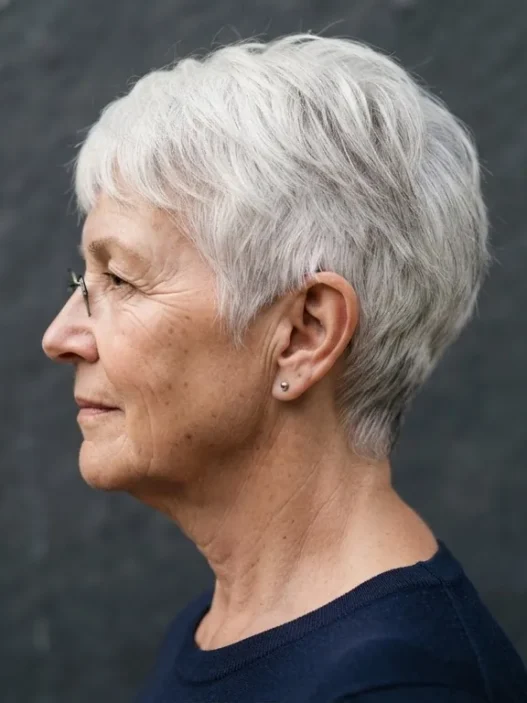
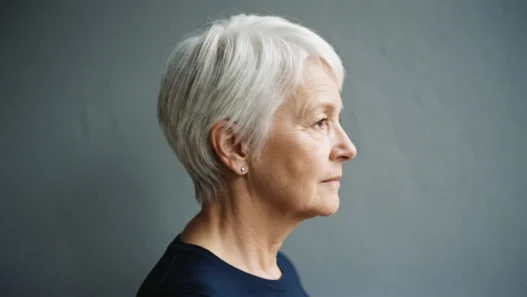
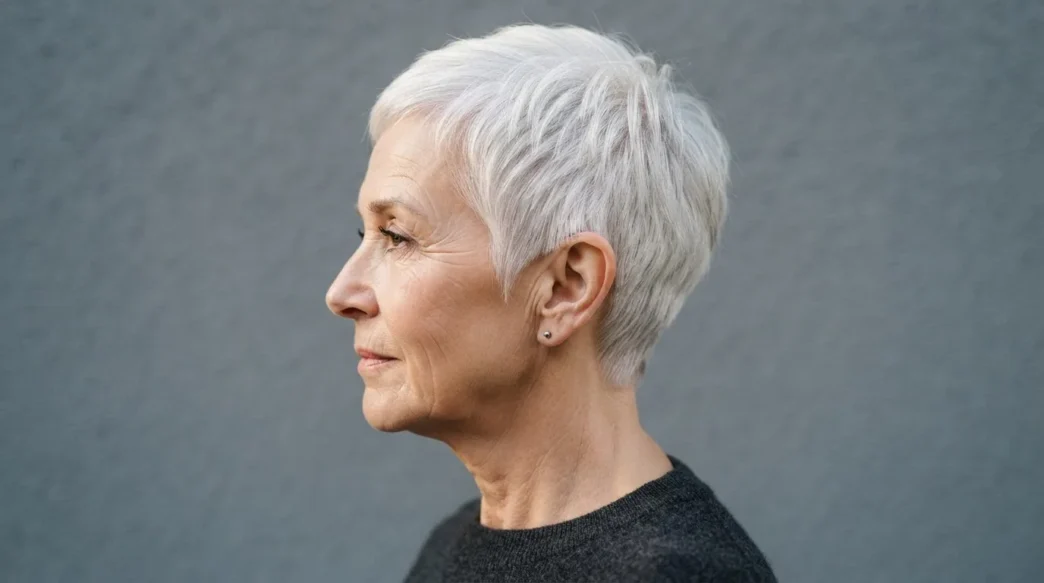
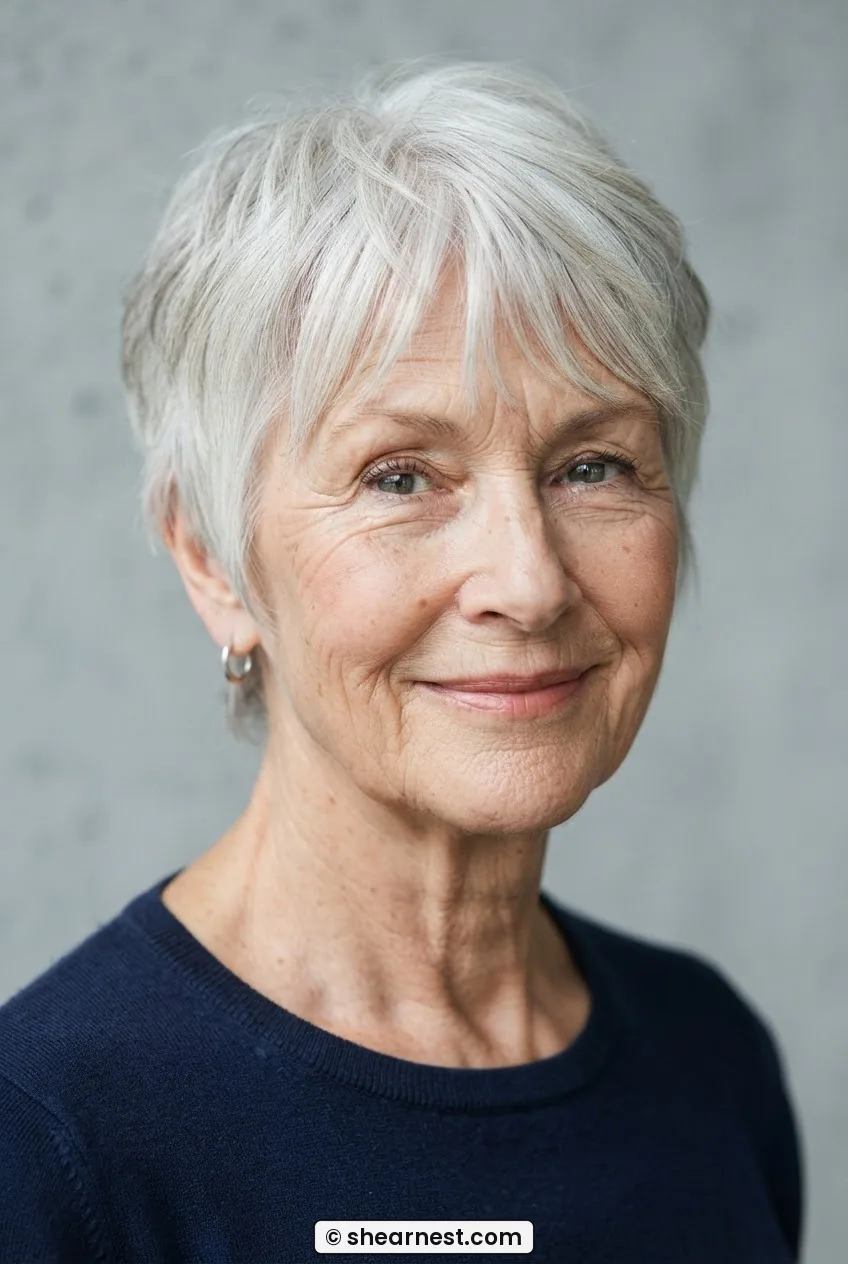
Weight sits low at the occipital bone, with close-cropped sides that taper cleanly through the nape. The top carries a bit more length — maybe two inches — so there’s enough to push forward or to the side. The perimeter around the ear is scissor-cut, not clippered, which keeps it from reading too severe.
Look at her in the photo — the way the side light catches that taper through the nape is exactly why this cut photographs so well. She’s got a softened jawline and the short sides let the face sit front and centre. It suits oval and long face shapes particularly well. Fine and medium hair both handle this beautifully; thick hair needs thinning through the sides or it’ll push out rather than lie flat.
Upkeep is every five to six weeks — the nape starts looking overgrown faster than anything else. At the chair, say: “scissor taper through the nape, weight left at the occipital, I want to keep length on top.”
2. The Disconnected Undercut Bob
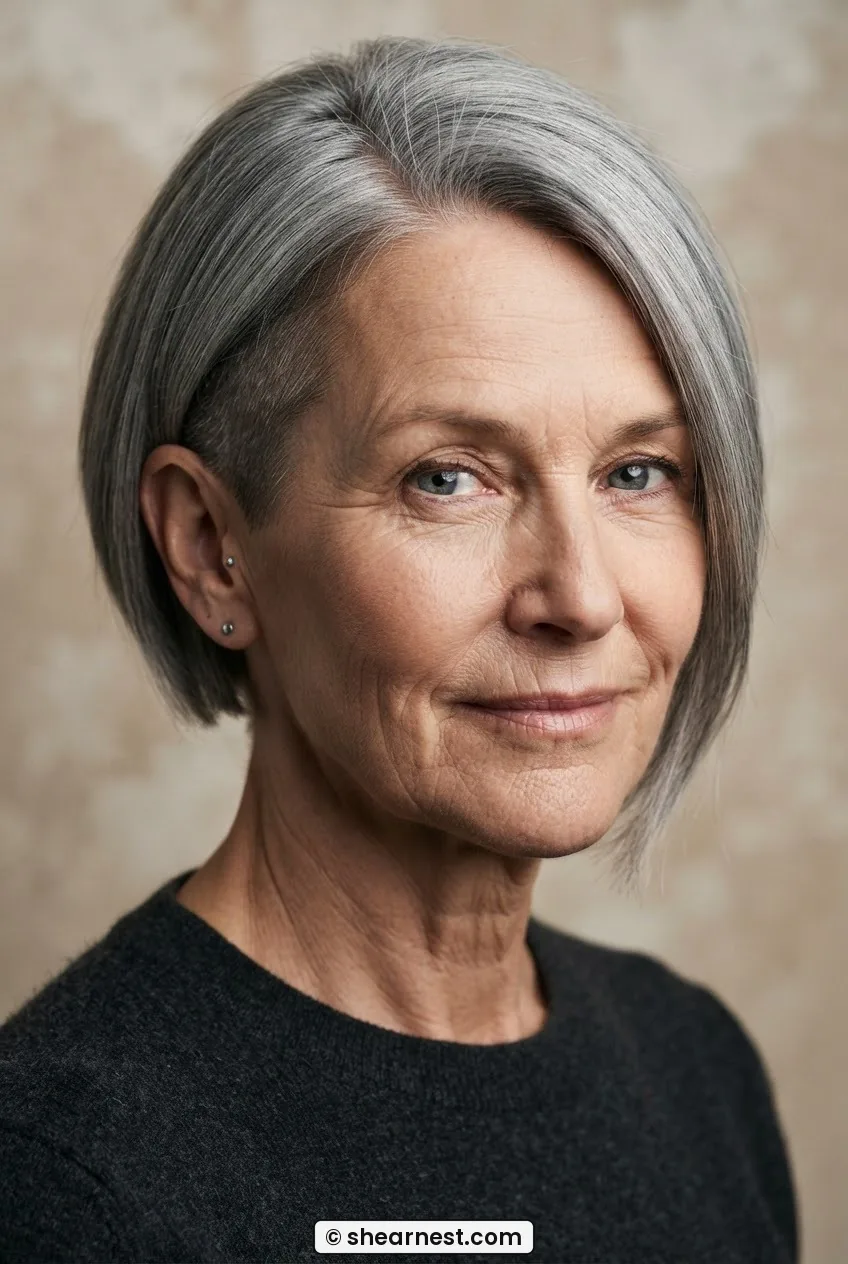
This one has a strong interior structure. The under-section — everything from the occipital down — is cut close or even clipped short, while the top section falls over it as a clean, blunt panel. The disconnect is hidden when the hair lies naturally but reveals itself when the wind moves it or she tucks it back behind her ear. On grey hair, that contrast of texture is stunning.
Who it suits: women with medium to thick hair who want something with edge but still professional enough for work. The top panel needs enough density to drape properly — very fine hair can look wispy over the undercut rather than sleek. Upkeep is six to eight weeks for the under-section, longer if you’re happy to let it grow into more of a graduated effect. At the chair: “disconnected undercut, clean panel on top, I want the disconnect hidden when it’s down.”
3. The Soft Tapered Nape Crop
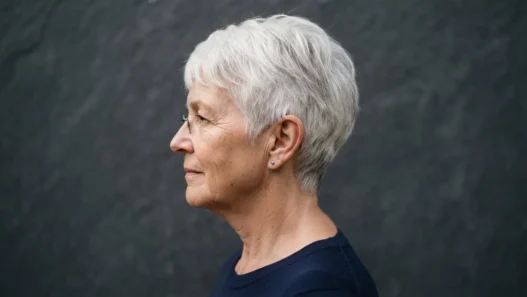
Think of this as the precision pixie’s more relaxed sibling. The graduation through the back is softer — the clipper work fades rather than cuts to a hard line. The sides have a little more length, sitting just at or below the cheekbone. The crown is textured with point-cutting so it moves rather than sitting like a helmet.
This is genuinely one of my favourite cuts for women who are nervous about going short for the first time. It’s short enough to feel like a real decision but the softness at the sides means there’s no dramatic perimeter line to grow out awkwardly. Suits round and heart-shaped faces especially well. Medium hair texture is the sweet spot. Every six to seven weeks for a tidy-up.
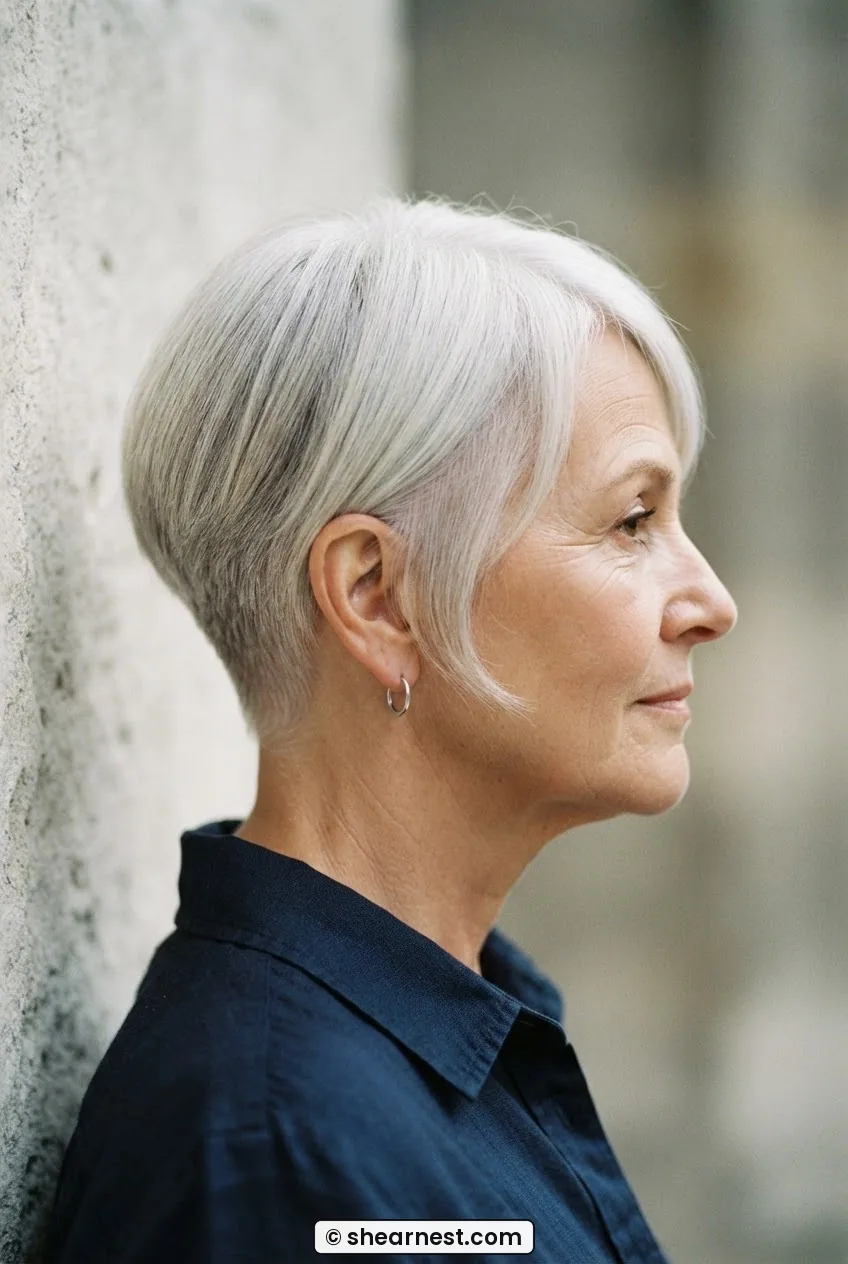
At the chair: “soft fade through the nape — no hard clipper line — point-cut the crown, leave the sides just past the cheekbone.”
4. The Blunt Lob That Holds Its Line
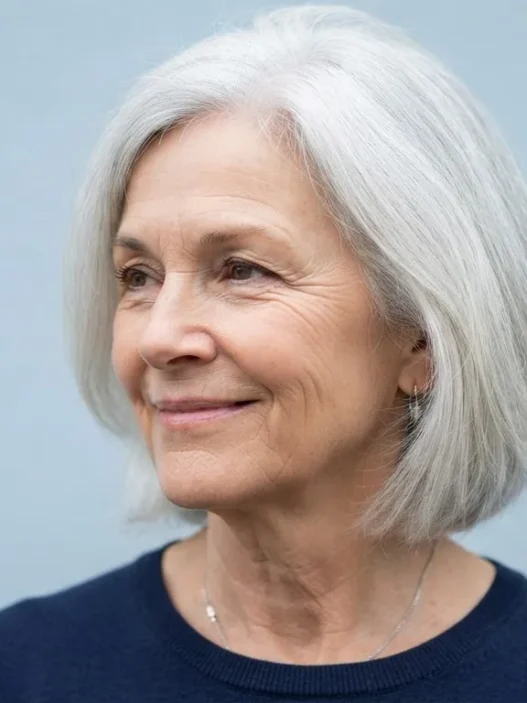
The weight line here sits between the collarbone and the jaw — typically about two inches below the jaw. It’s cut on a slight angle (shorter at the back, longer at the front) which gives movement without layering. The perimeter is blunt, which means it holds even as the hair grows. On silver or white hair, this perimeter catches the light beautifully and the line reads clean from across a room.
Suits most face shapes. The length softens a strong jaw and the angle at the front draws the eye down and forward, which works particularly well for square faces. For anyone curious about how grey and structure interact differently at different ages, the conversation continues in my post on hair styles for women over 70 — some of the same principles apply, the priorities just shift slightly.
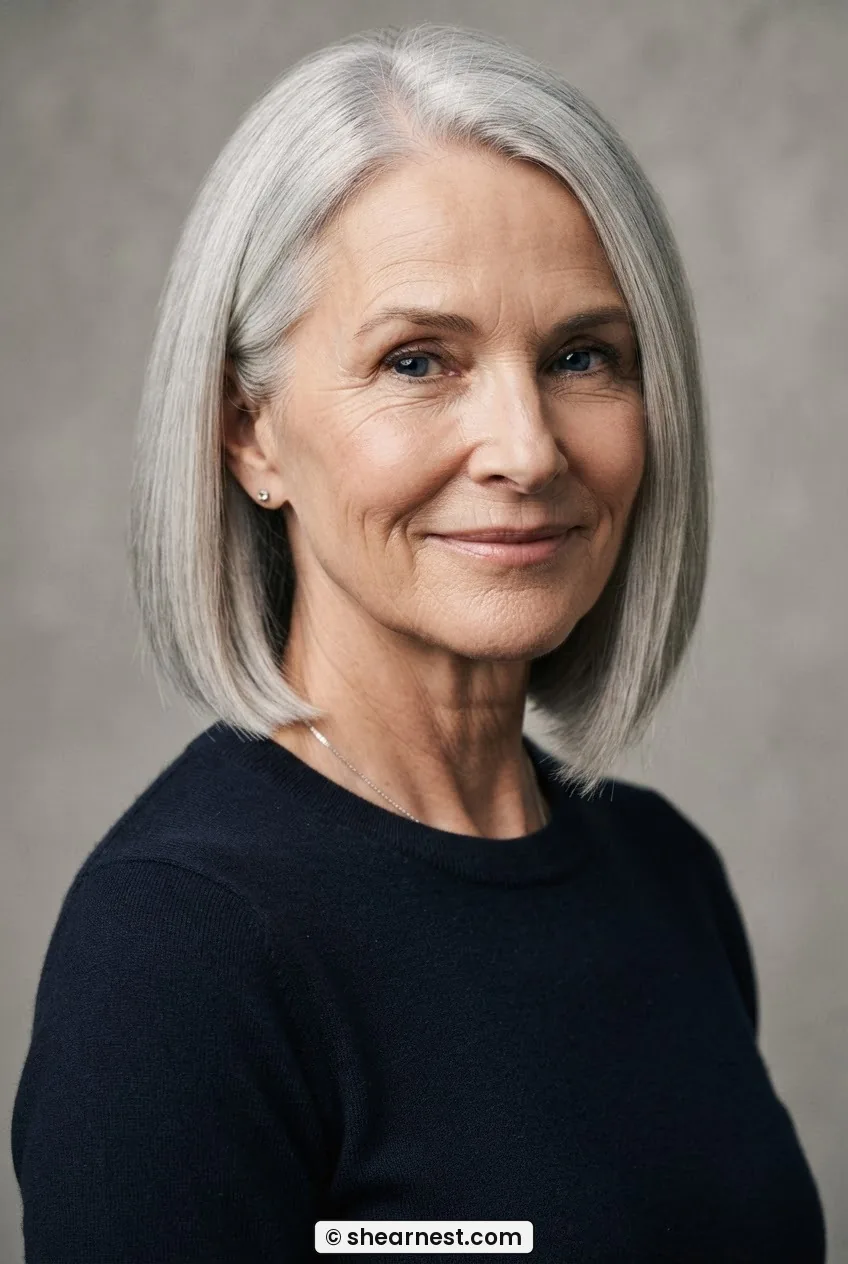
Every eight to ten weeks. The blunt line forgives grow-out better than a layered cut does. At the chair: “blunt lob, slight angle so the front sits longer, no internal layers, keep the perimeter clean.”
5. The Layered One for Thick Silver Hair
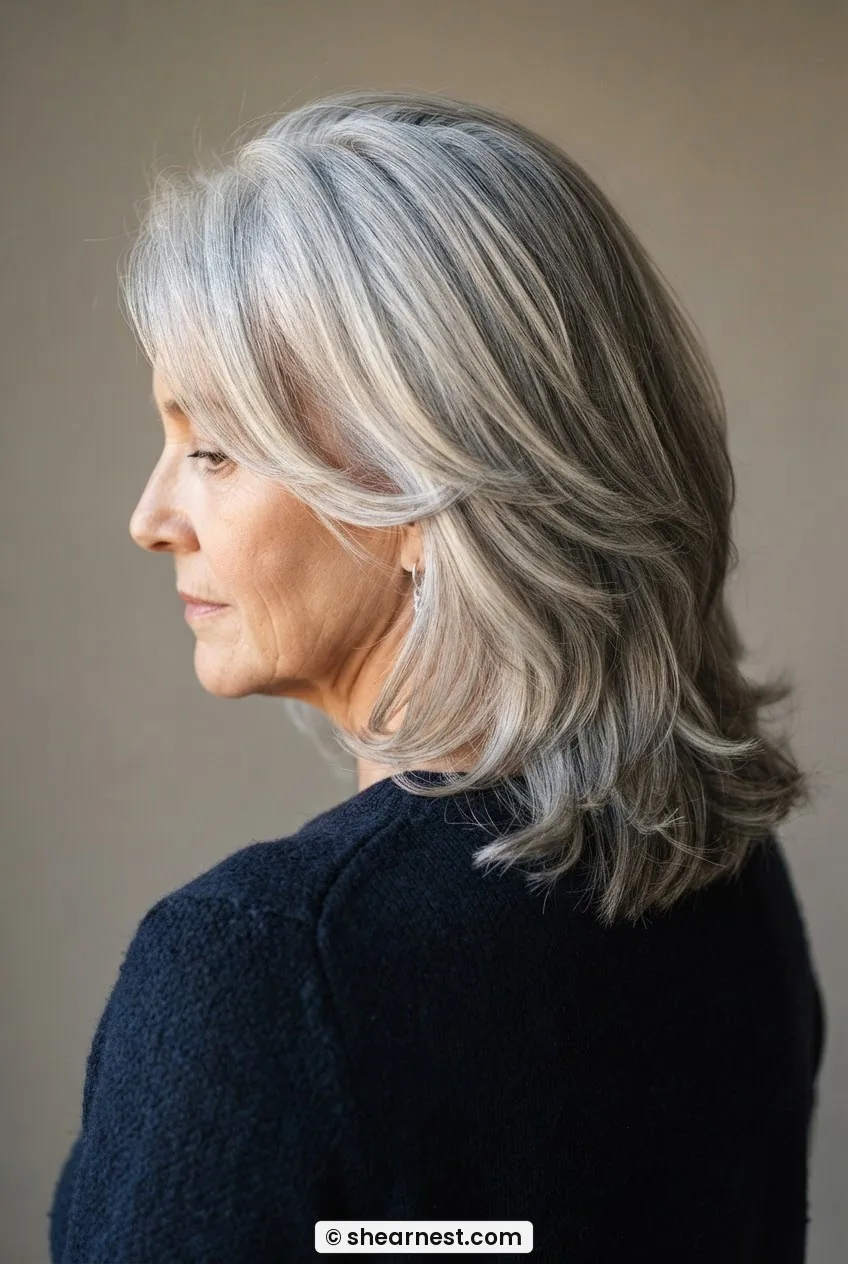
Thick grey hair is genuinely a gift — it holds any shape you give it — but without the right layers it turns into a solid block that sits heavily on the face. This cut removes weight through the interior with long slide-cutting, which thins without shortening. The perimeter sits at the collarbone or just below. The face-framing layers start at the cheekbone and blend back into the length.
This is my personal pick of the eleven. I have thick, coarse silver hair and this is the architecture that finally made it behave without looking matronly. The interior slide-cutting changed everything — I lost probably a third of the bulk and gained actual movement.
Every ten to twelve weeks. Thick hair grows slowly in perceived terms because the weight keeps it down. At the chair: “slide-cut through the interior to remove bulk, keep the perimeter length, face-framing layers from the cheekbone.”
6. The Cropped Shag for Fine Grey Hair
Fine grey hair needs texture built into the cut itself — product alone won’t create volume that lasts past mid-morning. The cropped shag solves this with razored layers through the top and mid-section, a curtain fringe that’s point-cut to avoid a blunt line, and a short perimeter that sits just at or above the jaw. The layers are many and close together, which creates the illusion of density even where the hair is sparse.
There’s a full breakdown of why construction matters so much for fine hair specifically in my post on the best haircut for fine hair over 50 — most of those principles carry straight through into the sixties and beyond.
Upkeep every six to seven weeks — the razored layers grow out unevenly if left too long. At the chair: “cropped shag with razor layers through the top, point-cut fringe, keep the perimeter above the jaw.”
A Stylist Talks Through Fine Grey Hair Cutting
7. The Classic Chin Bob with a Weight Line
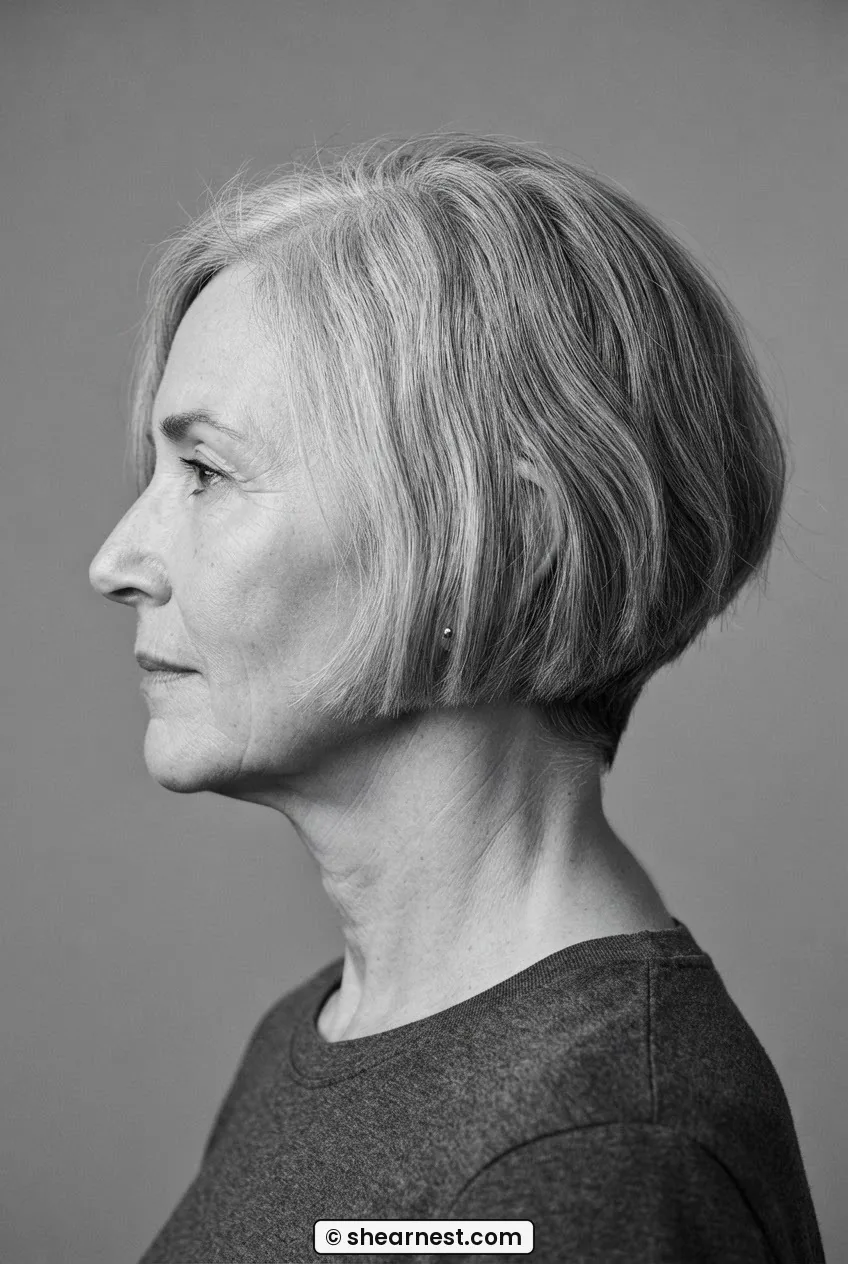
The weight line — that ridge of density created by cutting all the hair to the same length — sits right at the chin. Below that line, the hair is tapered or stacked slightly to sit under the chin rather than flicking out. This is a structural classic because it works. The weight at the chin creates the illusion of a sharper jawline and the close-cropped nape lifts the back of the head visually.
It’s one of the most requested gray hair styles for women in their sixties for good reason — it flatters almost every face shape and it works across fine, medium, and thick hair types. Thick hair may need some internal thinning to stop it from flicking. Upkeep every six to eight weeks. At the chair: “chin-length bob, weight line sitting at the jaw, stacked slightly underneath, tapered nape.”
8. The Grown-Out Pixie That Needs Nothing
This is the cut that happens between a pixie and a short bob, and it’s worth asking for deliberately rather than waiting to grow into it accidentally. The sides are past the ear. The top has enough length to show some texture — maybe three inches. The nape is clean but not tight. The whole thing looks like it’s in transition on purpose, which on silver hair reads incredibly cool.
No real styling required. Wash, a tiny amount of pomade or texture cream, and done. Suits oval and heart-shaped faces most naturally. This is also a great stage to maintain if you’re curious about growing out a pixie without looking like you’ve just given up on the whole thing. Medium-to-fine hair is ideal; thick hair at this length can go wide at the sides. Every seven to nine weeks.

At the chair: “I want a deliberate grown-out pixie — sides past the ear, length on top, clean nape, nothing tight.”
9. The Graduated Bob for Volume at the Back
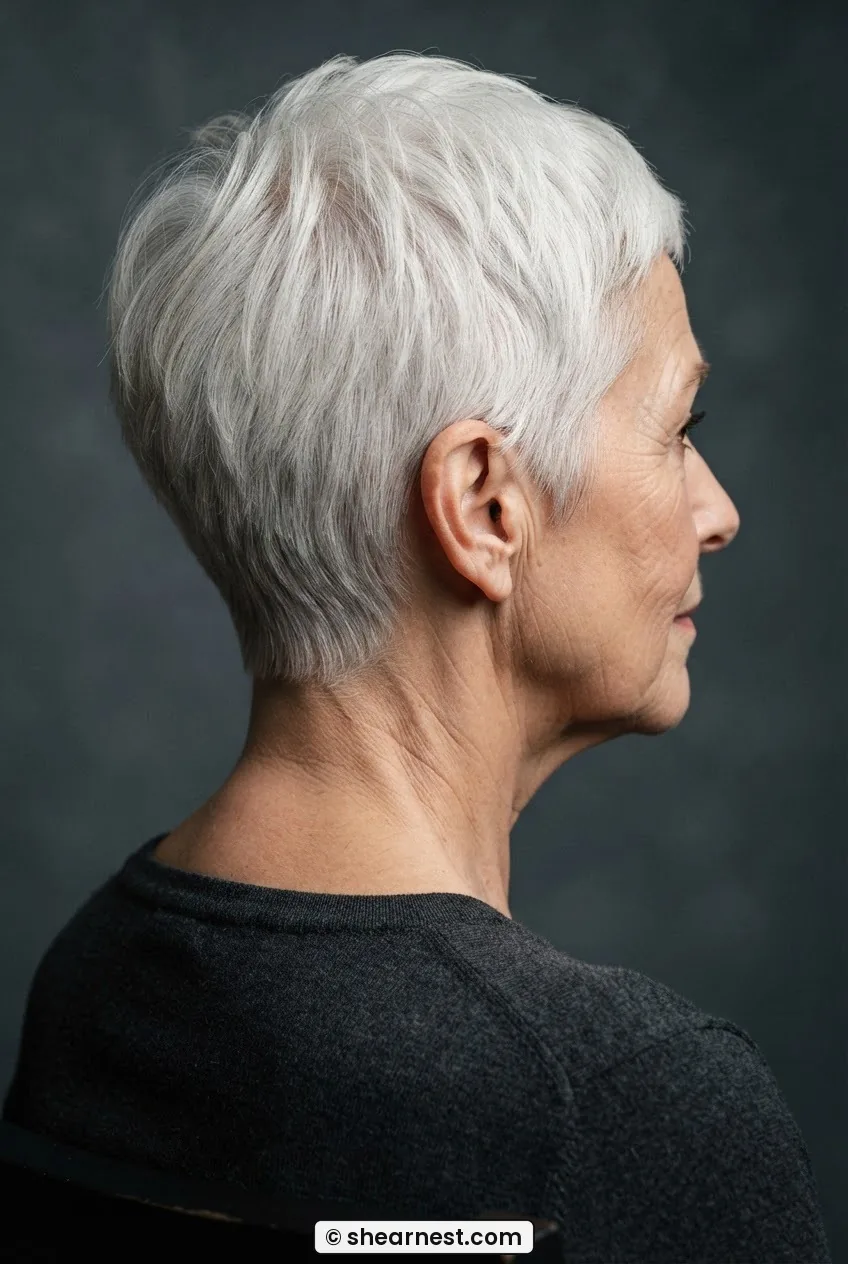
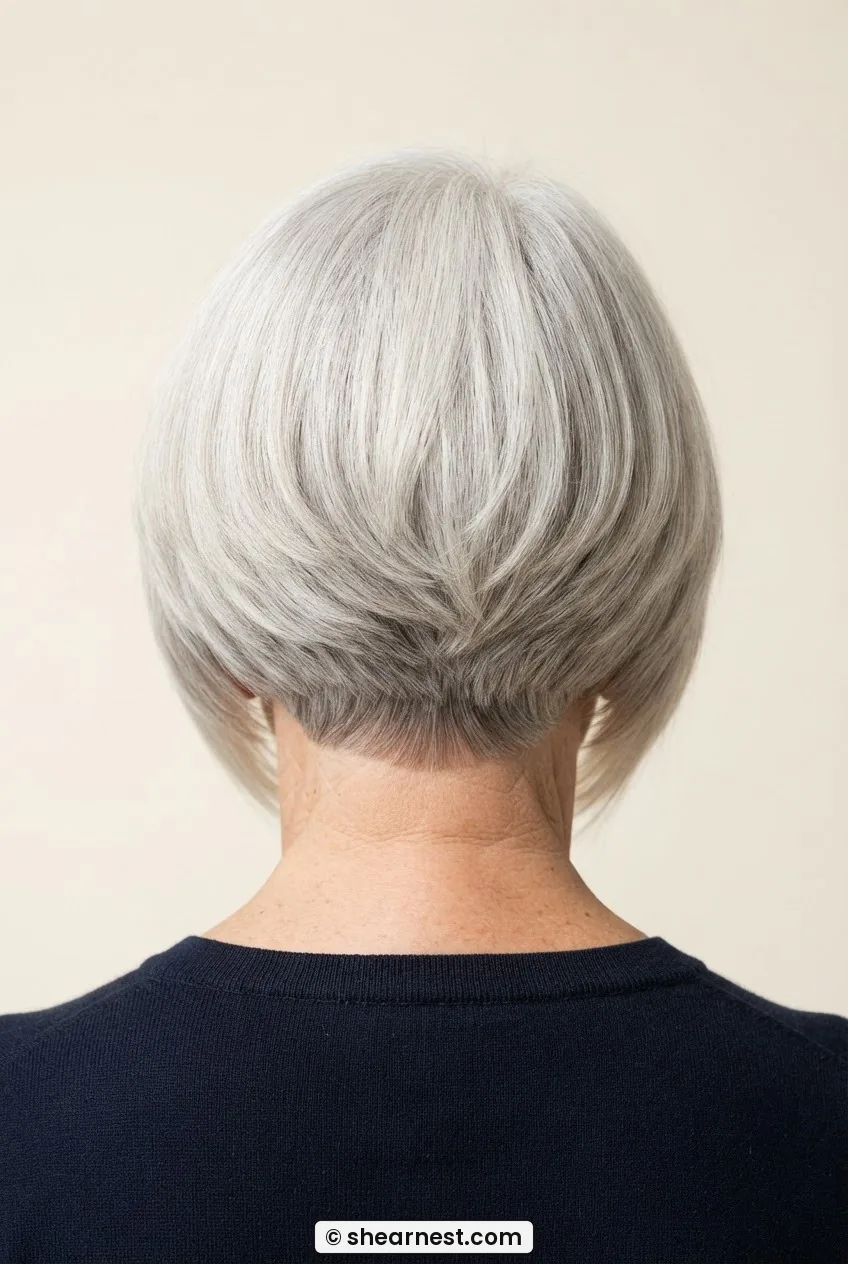
The graduation here runs from close-cropped at the nape up to the full perimeter length at the perimeter — usually sitting between the chin and the cheekbone. That stacking at the back creates a rounded, full silhouette at the back of the head, which is particularly useful for women who’ve lost density at the crown. The front pieces are longer and can be tucked behind the ear or left to frame the face.
She’s got a wonderful example of this in the image below — see how the back rounds out beautifully? That fullness is all structure, no product. For oval face shapes in particular, I’d always point toward a version of this or a chin bob first. There’s more on why face shape shifts the decision in my piece on oval face hairstyles for women over 50.
Every six weeks — the graduation grows out quickly and looks messy before a layered cut does. At the chair: “graduated bob stacked at the back, longer panels framing the face, I want fullness through the back of the head.”
10. The Curly Grey Cut with Interior Layers
Curly grey hair behaves completely differently from straight grey hair — it contracts when dry, which means a cut that looks short enough wet will often look shorter than intended once it dries. The interior layers here are cut dry (or the stylist cuts knowing the shrinkage factor) so the curl shape is built into the cut from the start. The perimeter is left longer through the front and the layers get shorter toward the crown to push height up rather than out.
This is a specialist cut and it’s worth finding someone who works with curly hair regularly — the dry cutting curly hair approach makes a significant difference to how it sits. Upkeep every ten to twelve weeks if you use a curl cream and a diffuser. At the chair: “interior layers cut to suit my curl pattern, longer perimeter at the front, height at the crown — please cut dry if you can.”

11. The Long Silver Layer for Wavy Hair
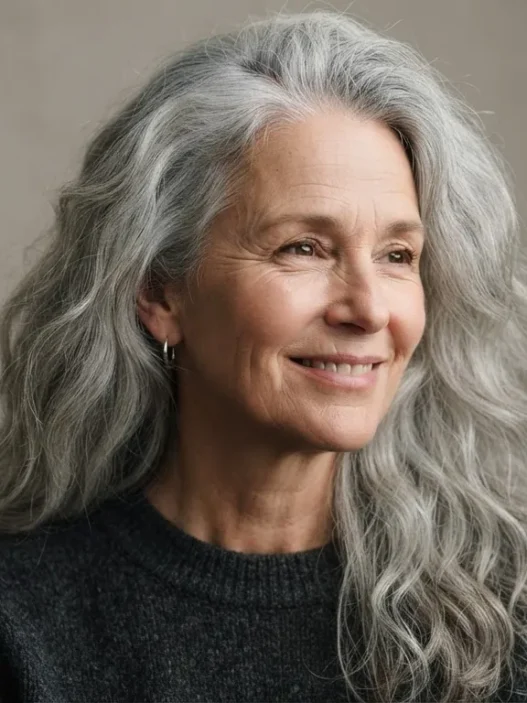
Long grey hair gets a bad reputation it doesn’t deserve. When it’s wavy and layered properly, it is genuinely one of the most striking things I’ve seen on women in their sixties. The layers here are long — cut with a technique called point-cutting into the length rather than sliding out — which means the wave pattern is preserved and the layers don’t create that frizzy, raggy texture that short layers can cause in wavy hair.
The perimeter sits anywhere from mid-back to the bra strap. Face-framing pieces are the shortest layer, hitting around the collarbone. The whole thing needs very little — air-dry with a curl cream and scrunch, or a loose blowout with a round brush. For anyone with natural wave or curl who’s been cautious about keeping length, the post I wrote on wavy haircuts for women over 50 covers the structural decisions in more depth. And if you’re thinking about what comes next — past sixty-five, into the seventies — I’ve got thoughts on that too in the section on hairstyles over 70.
Every twelve to fourteen weeks. Long wavy hair is surprisingly low-maintenance when the layers are right. At the chair: “long layers point-cut into the wave, face-framing pieces at the collarbone, keep the perimeter length, I don’t want the wave disrupted.”

Questions I Get About Grey Cuts
Does grey hair need different products than coloured hair?
Mostly, yes. Grey hair tends to be coarser and more porous, which means it absorbs moisture (and product) differently. A purple or blue toning shampoo used once a week will keep white and silver tones from going brassy or yellow — you can read up on how toning shampoos work before you commit to one. Beyond that, a good leave-in conditioner matters more than it did when hair was coloured.
Can fine grey hair actually look full without a perm?
Absolutely — and the cut does more work than people realise. Razored layers, close perimeters, and strategic weight removal all create the visual impression of density without adding anything to the hair. The cropped shag in this list (number six) is the most direct answer to this question.
How often should I really be going to the salon?
It depends on the cut more than anything else. A precision pixie or graduated bob starts looking overgrown at five to six weeks. A blunt lob or long layered cut can go twelve to fourteen weeks and still look intentional. I’ve given specific timelines for each cut in the list above — use those as your starting point and adjust to your own growth rate.
Is it worth seeing a specialist for grey hair?
For curly grey hair, yes — absolutely. For straight or wavy grey hair, any experienced stylist who understands how to cut for texture rather than just length will do well. The conversation at the chair matters more than a fancy title. Take in reference images of the specific construction you want — not just a vague mood board — and you’ll get a much better result.
If any of these eleven made you think “that’s the one” — save the image, screenshot the “at the chair” line, and take both to your next appointment. Stylists work so much better with specific language than with “I just want something fresh.” And honestly, after sixty, you’ve earned the right to walk in knowing exactly what you want.