











I stood on the promenade last October with freshly blown-out hair that looked great for about twenty minutes. Then the sea air touched it and, just like that, it was plastered to my scalp again. I laughed at the time, but I drove home a little annoyed because I had done everything right. That flat-by-noon feeling is exactly why I started digging into fine flat hair haircuts and what really makes them hold.
What You Are Seeing When Hair Falls Flat by Noon
This section is the effect, plain and simple. In the morning my hair has air in it. The roots stand a little away from my head, the ends swing, and I think, okay, we did it. By lunch the part looks wider, the crown looks lower, and the sides cling a little too closely around my ears. It is not dirty, exactly. It just looks tired.
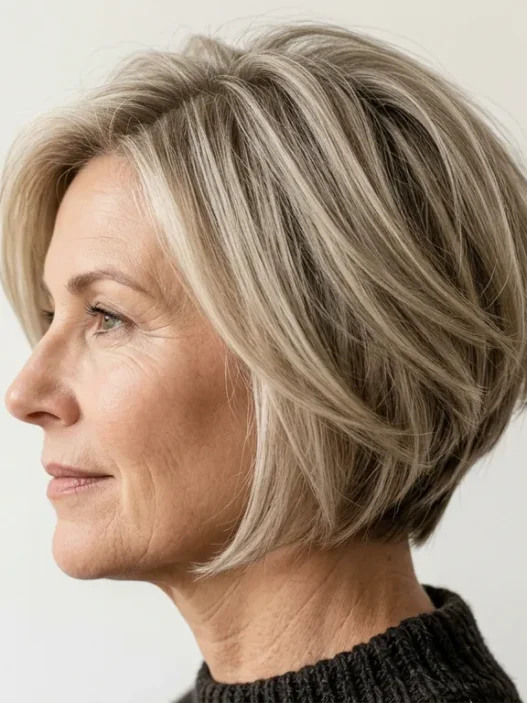
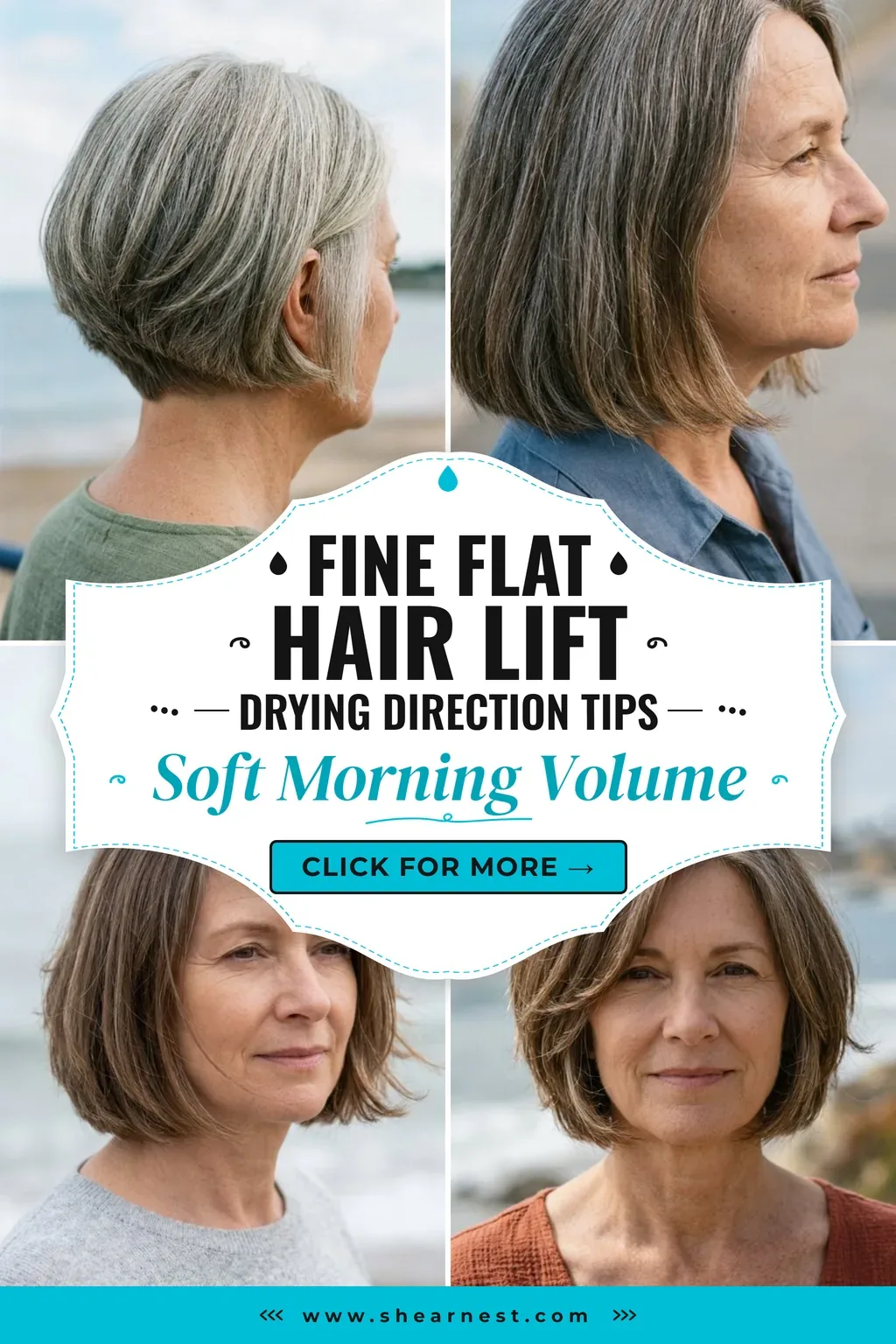
Look at how she is wearing hers on the seafront in that first photo. That little bit of separation at the crown is exactly what I mean. Her hair is not big. It is just off the scalp, so light gets under it. That shadow underneath is the whole trick. When my hair is flat, there is no shadow. My head and my hair read as one solid shape, and that makes everything look thinner than it is.

I used to think this was a styling failure. I would add more mousse, more spray, more backcombing, and it would still sink. What I see now is that it is mostly a structure issue. If the cut leaves too much weight sitting on top of fine roots, gravity wins by 2pm no matter what I spray on it. And sea air, office heat, a car window cracked open, all of it just speeds up the same slide.
A few small signs tell me a cut is working before I even leave the salon:
- My part looks soft instead of scraped, with a half-inch of air at the root
- The ends move when I turn my head, they do not swing as one curtain
- The nape does not feel bulky when I press it flat with my palm
- I can shake my head and the shape comes back without re-fluffing
That last one is my favorite test. If I have to keep lifting it with my fingers all day, the shape is not really in the haircut. It is just in the blowout. A good cut for my texture holds its own air for a while, even if I do almost nothing. You can read more about that idea in my notes on the best haircuts for fine hair where I stopped blaming product for everything.
Why Fine Hair Loses Lift So Fast
I love a good blowout, but I had to learn why mine never lasted. Each of my strands is narrow, so it does not have much stiffness on its own. Think of it like a single blade of grass versus a thick stalk. One stands up fine for a minute, but a little moisture or weight pushes it over. Put thousands of those soft strands together without any support underneath and they lean on each other and then lie down together.
Oil makes it faster. My scalp makes oil, yours does too, and on fine hair that oil travels down quickly because there is less surface to slow it down. By midday the first inch near my root gets a little slick. Slick means heavy. Heavy means flat. I used to wash more to fix it, which helped for a day and then my scalp just made more oil to catch up. Fun cycle, right?

Then there is water in the air. I live near the coast, so I notice this a lot. Fine hair soaks up humidity fast and lets it go fast. When it soaks it up, hydrogen bonds inside the strand soften and the bend I put in with a round brush relaxes out. That is why seafront wind can look amazing for photos and terrible ten minutes later. She has that wind-blown lift in the photo, see how the ends kick out just below her chin? That is gorgeous, and it is also temporary if there is nothing cut into the shape to support it.
My unpopular opinion, and I know some stylists will disagree with me here, is that most volume shampoos made my situation worse. They stripped everything so my roots stood up squeaky-clean for an hour, then my scalp panicked and overproduced oil by 4pm. I get better all-day lift from a gentle, sulfate-light wash and a really well-placed cut than I ever did from a whole shelf of big-bottle promises. You can learn a lot about lasting fullness by reading up on lasting blowout techniques during your normal wash routine, because direction matters more than foam.
I also had to accept that length is weight. Past my shoulders, my hair pulls its own roots down. It is not dramatic, it is just physics. A few inches can be the difference between roots that stay up and roots that give up. I learned this the hard way after growing mine out for a wedding and wondering why my crown disappeared in every photo.
What That Weight Means You Cannot Have
So does that mean I can never have long hair if my hair is fine and flat?
Not never. But I cannot have long, one-length, razor-thin ends and day-long lift at the same time. I tried for two years. One-length long hair looks sleek on thick hair because there is enough fiber to fill out the bottom. On my hair it just meant the top got pulled flatter while the bottom looked see-through. I kept thinking a trim would fix it, but it was the design itself working against me.
What about those soft, melting layers I keep saving on Pinterest?
I save them too. And some of them can work, just not the super-long, heavily slide-cut versions that remove all the interior bulk. When too much interior hair is carved out, there is nothing left to prop up the top layer. It is like taking the stuffing out of a pillow and expecting it to stay plump. I love soft movement, but I need a solid perimeter underneath it or my 4pm hair looks stringy.

Okay, what actually fails first on me?
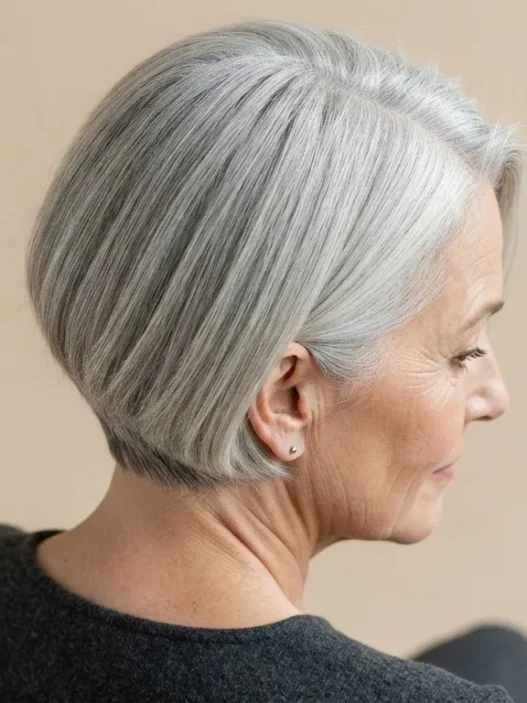
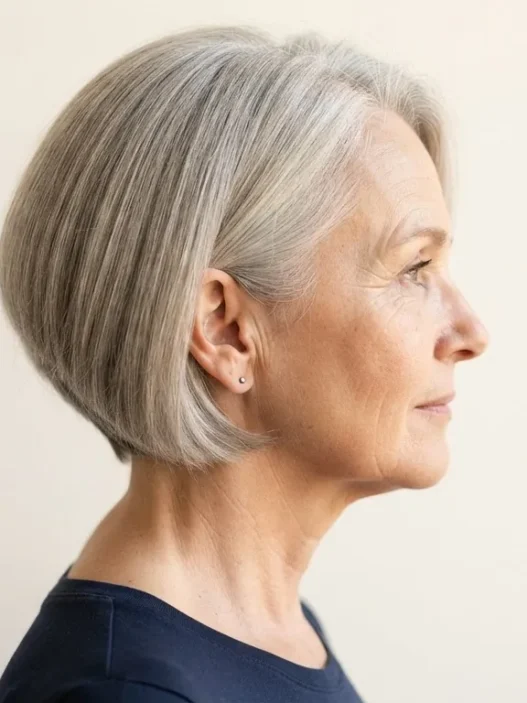
The crown. Always the crown. My sides can look fine while the top sinks, which makes my part look wider than it is. This is why I got a little obsessed with cuts that build a short, hidden support layer underneath the crown instead of just layering the top shorter. She has a similar head shape to mine in that collarbone photo, and honestly that rounded top is what I point to when I explain it to my stylist. It is not teased. It is cut to sit up.
I stopped asking for volume and started asking for support. Volume is what I want to see. Support is what makes it stay.
That shift changed my appointments completely. I used to bring in photos of bouncy blowouts. Now I bring photos of 4pm hair that still looks decent. I wrote about that test in detail in my piece on a haircut for very fine hair and it still holds true. Morning hair lies to you a little. Late-afternoon hair tells the truth.
What Actually Holds a Lift in Place
Once I understood the weight problem, the fix got simpler. Lift stays when something short pushes up something slightly longer. That is it. No jargon needed. A shorter layer underneath acts like a little shelf. The longer hair rests on it instead of falling straight onto the scalp. When I tried this for the first time, my stylist called it stacked interior graduation, but all I saw was that my roots did not need backcombing to stay up.
Blunt edges help too, which surprised me. I always thought layers equal volume. On fine hair, too many wispy layers just make less hair in more places. A clean, even bottom edge makes the ends look thicker, and thicker-looking ends make the whole shape look balanced so the top does not look so sparse by comparison. My favorite is a jaw-skimming bob with a lightly graduated back. Short enough to stay up, long enough in front to feel feminine.
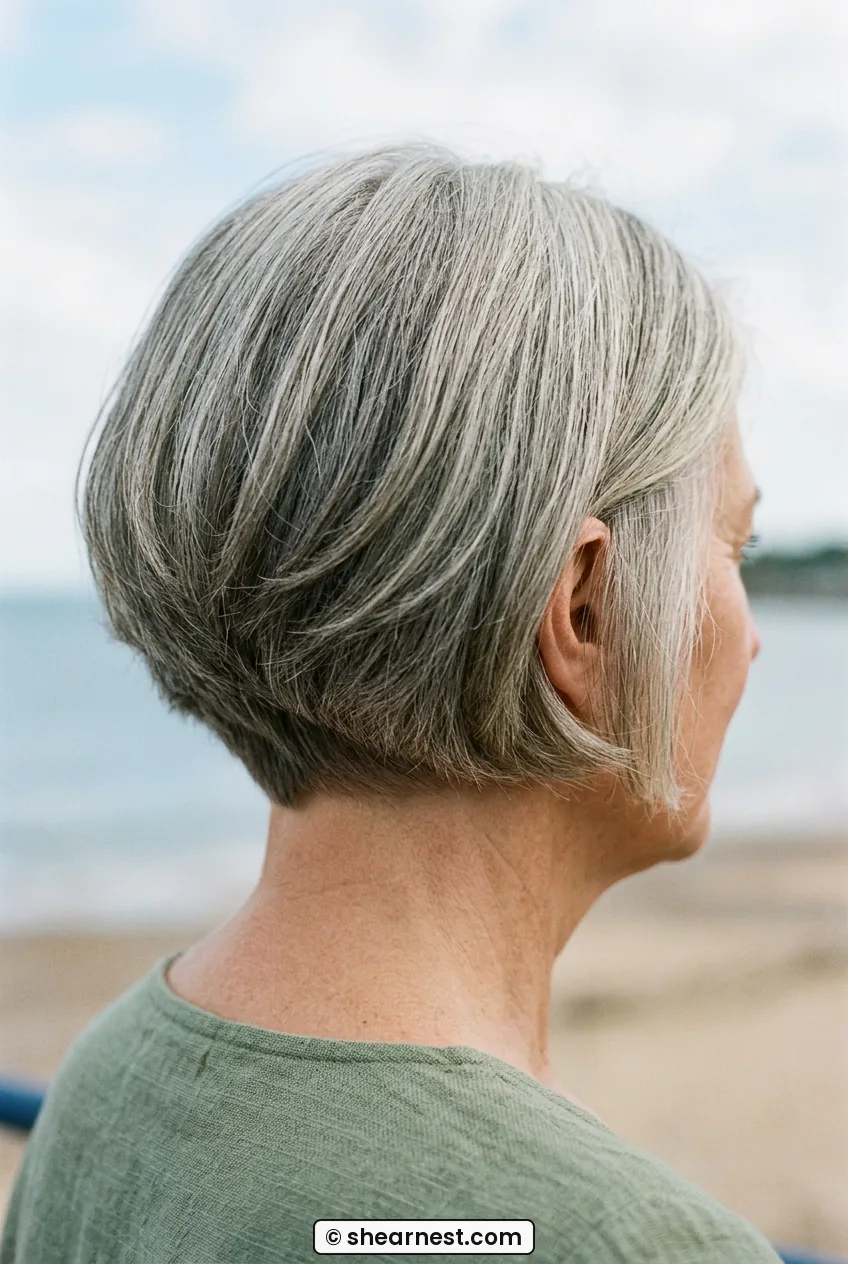
Here is how the two approaches feel on my head, side by side. Wispy, over-layered cuts feel light and airy in the salon chair and then collapse by dinner because there is nothing to lean on. Solid-perimeter cuts with short hidden support feel a little heavier at first, almost too tidy, and then they look better at hour six than hour one because the shelf keeps working while product wears off. One borrows lift. The other builds it in.
Drying direction matters as much as scissors. I dry my roots forward and side to side first, not in the final part, and I do not smooth the crown down until the very end. I also learned to let the nape dry lifted instead of pressing it flat with a brush. You can pick up a lot by practicing gentle round brush guidance with a small brush on nearly dry hair, since that last ten percent of drying locks in the bend.
For short cuts, I keep a cheat sheet in my head from testing short hair styles for thinning fine hair on myself and friends. The ones that lasted always had three things: a close, tapered nape so the back did not puff out, a little length left through the top to fold over, and no thinning shears through the crown. Every time shears went crazy up top, my lift lasted half as long.
See the Shelf Layer in Action
What I Ask for in the Chair Now
I walk in with much clearer language than I used to. I tell my stylist I have fine, low-density hair that drops by midday, I wear it mostly air-dried or with a quick three-minute blowout, and I want it to look decent at 4pm without re-styling. Then I show her two photos. One is morning hair I love. The other is the same kind of cut at the end of the day. That second photo tells her more than any buzzword I could use.
My current ask is a chin-to-collar cut with a solid edge, a slightly stacked back, and face-framing pieces that start at my lip, not at my cheek. The lip-level start keeps fullness around my jaw instead of carving it away where I need it most. This is the length I am talking about in that wind-on-the-promenade shot. See how it hits just below her chin and kicks a little? Mine does the same when it is cut with a touch of forward angle, and that angle is what keeps it from flipping under and sticking to my neck.

I also ask her what she is not going to do, which feels awkward the first time but saves tears later. Please do not razor my crown. Please do not slide-cut my ends super thin for movement. Please do not take the back too long to preserve length if it means the top has to carry extra weight. I would rather lose a half-inch all over and gain lift that lasts than keep length that drags everything down.
Styling-wise, I keep it boring on purpose. A pea-size bit of light mousse just at the roots on damp hair, a quick lift with fingers, then a cool shot to set. I finish with a dry texture puff only if I am going out at night. Heavy oils and creamy leave-ins go on my ends only, never within two inches of my part. And I wash my brush, which I ignored for years. A clean brush grips better, so I get more bend with less heat.

If you are over 50 and weighing length versus lift, I found a haircut for fine hair over 50 really helpful when I was deciding, and for pixie-curious days I still re-read my notes on how to style pixie cuts for fine hair because the root-drying trick there works on bobs too. You can also brush up on expert length advice before your consult if you are torn between a bob and a lob, since that choice decides where the weight sits.
Fine, Flat Hair Questions That Come Up in My Chair
Can fine hair ever hold volume without backcombing?
Yes, mine does now, but only when the cut does half the work. A stacked back or a short interior layer gives the top something to sit on, so I do not have to rough up my roots to fake it.
How often should I wash if my roots go flat by noon?
I wash every other day and rinse with just water in between if I need to. A tiny sprinkle of translucent powder at the part on day two buys me more time than a full extra wash ever did.
Are blunt cuts or layers better for lift?
For me it is a blunt perimeter with hidden short layers inside, not visible choppy layers all over. The edge keeps the ends looking full while the interior does the lifting quietly underneath.
Does sea air or humidity always ruin fine hair?
It softens a fresh blowout fast, but a well-supported shape bounces back after wind better than a product-only style. I let mine air out on the walk home and then flip my part once I am inside.
I am off to shake out my bob and walk the promenade again, wind or no wind. If your hair drops like mine does, try asking for support instead of volume next time and see what happens. Tell me if your 4pm hair looks any different, I am nosy like that.