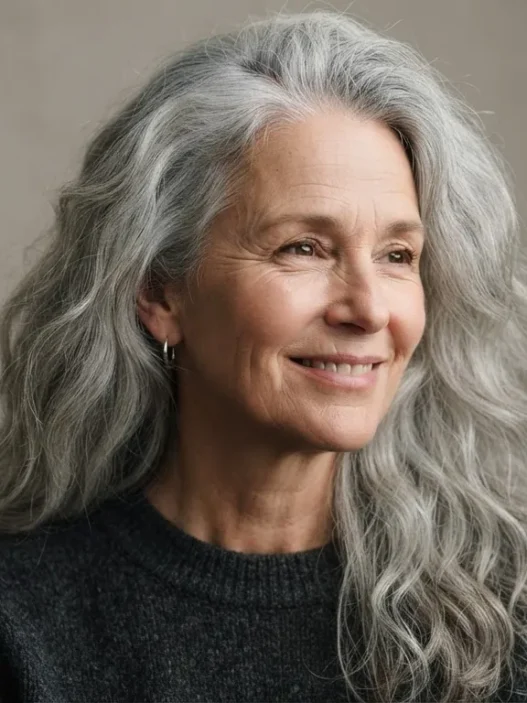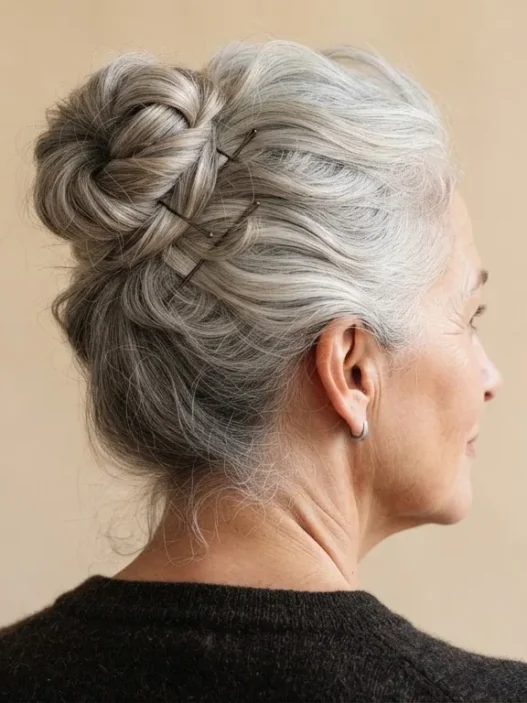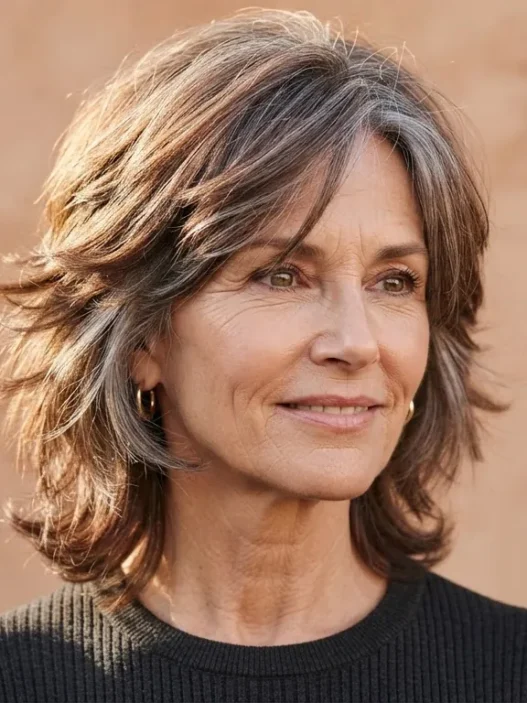




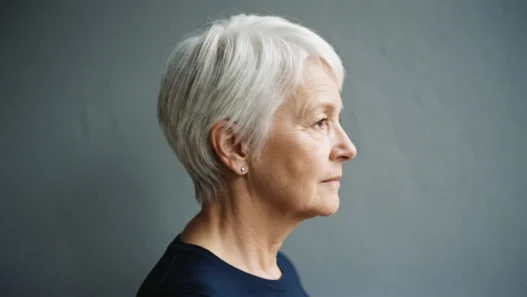

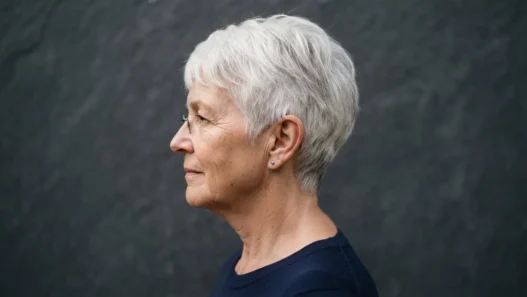



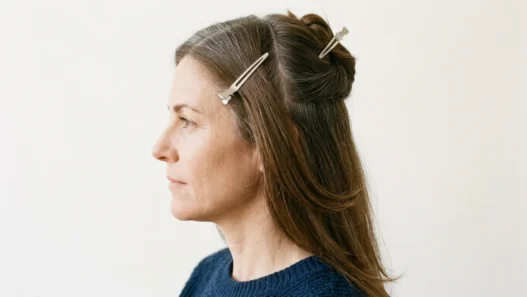
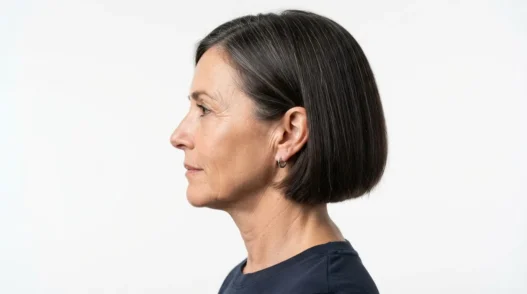
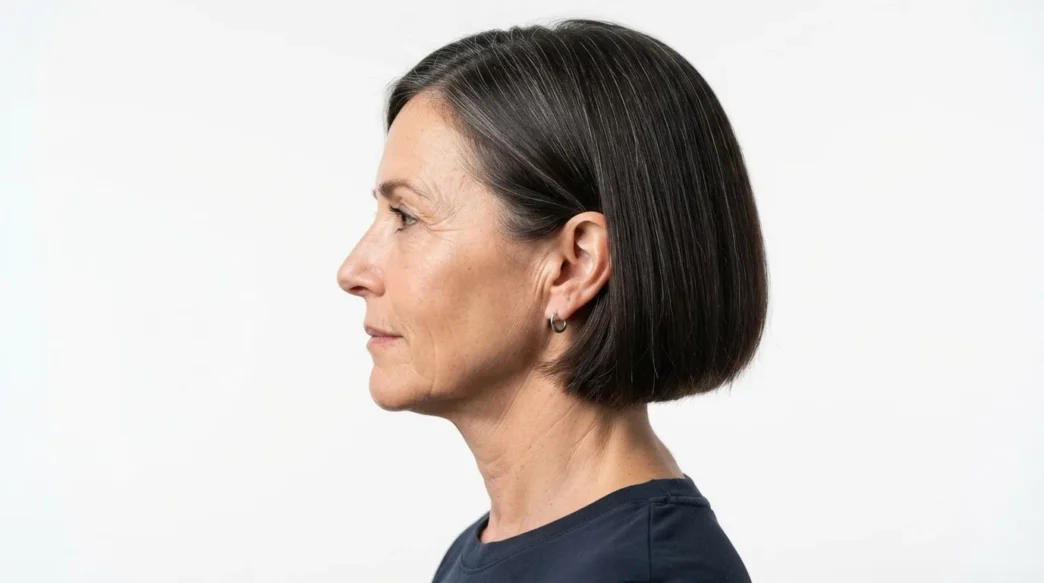
A woman sat in my chair last spring — fifty-three, straight dark hair threaded with grey, and absolutely furious with her last haircut. Not at me. At a photo she’d brought in. “It looked nothing like this,” she said, holding up a torn magazine page. And she was right. It didn’t. But that wasn’t the stylist’s fault, and it wasn’t the haircut’s fault either. It was a geometry problem — one I’ve been untangling for thirty years.
What’s In This Post — Jump Ahead If You Need To
The Photograph Problem
The photo she was holding showed a model — probably twenty-eight, maybe thirty — with that classic blunt chin-length bob. Straight hair, perfect swing, a perimeter line so crisp it looked like it had been cut with a laser. Gorgeous cut. But here’s the thing: that photo was doing a lot of work the model’s own face wasn’t doing on its own. It was studio light. A forward chin tilt. Professionally blow-dried using round brushes that probably took forty-five minutes. And — critically — a jawline that hadn’t softened yet.
I’m not saying any of this to be unkind. I’m saying it because nobody in the magazine tells you any of it, and as a result, women over fifty walk in with a reference photo and walk out confused when their mirror doesn’t match. The cut itself may be perfect. The geometry just isn’t the same geometry.
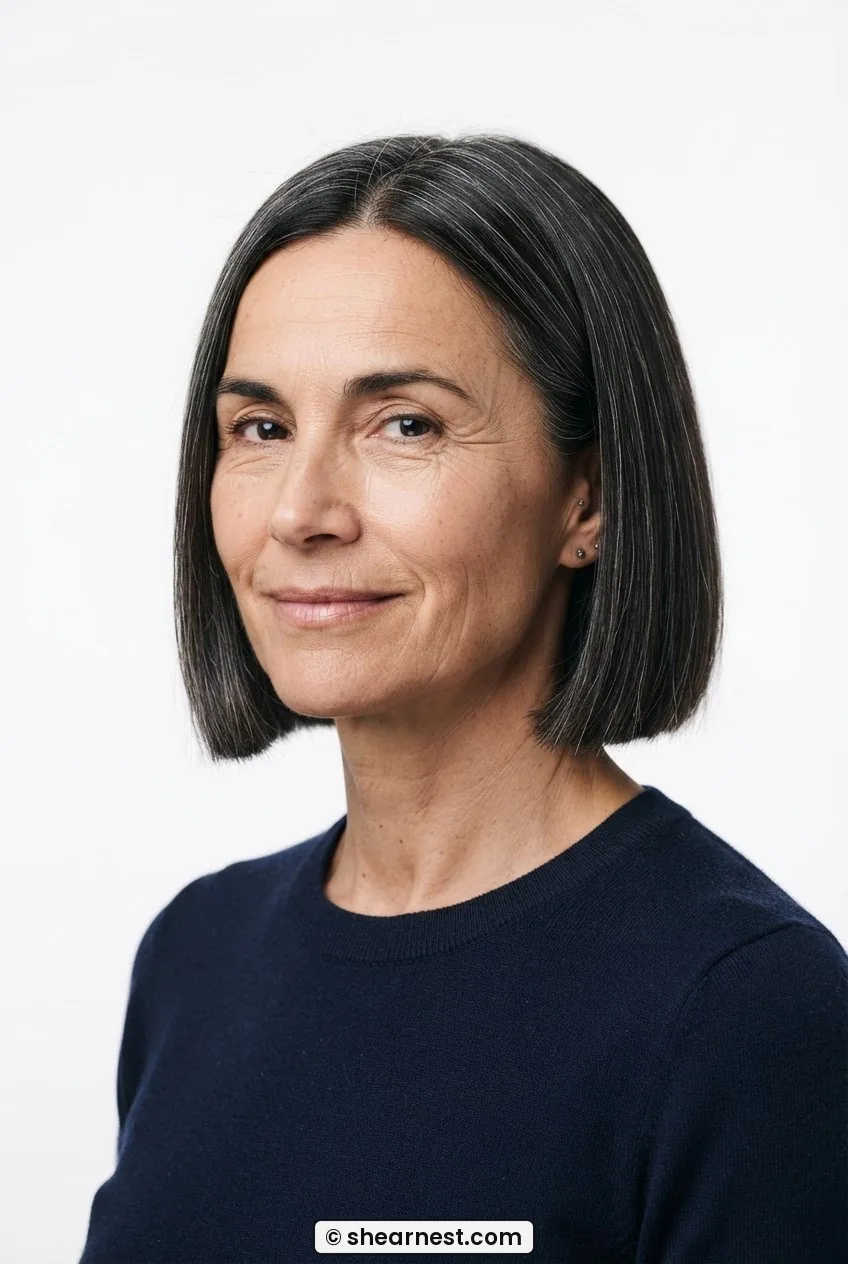
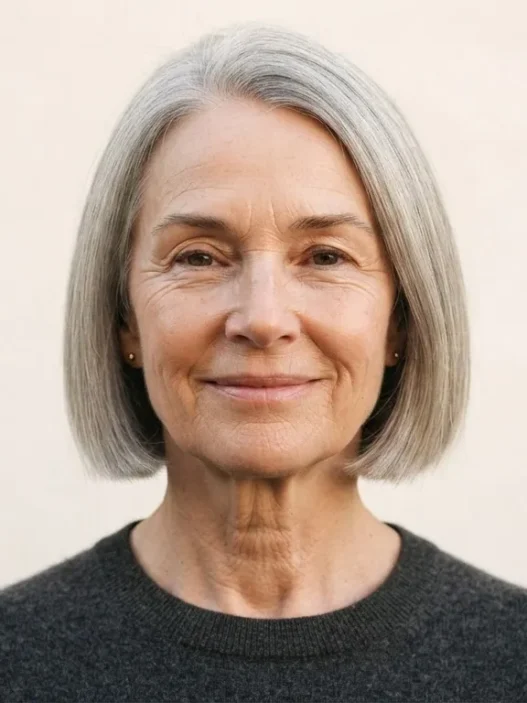
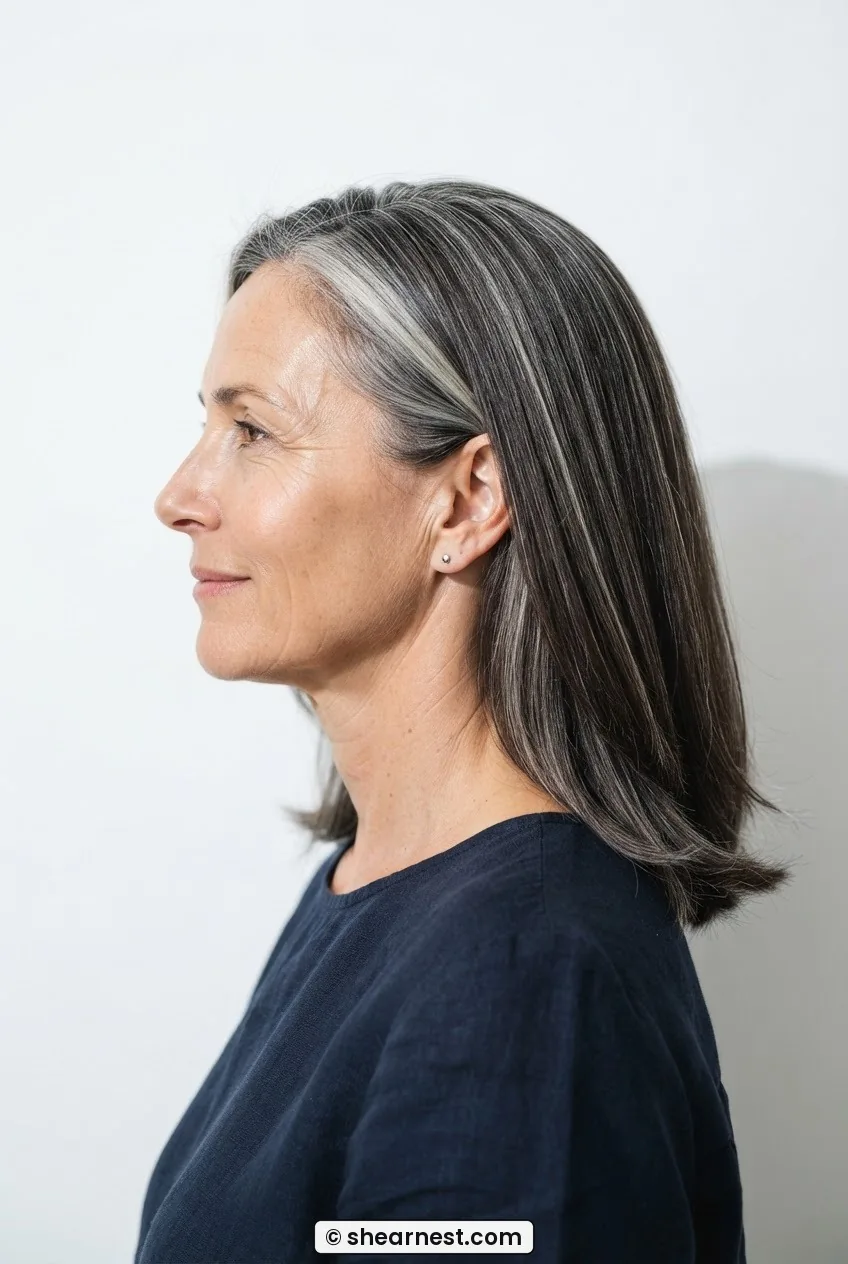
This is genuinely the most common source of disappointment I see in my chair, and it’s almost always fixable — once you understand what the photo is actually showing you versus what it’s leaving out. Look at this photo here: see how her blunt perimeter line catches the light and draws your eye straight across? That crispness is real. That’s the cut working exactly as it should on straight hair. But notice where that line sits — and ask yourself honestly whether it’s sitting in the same place relative to your jawline.
Four Bobs, One Name
While I’m at it — “bob” is doing far too much heavy lifting as a word. When someone says “I want a bob,” I genuinely don’t know what they want until I ask six follow-up questions. Because what gets called a bob in 2026 covers at least four structurally different cuts:
- The blunt bob — one-length, perimeter cut straight across. Maximum weight at the bottom. Very graphic on straight hair. Shows every millimetre of growth.
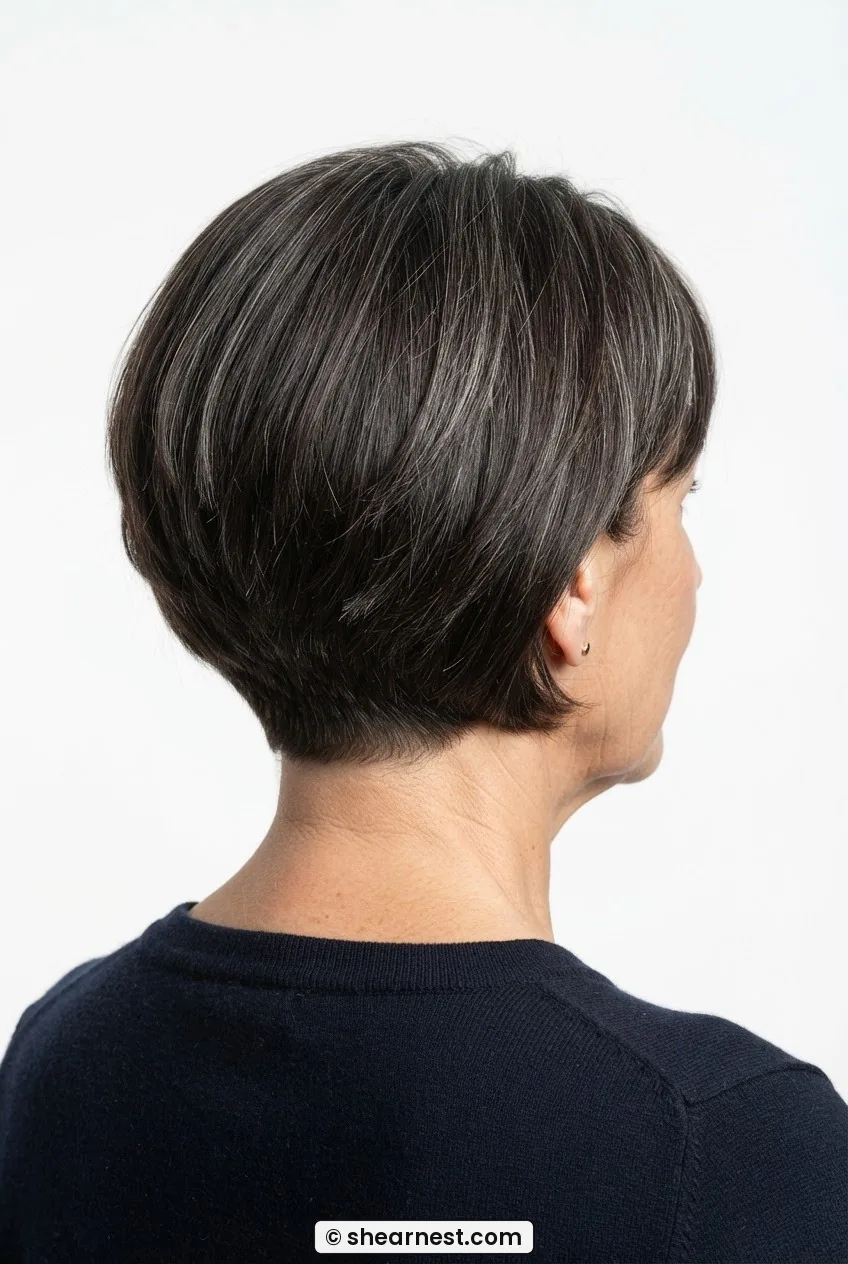
- The graduated or inverted bob — shorter at the back, longer at the front. Creates internal weight distribution and can lift volume away from the nape, which is often exactly what fine straight hair needs after fifty.
- The layered bob — weight removed through the interior. Moves more, feels lighter, but can go wispy on very fine hair if the layers are too aggressive.
- The textured or disconnected bob — length variation is deliberate and dramatic. Looks incredible in editorial shots. Requires quite a bit of styling confidence to maintain at home.
These four cuts behave completely differently on straight hair over fifty. They age differently, they grow out differently, and they require different amounts of styling effort. The fact that Pinterest lumps them all under “short hair styles straight” as if they’re the same thing drives me absolutely mad.
If you’re looking for inspiration on straight cuts that cross over into wavy territory — because a lot of straight-haired women have just enough movement to pull this off — I’ve written more about this in my post on wavy haircuts for women over 50, which covers how to work with that in-between texture rather than fighting it.
What Actually Changes After 50
Let me just say it plainly, without any of the softening language that beauty writing usually wraps this in: after fifty, straight hair typically gets finer. Not always dramatically, not overnight, but the individual strands lose some of their medulla thickness, the scalp produces slightly less sebum (which sounds like a bad thing but actually means less weigh-down), and the overall density — meaning the number of hairs on your head — tends to decrease gradually. These are hormonal shifts. They’re normal. They matter enormously for which cuts will actually work.
At the same time, the face changes too. Bone structure doesn’t change much, but soft tissue redistributes. The jawline softens. Cheeks lose some of their scaffolding. Temples can hollow slightly. None of this is catastrophic — honestly, I think a lot of women over fifty have a bone structure that becomes more interesting, not less. But it does mean that the same cut, at the same length, hitting the same point on the face, reads very differently at fifty-four than it did at thirty-two.
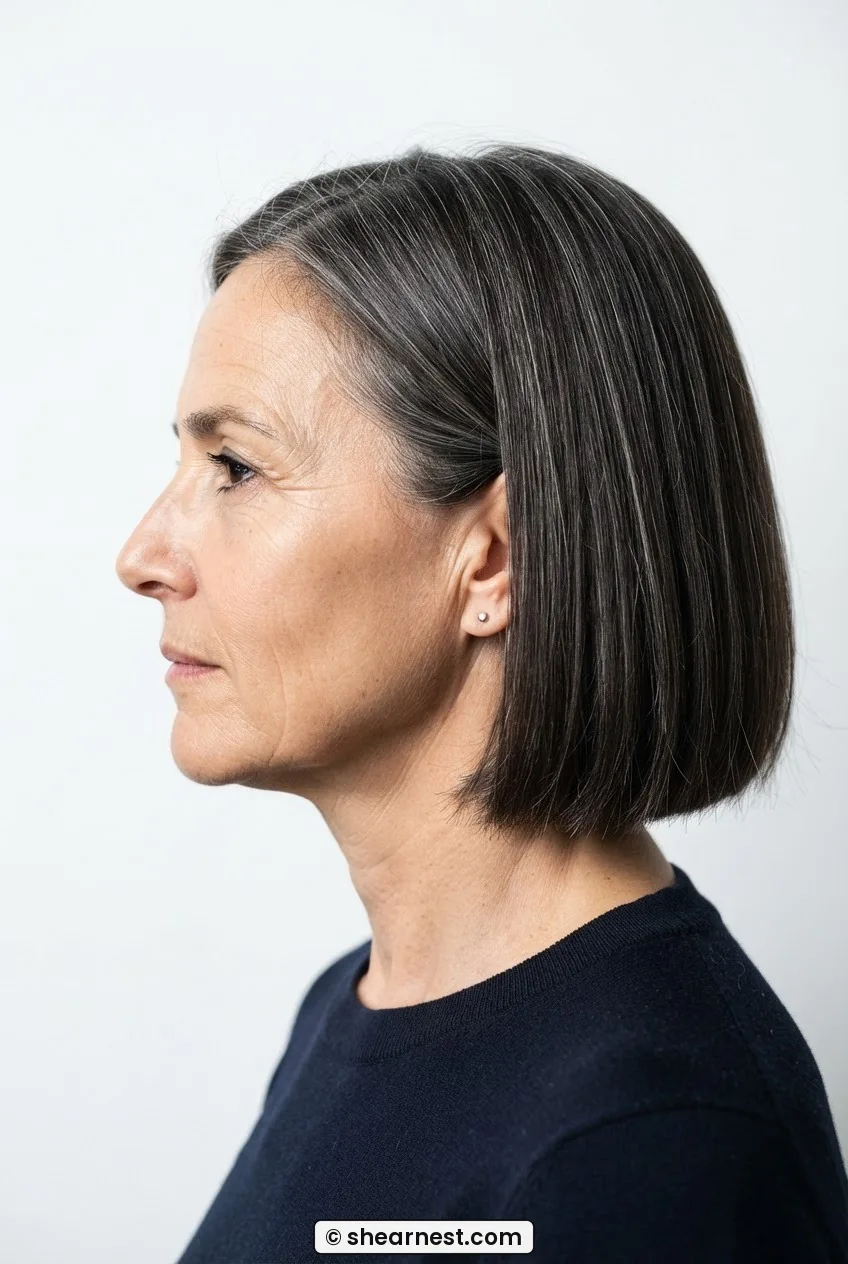
The thing that trips women up most consistently is jaw-length cuts on a softened jawline. A blunt bob that sits right at the jaw emphasises that soft edge — it draws the eye directly to the spot you might least want emphasised. Moving the cut up (to just below the cheekbone) or down (to below the jaw, toward the collarbone) almost always reads better. I don’t say this to be harsh. I say it because I’ve seen the difference hundreds of times, and I’m tired of watching women blame themselves when the answer was actually half an inch of length adjustment.
For women moving into their sixties and beyond, these same principles apply with a little more intensity — I’ve written about how the conversation shifts even further in my post on hair styles for women over 70, if you want to think ahead or pass it along to someone who needs it.
Why the Perimeter Matters More Than the Length
This is the part that genuinely changed how I think about straight haircuts for women over fifty. It’s not really about whether you go short or medium-length. It’s about what the perimeter line is doing.
On straight hair, the perimeter line is everything. It’s the loudest visual statement in the cut. With curly or wavy hair, the texture creates visual complexity throughout the whole shape — your eye travels around it. With straight hair, your eye goes immediately to the bottom edge. That line is what people see in photos. It’s what the light catches. It’s what either looks intentional and modern, or looks overgrown and undefined.

A blunt, crisp perimeter is genuinely one of the most powerful tools available for straight hair over fifty — but it needs to be maintained. Every four to six weeks, not eight. The grow-out on a blunt line goes from graphic to shapeless faster than almost any other cut. I know that feels like a lot of salon visits. But this is actually how often haircut maintenance matters — on straight one-length cuts, the timing really is the difference between the look working and not working.
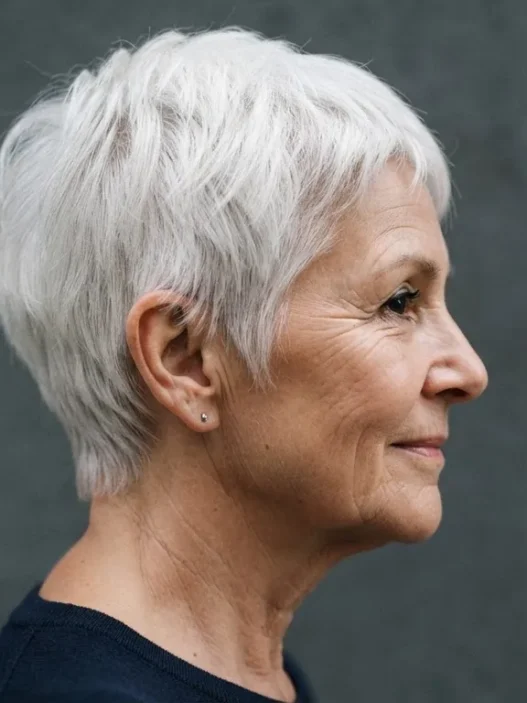
The alternative — and this is where I’ve shifted my thinking over the years — is a slightly softened perimeter. Not layered, not choppy, just point-cut or slide-cut at the very edge so the line isn’t quite so hard. It grows out more gracefully. It’s more forgiving if you go seven weeks instead of five. And honestly, on finer straight hair after fifty, it often looks more refined than the razor-sharp blunt edge, which can look heavy if the hair below the line starts to thin slightly at the ends.
You can explore all the variations on bob perimeters across different age groups in the broader hairstyles over 70 archive — it’s useful for seeing how these principles evolve over time.
What I Changed My Mind About
For the first fifteen or so years of my career, I was a true believer in going shorter as women aged. It was what I was taught. It was what most of the industry believed. Shorter is easier. Shorter is more polished. Shorter is more appropriate.
I don’t believe that anymore.
I’ve completely reversed my position on this, and I’ll tell you exactly why: I watched too many women agree to pixies and crops they didn’t actually want, because they’d been told by someone like me that it was “the right thing to do” after fifty. And then they spent two years growing it out while feeling unlike themselves. That’s not a better haircut. That’s just obedience dressed up as style advice.
The cut that makes you feel most like yourself is the right cut. Full stop. Age is a factor in how we execute it — not in whether you’re allowed to want it.
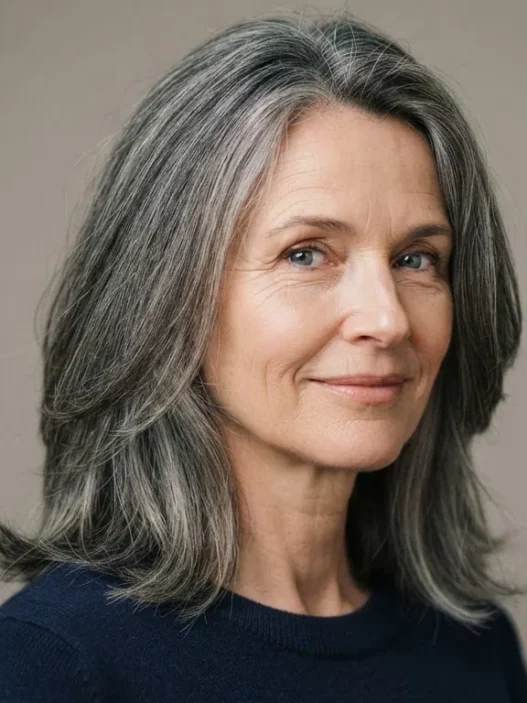
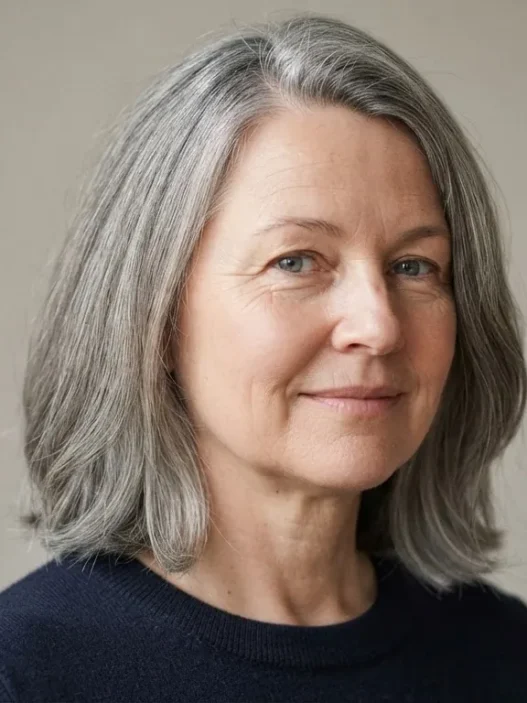
What I do believe is that length placement matters more as we age. A lob — that longer bob sitting between the collarbone and the shoulder — is genuinely one of the most flattering straight haircuts for women over fifty that I’ve seen consistently work across face shapes and hair densities. It’s long enough to create movement, it sits below the jawline so it doesn’t emphasise soft edges, and on straight hair it can look breathtakingly clean and modern. The lob versus bob decision is honestly more nuanced than most guides make it sound — it comes down to your specific jaw placement and how much styling time you actually have.
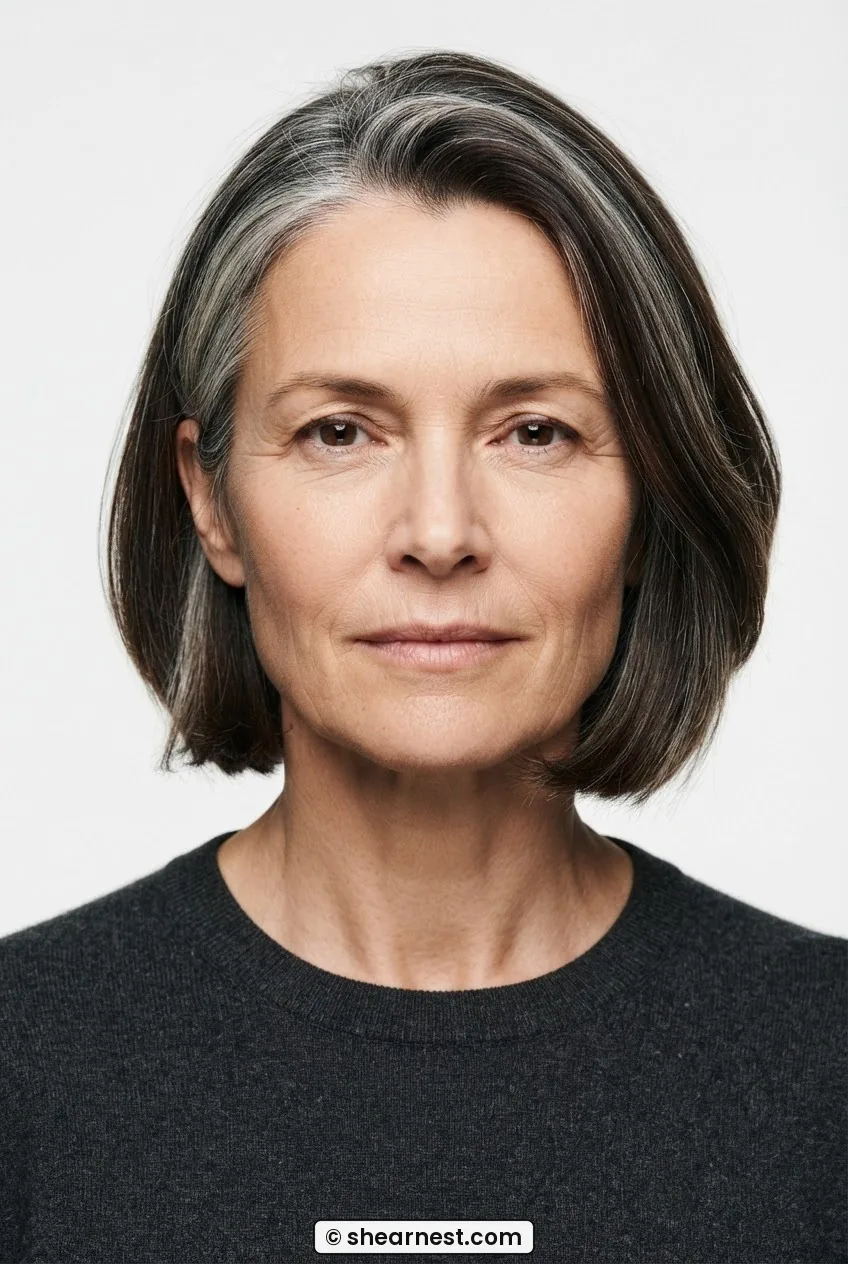
And grey. I changed my mind about grey too. I used to default to recommending that women cover grey in straight hair because the contrast between grey and darker roots can look stark and unfinished. I now think the opposite — a well-handled grey transition on straight hair is one of the most striking, sophisticated things I see in my chair. The key word is “handled” — meaning intentional blending rather than a sharp demarcation line. But covering it reflexively? That’s the old advice. I don’t give it anymore.
Questions I Get About This
Does straight hair need different cutting techniques after 50?
Yes, genuinely. Finer straight hair responds differently to the same cutting technique than it did ten years ago. Point-cutting and slide-cutting at the perimeter prevent the blunt edge from looking blocky or heavy on thinning ends. A good stylist will adjust their approach based on your current density, not the density you had at thirty-five.
Is a blunt bob too harsh on a softer jawline?
It depends entirely on where it sits. Blunt at the jaw — often, yes. Blunt above the cheekbone or below the jaw — usually not at all. The line itself isn’t the problem; it’s the placement of that line relative to your specific face. This is why bringing reference photos to your consultation is helpful, but talking to your stylist about where the line actually lands is essential.
What’s the easiest straight haircut to maintain at home between appointments?
A graduated bob or a lob with a softened perimeter. One-length blunt bobs show every millimetre of grow-out and go shapeless quickly. A graduation at the back holds its structure better for longer. At home, the single biggest thing you can do for straight hair over fifty is learn a proper blow-dry technique — it matters more than almost any product.
Should I avoid layers if my straight hair is thinning?
Not necessarily — but aggressive layers can make thinning ends look even more sparse. The goal is to remove weight internally without decimating the perimeter density. A skilled stylist will take less through the ends and more through the mid-lengths to create movement without sacrificing the fullness of that bottom line. Always communicate your concerns about density before the cut starts.
The woman with the magazine page left my chair that day with a graduated bob, the perimeter sitting just below her jaw rather than at it, and a slightly softened edge that would still look intentional at week seven. She texted me a photo three days later. Looked nothing like the magazine picture — it looked better. Because it was actually hers. That’s still the whole point, thirty years in. If you have a question about your specific situation, you’re always welcome to reach out through the contact page — I read everything.