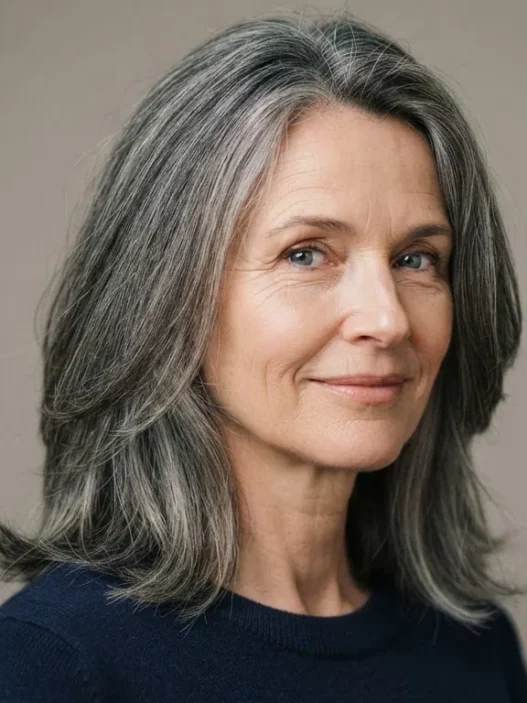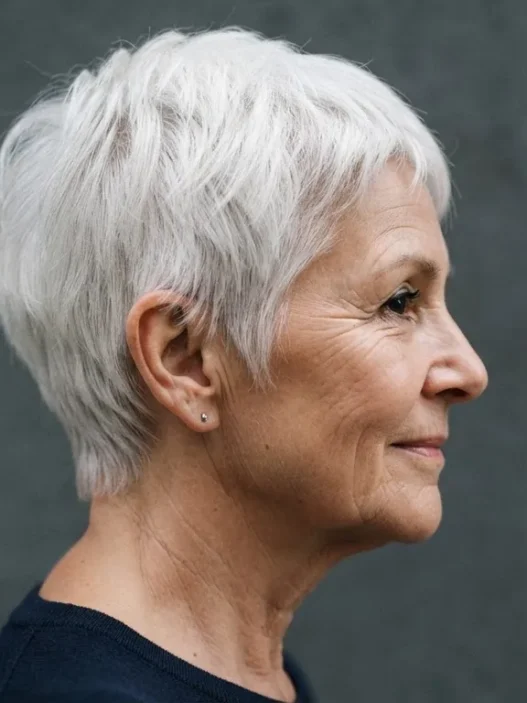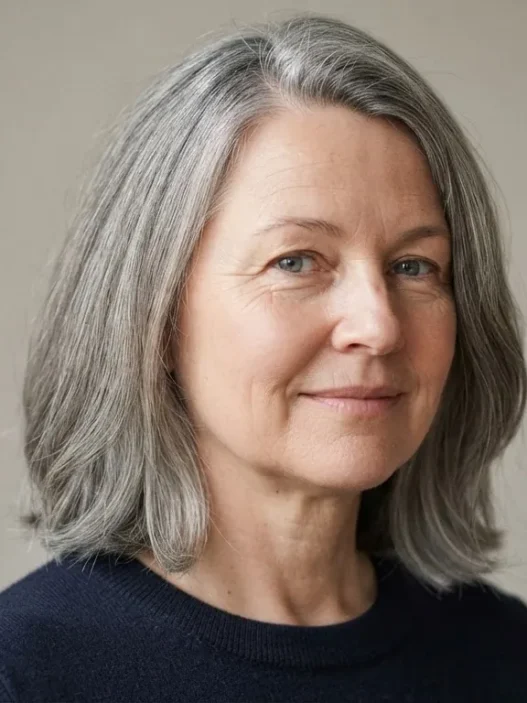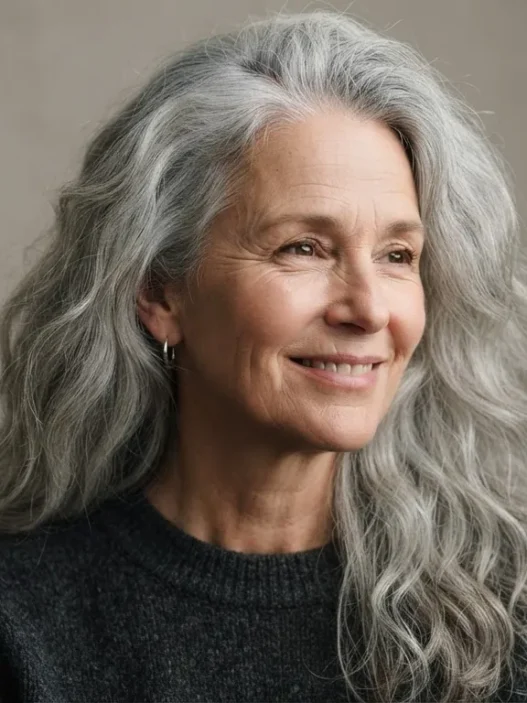




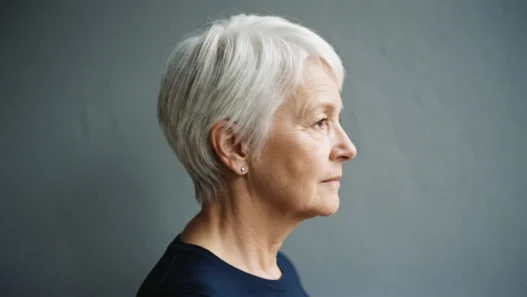

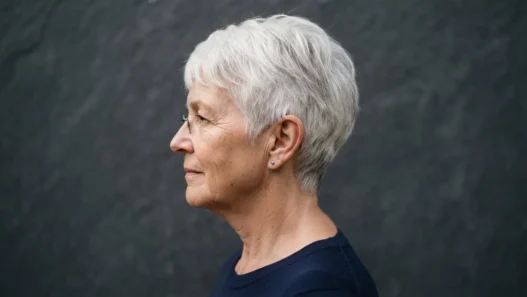

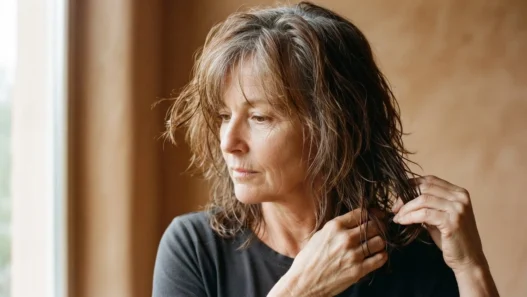

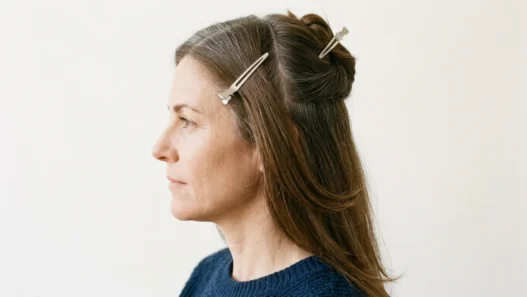
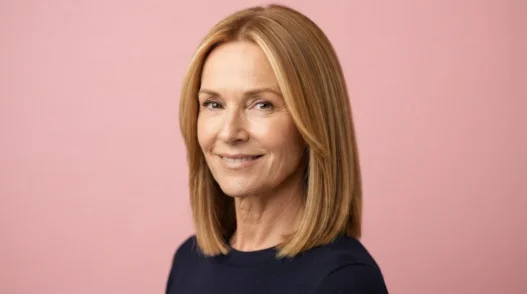
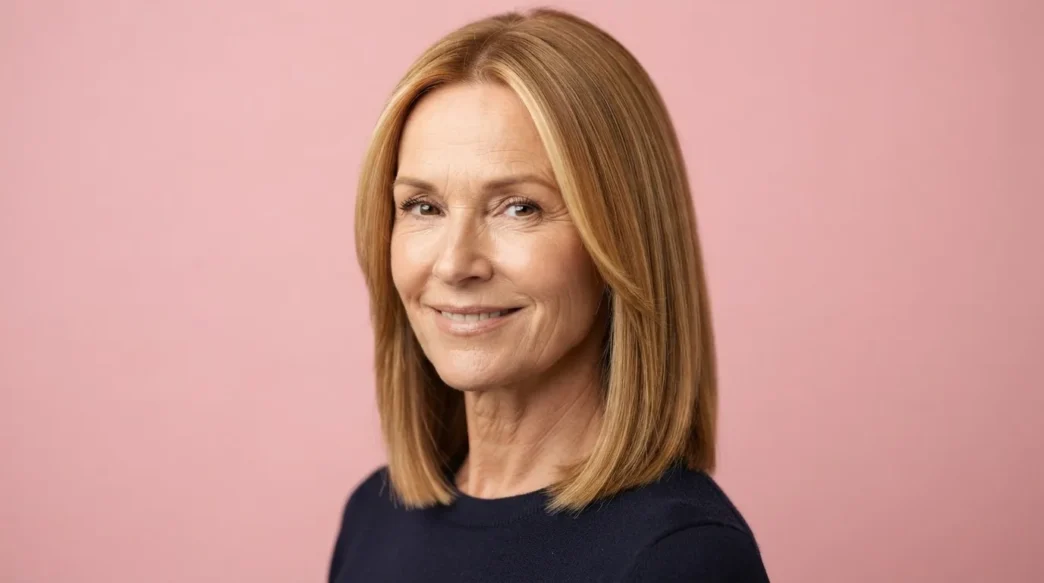
I’ve spent a lot of time thinking about what actually makes blonde work on hair that’s changed — in density, in texture, in the way it takes colour. Not the fantasy version where everything lifts clean and even, but the real thing where your mid-lengths are drier than they were ten years ago and your root regrowth includes a few silvers that act entirely differently under a bowl of 20-volume. This post is about blonde hair over 50 as a practical decision: what you’re matching pigment against, where the weight of the cut sits, and what to actually say when you’re in the chair.
10 Blonde Options — Find the One That Fits Your Hair
- 1. The Warm-Toned Blunt Lob
- 2. The Ribbon Highlight Bob
- 3. The Babylight Crown on Fine Hair
- 4. The Chunky-Section Balayage Shag
- 5. The Sandy Pixie with Tonal Variation
- 6. The Money-Piece Bob on Straight Hair
- 7. The Lived-In Lob for Wavy Hair
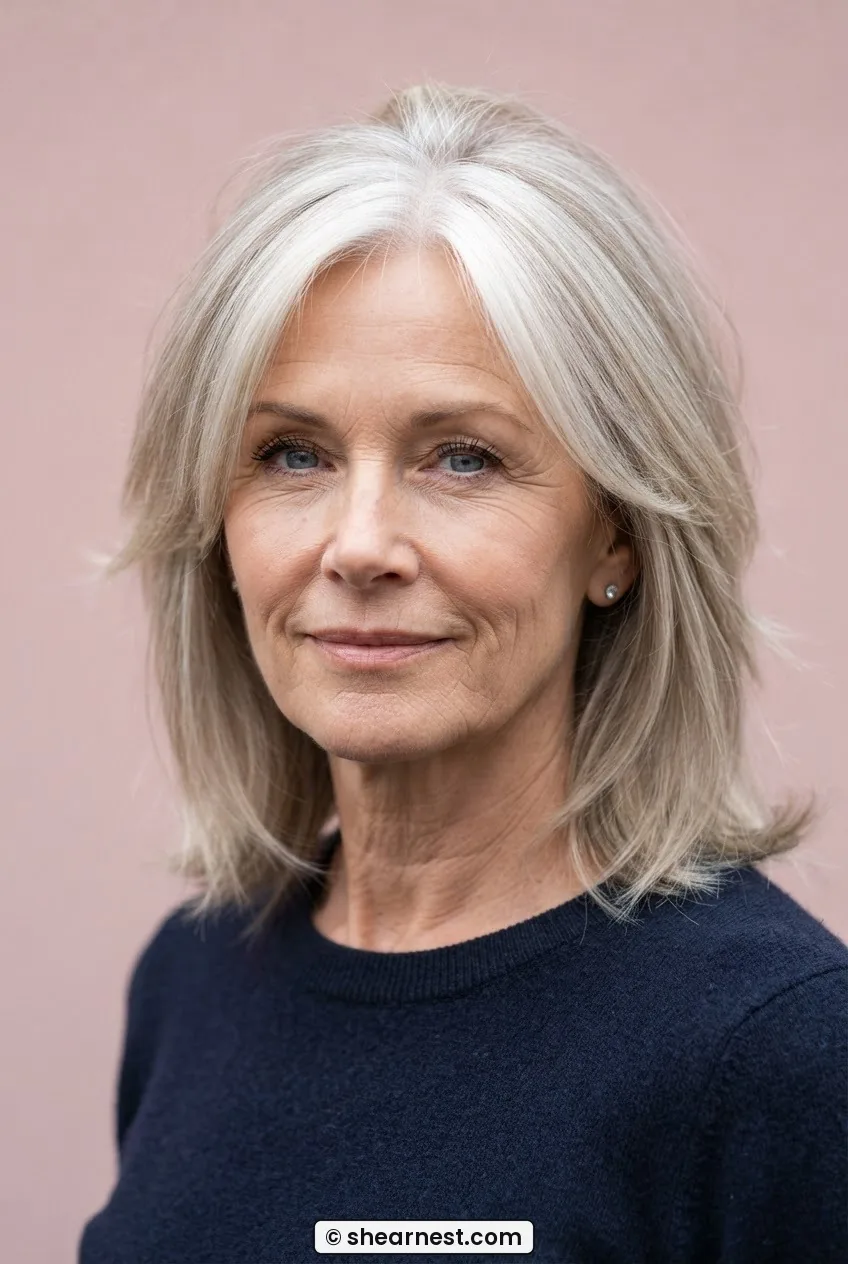
- 8. The Silver-Blonde Blend for Transitioning Grey
- 9. The Curtain-Bang Lob with Face-Framing Panels
- 10. The All-Over Soft Blonde on Thick Hair
1. The Warm-Toned Blunt Lob
A blunt perimeter cut to sit between the clavicle and the shoulder, with no internal layers and no graduation — just one clean line where all the weight collects. The colour sits in a warm honey-to-wheat range, applied as a full foil set with slightly more density in the top quadrant so the roots read slightly richer than the ends.
This one cancels the yellow-green brassiness that oxidised brown bases develop over time. Warm blonde pulls that sallow-to-green cast toward gold instead of fighting it with violet toner (which, on oxidised mid-lengths, can go flat and grey-looking). It suits women with medium-to-thick hair that still has enough body to hold a blunt line — if your ends are sparse, the blunt hem will look thinner than it actually is. Upkeep is straightforward: a full foil set every 10–12 weeks, a bond-building treatment at each appointment.
At the chair: “A blunt lob to the collarbone, no layers, warm honey tones through the foils — I want the roots a shade deeper than the ends.”
2. The Ribbon Highlight Bob
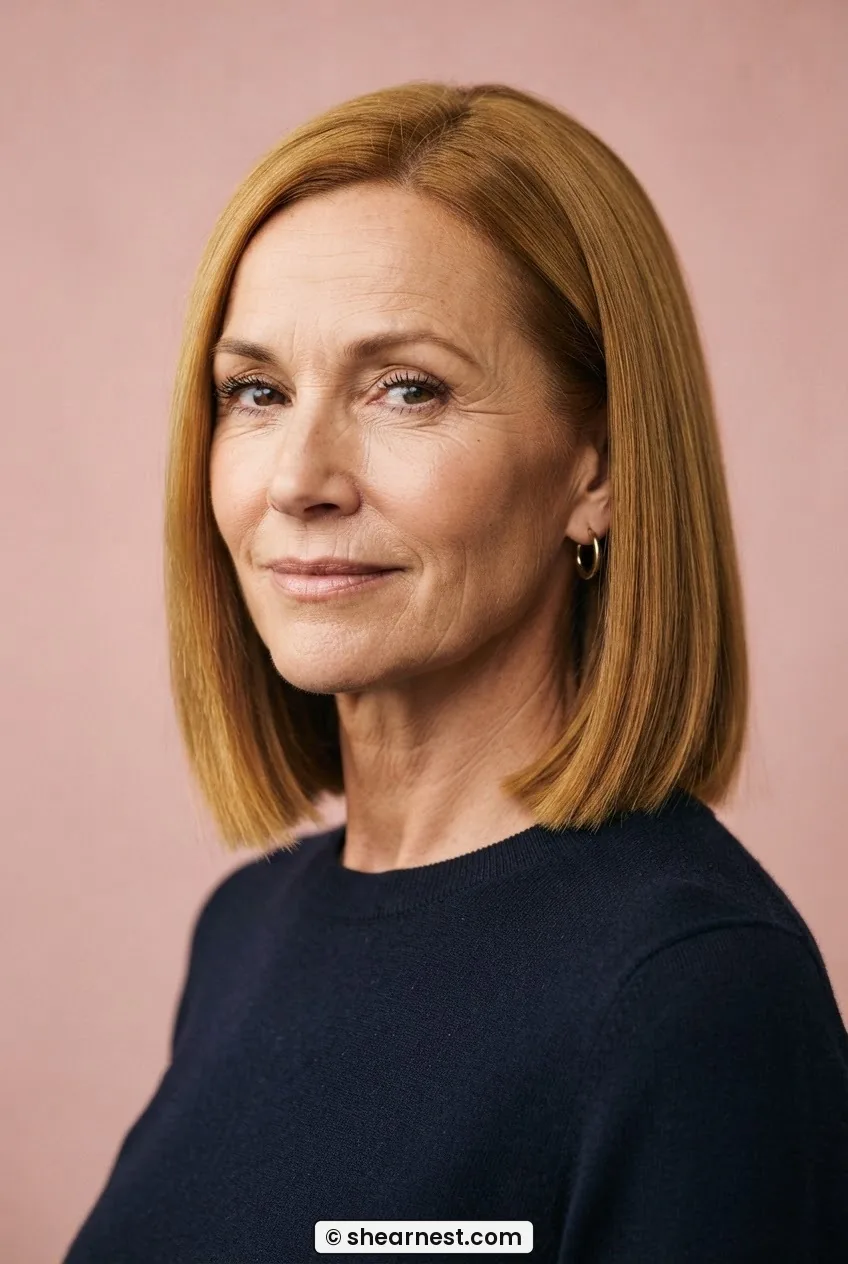
The bob sits at jaw-to-chin length, cut with a slight internal graduation so the back rises a centimetre or two above the front sections. No stacking — the back is scissor-cut, not clippered, so the hem stays soft rather than wedge-like. The colour technique is the interesting part: fine, evenly spaced ribbons of blonde are woven through the whole head rather than concentrated at the top surface.
Ribbon highlighting is what you ask for when you want the colour to read as dimensional rather than striped. Because the foils are pulled from root to end in narrow sections, you get movement through the whole length instead of a highlighted-on-top, dark-underneath contrast. It works especially well on straight hair cuts for women over 50 because the ribbons of colour are visible rather than hidden inside curl or wave. Grey strands that lift faster than the rest of your base actually help here — they contribute lighter ribbon moments without extra processing. Upkeep every 8–10 weeks.
At the chair: “A chin-length bob with light graduation in the back, and ribbon highlights pulled root to tip — not just surface foils.”
3. The Babylight Crown on Fine Hair
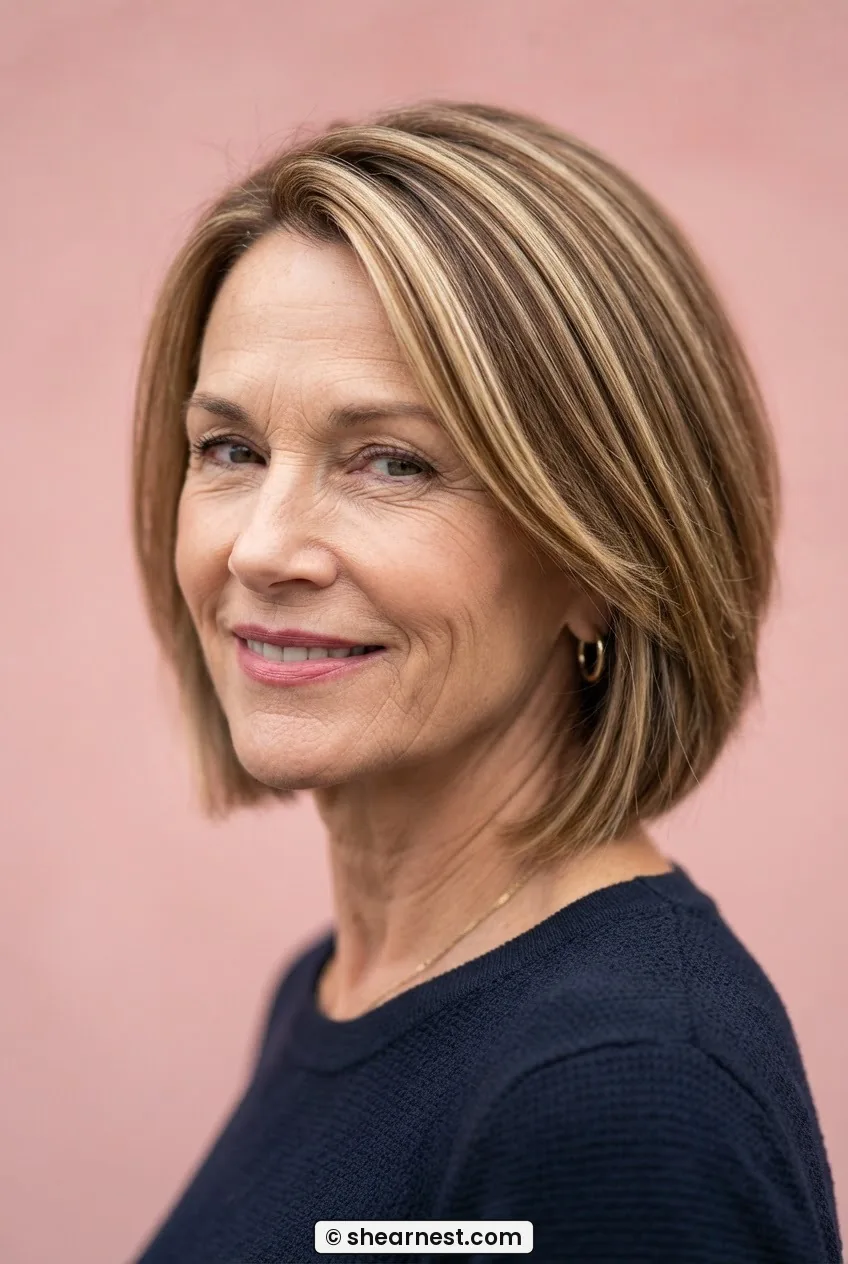
This one’s specifically engineered for fine hair. The cut itself is a medium-length shattered layer cut — interior layers from the crown down, cut with point-cutting or a razor so the ends are feathered rather than blunt. What does the heavy lifting visually is the colour placement: babylights (ultra-fine foils, often 25–35 per session) applied densely through the crown and top sections, fading into fewer, wider foils through the mid-lengths.
The effect is a genuine brightness at the top of the head that reads as fullness under light. I’ve talked about this approach before in my guide to haircuts for fine hair over 50 — the right colour placement genuinely changes the perceived density of the style. This works best in an ash-to-cool-blonde range, which is useful if you’re cancelling yellow warmth from lightened fine hair. Fine hair over-processes faster, so ask your colourist to use a lower-volume developer through the mid-lengths. Upkeep every 10–14 weeks depending on regrowth rate.
At the chair: “Dense babylights through the crown and top, wider foils through the lengths — I want the top to look full and bright.”
4. The Chunky-Section Balayage Shag
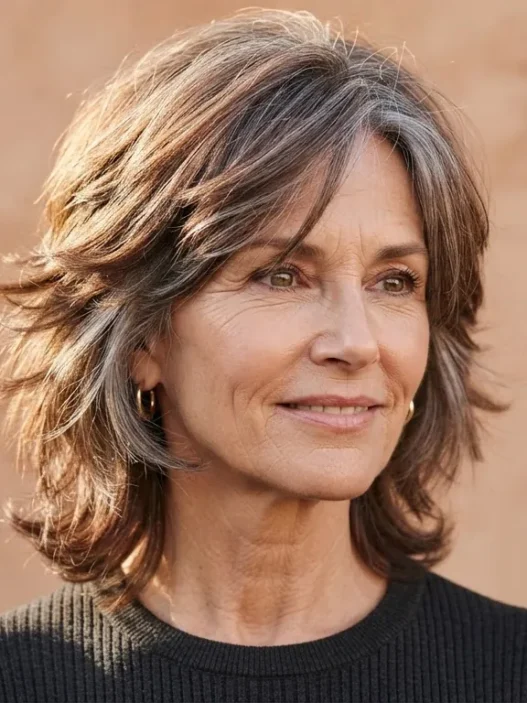
A long shag — collarbone to mid-chest length — cut with visible curtain layers and disconnected sections through the crown. The ends are texturised with a razor or chunking shears so there’s real movement between layers rather than blended-together softness. Then: a deliberate, wide-section balayage applied freehand in broader sweeps than you’d usually see, so the contrast between darker roots and lighter lengths is obvious rather than seamless.
This is the option I’d go to for thick or coarse hair that tends to absorb colour. Wide balayage sections on dense hair read proportionately — they look intentional. Fine hair would make the same technique look patchy. The chunky layering gives body-heavy hair a place to go, which solves the bulk problem without sacrificing length. And the contrast between root depth and length brightness actually helps when your root regrowth includes grey — it reads as part of the design. You’ll need a glossing treatment to keep the colour saturated between appointments. Refresh balayage every 14–16 weeks.
At the chair: “A long shag with disconnected layers, razor-finished ends, and a chunky freehand balayage — I want visible contrast, not seamless blending.”
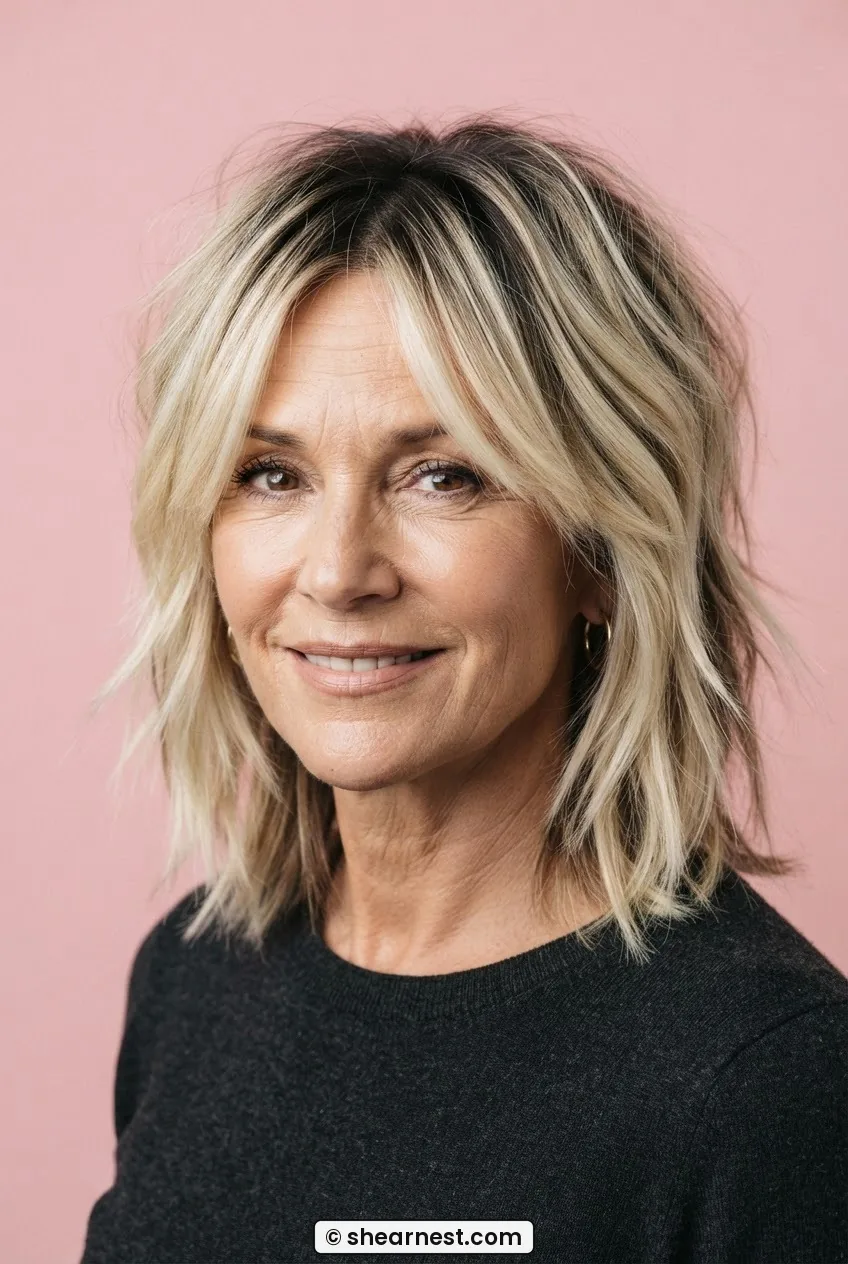
My personal pick is this one — the chunky balayage shag. My hair is thick, and every time I’ve gone for delicate babylights or a refined technique, the effect disappears within weeks because there’s simply too much hair for it to show up. Wide sections, real contrast, visible layers: this is what actually reads on dense hair.
5. The Sandy Pixie with Tonal Variation
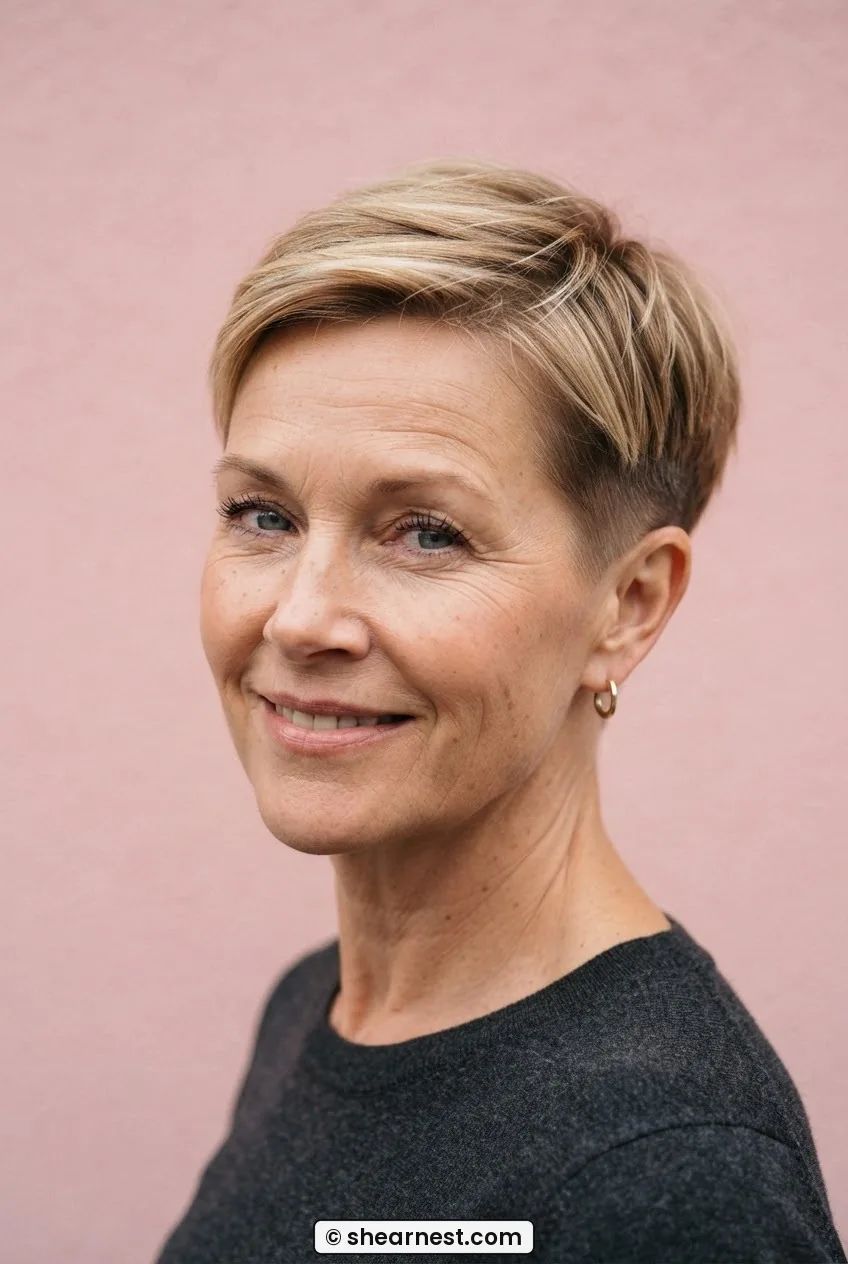
A pixie where the top section is left longest — roughly 5–7cm — so there’s enough length to show colour. The sides and back are graduated short, cut tight to the head with scissors over comb. The colour is a sandy, medium blonde base with slightly lighter streaks through the top that are applied as low-contrast highlights rather than dramatic lightening.
Sandy tones sit in the neutral-to-warm category: they’re not golden enough to look brassy, and not cool enough to look ashy. On a pixie, tonal variation — darker underneath, lighter on top — creates the illusion of depth without the maintenance overhead of a full highlight set. This suits grey-blonde hair particularly well because the sandy base pulls grey into the warm range rather than letting it look dingy. Upkeep on the cut is every 5–6 weeks; the colour can go 12 weeks between full refresh appointments if you use a root shadow at your colourist’s between visits.
At the chair: “A pixie with the top kept at 5–6cm, tight graduation through the back and sides — and a sandy base with low-contrast lighter pieces on top.”
6. The Money-Piece Bob on Straight Hair
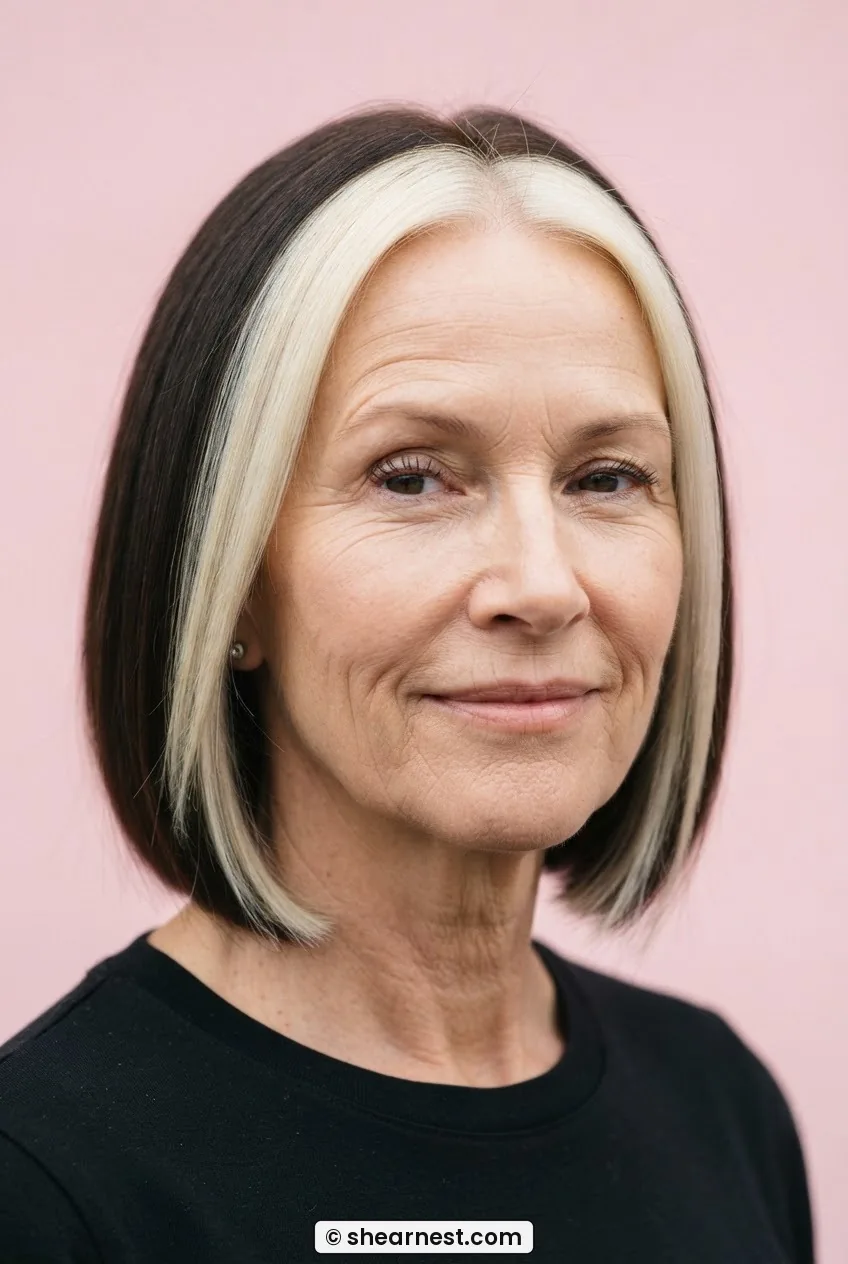
A sleek, one-length bob cut to sit between the jaw and the chin. Perfectly flat at the back, cut parallel to the floor. No internal layers. The colour is the technique: two bold panels of lightened blonde placed at the front sections on either side of the face — what the industry calls money pieces — sitting on top of a much darker base through the back and crown.
The contrast is the whole point. On straight hair, you can actually see the clean line where the face-framing blonde sections meet the darker back, and that structural contrast is visually striking in a way that softer, blended colour isn’t. It suits women with a clear hair line and good density at the front sections — if your hairline is receding or the front panels are sparse, a money piece won’t have enough hair to show on. You can read more about what happens to texture and density at this age in my piece on what actually works for straight hair over 50. Touch up the front sections every 6–8 weeks to keep the contrast reading clean.
At the chair: “A one-length bob parallel to the floor, no layers — and two bold blonde panels at the front sections, kept bright against a darker back.”
7. The Lived-In Lob for Wavy Hair
A lob cut to shoulder length, with invisible layers through the interior — the kind of layering that doesn’t show until the hair dries into its wave. Point-cut ends. No blunt hem because a blunt line collapses when wavy hair does what wavy hair does. The colour is a lived-in blonde: a slightly darker root melt into a mid-range blonde through the lengths, applied with a soft brush application rather than foils so there’s no hard line between root and length.
Wavy hair and a root melt are genuinely made for each other. The colour movement mimics the hair movement — it all flows in the same direction. And if you’re in any transitional territory with grey (growing it out, blending it, or somewhere in between), a root melt in an ashy or cool-blonde range can sit naturally alongside the silver. I have a full breakdown of this dynamic in my post on wavy haircuts for women over 50 — the shape really does change when the cut respects the wave pattern. This colour holds well and needs a full refresh every 12–14 weeks.
At the chair: “A shoulder-length lob with invisible interior layers, point-cut ends — and a lived-in root melt into a mid blonde, no hard foil lines.”
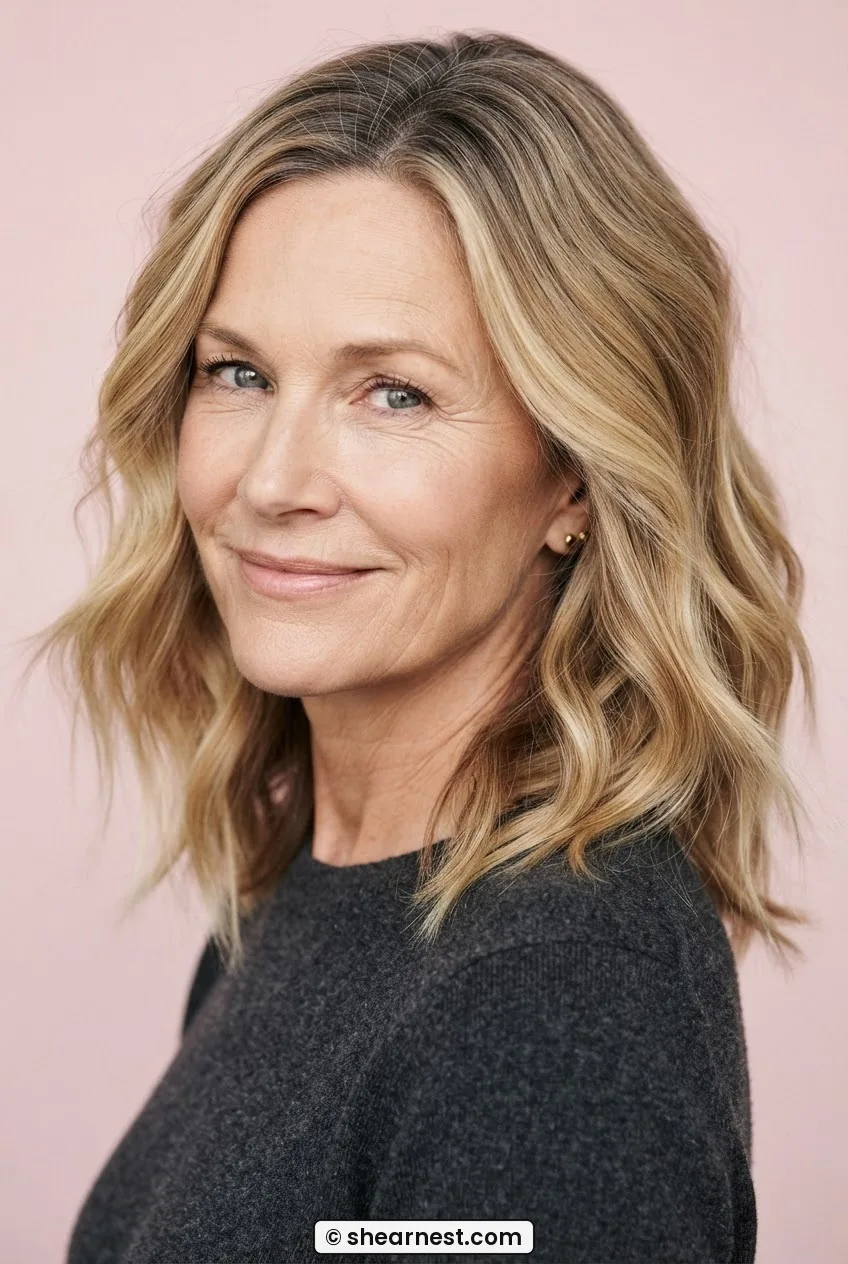
8. The Silver-Blonde Blend for Transitioning Grey
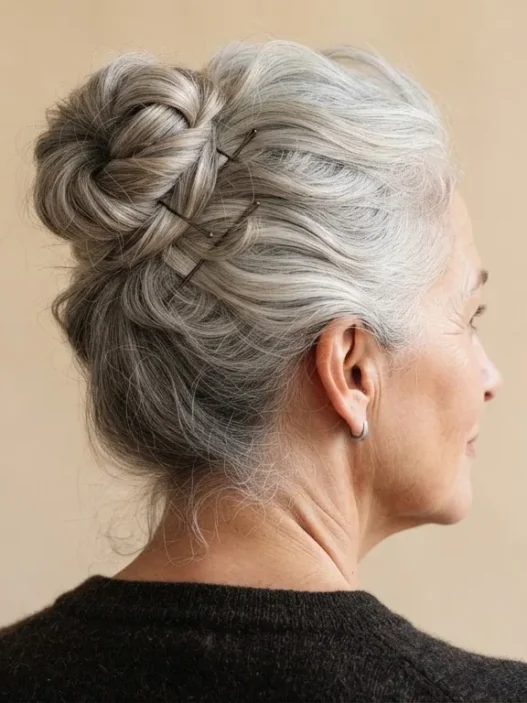
This one is less about a single cut and more about a colour construction that works across several lengths — from a medium bob to a lob. The cut should have some layering through the top and crown to allow movement that disguises any root contrast. What makes this approach specific is the toning strategy: instead of fighting incoming grey with warm blonde, you work with it by lifting any remaining darker strands to a pale or icy blonde that sits adjacent to the silver. Blending grey with blonde is a technique that’s been gaining real traction, and for good reason — it removes the constant fight of covering grey with pigment.
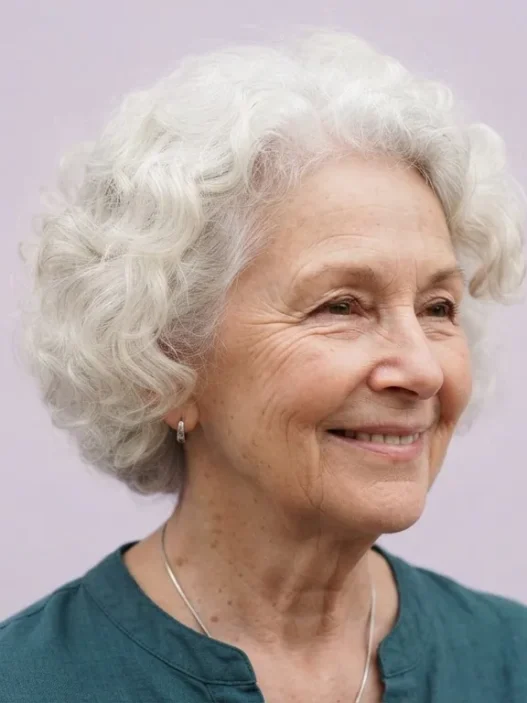
The result is a head of hair that ranges from silver-white at the root to platinum or pale blonde through the lengths. It reads as intentional rather than grown-out. This suits women who are genuinely transitioning and tired of the root-every-six-weeks cycle. It does require initial heavy lifting at a salon that knows what it’s doing — over-toned hair in the wrong direction will look flat and grey rather than silver-bright. You can let the silver grow in naturally once the lengths are lightened enough to sit alongside it. After that, maintenance is just a violet toner every 6–8 weeks at home.
At the chair: “I want to blend my incoming grey rather than fight it — lift the darker sections to a pale blonde that sits next to the silver, and tone with violet to unify.”
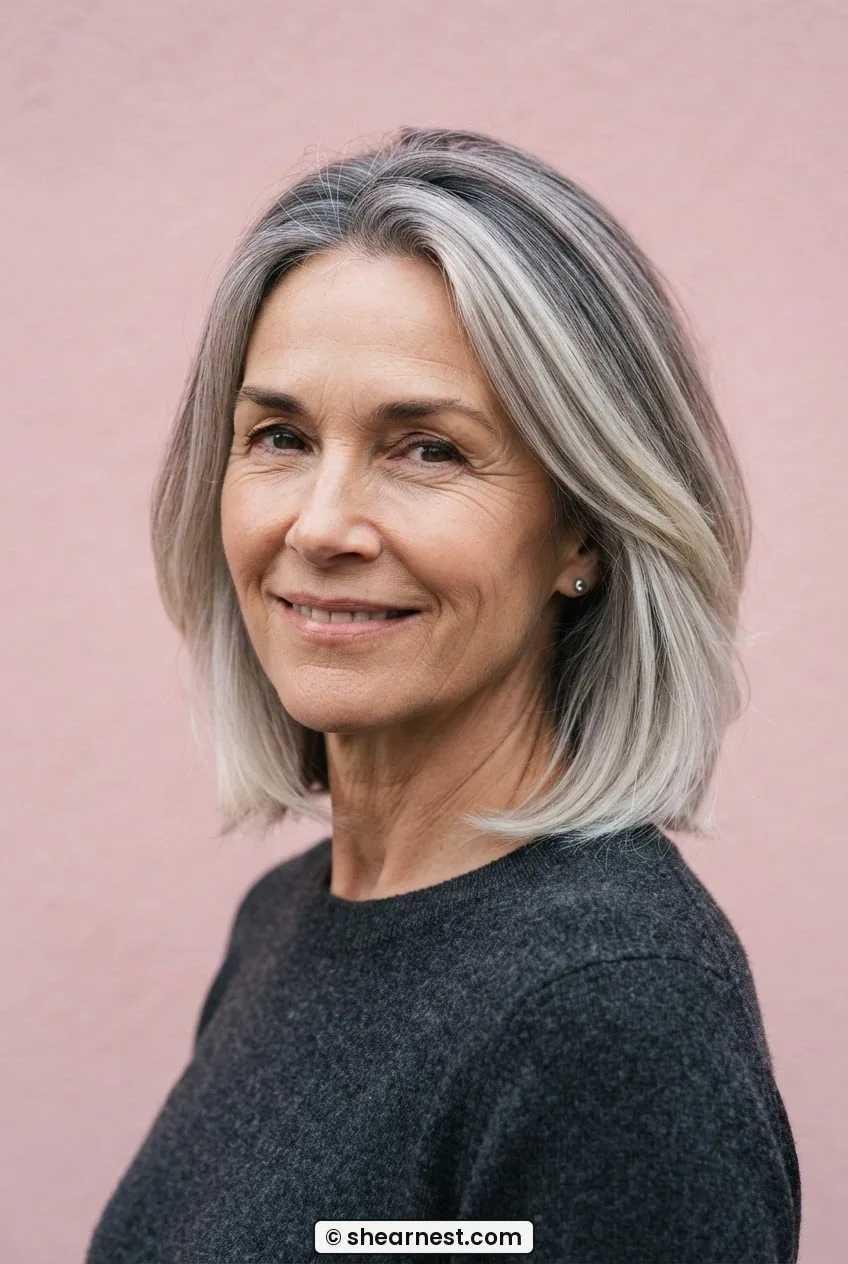
How the Silver-to-Blonde Technique Actually Works
9. The Curtain-Bang Lob with Face-Framing Panels
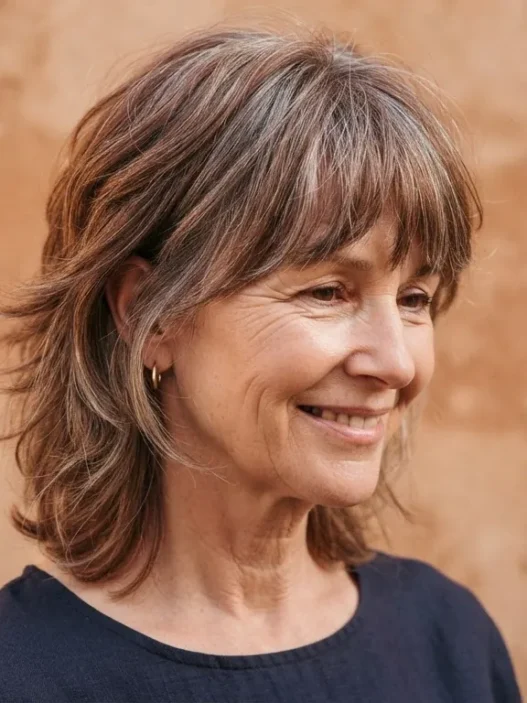
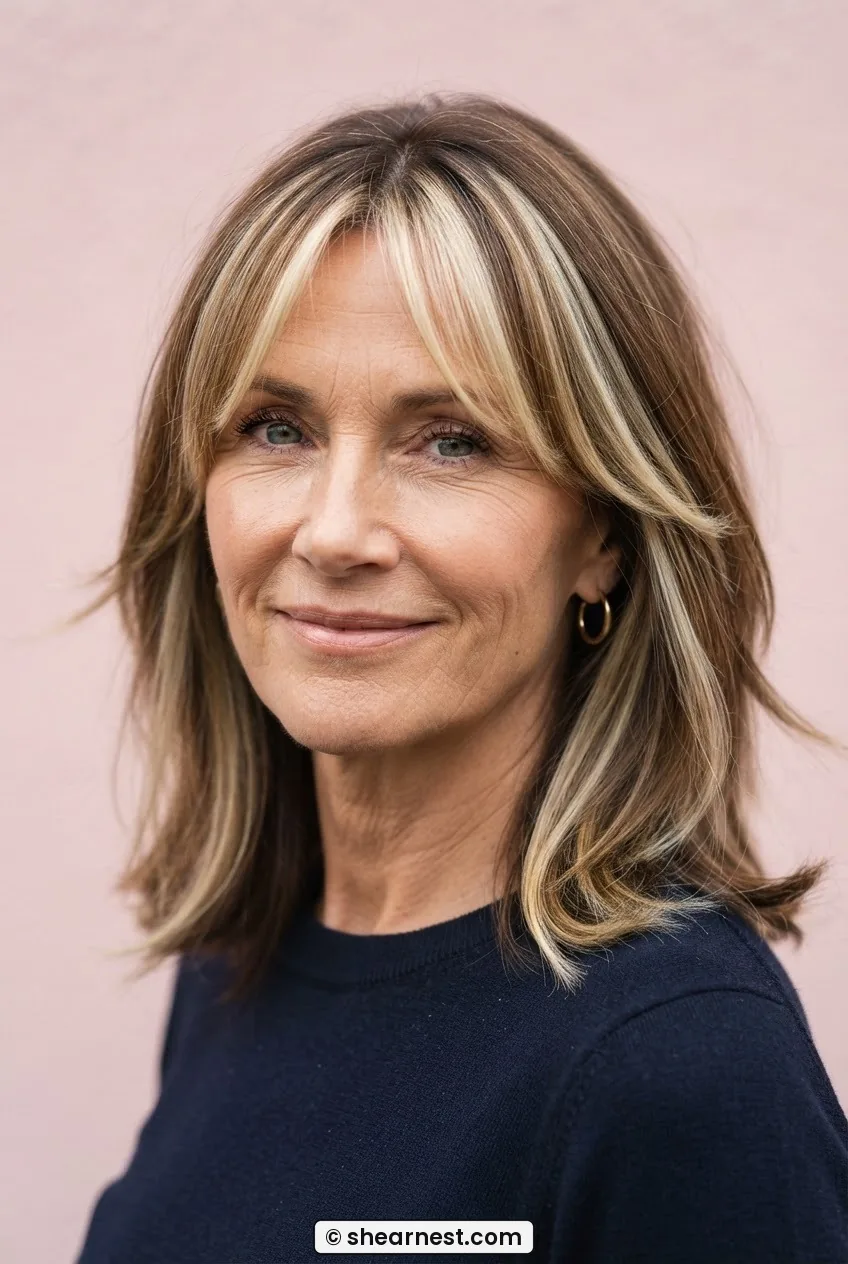
A shoulder-length lob with curtain bangs cut from a centre part — the fringe sections are the longest point, sitting between the cheekbone and the lip, graduating back toward the temple. The rest of the lob has soft interior layers through the back. Then face-framing colour panels are applied from the root of the front sections down through the bang: a brighter, lighter blonde than the rest of the hair, pulled as wide-ish foils that frame the part and the curtain sections.
The face-framing blonde pulls your eye to the centre of the face, which does something useful for a softened jawline or prominent forehead — it redirects where you’re looking. Look at how she’s wearing her curtain sections in the photo here — the way the lighter pieces catch the light directly at the front of the part is exactly what I mean about placement mattering. This combination of curtain bangs and face-framing colour is particularly versatile; the bangs can be brushed back on low-effort days. Curtain bangs over 50 takes a bit of practice but is genuinely easy once you’ve got the technique. Colour refresh every 8–10 weeks for the face panels.
At the chair: “A lob with curtain bangs cut from a centre part, graduating from cheekbone to temple — and brighter face-framing foils pulled from the root through the bang sections.”
10. The All-Over Soft Blonde on Thick Hair
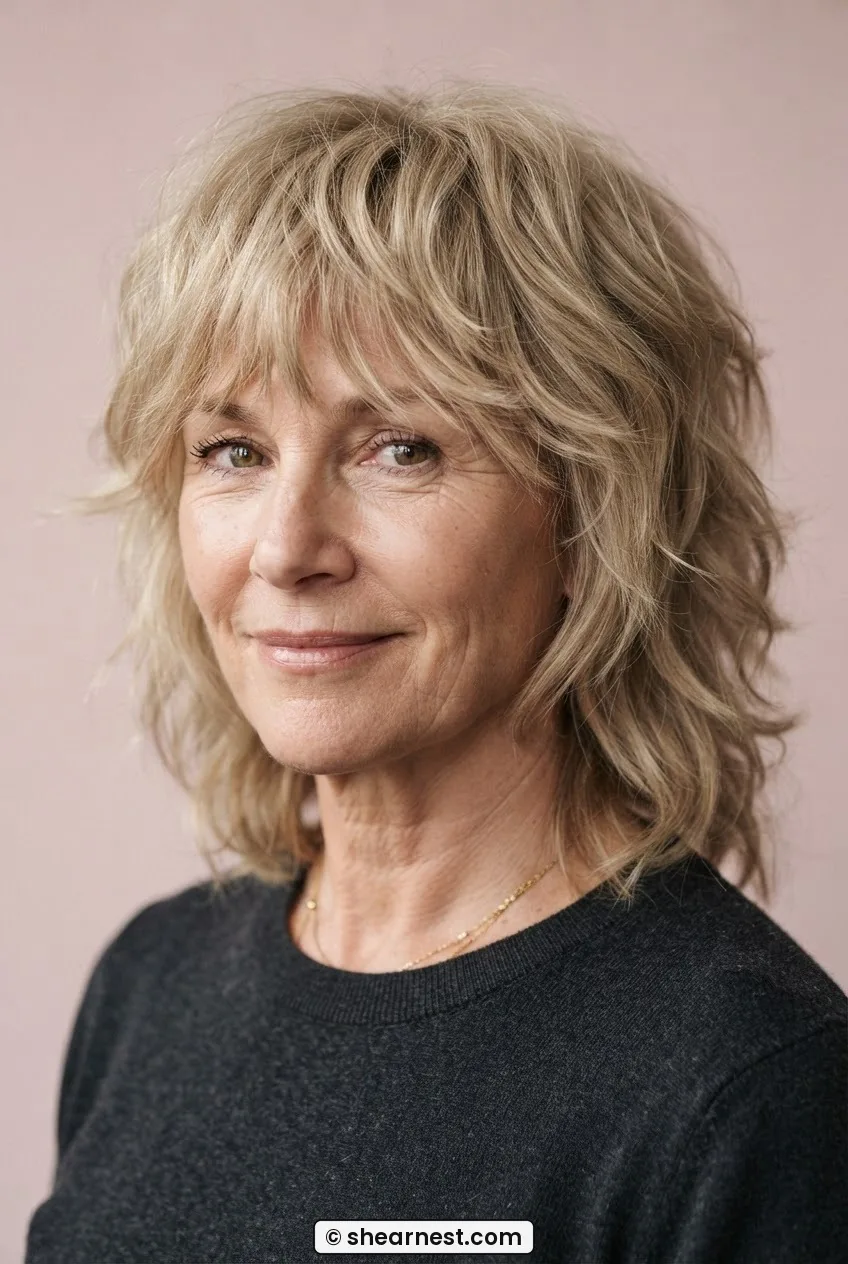
Full head colour — not highlights, not balayage, not anything partial. A single-process all-over blonde applied root to tip, in a soft, mid-range tone that sits in the beige-blonde or champagne-blonde territory. The cut needs to do some work here: a medium shag or heavily layered lob, because all-over colour on thick hair without internal texture reads flat and wig-like.
All-over colour has a reputation for being high maintenance, and in some ways it is — you’ll need to refresh the root every 5–6 weeks if you’re covering darker pigment. But the advantage is consistency: no variation in how the colour behaves, no patchiness from sections that lifted faster than others, no dark spots where the foils didn’t process. On genuinely thick hair, the evenness of all-over colour can actually look more polished than a blended balayage where the technique disappears into the volume. This works well for women who’d rather have a predictable appointment than a creative one. And if you’re also thinking longer term about how colour choices shift with age, my piece on hair styles for women over 70 is worth a read — the principles of managing density and colour coverage apply across that whole decade too.
At the chair: “An all-over single-process blonde in a champagne or beige tone — and a heavily layered cut so the flat-colour effect breaks up and has movement.”
Quick Answers
Does blonde make you look older or younger over 50?
Neither, really — it depends entirely on the tone and technique. Warm or ashy blonde placed in the right range for your skin tone reads fresh and intentional. Overly yellow or brassy blonde against a cool or pale complexion can look harsh, not because blonde is wrong but because the tone is. It’s worth asking your colourist to hold actual swatches against your skin in daylight before committing to a formula.
How often does blonde hair over 50 need colour maintenance?
It depends on the technique. Full foil sets and all-over colour generally need a visit every 6–10 weeks. Balayage and lived-in techniques can stretch to 12–16 weeks because there’s no hard root line. At-home violet toner or a weekly purple shampoo helps maintain tone between salon visits regardless of which approach you use.
Can blonde work if my hair is thinning?
Yes — but the technique matters more than the colour itself. Babylights through the crown area are particularly effective because the fine foiling mimics the natural light-catching quality of healthy density. Avoid dark roots against very light lengths if your hair is sparse at the top, as high contrast emphasises the scalp. A root shadow in a mid-tone blonde keeps everything reading softer.
What’s the difference between balayage and highlights for blonde hair over 50?
Highlights are applied in foils with a defined start and end point — the colour is more predictable and more even. Balayage is painted freehand onto the surface of the hair, so the lightening is concentrated on the ends and mid-lengths with a softer root. Highlights tend to suit fine, straight hair where evenness shows; balayage suits wavy or textured hair where the freehand variation disappears into the movement.
One last thing: always ask your colourist to apply a bond-protecting additive to the lightener. At this stage, the internal structure of the hair strand is more fragile than it was — and blonde is a lightening process, however gentle the formula. It’s a small extra cost per appointment and it makes a real difference to how the hair feels and holds its length between visits. That’s the practical part nobody usually says out loud.