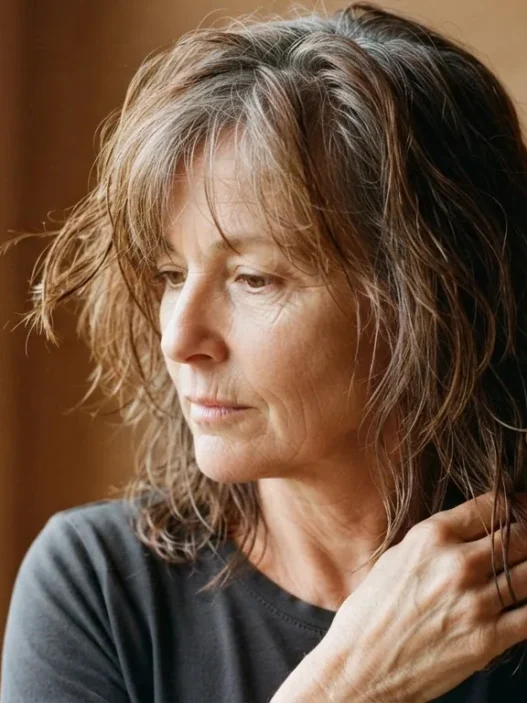








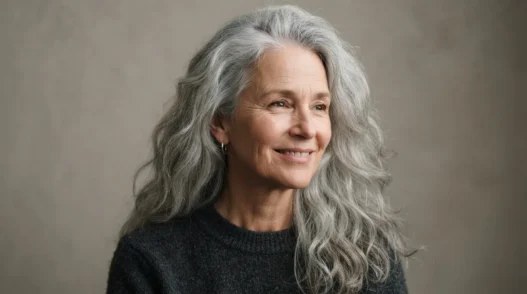
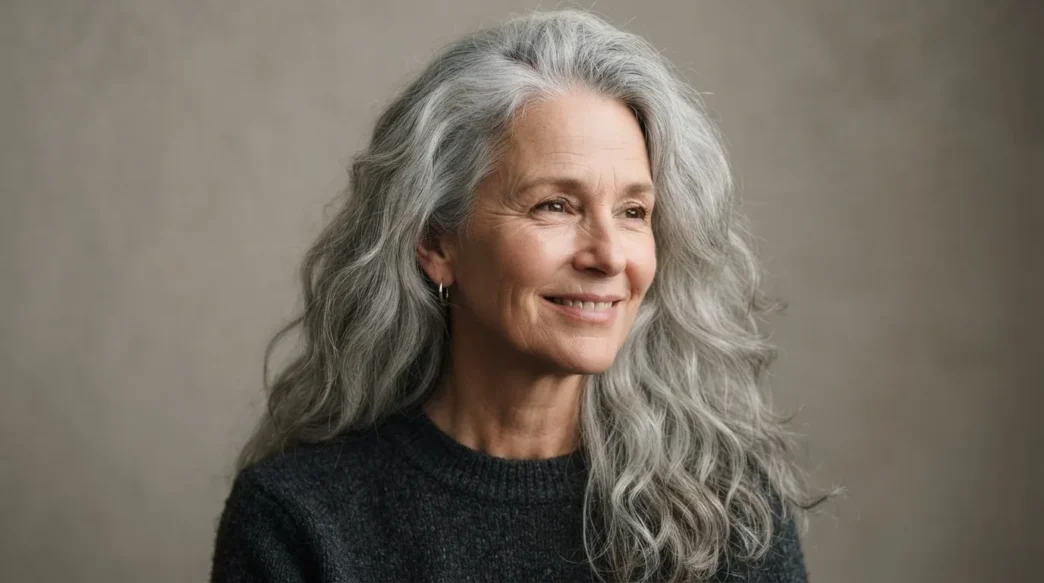
She sat down in my chair and said she was finally ready to stop fighting it. Twenty years of color, and she was done. Her hair was long — collarbone length, thick, mostly silver at the root with warm remnants of her original brunette still clinging to the ends. She looked tired just talking about it. I’d heard this exact sentence maybe four hundred times. And I’d given the wrong advice at least fifty of them before I finally understood what actually makes long gray hair work — and what quietly makes it fail.
The Appointment That Changed My Mind
This was maybe eight years ago. A client — I’ll call her Margaret, because that was genuinely her name — came in with a printed photograph from a magazine. Silver hair, long, beautifully lit, worn loose. She wanted exactly that. And I told her yes, absolutely, we can do that. I transitioned her out of her highlights, let the gray grow, and trimmed her ends every eight weeks like clockwork.
Eighteen months later she was miserable. Not because the silver wasn’t beautiful — it was. But the length and the density she had were doing something to her face I hadn’t anticipated. Or rather, I had anticipated it and told myself the result would be different for her. It wasn’t. The heavy curtain of gray was pulling everything downward. Her jawline, which was perfectly lovely, had completely disappeared inside the frame. She looked drawn. She looked, and I say this carefully, older than she was — not in a striking, intentional way but in a way that made her seem tired.
I cut eight inches off that day. She cried, briefly, and then looked in the mirror and exhaled. That exhale taught me more than any technique class I’ve ever taken.
The Photograph Problem
Every client who wants long silver hair brings in a photo. I don’t say that dismissively — I love when they bring photos. But there’s a specific problem with the photos they tend to find, and it took me an embarrassingly long time to name it clearly.
The women in those images are lit by professionals. The long silver hair catches directional light in a way that makes it look luminous, almost metallic. The contrast between the cool tones of the gray and the warmth of the skin underneath reads as striking in photography. What the photograph does not show you is what that same hair looks like under the fluorescent light in the office bathroom at 4pm on a Wednesday. Gray is highly light-reactive. In flattering light, it glows. In harsh light, it can read as dull, ashy, flat — a quality that reads differently when the hair is long and dense because there’s simply more of it absorbing that flat light all at once.
This isn’t a reason to cut it short. I want to be very clear about that. Long gray hair on women over 50 can be genuinely stunning in person — not just in photographs. The women I’ve seen wear it best have one thing in common, and it’s not their face shape or their hair texture. It’s that they’ve made a specific decision about the cut. The length is intentional. The weight is managed. They didn’t just stop coloring and let it grow.
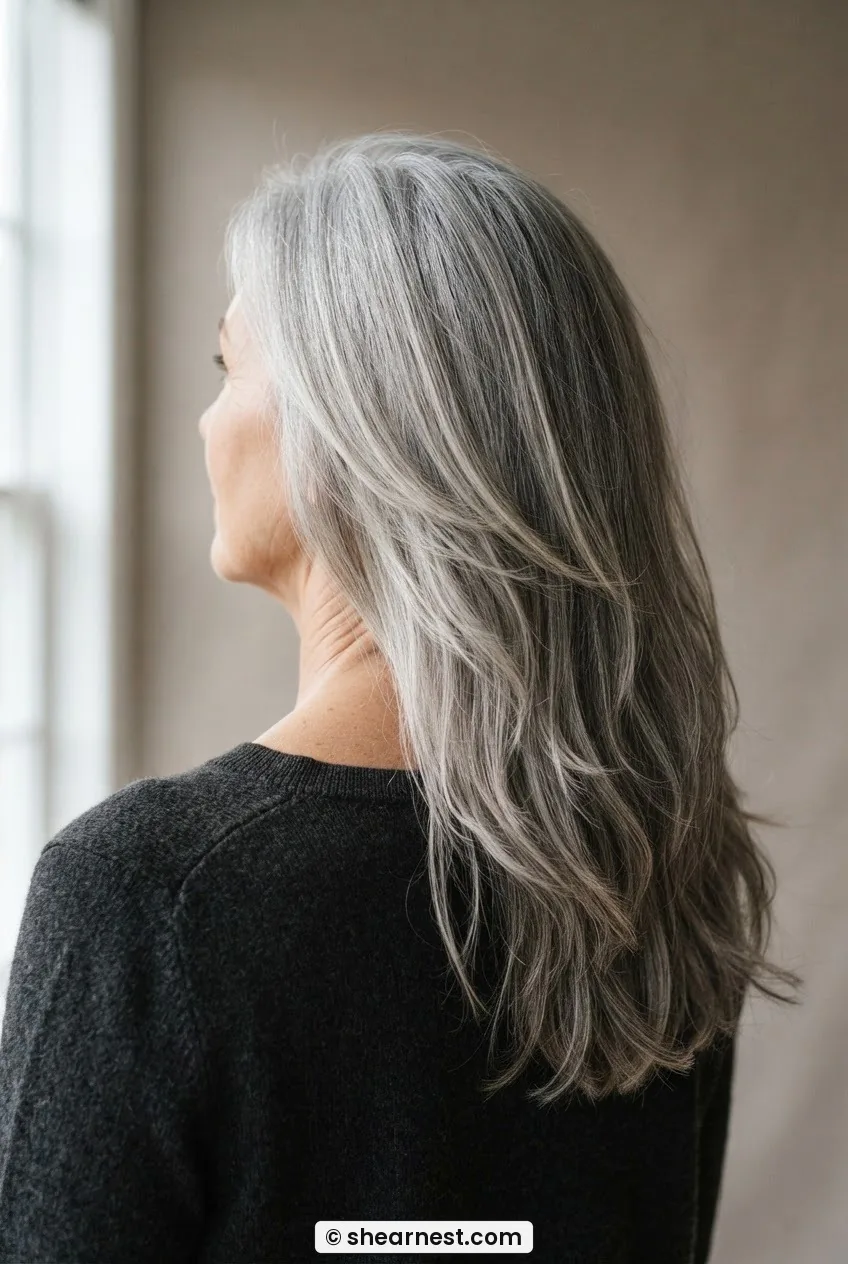
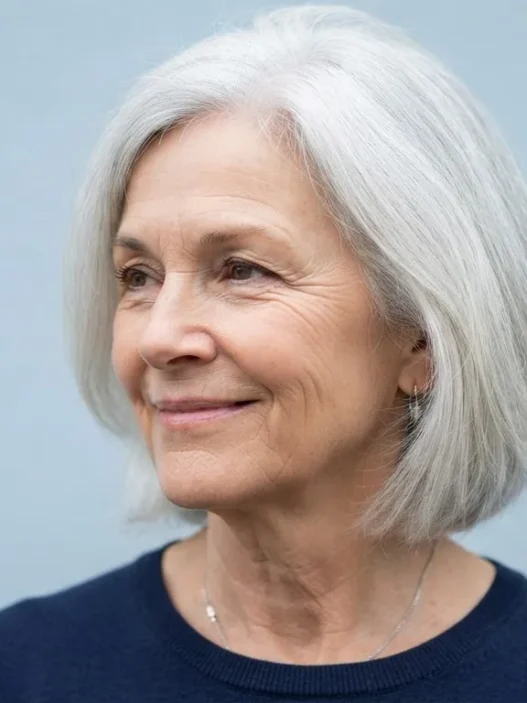
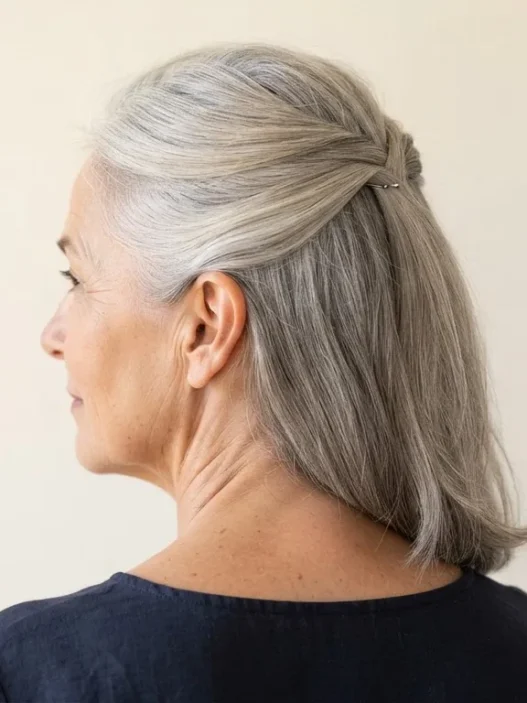
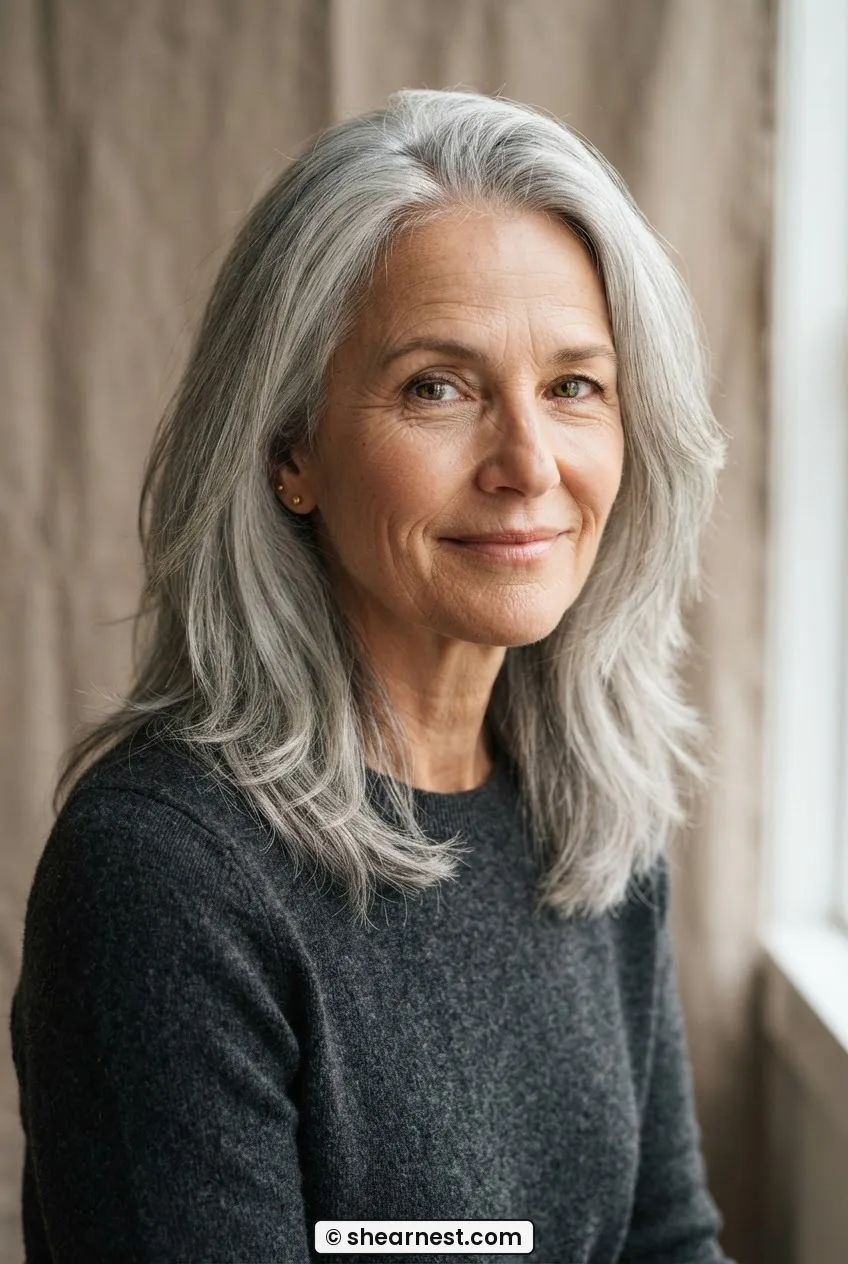
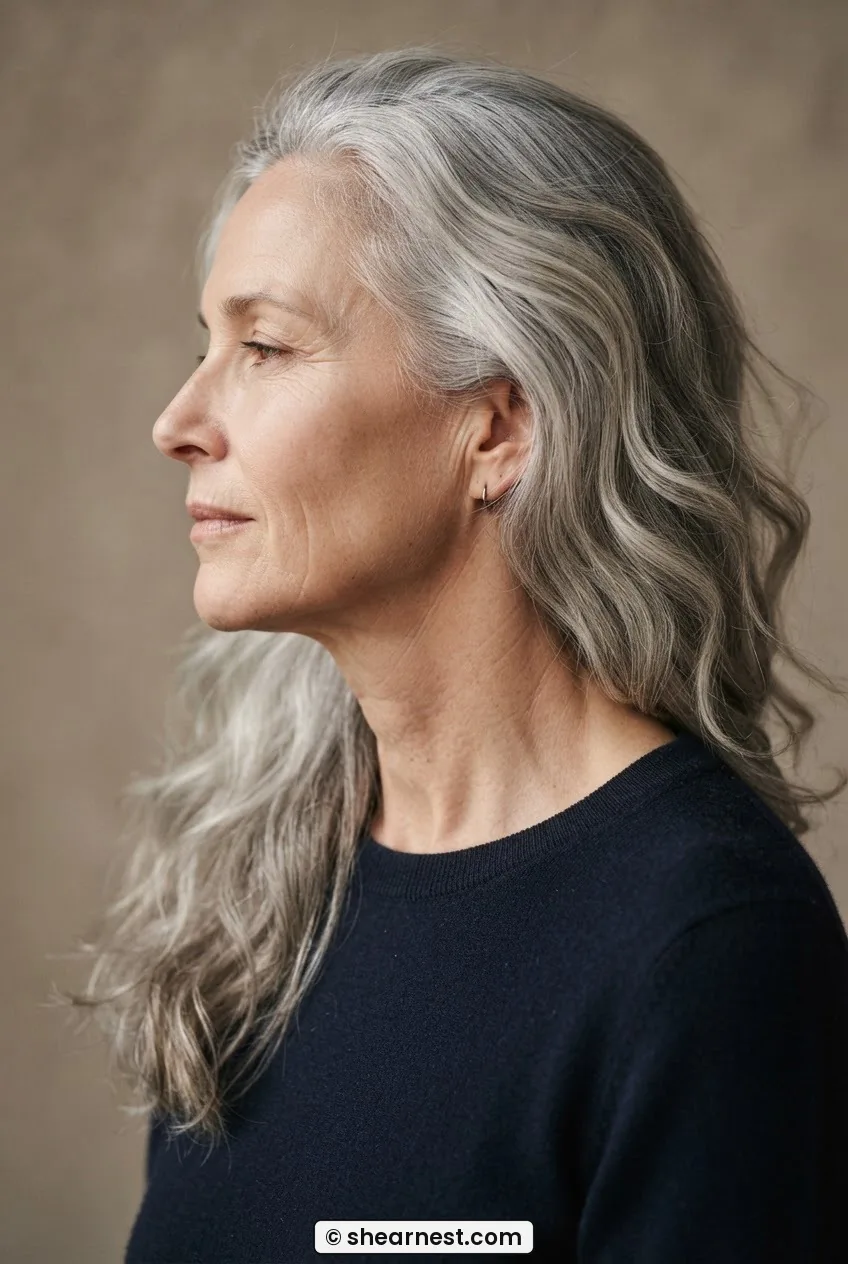
When I look at this photo — see how her silver sits at the front, softer at the hairline? That framing around the face is doing a lot of the work. That’s not an accident. Someone made a deliberate decision about where the layers fall.
Why the Perimeter Matters More Than You Think
When stylists talk about long hair on older women, we immediately go to layers. Layers, movement, face-framing — these are the words we reach for automatically. And they’re not wrong. But I think we undersell the importance of the perimeter, meaning the very outermost edge of the hair as it sits against the body.
Here’s the mechanism. As we age, the face loses volume in specific places — the temples, the mid-cheek, just below the cheekbones. The jawline softens. The neck, sometimes, becomes more prominent. Long hair that ends in a blunt, heavy line at the collarbone or mid-back creates a visual boundary that draws the eye exactly to those areas. If the perimeter is thick and solid, the contrast between the dense hem of the hair and the softer face above it can work against you.
What I do now — and what I wish I’d been doing fifteen years ago — is thin the perimeter. Not invisibly, not aggressively, but enough that the ends of the hair have some visual softness, some transparency. A slight point-cut or piece-y finish at the ends means the hair fades out rather than landing. The face doesn’t need to compete with a hard horizontal line across the collarbone.
This matters more with gray hair than with colored hair because silver, as I said, reflects light differently. A blunt silver hem catches light and announces itself. A softened hem integrates. If you’re reading up on how soft layering works on straight hair tends to fall differently than you’d expect, this perimeter principle is part of why.
It also connects to face shape in ways that people rarely discuss explicitly. I’ve written before about how oval face hairstyles for women over 50 sit differently at long lengths than they do at medium lengths — the perimeter behaves differently when the face is wider at the cheekbones versus at the jaw. Worth factoring in before you commit to a single length.
What I Changed My Mind About — Silver at Long Lengths
For a long time I believed — and I told clients this, and I’m not proud of it — that long silver hair past 60 was a style choice that required a certain confidence to pull off. A certain boldness. As though the length and the gray together were a statement, and not every woman wanted to make a statement.
I was wrong about the framing. Completely wrong.
Long silver hair isn’t a statement any more than long brunette hair is a statement. It’s a preference. What I was actually reacting to — without articulating it properly — was the difference between managed long silver hair and unmanaged long silver hair. And those two things are genuinely different, but the difference has nothing to do with boldness. It has to do with the cut and the condition of the ends.
Gray hair, particularly natural gray, tends to be coarser and more porous than pigmented hair. The cuticle structure changes. This means that long gray hair can look frizzy, dry, or splintered at the ends far more readily than the same length in a darker shade. The solution isn’t to cut it short. The solution is to treat the ends differently — moisture, regular trims (and I mean six to eight weeks, not twice a year), and a clear-eyed conversation with your stylist about what your specific hair texture actually needs at this length.
There’s a real difference between what works for someone with thick, wave-prone gray and someone with fine, straight silver. I’ve written about this in the context of wavy haircuts for women over 50 — the texture conversation changes everything when the hair is also transitioning to silver, because the gray grows in at a different diameter than the pigmented hair that preceded it. That means the wave pattern might shift too. Not always. But often enough that it’s worth knowing about before you make a decision about length.

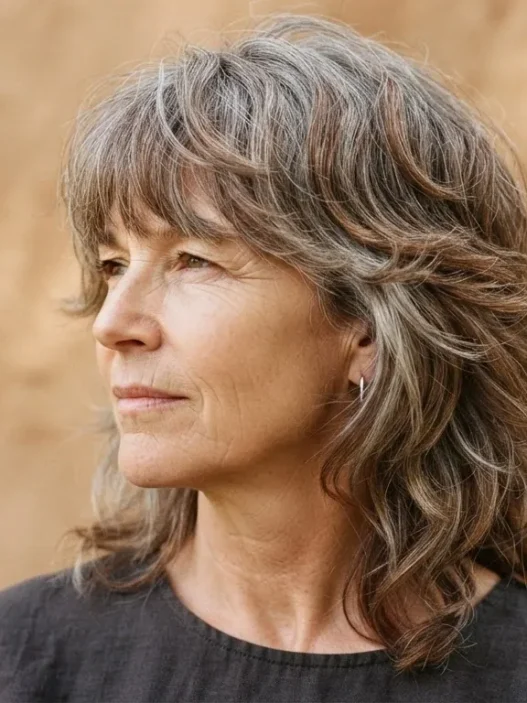
And here — look at her ends in this photo. That’s the definition I’m talking about. Not crispy, not frayed. Defined, individual pieces with some transparency. That’s what well-maintained long silver hair looks like up close. It’s achievable. It just requires intention.
The Weight Question Nobody Answers Honestly
Here’s the uncomfortable one. And I say this as someone who genuinely loves long hair on older women — not as a caveat, not as a soft precursor to telling you to cut it off.
Dense, heavy, long gray hair can flatten fine features. Full stop. If you have a naturally fine bone structure — smaller nose, narrower chin, close-set eyes — a wall of silver falling past your shoulders creates a visual imbalance that isn’t flattering in the traditional sense. The hair overwhelms the face rather than framing it.
The fix is not length. The fix is weight removal. Internal layers — not dramatic, not choppy, just strategic thinning of the mid-lengths and under-sections — reduce the density without reducing the perimeter length. The hair still sits at the same place on your body. The ends still land where you want them. But the face is no longer behind a heavy curtain. It’s visible again.
I had a client last spring who came in wanting to take off six inches because she felt her long gray hair was aging her. She was right that something was off. She was wrong about the solution. We removed weight internally — took nothing off the perimeter — and the result was transformative. She looked at herself and said, “It’s not even different and it’s completely different.” That’s exactly the right reaction. The length was the same. The visual load had changed entirely.
This principle applies whether your hair is straight or has some texture to it. I’ve talked about this in the context of straight hair cuts for women over 50 — straight hair in particular shows weight very clearly because there’s no wave to break it up. The internal thinning approach matters even more when the hair lies perfectly flat.
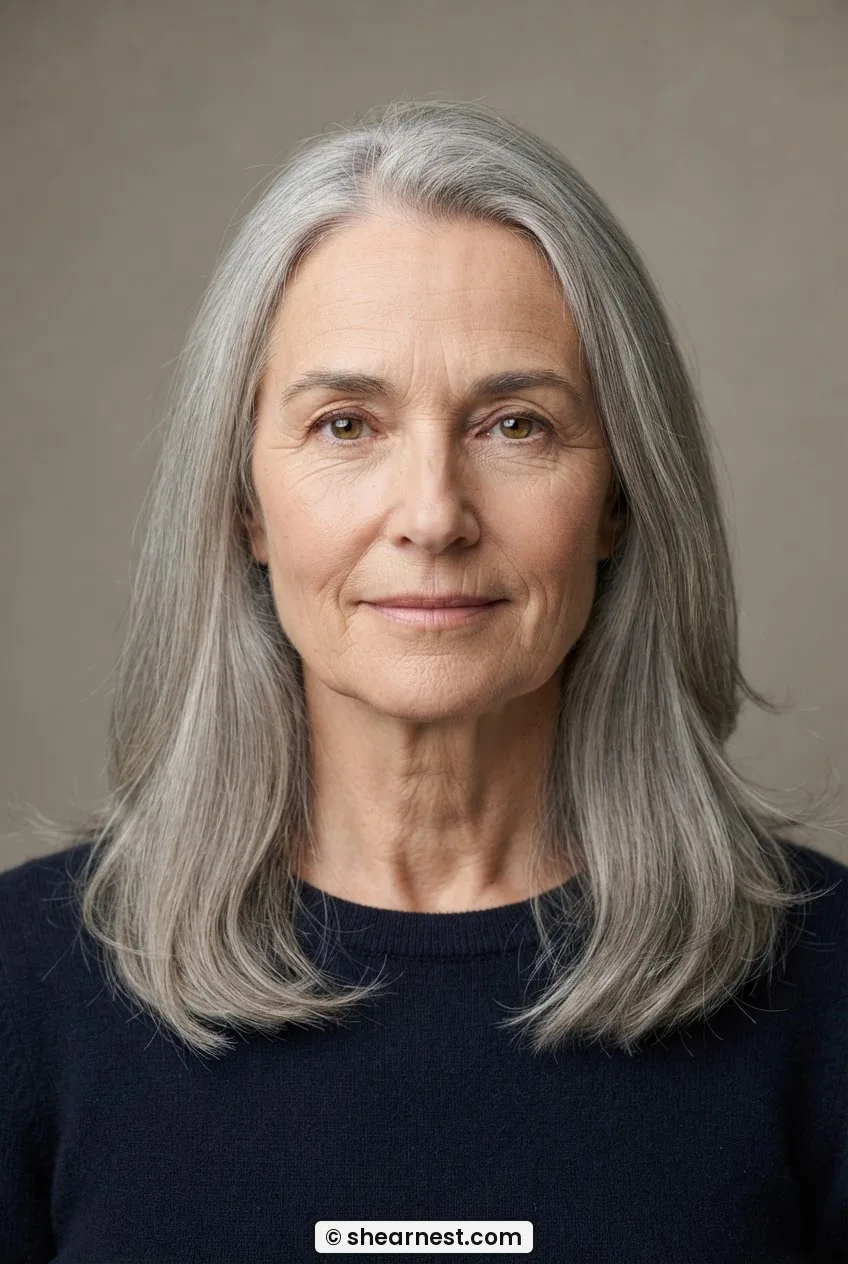
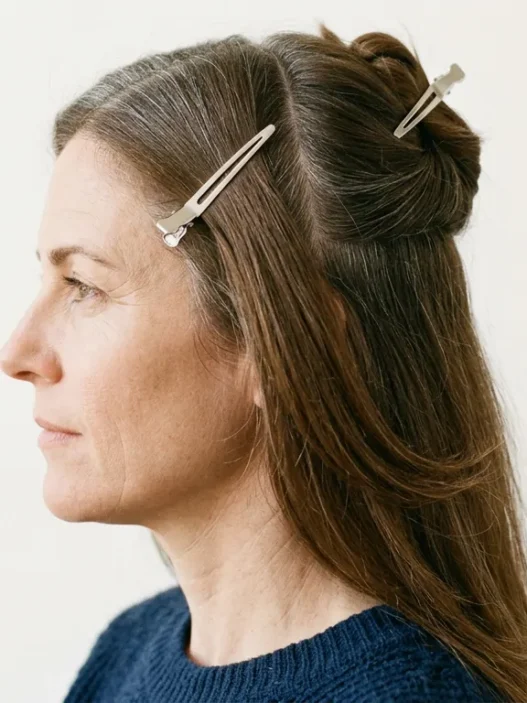
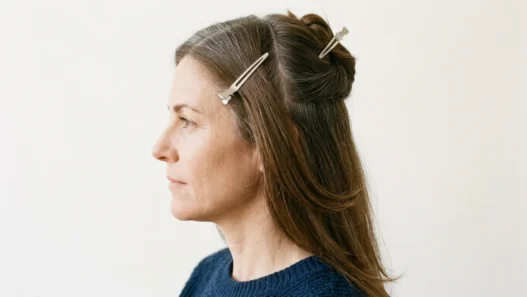
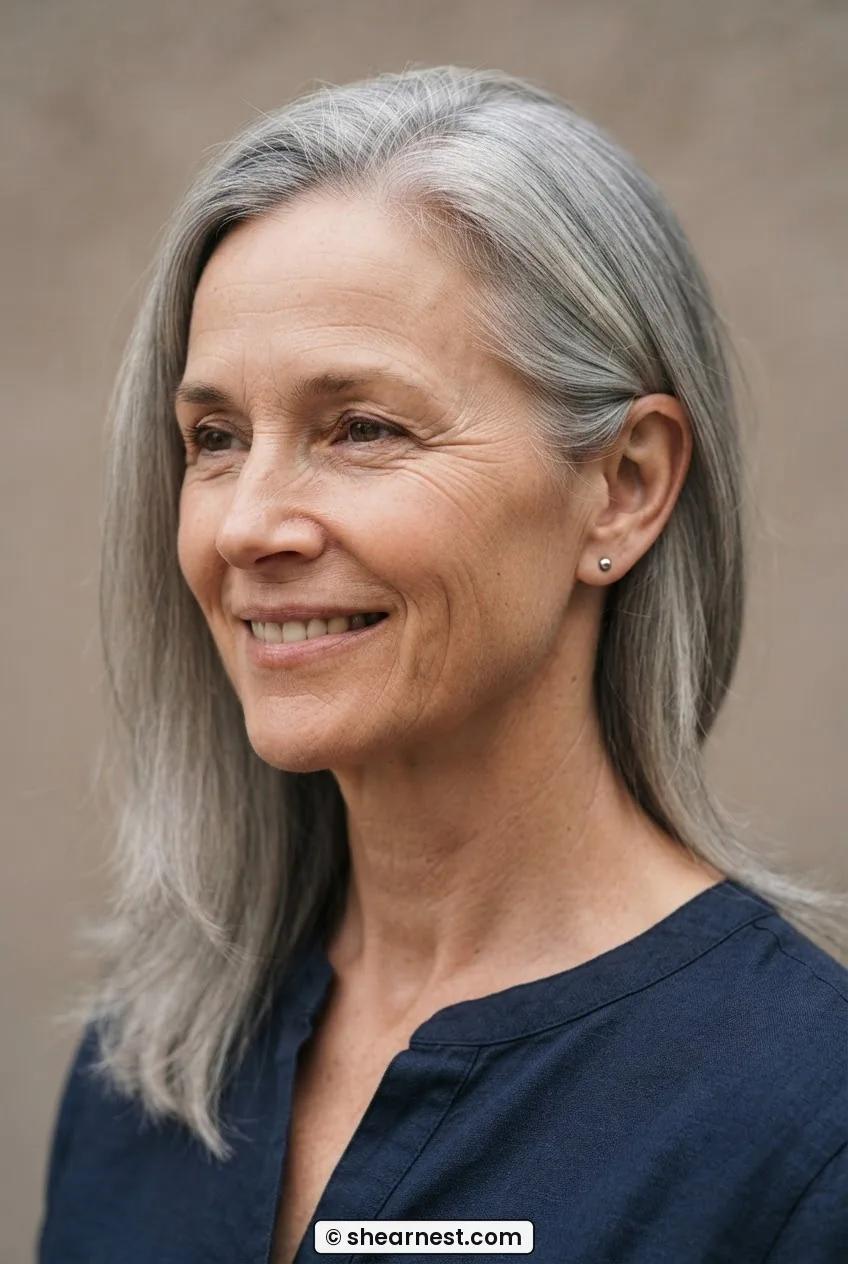
Look at the difference in how her hair sits here — the weight has been removed underneath, and you can see it in how the front sections move. That’s the visual lightness I’m describing. The length is fully intact.
The conversation about weight also changes as hair gets longer with age. How gray hair texture changes is worth understanding before you assume your hair will behave at 55 the way it did at 35, even at the same length. It won’t, always. But that doesn’t mean long hair stops working — it means the approach has to evolve.
For anyone curious how these same questions play out at shorter lengths or at later stages of life, I’d point you toward this honest take on hair styles for women over 70 — it addresses the weight question from a slightly different angle and is worth reading alongside this.
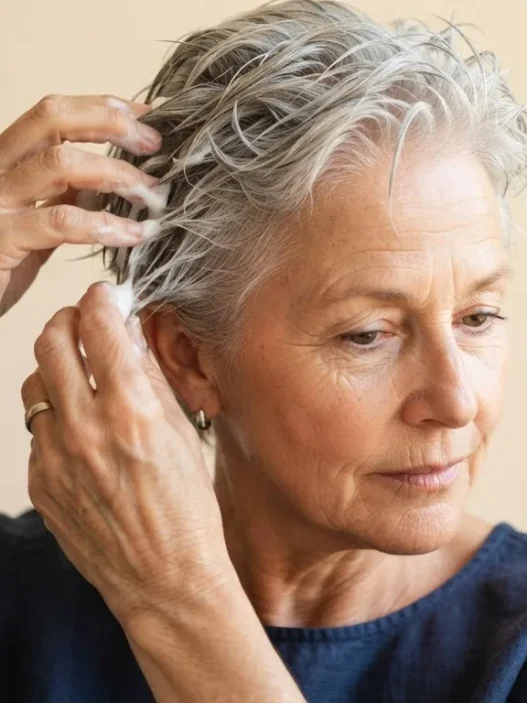
Seeing the Weight-Removal Technique in Real Time
Questions I Get About This
Does long gray hair actually age you, or is that a myth?
It depends entirely on the cut. Unmanaged long gray hair — heavy ends, no internal layering, no perimeter softness — can read as low energy rather than elegant. But well-cut long silver hair is genuinely striking. The gray itself isn’t the problem. The cut doing nothing with it is. Toning silver hair at home is also worth looking into if your gray pulls yellow in certain lights, which changes the whole read of the length.
How often should I be trimming if I’m growing out gray at long lengths?
Every six to eight weeks, without exception. Gray hair is more porous than pigmented hair — the ends degrade faster, and split ends travel up the shaft more aggressively. Skipping trims to maintain length is almost always counterproductive. You end up cutting more later because the damage has crept higher.
Can I keep long gray hair if I have fine hair?
Yes, but the strategy is different. Fine gray hair actually benefits from length because the added weight helps it lie flatter and look more substantial. The key is avoiding too much internal layering — with fine hair you need to keep enough density to prevent the hair from looking sparse. A stylist who works regularly with fine hair at long lengths, specifically with blonde or lightened hair over 50 where similar texture concerns apply, will know how to balance this.
What’s the one thing I should ask my stylist before committing to long gray hair?
Ask them specifically about your perimeter and your interior weight — not just whether the length suits your face shape. Any stylist can tell you what length looks good. Fewer will proactively address how the density of the hair at length interacts with your particular facial structure as it’s changed over time. That conversation is the one that actually changes the outcome.
If you take nothing else from this: long gray hair for older women is not a consolation prize and it’s not a bold political statement. It’s a hair choice, like any other. It responds to good cutting and honest maintenance, and it can be genuinely beautiful at 52, at 61, at 70. The photograph problem is real. The weight question is real. But neither of them means you have to cut it off. They just mean the cut has to do some actual work. Find a stylist who agrees, and you’re most of the way there.