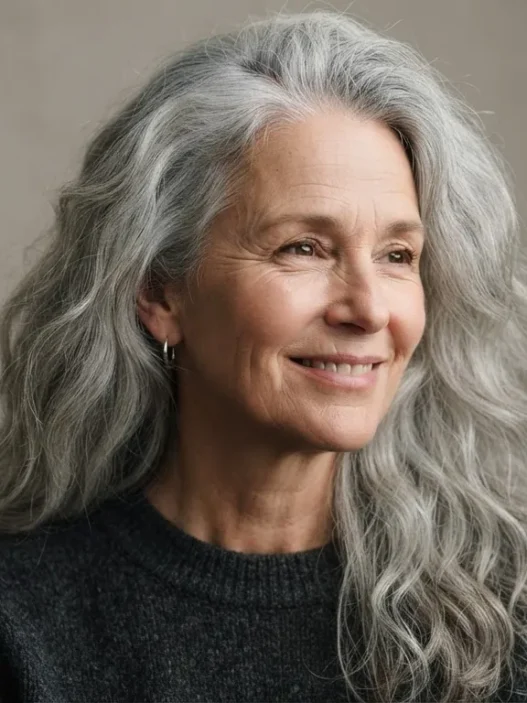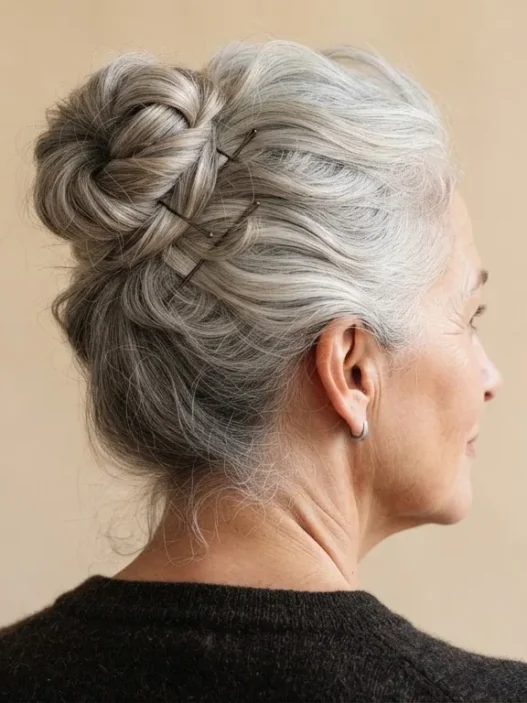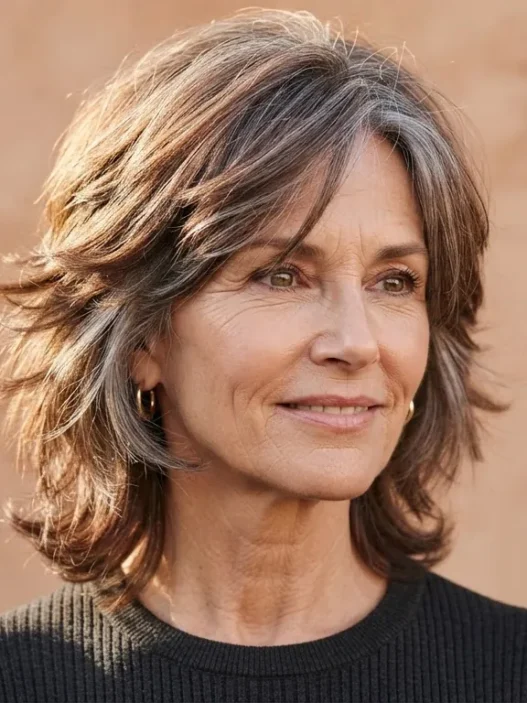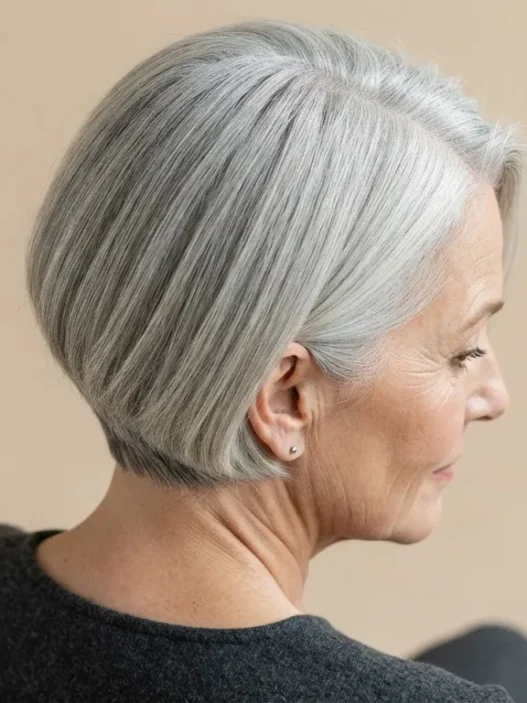







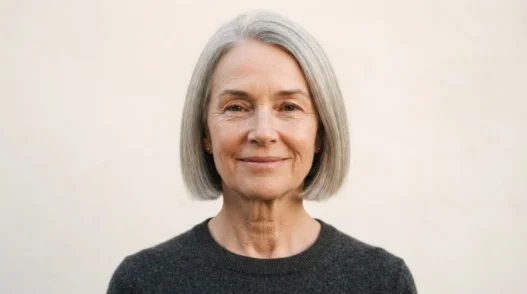
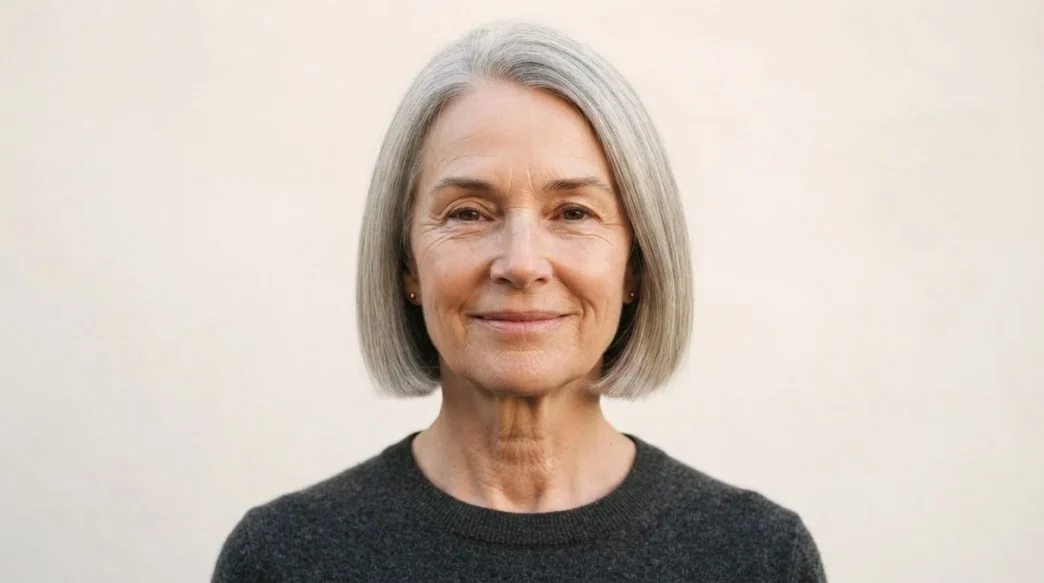
I’ve been obsessing over fine hair cuts for years — partly professional curiosity, partly because my own hair started thinning somewhere around 52 and I had to completely rethink what I was asking for at the salon. The frustrating thing about fine hair over 50 is that the density changes, the porosity changes, and the weight distribution that once kept a style behaving simply doesn’t anymore. Structure has to come from the cut itself, not from the blowout. Once I understood that, everything shifted.
These ten cuts are chosen on construction, not vibes. Each one works differently — some use weight to fake density, some use graduation to fake volume, some remove bulk in very specific places so the remaining hair can move. One of them is almost certainly yours.
10 Haircuts For Fine Hair Over 50 — Find Your Shape
- The Blunt Bob That Thickens at the Ends
- The Graduated Bob With Weight at the Nape
- The Soft Layered Lob for Almost-Fine Hair
- The Disconnected Pixie With a Heavy Crown
- The Chin-Length Bob With an Internal Undercut
- The Feathered Shag for Reluctant Layers
- The Side-Parted Blunt Cut That Fools the Eye
- The Long Pixie With a Tapered Back
- The Textured Bob With Piece-y Ends
- The French-Tuck-Friendly Mid-Length With Soft Face Framing
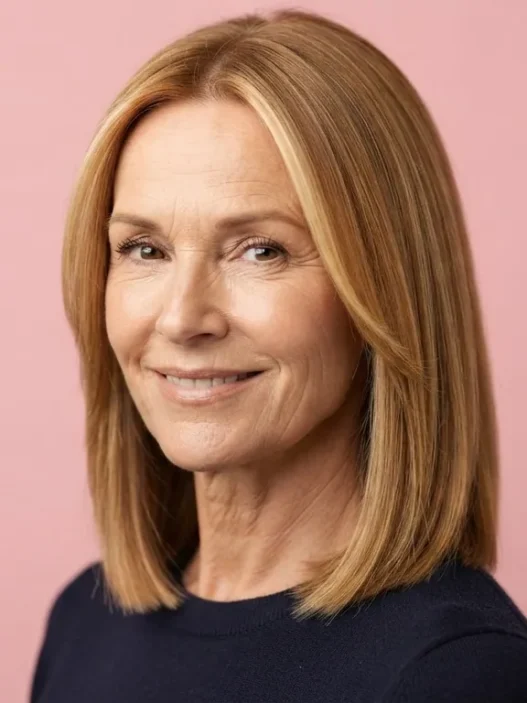
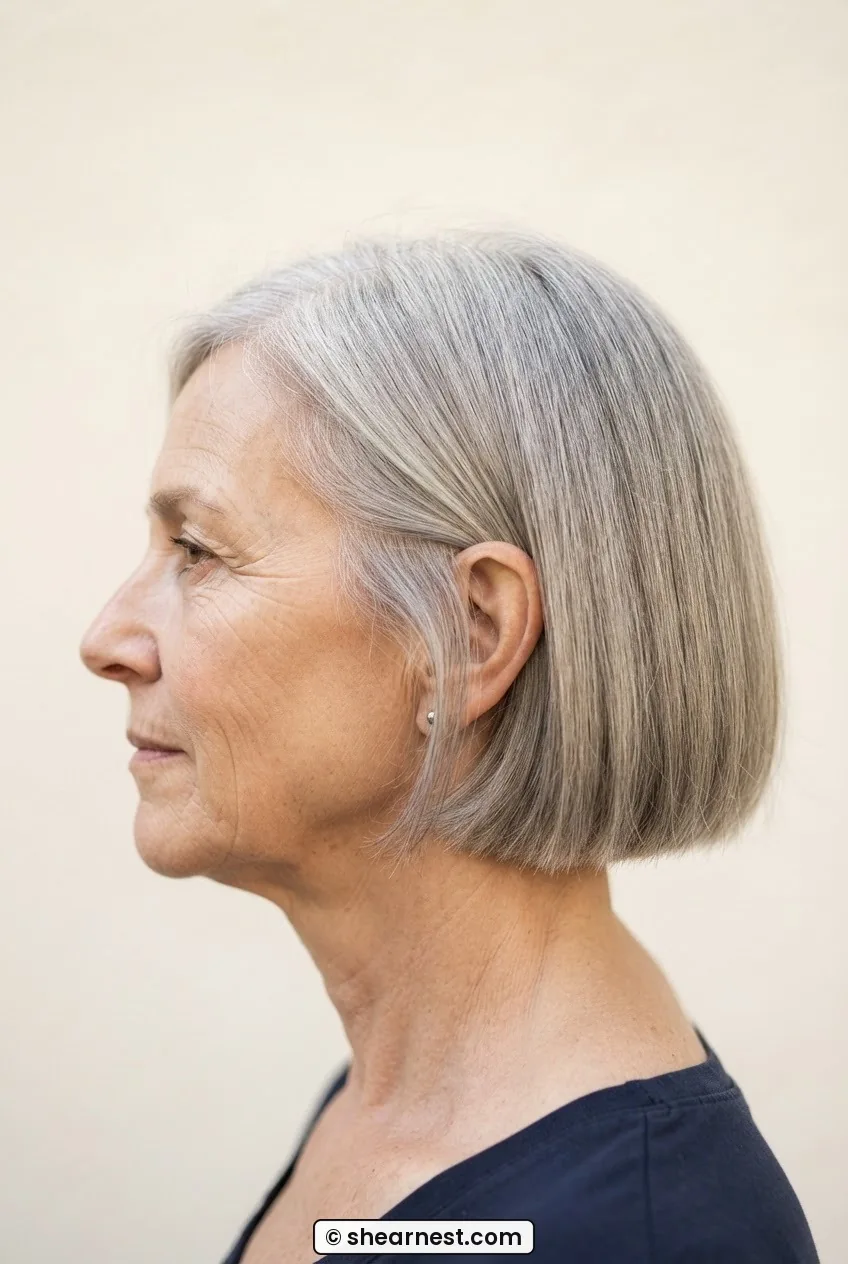
1. The Blunt Bob That Thickens at the Ends
This one is built on a single principle: keep all the weight in one horizontal line. The cut sits anywhere from just below the ear to the jaw, and the ends are left completely blunt — no point-cutting, no feathering, nothing that breaks the edge. All the hair lands at the same level, so when it catches light, it reads as thick even when it absolutely isn’t.
The shape works best on straight to slightly wavy fine hair because the perimeter line stays intact. Wavy hair can make the line feel uneven unless your stylist cuts it dry. Upkeep is every six to eight weeks — that blunt edge blurs fast on fine hair and suddenly the whole illusion is gone.
What to say at the chair: “One length, blunt perimeter, no internal layers, and I want the line kept crisp.”
2. The Graduated Bob With Weight at the Nape
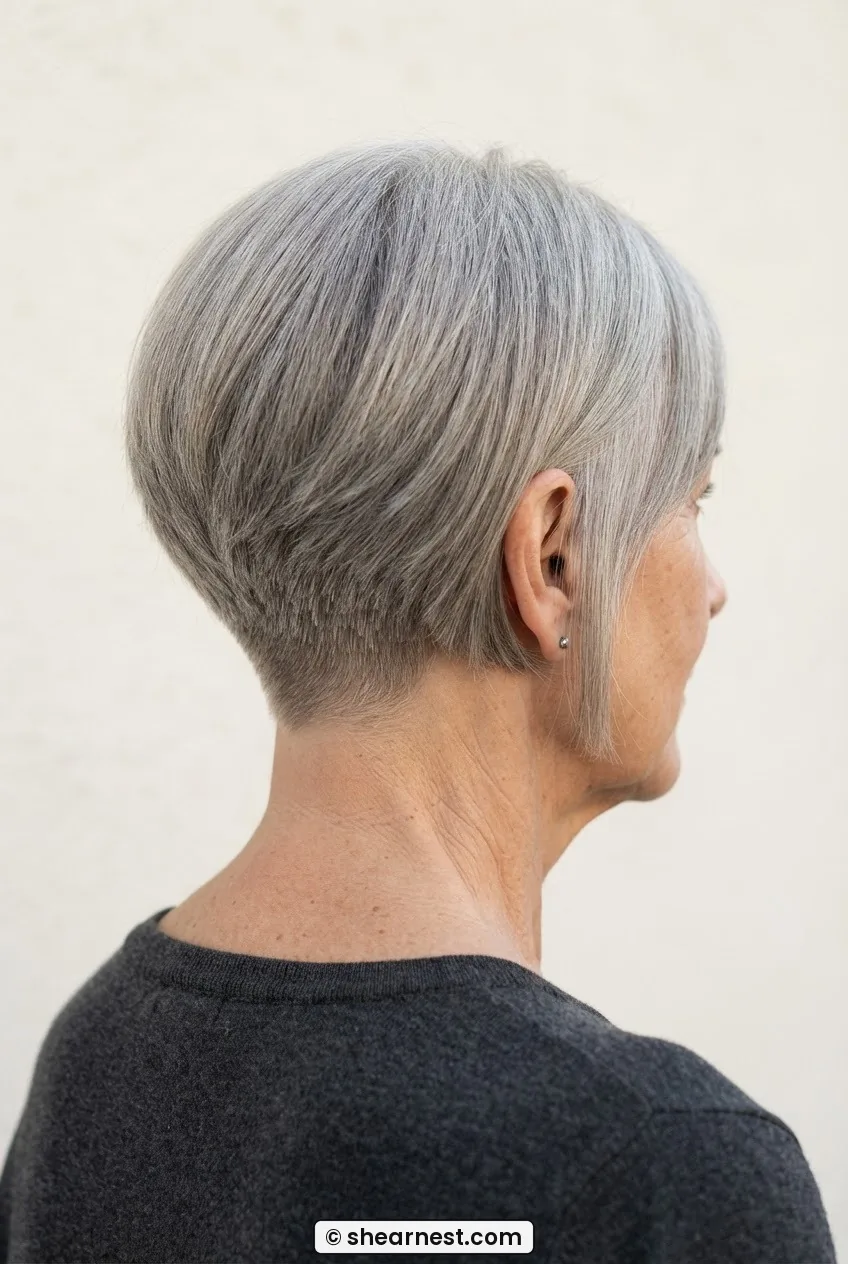
Where the blunt bob keeps everything level, the graduated bob does something more architectural: it stacks hair at the nape so there’s a solid wedge of weight at the back while the front pieces swing longer toward the face. The graduation — that close-cropped, almost stacked back — creates the illusion of density precisely where most fine-haired women have lost it.
It suits women whose hair has thinned most noticeably at the crown and temples, because the stacked back draws the eye away from the top. Personally, I think it’s one of the most underrated haircut choices for fine hair over 50 — it photographs beautifully, it behaves without much product, and a good cut holds its shape for eight weeks minimum. The front lengths frame the face without touching the shoulder, so there’s no limpness from gravity.
You can also explore more detailed advice about this structural principle over at straight hair cuts for women over 50, where the graduated shape gets broken down specifically for pin-straight textures.
What to say at the chair: “Graduated bob, stacked tight at the nape, front pieces angled to jaw — no layers in the top section.”
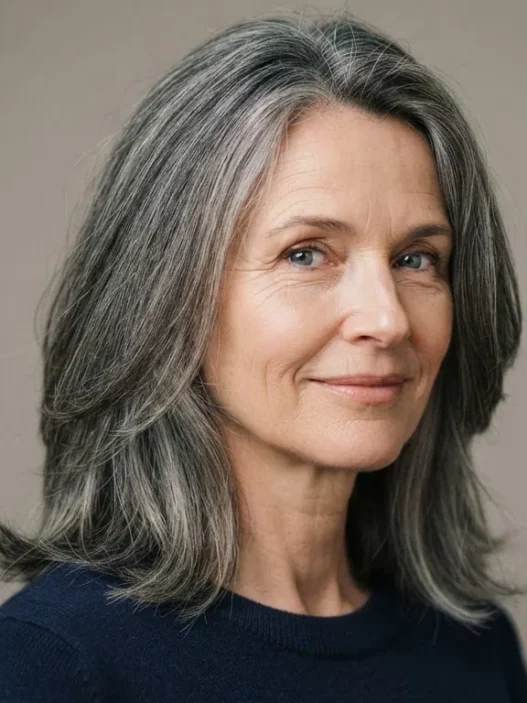
3. The Soft Layered Lob for Almost-Fine Hair
I want to be precise about who this suits, because “layered lob” gets recommended for fine hair far too loosely. This specific version works when hair is fine in diameter but you still have reasonable density — meaning there’s enough of it, just each strand is thin. If you’re genuinely sparse across the top, layers at lob length will show the scalp more, not less.
The construction here puts layers only from the mid-shaft downward, leaving the top third of the hair solid and uncut. That preserves weight at the crown (where you need it) while the lower layers allow movement and prevent the ends from going flat and stiff. Length sits at or just above the collarbone. It’s the longest of the cuts on this list that I’d genuinely recommend for fine hair without caveats.
What to say at the chair: “Lob to the collarbone, layers starting below the occipital bone only — keep the top section solid.”
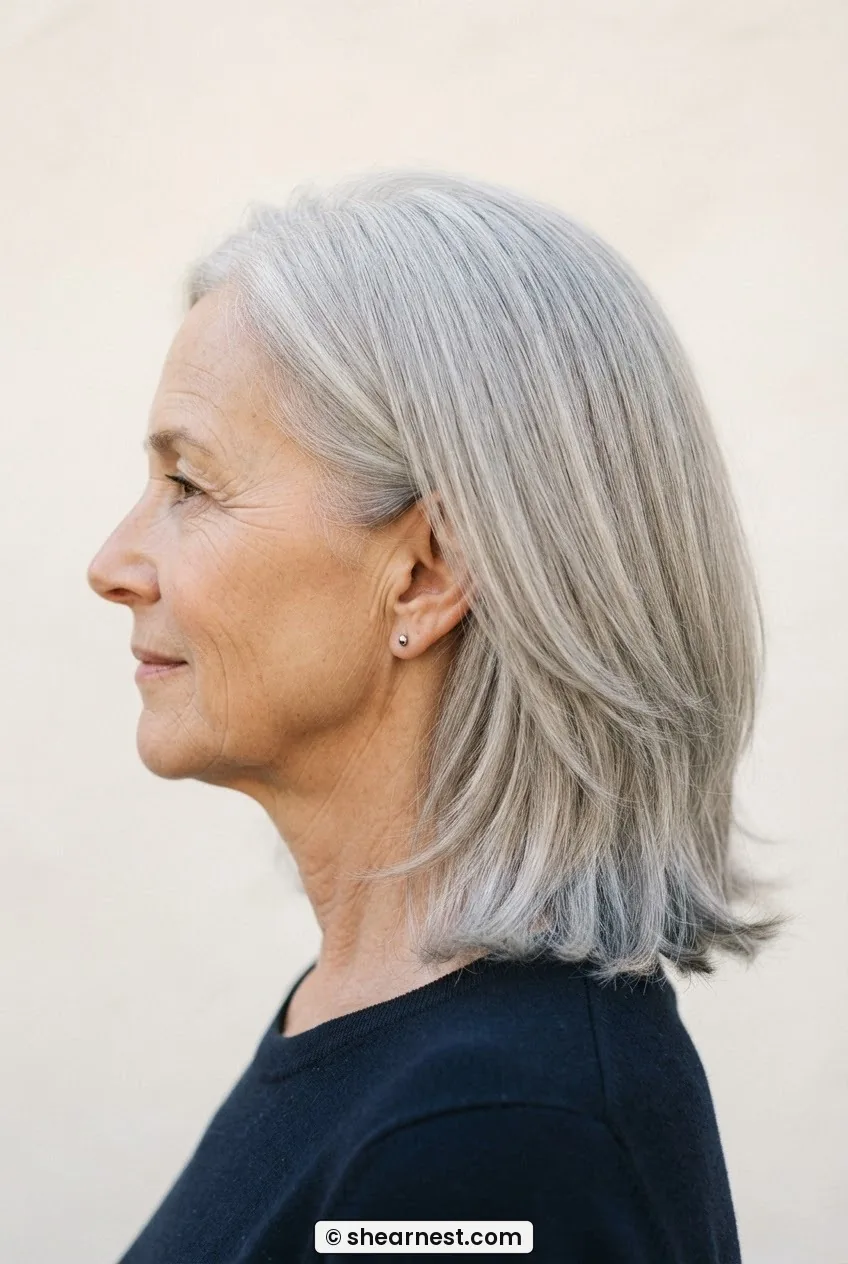
4. The Disconnected Pixie With a Heavy Crown
This is the bold one. And I think it’s bolder in the best possible way.
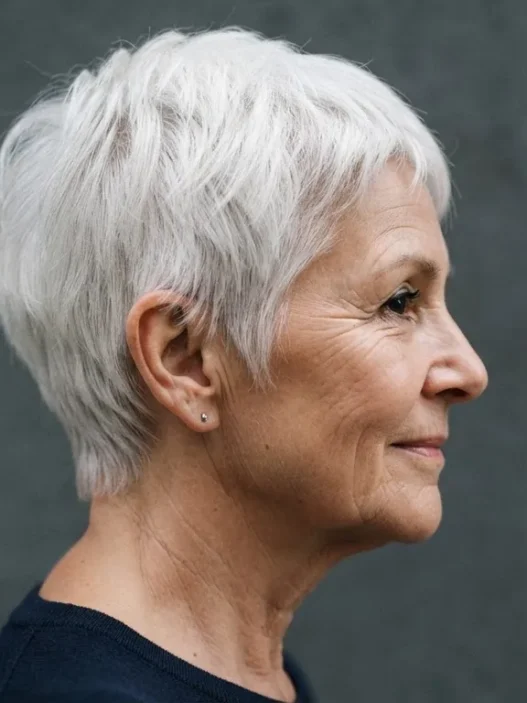
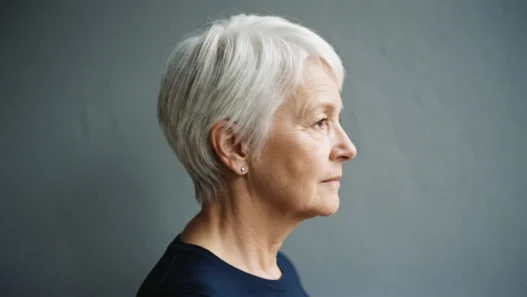
The disconnected pixie keeps length at the crown — two to three inches of hair that can be styled upward or swept to one side — while the sides and back are cut close, either clippered or scissor-cut very short. The disconnect happens because there’s no blending between those two sections. It’s intentional contrast, and that contrast is what makes it flattering for fine hair: the top length is left concentrated and dense-looking because it isn’t being spread across the whole head.
Look at the lift she’s achieving in this photo — that’s not product alone, that’s structural. When the weight sits at the crown and there’s nothing on the sides competing for attention, fine hair suddenly looks intentional rather than sparse.
Upkeep: every four to five weeks. The sides grow out fast and the whole silhouette depends on them staying tight.
What to say at the chair: “Disconnected pixie — two to three inches on top, close on the sides and back, no blending between the two sections.”
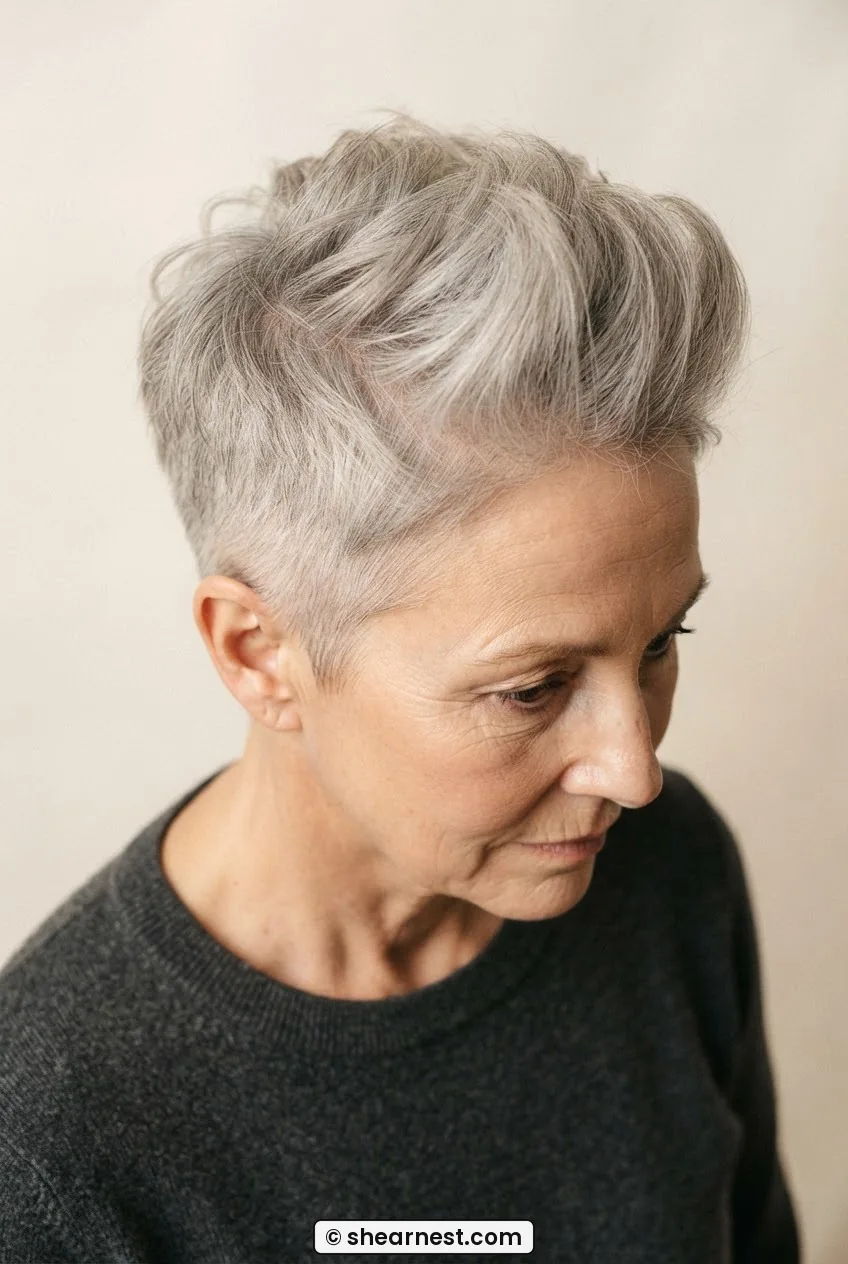
A Stylist Breaks Down the Crown Volume Trick
5. The Chin-Length Bob With an Internal Undercut
Here’s one that flies completely under the radar. The internal undercut removes a very thin layer of hair from underneath — right at the nape or below the occipital bone — without changing the visible silhouette at all. From the outside, it looks like a classic chin-length bob. But because some of that hidden weight is gone, the top and surface layers can lift instead of being dragged down.
My personal pick is this one, honestly. When I first asked for an internal undercut on a client with very fine ash hair, I watched her face change when she shook her head and the bob swung instead of sitting flat. That swing is the whole point — and it happens because you’ve removed the dead weight, not because of any product.
It suits fine hair that’s thinning at the nape specifically, and it’s a brilliant option for anyone who’s been frustrated that their bob looks great when it’s freshly blown out but collapses by mid-afternoon. Less hair underneath means less weight pulling the style down over the course of the day.
What to say at the chair: “Chin-length bob with a light internal undercut at the nape — I want the surface to swing freely without being weighed down.”
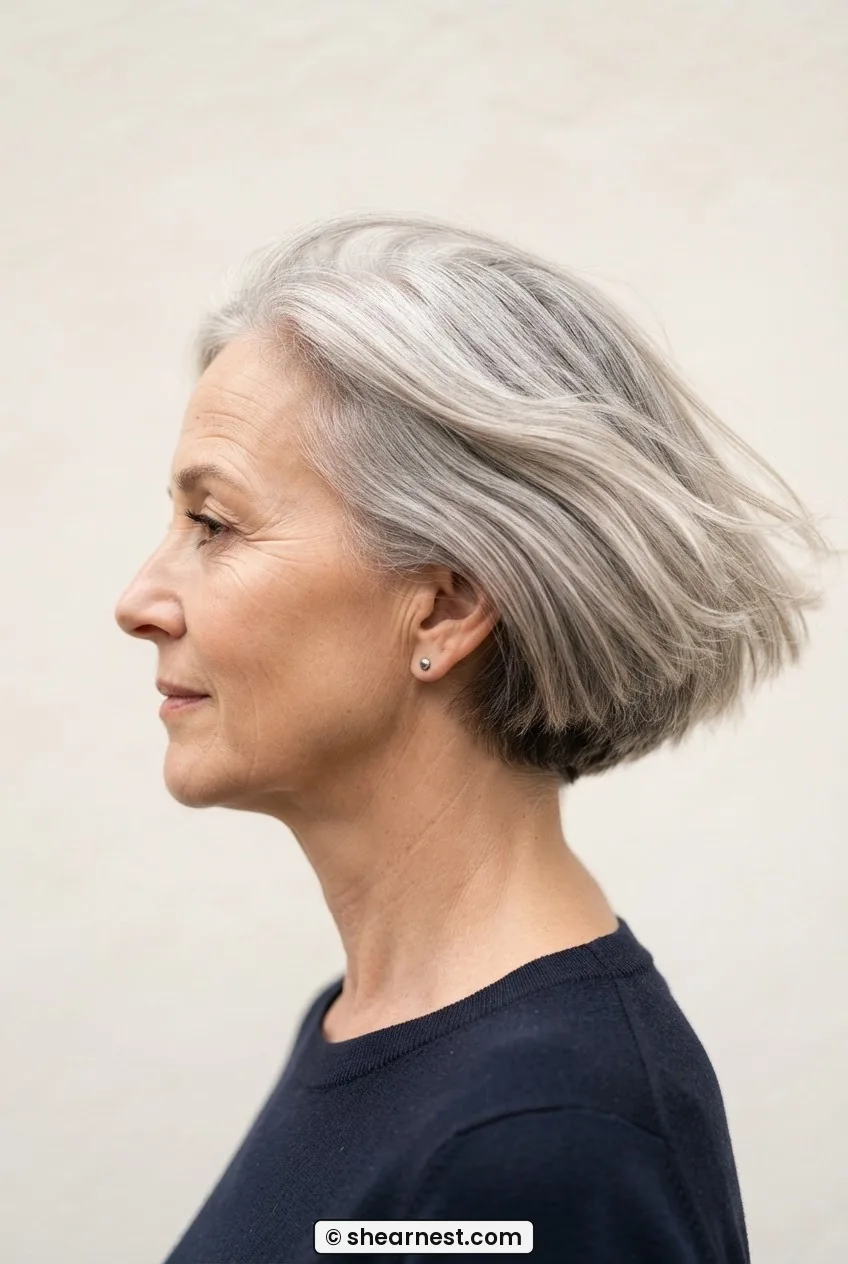
6. The Feathered Shag for Reluctant Layers
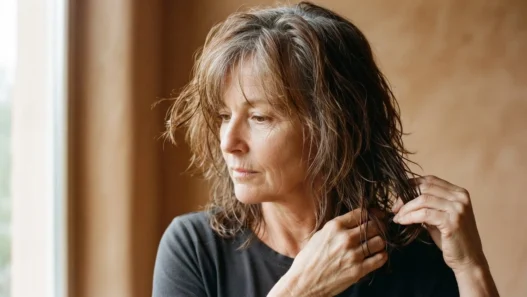
The shag has had its revival moment, and mostly I think fine-haired women have been slightly misled by it. A full shag — with curtain bangs, deep internal layers, and lots of disconnection throughout — can make truly fine hair look stringy and sparse. But a feathered shag, where the layering is kept shallow and the technique is point-cutting rather than full-on internal removal? That’s a different thing.
This version works at bob-to-lob lengths. The stylist uses point-cutting at the ends and very light surface layering to add texture and break up the weight line without actually removing volume. The result has some of the shag’s movement and personality without the riskier density loss. It suits women with fine hair that has a natural wave — bringing out natural wave in fine strands can make a feathered shag look intentionally tousled rather than limp.
What to say at the chair: “I want some shag texture but with shallow layers — point-cut the ends only, keep the interior weight mostly intact.”
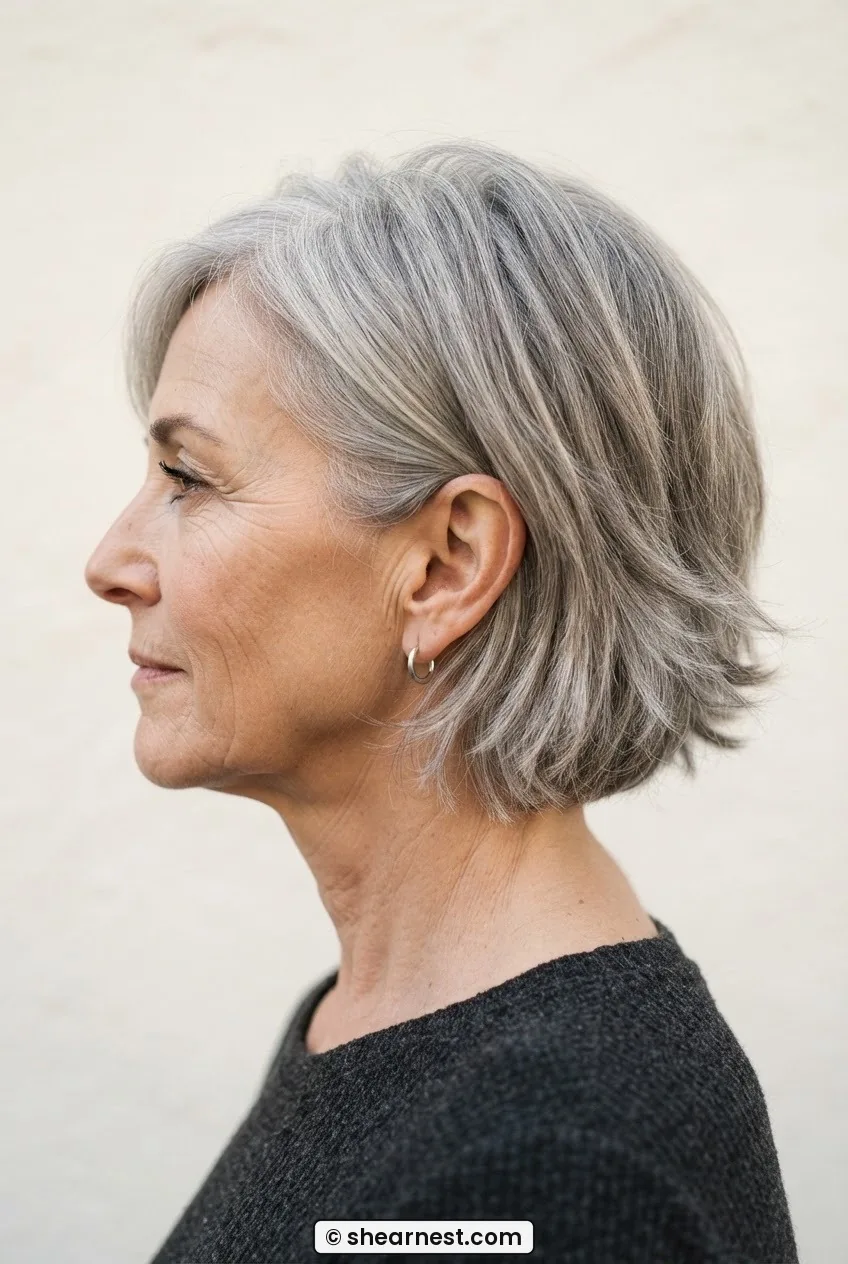
7. The Side-Parted Blunt Cut That Fools the Eye
This is more of a styling decision built into the cut than a dramatically different shape — but it matters enough to have its own entry because the parting placement changes where your cut needs its weight.
A side part, cut into a blunt one-length bob or lob, works because the swept-over section of hair adds a literal extra layer of coverage on one side of the head. For fine hair that’s thinning at the crown or temples — which is extremely common over 50 — a side part strategically placed can make a significant visual difference. The cut needs to account for this: the longer, swept-over side should carry slightly more length so it doesn’t flip up away from the face.
Upkeep between appointments is lower than most cuts on this list because there’s no tight graduation or disconnection to maintain. Every eight weeks is usually fine. And it transitions beautifully into an updo — if you’re interested in what works at this length for more formal occasions, the 60+ French Twist updo method is one of the best things I’ve bookmarked for exactly that reason.
What to say at the chair: “One-length bob with a permanent side part cut in — longer side to fall across the forehead without flipping.”
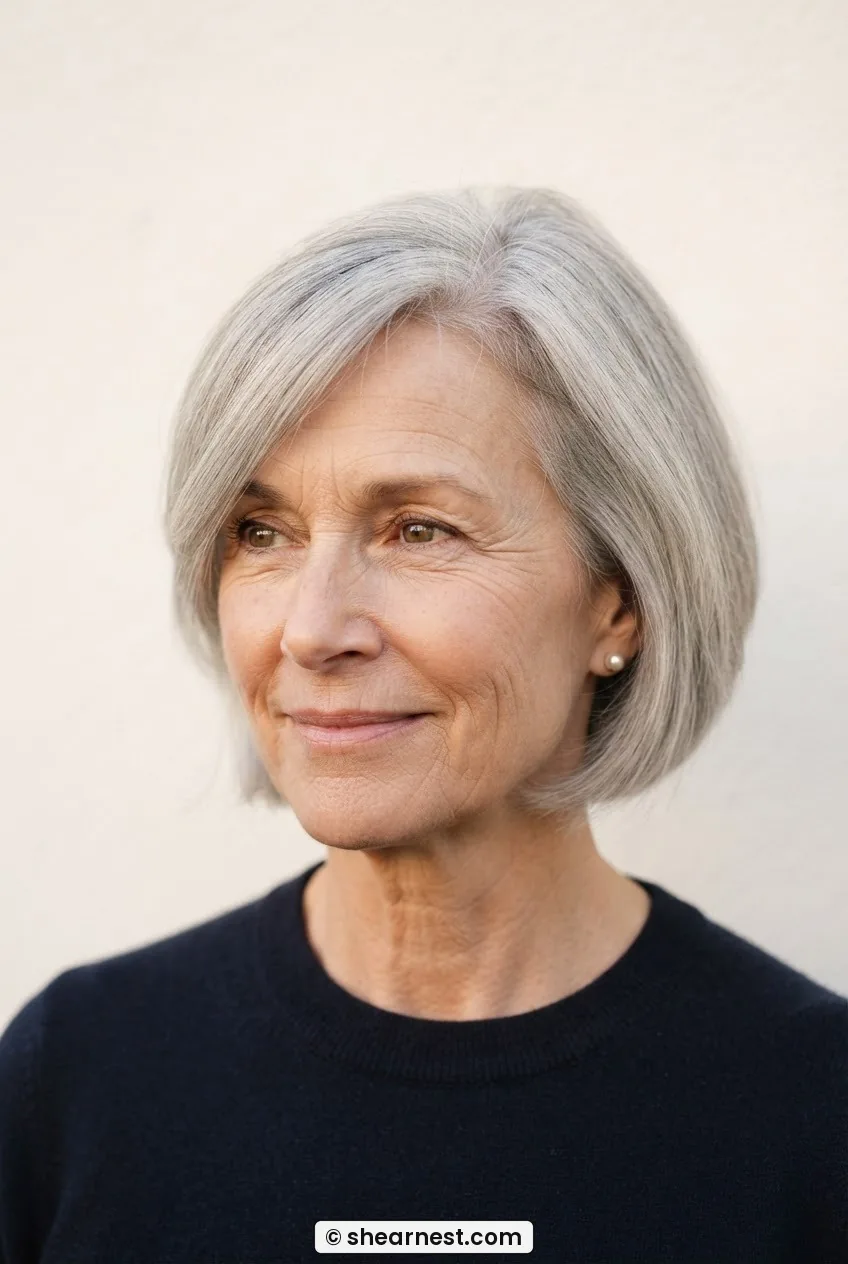
8. The Long Pixie With a Tapered Back
Different from the disconnected pixie in one important way: instead of a sharp contrast between top and sides, the long pixie uses a taper — a gradual fade from longer at the crown to closely cropped at the nape. The sides are still short but they blend rather than disconnect, giving a softer silhouette that suits more face shapes.
I find this cut particularly good for fine hair with a flat crown, because the taper at the nape pulls the eye up and creates the visual impression of height. The top length — usually three to four inches — can be styled with a little pomade or texturizing spray to add movement and separation, which again reads as thickness even on very fine strands.
It’s worth noting that volumizing techniques at the root matter more with this cut than with any other on this list, because there’s nowhere for flat hair to hide.
What to say at the chair: “Long pixie, tapered nape — not shaved, tapered — and I want four inches on top to style.”
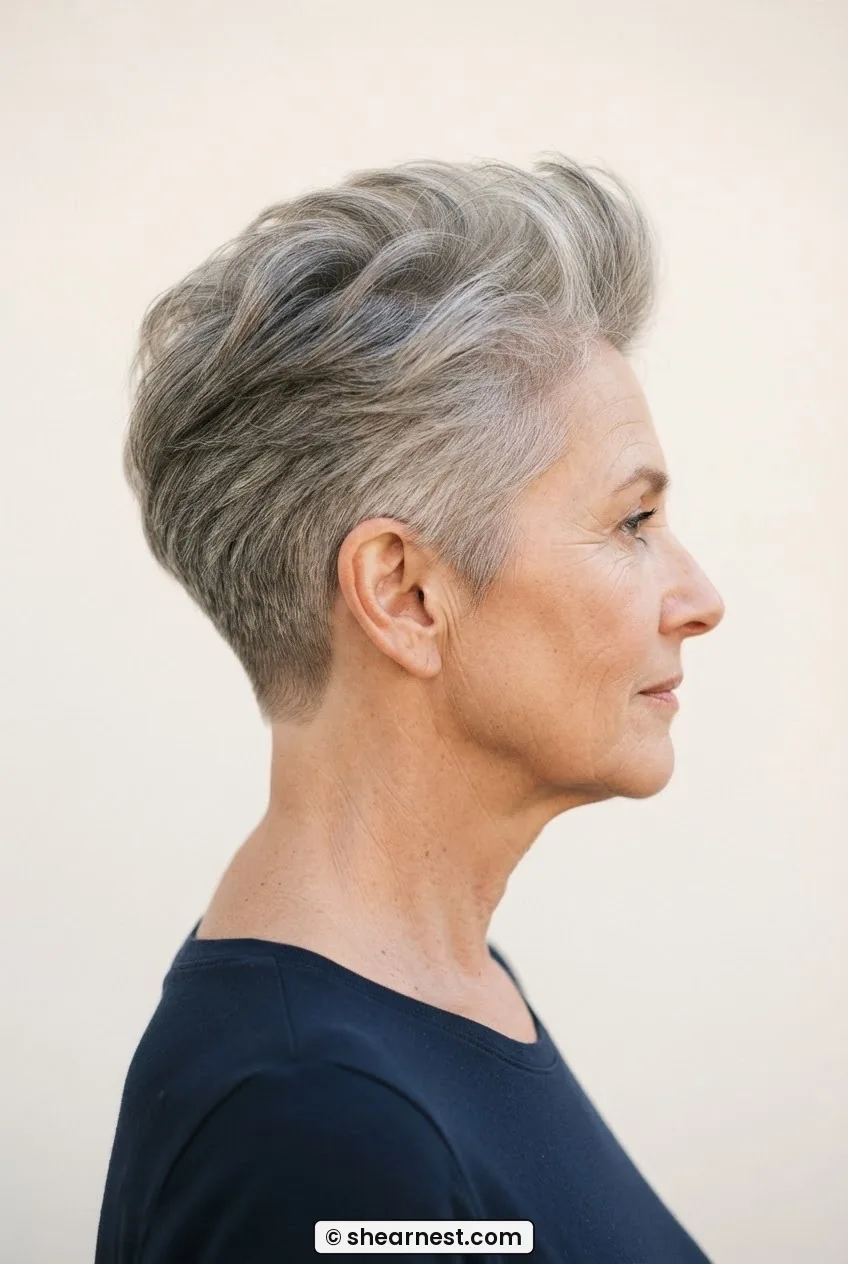
9. The Textured Bob With Piece-y Ends
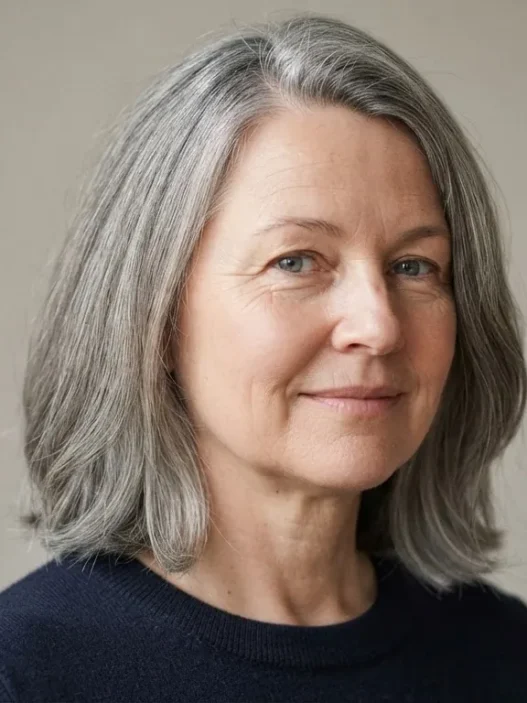
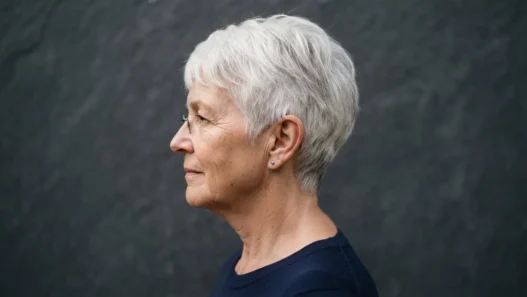
This one is for fine hair that’s also quite straight and tends to look flat no matter what. The piece-y end technique — where the stylist uses a razor or scissors to separate and thin the very tips of the hair into individual clusters — breaks up that solid, limp edge that fine straight hair often forms. Instead of one blunt line that catches light uniformly, you get small pointed sections that create the illusion of more hair through visual texture.
She’s got wonderfully fine hair in this photo and look at what those separated ends are doing — the style reads as full because the tips are moving independently rather than clumping together. The construction underneath is actually quite simple: a solid one-length bob. It’s just the end technique that changes everything.
One caution: this is not for hair that’s thinning at the ends due to breakage. If your ends are already sparse, more separation will make them look more sparse. In that case, a blunt cut is your friend. For women wondering how this translates to wavy textures, the advice on wavy haircuts for women over 50 covers the razor-versus-scissors debate really well.
What to say at the chair: “One-length bob with piece-y ends — razored or point-cut at the tips to create separation, not blunt.”
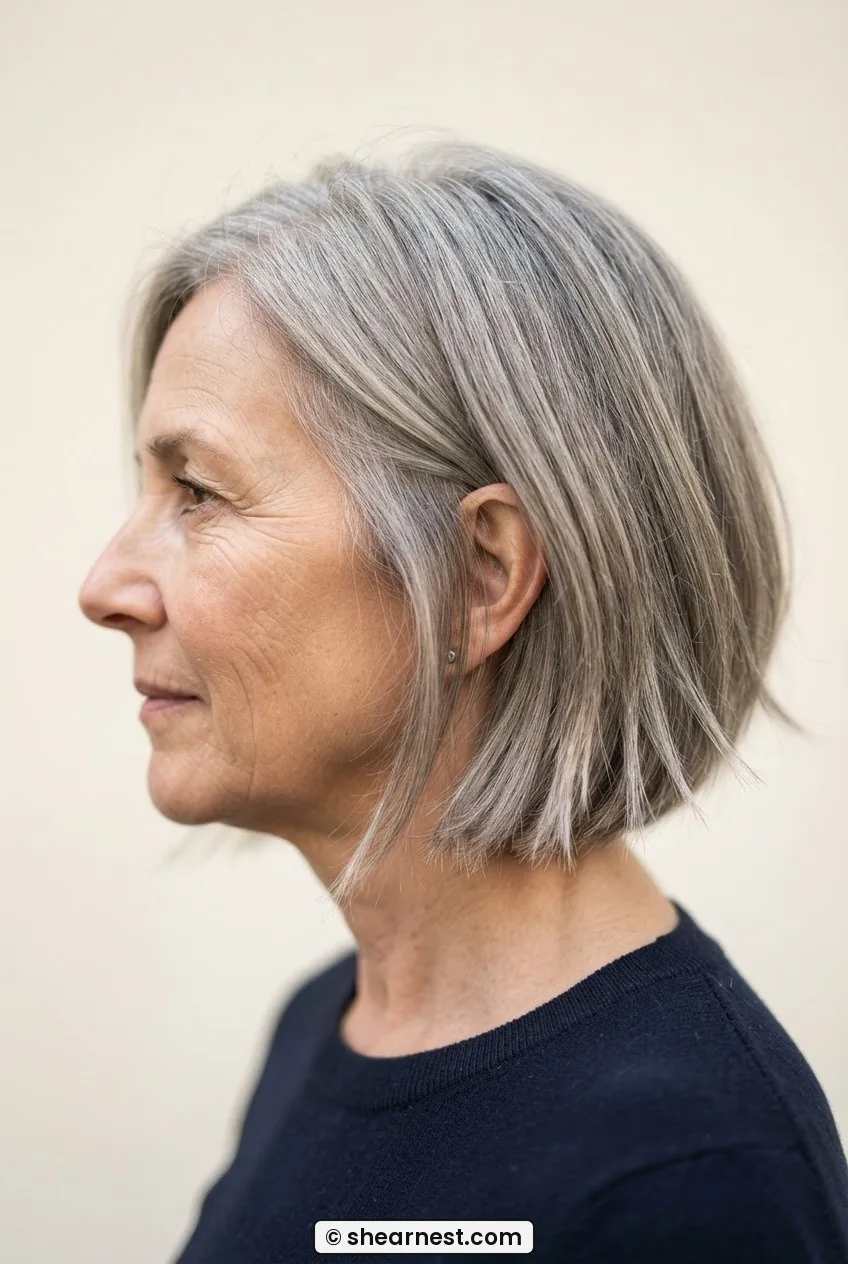
10. The French-Tuck-Friendly Mid-Length With Soft Face Framing
This is the one for women who aren’t ready to go short. And I say that with zero judgment — sometimes you need to be able to pull your hair back, or you have a specific face shape that genuinely looks better with more length, and those are real reasons that deserve a real answer.
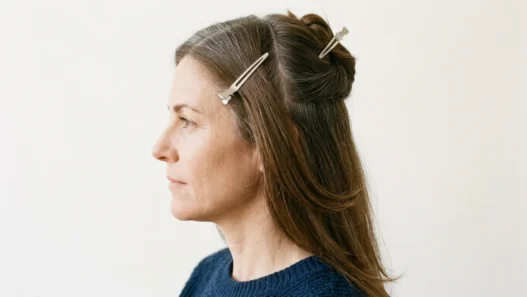
The mid-length here sits between the collarbone and the shoulder. The key to making it work for fine hair is the face framing: two or three longer pieces cut from around the temple line, graduated slightly shorter than the rest of the hair, so they fall forward and frame without being a full bang. No layers anywhere else — the interior stays solid to maintain as much density as possible. This lets the hair be worn down and look styled, or half-pinned back in a French-tuck type arrangement without the ends looking sparse or stringy.
If you’re in the camp of women with fine hair who want to keep some length, also worth reading is what changes for hair styles for women over 70 — because many of those structural principles apply earlier than you’d think, and it’s useful to understand where the journey is heading.
What to say at the chair: “Mid-length, collarbone to shoulder, no interior layers — just soft face framing pieces from the temples, graduated slightly shorter than the rest.”
Questions I Get About This
Will cutting my fine hair shorter actually make it look thicker?
In most cases, yes — but it’s the construction of the shorter cut that does the work, not the length reduction alone. Shorter hair has less weight pulling it down, which means it can stand away from the scalp more easily. A blunt or graduated bob concentrates density at the perimeter, making the hair appear thicker at the ends where it shows most.
Can fine hair over 50 handle layers at all?
It depends entirely on density. Fine hair that’s dense (lots of strands, just thin ones) can handle surface layers well. Fine hair that’s also sparse — meaning you actually have fewer follicles than you used to — needs to be very careful with layers, which remove visual weight. When in doubt, ask for face-framing pieces only and leave the interior solid.
How often do I really need to get these cuts trimmed?
Shorter, more structured cuts like the graduated bob or the disconnected pixie need refreshing every four to six weeks. One-length bobs and mid-lengths can go six to eight weeks before the shape noticeably degrades. Fine hair doesn’t show split ends as dramatically as thick hair, but the silhouette softens quickly — and for most of these cuts, the silhouette is the whole point.
I’m over 60 — does any of this advice still apply to me?
Absolutely, with a small caveat. Hair texture and density can continue changing into your 60s and 70s, and some cuts that worked at 52 may need tweaking by 65. The structural principles are the same, but if you’re noticing more significant thinning, cuts 1, 2, 4, and 8 on this list are particularly robust for more advanced hair changes. The hairstyles over 70 section on this site also covers exactly where things shift.
If you’ve been going round in circles asking for “something with a bit of volume” and leaving the salon mildly disappointed — I’ve been there, and I really think the language is the problem as much as the technique. When you walk in knowing exactly where you want the weight to sit and where you don’t, the conversation changes completely. Pick the cut that matches your construction, take the photo, use the words. That’s genuinely all it takes.