



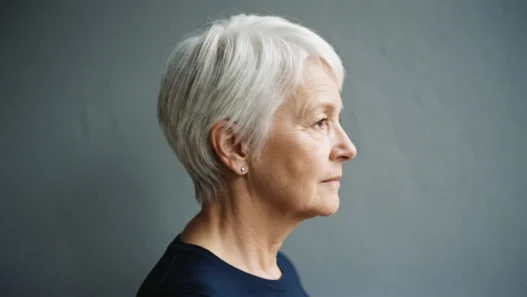

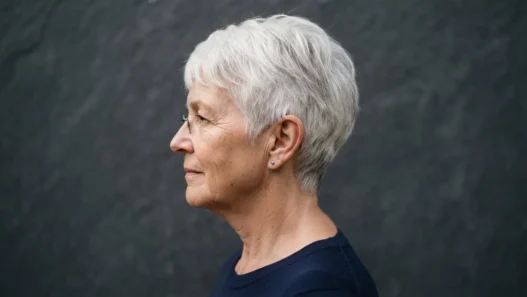


A client came in holding her phone up to my face — a photo from a Christmas party, maybe 2018 — and said, “I don’t look like this anymore and I need you to fix it.” She was 43. She had long, beautiful, dark brown hair. And she wasn’t wrong. Something had shifted, quietly, between that photo and the one she’d taken six months ago that she didn’t show anyone. I’ve been cutting hair for decades and I still think about that appointment. Because she’d put her finger on something I hadn’t heard anyone say out loud before: the hair hadn’t changed. She had. And nobody was talking about that.
The Photograph Problem
We all have one. A photo we keep returning to — not because we want to look young again (most of my clients are past that), but because we remember feeling like ourselves in it. The hair felt right. The face felt right. The whole thing worked. And somewhere around 40, 42, 45, that alignment quietly stops being automatic.
What I’ve noticed, cutting women’s hair through their thirties and into their forties and fifties, is that the photograph problem isn’t really about the cut. It’s about a mismatch between the hair you’re wearing and the face you’re wearing it on. Those two things used to be in sync. Then one of them started changing — slowly, at first, and then all at once — and the hair didn’t come with it.
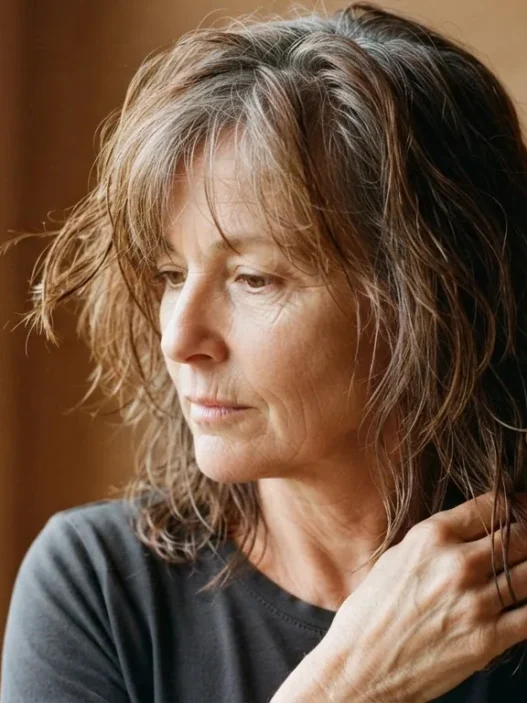
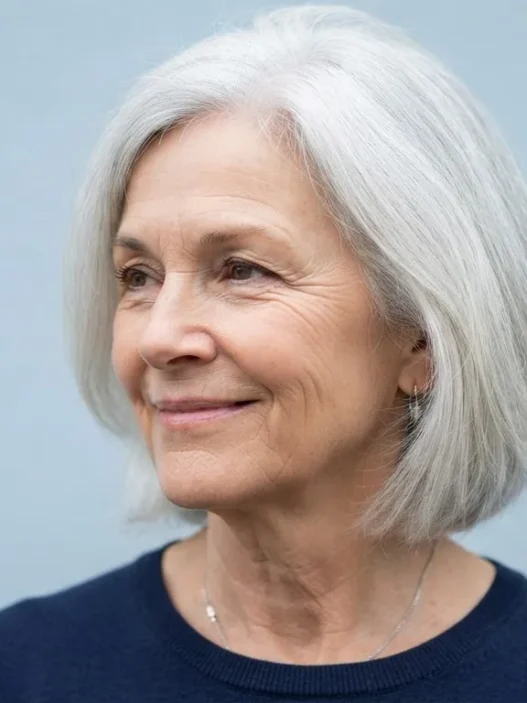
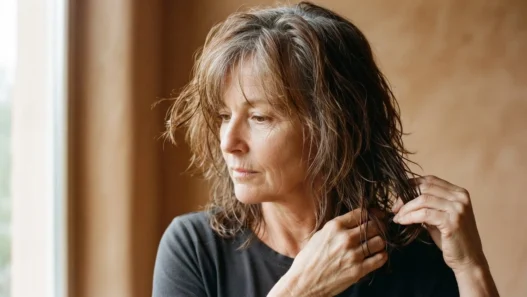
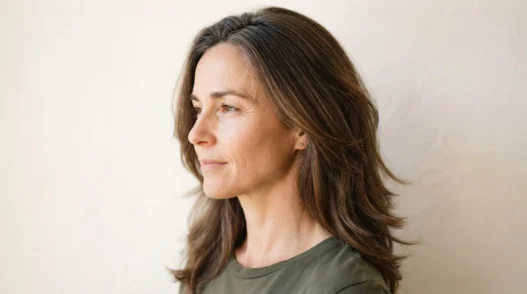
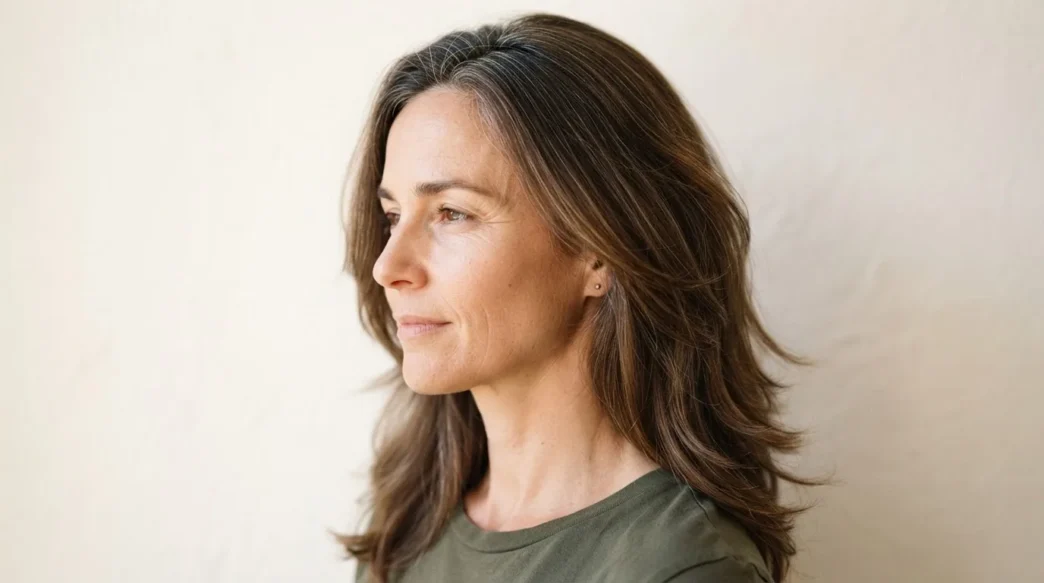
Look at the woman in this photo — see how the layers catch the light moving downward? That’s not an accident. That’s a cut working with the way her face sits now, not the way it sat ten years ago. The softness at the ends, the weight distribution — it’s doing a specific job.
The fix isn’t always dramatic. Sometimes it’s a few centimetres off the length. Sometimes it’s a fringe. But you can’t find the fix until you understand what’s actually happening — and that requires being a little more honest than most stylists are willing to be in a 45-minute appointment.
What Your Face Is Actually Doing
Here it is, plainly: the face lengthens. Not dramatically, not overnight, but over the course of your late thirties and through your forties, volume migrates downward. The temples narrow slightly. The mid-face drops. The jawline softens. If you had a round or oval face at 30, by 42 you may have something closer to a long or rectangular shape — and the cuts that worked for you before will start to feel off in ways you can’t quite name.
Horizontal lines shorten a long face. Vertical lines lengthen it further. This is basic geometry, but it’s the thing nobody says in plain language. A centre part with long, straight hair creates a vertical line from crown to collarbone. That’s a beautiful look — on the right face shape. On a face that’s already lengthening, it can feel stark. It can make the face look hollower than it is, more severe than the person wearing it.
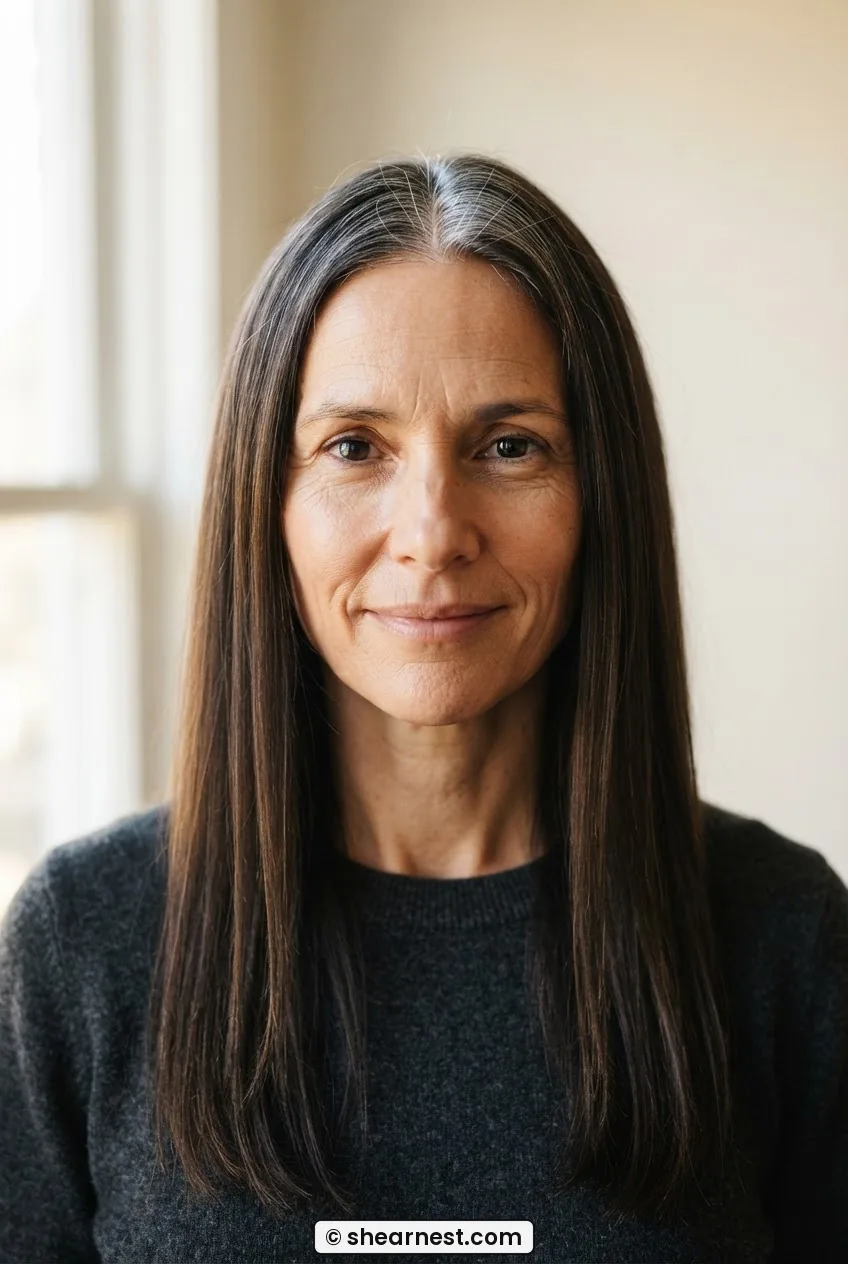
I’m not suggesting anyone cut their hair short the moment they turn 40. I am suggesting that checking in with your actual current face shape — not the one you think you have, but the one in a straight-on photograph taken in natural light — is worth doing. See how the light falls. Notice where the width is. That’s your starting point, not the haircut you had at 38.
Understanding how your face shape influences the right cut is something I go into more detail on in posts like Oval Face Hairstyles For Women Over 50: The Truth — if you’ve always assumed you have an oval face and haven’t checked lately, that one’s worth a read.
Why the Perimeter Matters More Than the Top
This is the thing I wish more clients understood before they sat in my chair. Everyone asks about volume at the roots. Everyone wants lift at the crown. And yes, that matters — especially for fine or thinning hair. But in your forties, the perimeter of your cut is doing more work than the top ever could.
The perimeter is the shape the hair makes around your face and neck. It’s the frame. And just like the frame around a painting, the wrong one changes what you see. A blunt, heavy perimeter on long hair can drag the eye downward — particularly if the jaw has softened. A layered, graduated perimeter creates movement and draws the eye outward at the cheekbones. A shorter perimeter brings warmth and definition back to a face that’s lost some of its structure.
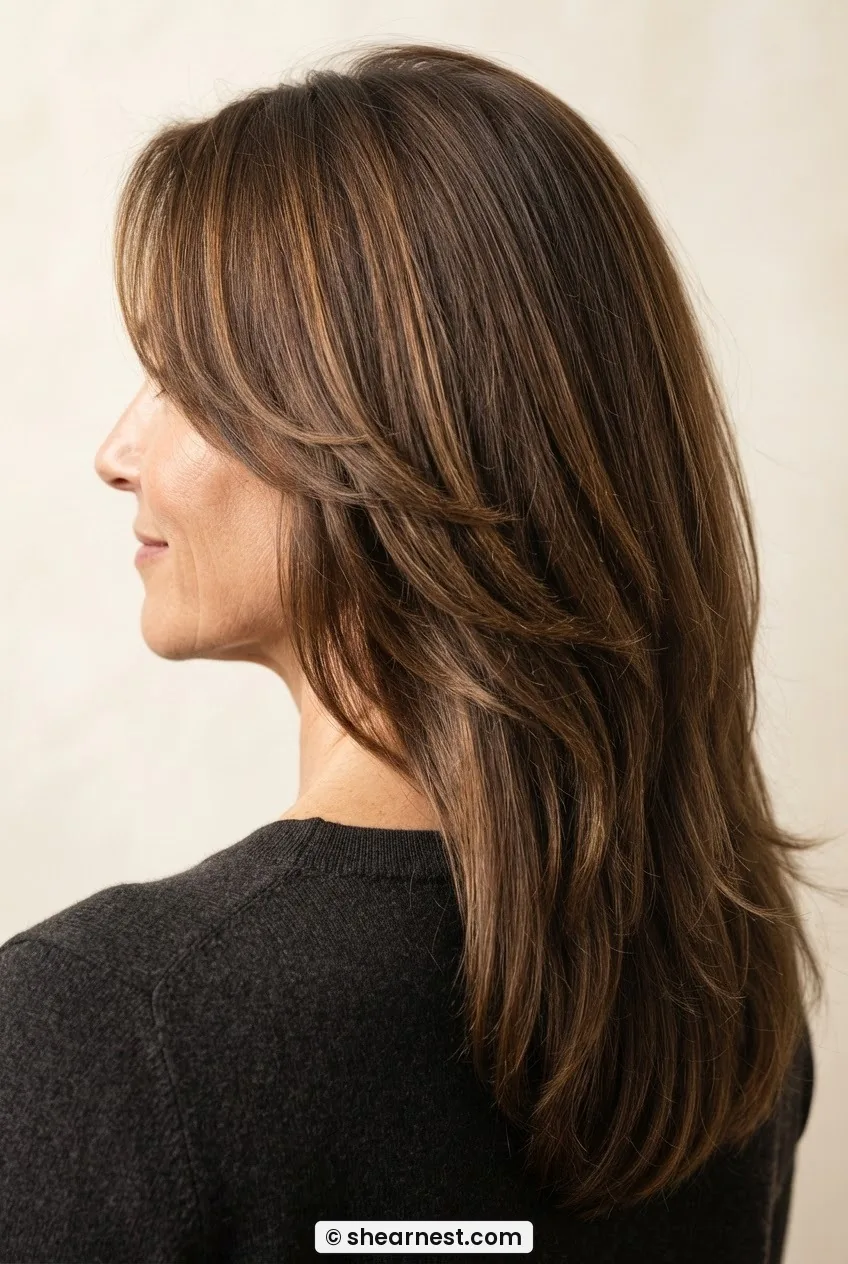
I had a client — mid-forties, thick dark hair, always worn long — who came in every eight weeks for a trim and never touched the shape. Same cut for six years. She looked slightly tired all the time and couldn’t work out why. We took two inches off the perimeter, added face-framing layers from cheekbone to jaw, and she burst into tears. Not because she looked younger. Because she looked like herself again.
The perimeter is where your stylist’s attention should be. If they’re spending all their time on the interior of your hair and not shaping the fall around your face, that’s worth a conversation. You can read up on how soft layers work at different lengths to get a sense of what to ask for before you sit down.
Long Hair After 40: The Argument I Changed My Mind On
I used to believe — and I’m not proud of this — that long hair past a certain age was a maintenance trap. Not because of some outdated idea about appropriate length, but because I kept seeing it sit flat, lose its life, pull the face down. I thought the issue was the length. I was wrong. The issue was that nobody had adjusted the cut to work with the way the hair had changed.
Long hair in your forties is completely viable. But it needs different handling than it did at 28. The hair itself changes texture — it may become finer, drier, more prone to breakage. It doesn’t move the same way. A blunt cut that looked glossy and sleek at 32 can look heavy and limp at 44. The same length with soft layers, a slightly shorter face frame, and a bit of texture cut into the ends? Completely different story.
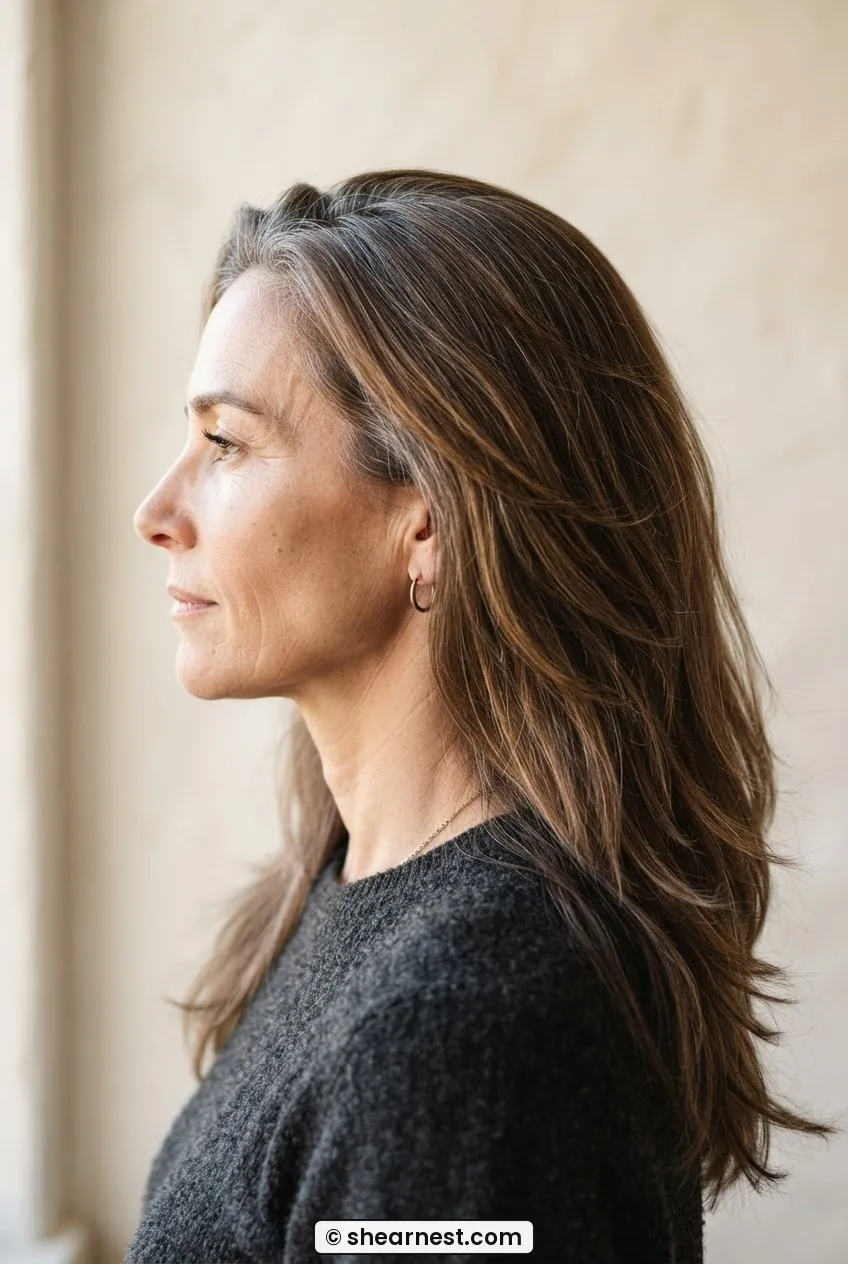
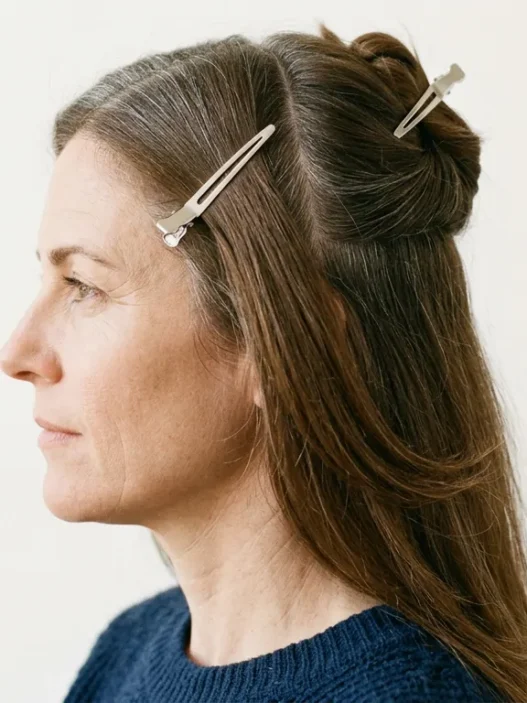
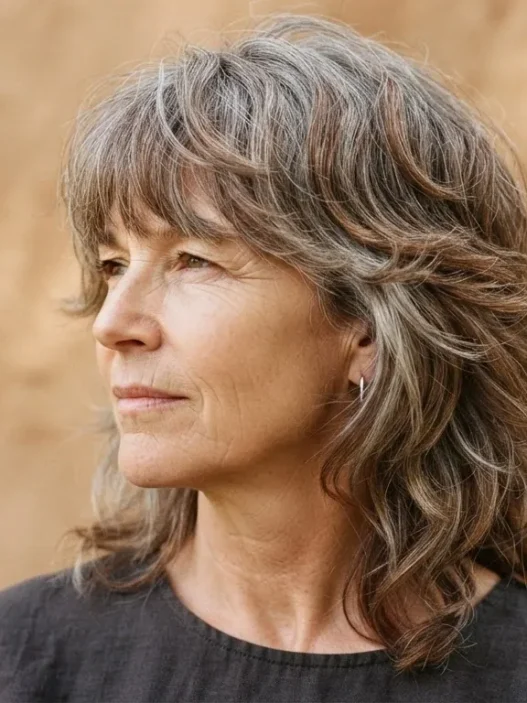
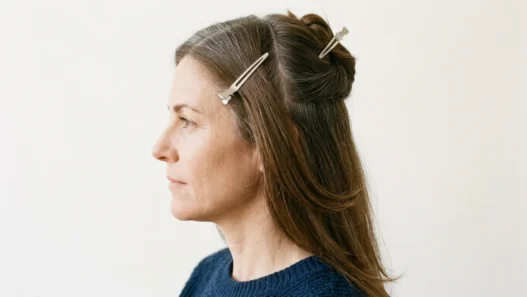
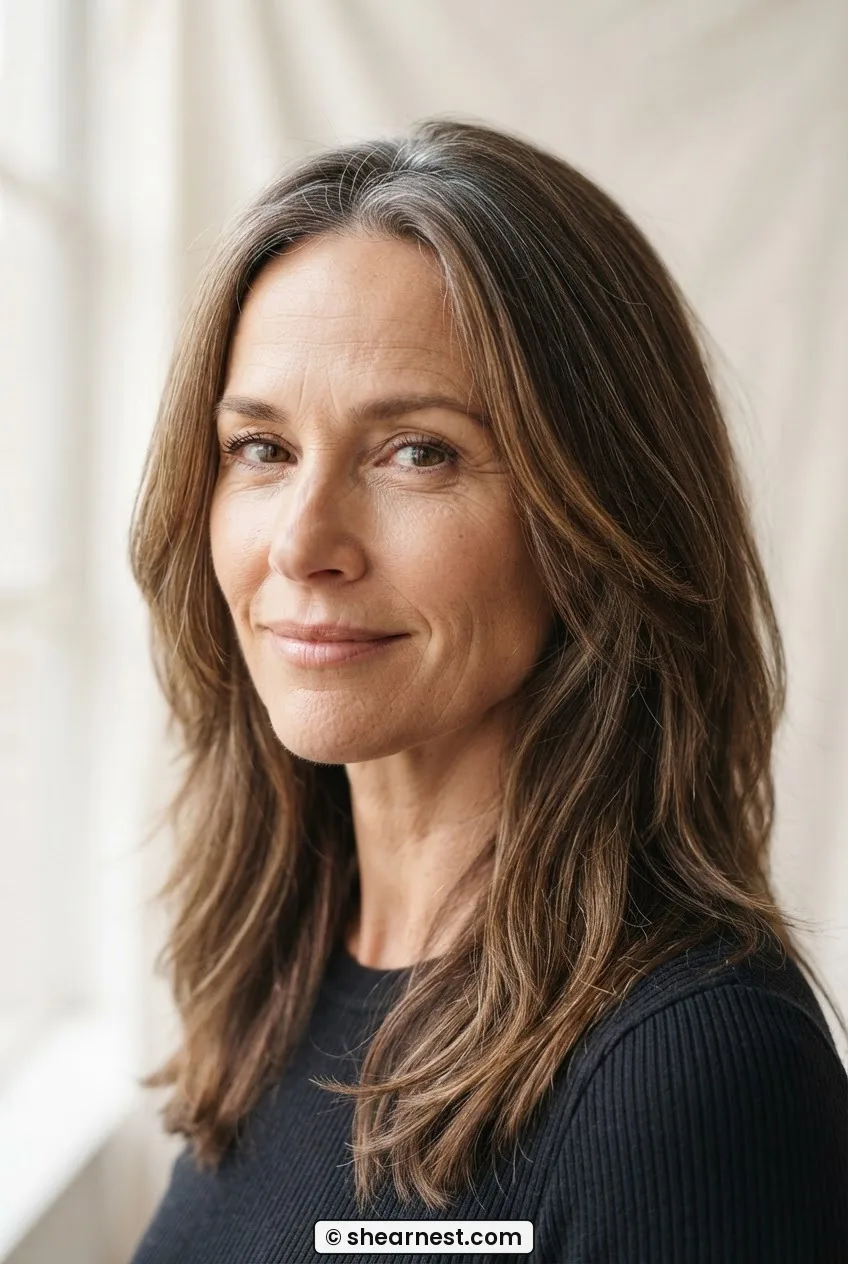
She’s wearing it long in this photo — and look at the way it moves. That’s the difference layering makes. The hair isn’t fighting gravity. It’s working with it. The parting shows the first few greys coming through at the root and honestly? That contrast adds dimension that flat colour would erase.
Long hair for women in their forties is having a genuine moment right now in 2026, and I think part of it is that people have stopped treating length and age as a moral equation. The question isn’t “is this too long for my age.” The question is “is this cut doing anything for my actual face.” Two very different questions.
If you’re thinking about keeping length into your fifties and beyond, I’ve written about the truth about wavy haircuts for women over 50 which covers how texture changes the whole conversation — and how straight hair cuts for women over 50 require a completely different approach to layering than most people expect.
The Texture Conversation Nobody Starts
Hair texture changes after 40. Full stop. And almost nobody talks about it directly — stylist or client — which means women spend years wondering why their hair “doesn’t do what it used to” without understanding the mechanism.
Here’s what’s happening. Oestrogen plays a role in how the hair shaft behaves. As levels shift through perimenopause and beyond, hair can become:
- Finer in diameter, even when total density stays the same
- Drier at the ends, because sebum production slows
- More porous, meaning it reacts to humidity more than it used to
- Sometimes curlier or wavier in patches — a surprise for women who’ve had straight hair their whole lives
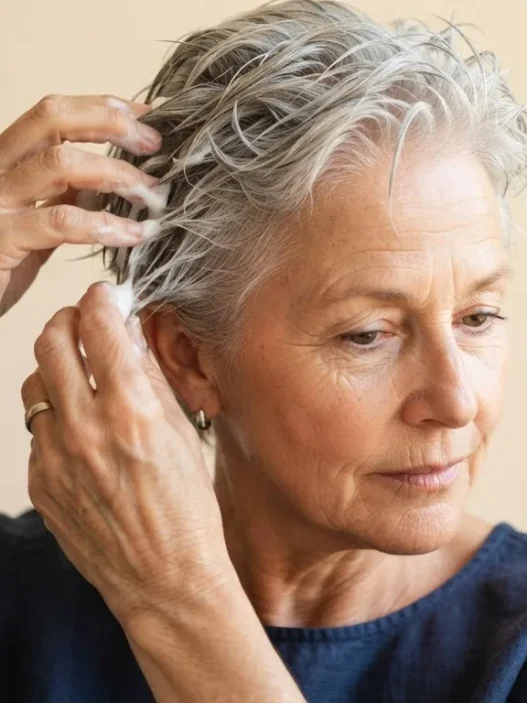
That last one catches people completely off guard. I’ve had clients in their mid-forties come in baffled because one side of their hair has developed a wave they’ve never had before. This is real, it’s documented, and it means the cut that worked on your former hair texture may not serve your current one at all. You can look at how hair texture shifts in perimenopause affect styling and cutting decisions — it genuinely changes what you should ask for.
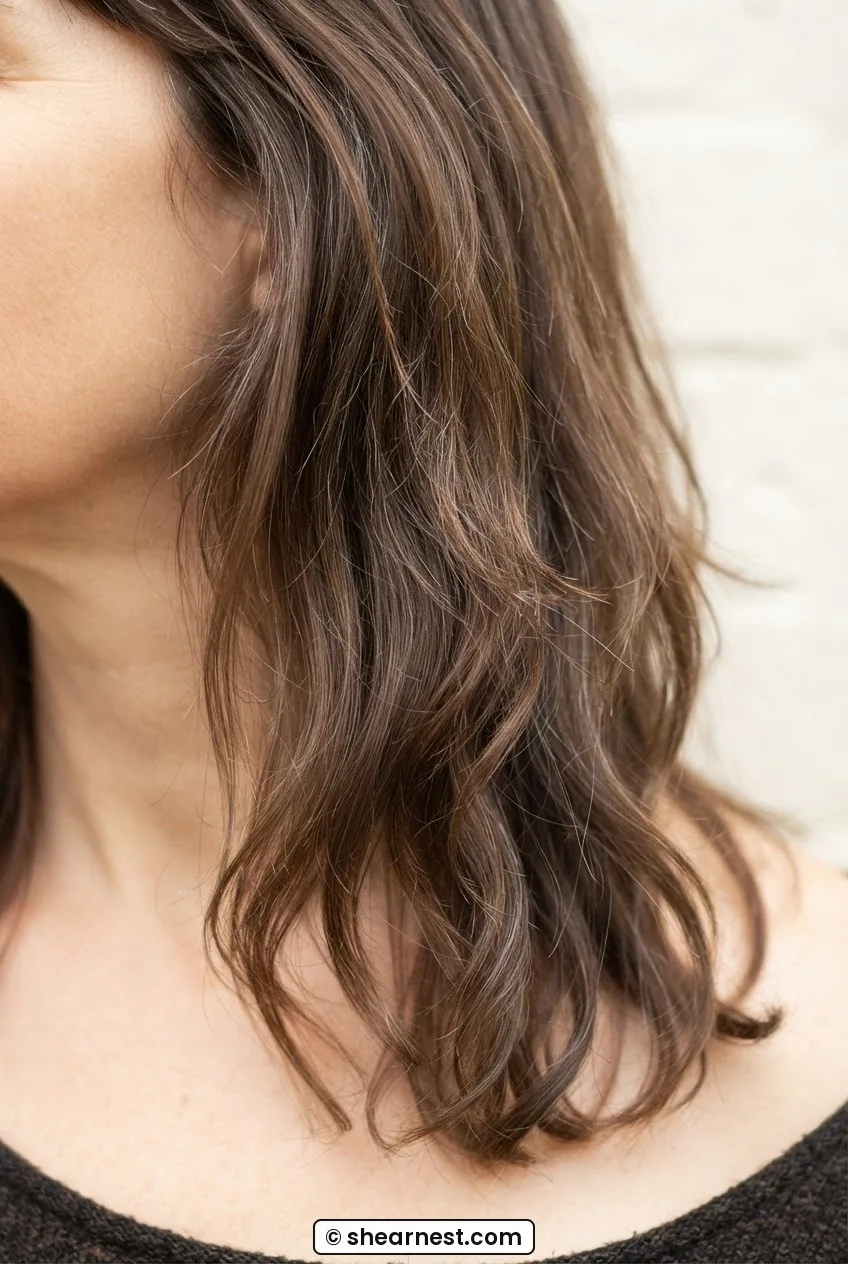
My honest opinion — and this is the part some people push back on — is that the texture conversation is more important than the length conversation. I’ve seen short hair that looked terrible because it was cut for someone’s old texture. And I’ve seen long hair that looked extraordinary because the stylist understood what the hair was actually doing now. Get the texture right first. Then worry about length and style.
For those thinking even further ahead, the texture shifts continue and accelerate — the post on hair styles for women over 70 and what actually changes goes deep on this, and there’s also a broader category overview of hairstyles over 70 if you want to see what the range of choices looks like at that stage. Understanding the trajectory helps you make better decisions at 44.
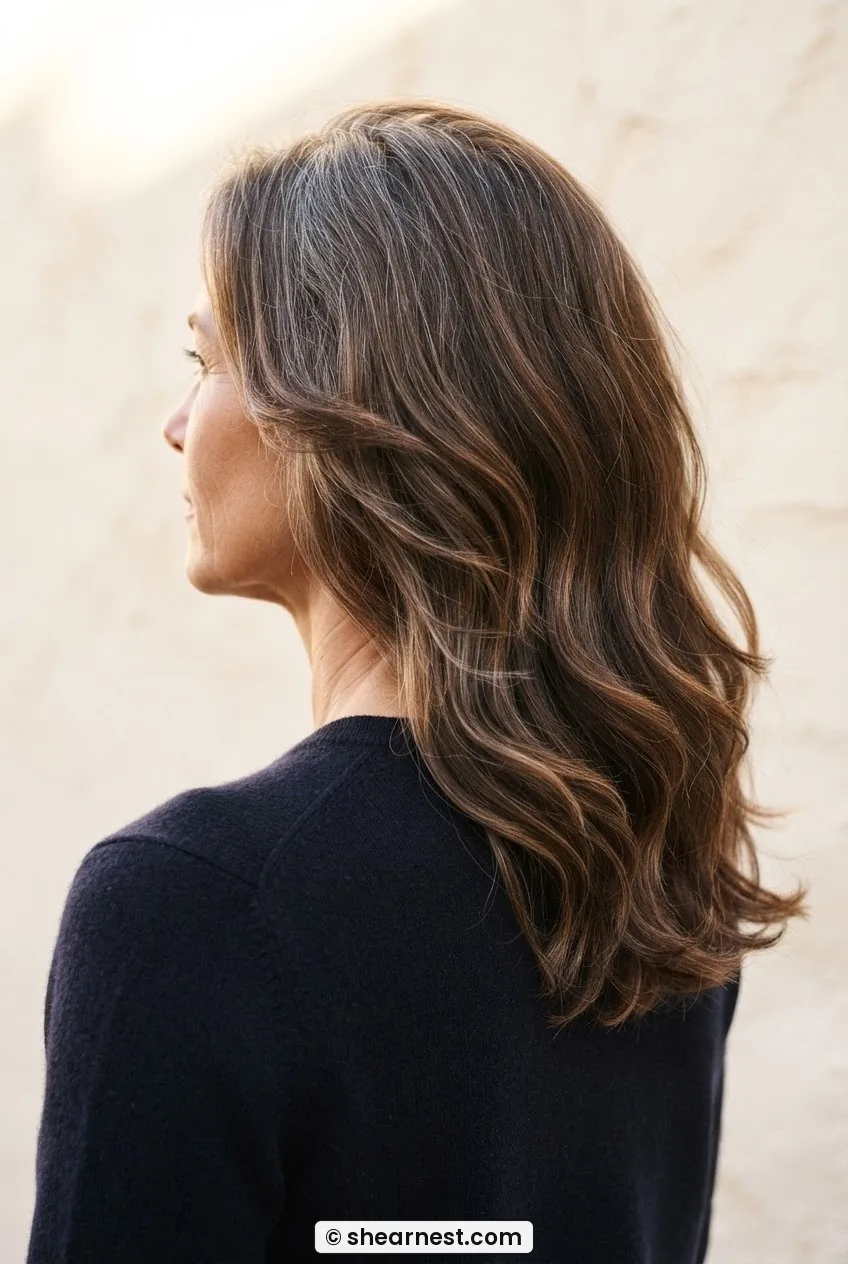
What I recommend now — and this is a shift from where I started — is that before any client over 40 discusses length or style, we spend five minutes talking about texture. How it’s changed. What it’s doing in humidity. Whether it’s behaving differently at the root than at the mid-length. That conversation changes everything that comes after it. You can also read up on cuts that work for finer hair if you’re noticing density loss alongside the texture change — the two often arrive together.
A Stylist Explains the Texture Shift Perfectly
Questions I Get About This
Does going shorter actually make you look younger?
Not automatically, no — and I wish the industry would stop implying it does. Short hair can look incredible after 40. So can long hair. What matters is whether the cut is working with your current face shape and hair texture. A badly cut pixie on the wrong face shape won’t do anything flattering. A well-cut lob on a face that’s lengthened might do more than any short cut ever could.
Should I cut my hair before or after going grey?
This is one I get constantly. My honest answer: the texture often changes as the grey comes in, so cutting before you’ve seen how the grey grows can mean you’re cutting for hair that no longer behaves the same way a few months later. I usually suggest waiting until the grey is established enough to show you what it’s doing — is it coarser? Wavier? Then cut for that hair, not the one you had before.
What’s the single most useful thing I can change at 40?
Add face-framing layers if you don’t have them. I’m not talking about heavy shag layers or anything drastic. Just a few pieces cut to land at the cheekbone and jaw that soften the perimeter and bring the eye to the widest part of your face. It’s the smallest change with the biggest return I’ve seen in thirty years of cutting hair. Do that before you do anything else.
My hair is thicker than ever — does any of this apply to me?
Yes, because thickness and texture aren’t the same thing, and because face shape changes regardless of what your hair is doing. That said, thick hair after 40 does have its own specific challenges — mainly around weight and movement. If it’s dense, it may need more internal texture removed to allow it to move naturally. A cut that leaves it too blunt can create that heavy, dragging effect at the perimeter I mentioned earlier. Thickness is an asset, but it still needs the right handling.
What that client with the Christmas photo taught me — without knowing it — is that the most useful thing a stylist can do isn’t hand you a reference image or tell you what’s trending. It’s pay attention to the face in front of them right now, today, and cut for that. Not the face from 2018. Not the face from a magazine. Yours. The one that got you here. That’s the one worth working with.