








I started paying closer attention to the pixie shag a few years ago when a client of mine — thick, graying hair, zero interest in maintenance — walked out looking like she’d just discovered herself. That’s a dramatic way to put it, but honestly, it was accurate. The cut did something a standard pixie just doesn’t: it gave her movement, personality, and a silhouette that worked with her hair rather than fighting it. Since then I’ve been obsessed with all the variations of this cut, and I’ve collected nine that I think are genuinely worth knowing about — each one built differently, each one suited to a different person.
What’s in This Post
- 1. The Classic Disconnected Shag
- 2. The Blunt-Fringe Pixie Shag
- 3. The Soft-Graduation Layer for Fine Hair
- 4. The Thick-Hair Shag with Interior Thinning
- 5. The Curly Pixie Shag
- 6. The Long-Top Short-Side Shag
- 7. The Gray-Blended Textured Shag
- 8. The Wavy Shag with Diffused Perimeter
- 9. The Close-Crop Shag for Natural Coils
1. The Classic Disconnected Shag
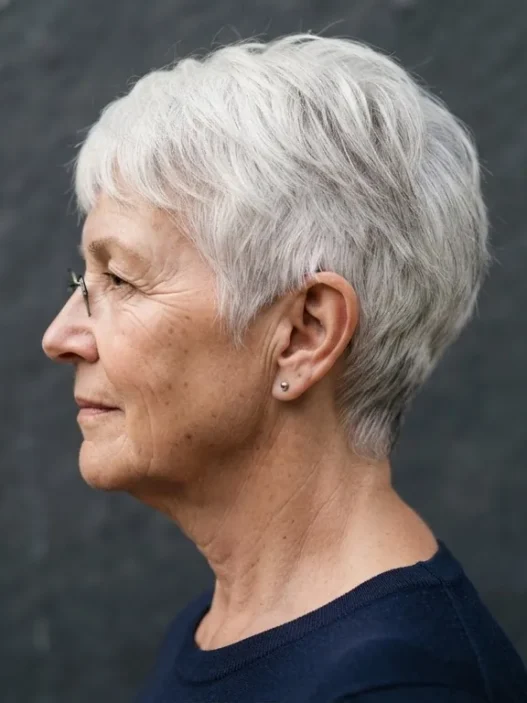
This is the one most people picture when they say “pixie shag.” The top is cut to about two inches, sometimes three, with point-cutting through the crown to break up any heaviness. From there, the sides and back are cut significantly shorter — we’re talking a real disconnection, not a gentle blend — which is what creates that signature split between the voluminous top and the clean perimeter beneath it. The nape sits low and close, sometimes razored, and the weight lives almost entirely up on the crown and temples.
It suits medium-density hair best. Too fine and the top looks sparse; too thick and it turns into a mushroom without careful thinning. Upkeep is every five to seven weeks to keep that disconnection crisp — if you let it grow out past eight weeks, the definition that makes the cut work starts to blur. At the chair, ask for “disconnected layers through the crown with a close-cut nape, no blending at the occipital.”
2. The Blunt-Fringe Pixie Shag
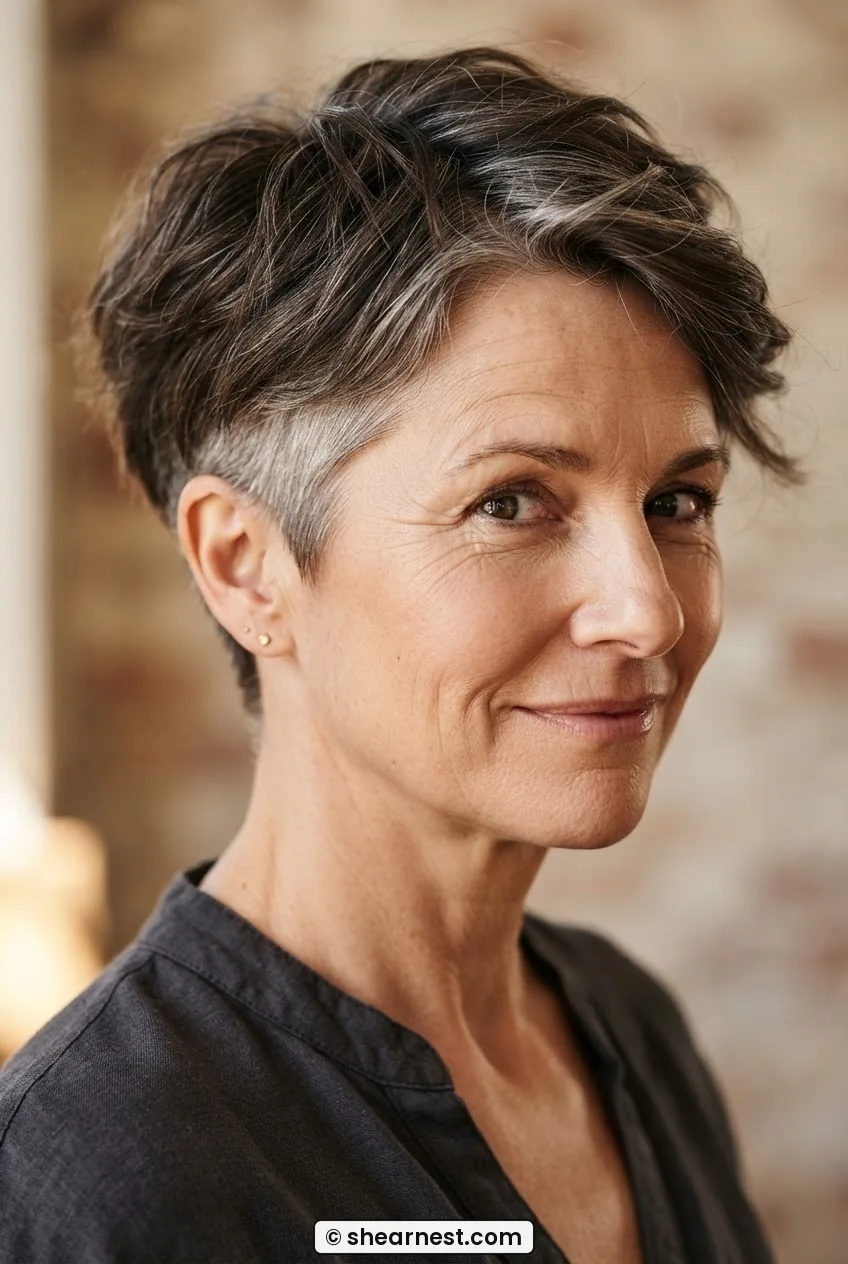
Same short-back-and-sides architecture as above, but the front is finished with a solid fringe cut straight across — usually sitting at the brow bone or just below it. The fringe acts as a visual anchor and gives the whole shape a decisiveness that the more diffused versions don’t have. Because the fringe is blunt, the stylist has to make sure the weight distribution behind it is deliberate: the layers immediately behind the fringe line should be slightly longer to avoid a shelf effect.
This one actually reads well on finer hair because the solid fringe creates the illusion of density. It’s also a strong choice if your face shape benefits from a horizontal line at the forehead — something stylists who know oval face hairstyles for women over 50 will tell you makes a real difference. Upkeep is slightly more demanding because the blunt fringe grows out visibly — budget for a trim every four to five weeks. Ask for: “blunt fringe at the brow bone with a shag through the crown, layered and point-cut behind the fringe line.”

3. The Soft-Graduation Layer for Fine Hair
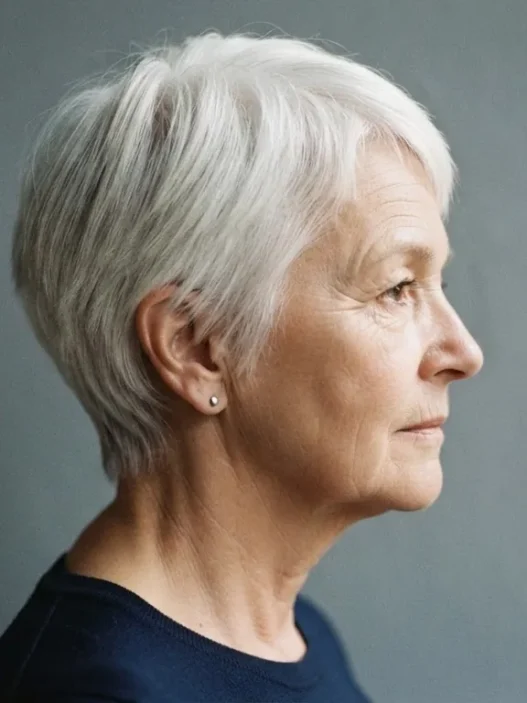
This is the gentle version. Instead of a hard disconnection, the back and sides are graduated softly — the length increases incrementally from the nape up toward the crown rather than jumping from very short to very long. The layers are cut on a high elevation so they fall with a little lift, and the ends are point-cut or twist-cut rather than scissor-over-comb, which keeps them from looking too blunt or flat.
Fine hair is the primary beneficiary here, and it’s worth reading up on the broader world of haircuts for fine hair over 50 to understand why graduation in particular works so well for low-density strands. The soft perimeter means the cut grows out more gracefully, so you can stretch appointments to eight or even nine weeks without it looking neglected. Tell your stylist: “soft graduation from the nape, high-elevation layers through the crown, point-cut ends — no blunt lines anywhere.”
4. The Thick-Hair Shag with Interior Thinning
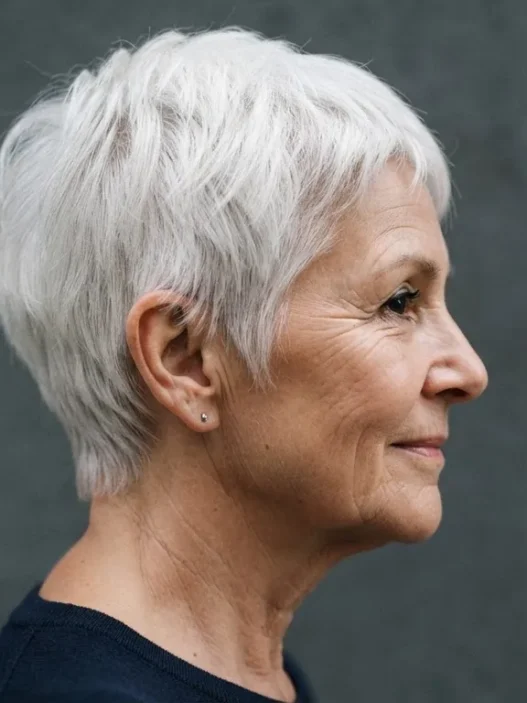
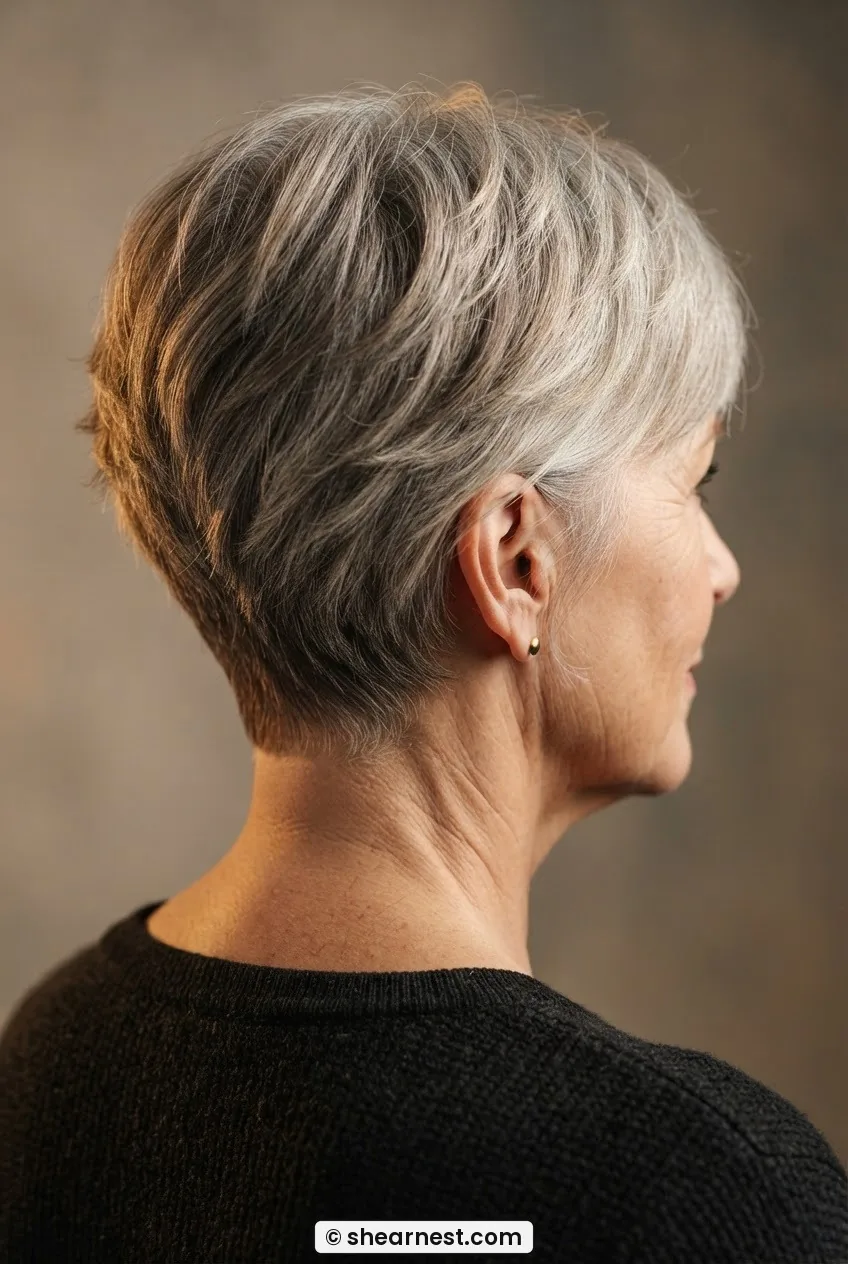
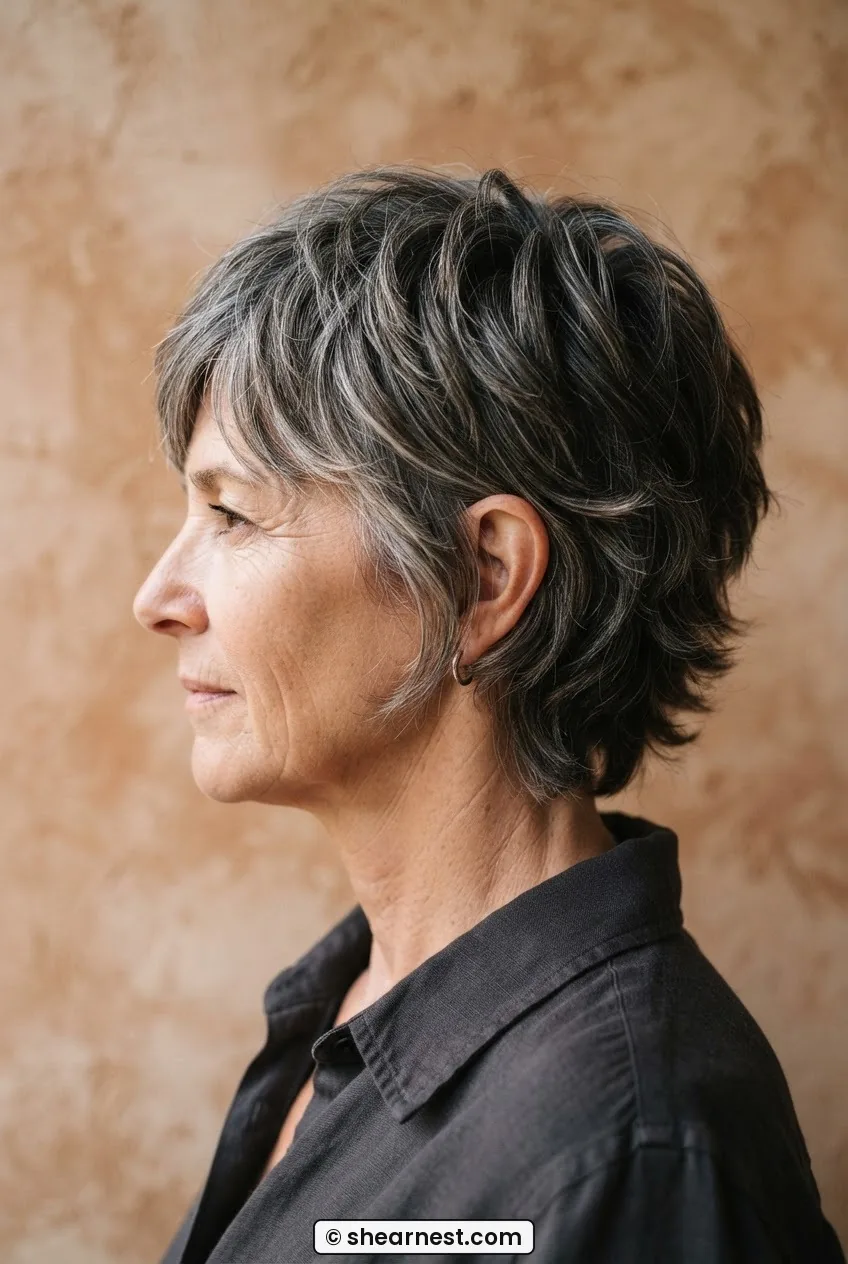
Thick hair and a pixie shag can be a rocky relationship without the right technique. The version that works involves serious interior thinning — slide cutting or thinning shears used inside the layers, not on the surface, to reduce bulk without removing visible length. The exterior silhouette stays intact; what changes is the weight inside the hair. The layers can then fall separately instead of clumping into a solid wedge.
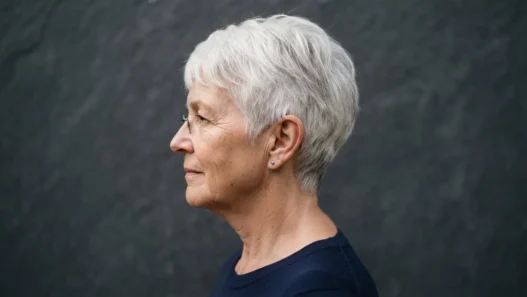
Look at how she’s wearing hers in the photo below — you can see the layers actually separating and moving rather than sitting in a block. That’s exactly what interior thinning achieves. This cut dries faster, styles easier, and doesn’t require as much product. The tradeoff is that thinning shear work grows out unevenly, so you’ll want to be back in the chair at six weeks. Ask for: “pixie shag with interior slide cutting through the bulk zones, layers point-cut on top.”
5. The Curly Pixie Shag
Curly hair changes everything about how a pixie shag is cut and how it behaves. Dry-cutting is almost always the better approach here — cutting dry lets the stylist see exactly where each curl wants to sit rather than guessing from wet hair that will spring up unpredictably. The layers need to be longer than they would be on straight hair to account for shrinkage; a layer that looks two inches on wet curls might sit at one inch once dry. The shaping tends to be rounder through the sides to follow the curl pattern rather than fighting it.
What I love about a curly pixie shag for women over 50 is that the natural texture does most of the visual work. You don’t need a diffuser running for twenty minutes — the layers define themselves. It does require a stylist who actually understands curl structure and cuts it accordingly. Ask specifically for someone with that experience, and tell them: “dry-cut pixie shag, longer layers to account for curl shrinkage, round perimeter at the sides.”

My personal pick is this one — the curly pixie shag on naturally graying hair. I’ve seen it transform women who spent years wrestling their curl pattern into submission. Stop fighting it. The shag was made for this texture.
6. The Long-Top Short-Side Shag
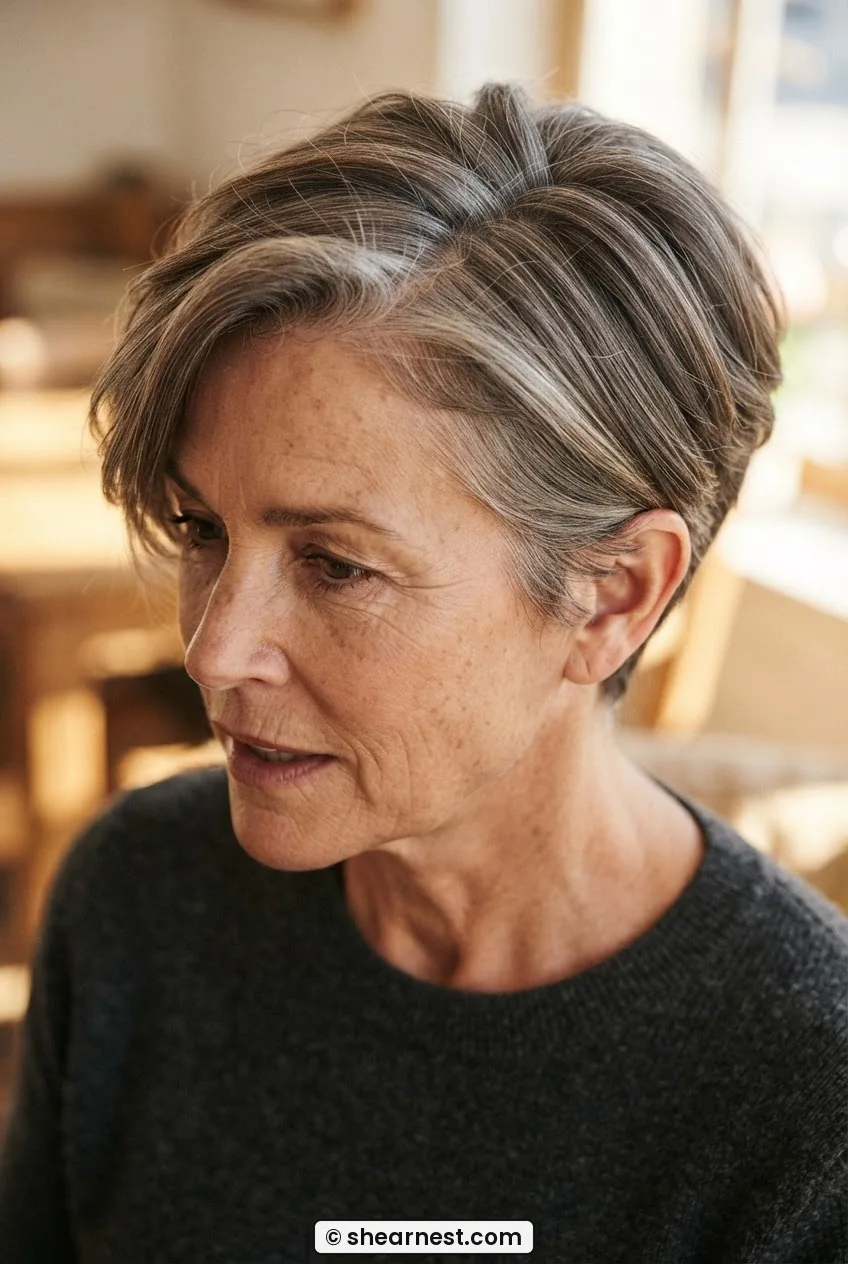
This is where the pixie shag tips into slightly longer territory on top — we’re looking at three to four inches through the crown and front, which gives enough length for a side part, some texture pomade manipulation, or even a very relaxed tuck behind the ear. The sides stay cropped close, but the transition from the long top to the short sides is handled with a soft fade or a gentle graduation rather than a sharp disconnection.
It’s a forgiving cut because the extra length on top gives you styling options when you want them. Bad hair day? Push it forward and let the layers break naturally. Good hair day? Work in some texture paste and let the layers sit where they land. Suits most hair types and most face shapes. Upkeep at six to eight weeks. Ask for: “longer pixie shag, three to four inches on top, close sides with a soft graduated transition — no hard part line.”
7. The Gray-Blended Textured Shag
This one is less about a specific construction and more about how the cut interacts with the transition from colored to natural gray. The shag is a particularly intelligent choice when you’re going gray because the layers break up the demarcation line — there’s no clean single edge where “old color meets new growth” because there are seven edges at different lengths doing different things.
The construction itself tends to be a mid-length pixie shag with generous point-cutting through the top layers to maximize texture separation, which helps the two-tone effect read as intentional rather than neglected. The gray typically grows in at the crown and temples first, and the shag framing those areas actually highlights the most interesting tonal shift. If you’re navigating this territory, understanding the bigger picture of the gray transition process helps you plan the cut timing around your specific growth pattern. Ask for: “textured pixie shag to work with gray transition, point-cut layers through crown and temple to blend the demarcation.”

8. The Wavy Shag with Diffused Perimeter
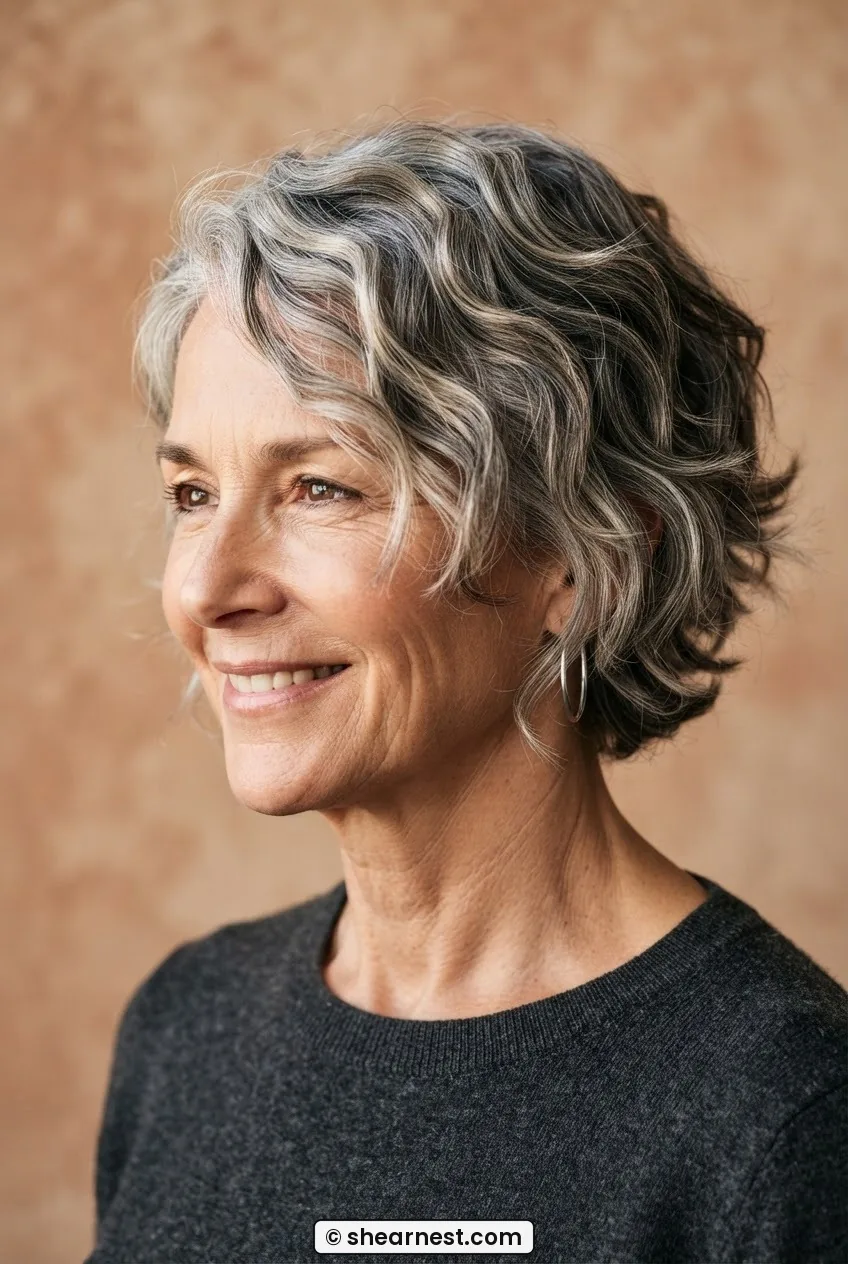
Wavy hair sits in an interesting middle zone — it’s not straight enough to hold a clean line and not curly enough to benefit from a fully rounded perimeter. The wavy pixie shag solves this by using a diffused perimeter at the back and sides: the ends are razored or point-cut into almost a frayed finish, so the wave pattern can reach the edge of the hair and do something interesting rather than hitting a blunt line and flattening out.
The layering through the crown tends to be choppier than other versions — long disconnected pieces on top with shorter ones beneath to support them, so the wave has lift from underneath. If you’re navigating the wavy texture question more broadly, the full breakdown of wavy haircuts for women over 50 is genuinely worth your time. This version of the shag grows out well for wavy hair — the diffused ends just get slightly longer and the waves adapt. Ask for: “pixie shag with razored or diffused perimeter, choppy disconnected layers through crown to support the wave.”
9. The Close-Crop Shag for Natural Coils
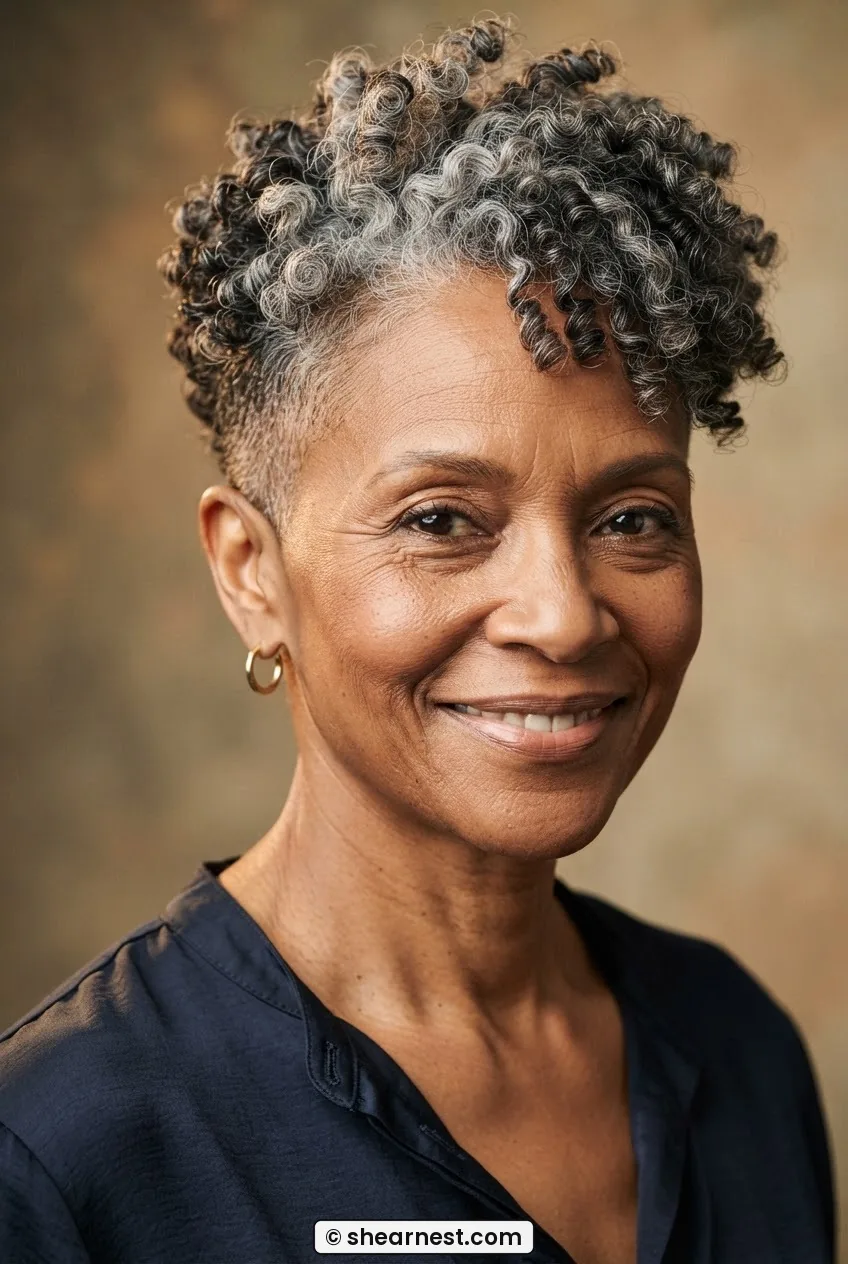
For women with type 4 coils, the “pixie shag” concept translates differently — the shaping follows the coil pattern rather than imposing layering from a straight-hair template. The top is shaped with more length to allow the coils to express themselves; the sides and back are tapered with clippers or scissored close depending on preference. The “shag” element here is about the variation in length and the deliberate movement through the top rather than a traditional layered system.
Gray natural coils are especially striking in this shape. The graying tends to happen in clusters and streaks through type 4 hair, and the close-crop shag showcases that natural patterning beautifully. It’s worth looking at how tapered natural cuts approach this specific combination of coil type and gray growth. Upkeep depends heavily on how fast your hair grows at the sides — some women are back every four weeks; others can stretch to six. Tell your stylist: “close-tapered sides, shaped top to let coils express, no heat straightening — work with the natural coil pattern.”
Questions I Get About This
Is a pixie shag high-maintenance compared to a regular pixie?
It depends on the version. A hard-disconnected shag needs trimming every five to six weeks because the disconnection blurs quickly. The softer graduation versions can stretch to eight or nine weeks without looking neglected — in some ways more forgiving than a classic pixie with a very precise silhouette. The texture works in your favor as it grows.
Can a pixie shag work on straight hair over 50?
Yes, though the styling approach changes. Straight hair needs product to create the separation and texture that wavy or curly hair provides naturally — a good matte texture paste or clay works well. The cut itself needs more deliberate point-cutting on straight hair to prevent the layers from looking like a solid helmet. There’s more on this in the post about straight hair cuts for women over 50 if you want to go deeper on that specific texture.
What’s the difference between a pixie shag and a regular shag haircut?
Length, essentially. A full shag usually sits at the chin or below — there’s enough length at the perimeter for a real curtain-fringe effect. A pixie shag keeps the perimeter at or above the jaw with everything else building upward. The layering philosophy is the same: disconnected layers, texture through the crown, movement — but compressed into a much shorter format.
How do I style a pixie shag at home without a lot of effort?
The honest answer is that a well-cut pixie shag does most of the work itself. The styling techniques that suit it best involve working product into slightly damp hair and then leaving it alone — overworking it flattens the layers. A small amount of texture paste or pomade on fingertips, scrunch or piece through the layers, and let it air-dry. That’s genuinely it for most days.
Honestly, the best thing about this cut at this stage of life is how little apology it requires. It’s not a “brave” choice or a dramatic statement — it’s just a well-engineered haircut that suits a lot of different textures and a lot of different people. If you’re not sure which of these nine fits your hair, print out the description that sounds most like your texture and read it to your stylist. They’ll know what to do with it. And if you want to explore how your specific hair type handles short cuts more broadly, the fuller guide to haircuts for fine hair over 50 is a genuinely useful read alongside this one.