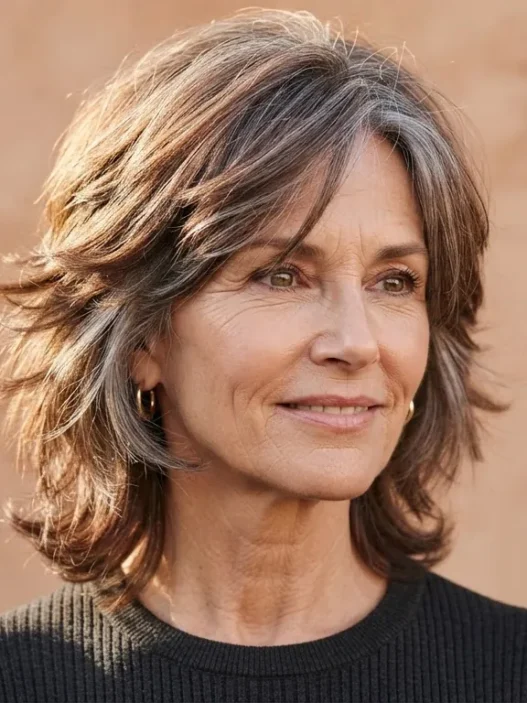







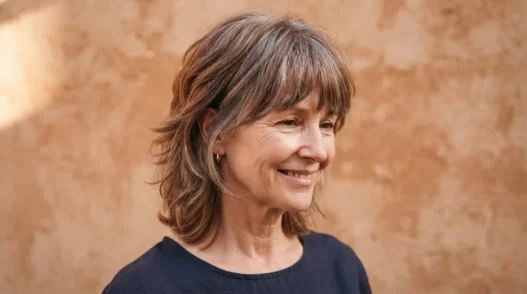
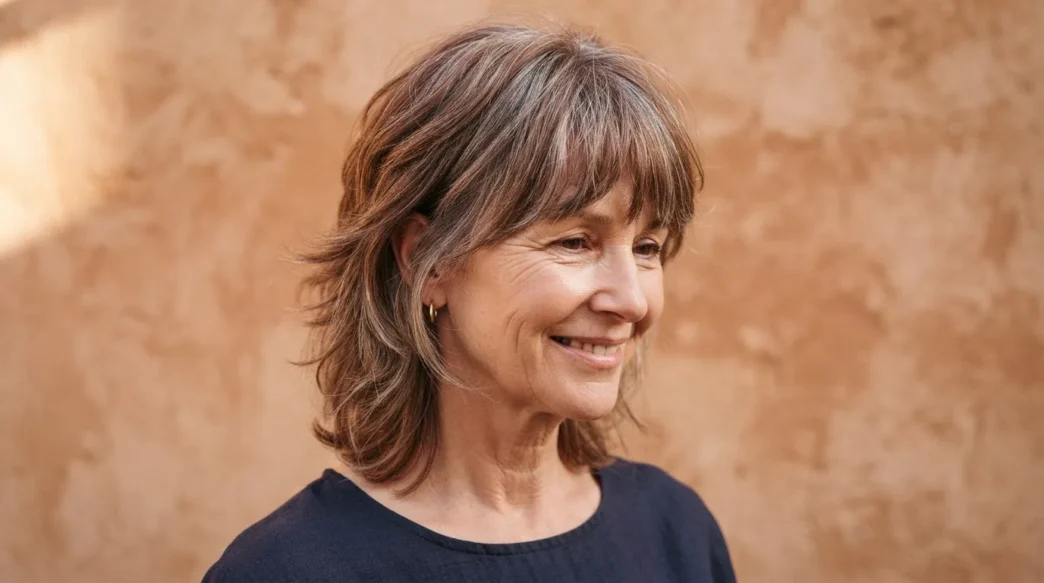
A woman sat down in my chair about three years ago and slid her phone across the counter without a word. On the screen: a gorgeous, slightly messy, heavily layered short shag on someone who looked like she’d just stepped off a ferry in Provence. She was around 55. The hair was silver-threaded auburn. She looked completely herself. My client looked at me and said, “I want that, but I’m terrified it’ll look ridiculous on me.” I told her it wouldn’t. And I was right — but not for the reasons either of us expected.
The Photograph Problem
Here’s the thing about inspiration photos: they lie, but not in the way you think. The photo isn’t lying about the cut. It’s lying about context. The woman in that image was photographed with intention — good light, the right angle, probably a diffuser and a little product. More importantly, the photographer understood her specific head shape and how the layers fell on her particular texture. What my clients bring me is rarely a photo of a shag that matches their hair type. They bring me the photo of the best possible version of a shag on the best possible texture in the best possible light.
That’s not a reason not to get the cut. It’s a reason to understand what you’re actually asking for.
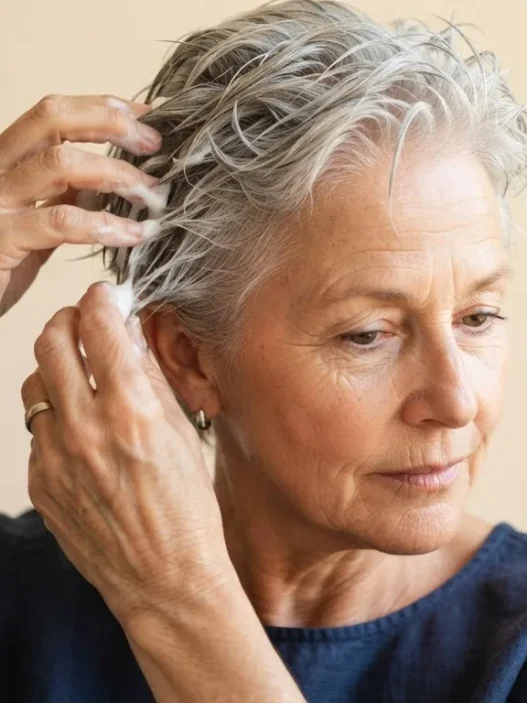
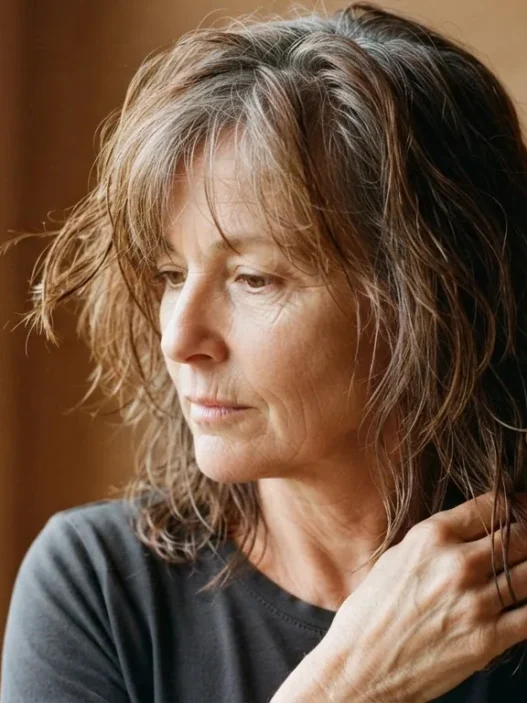
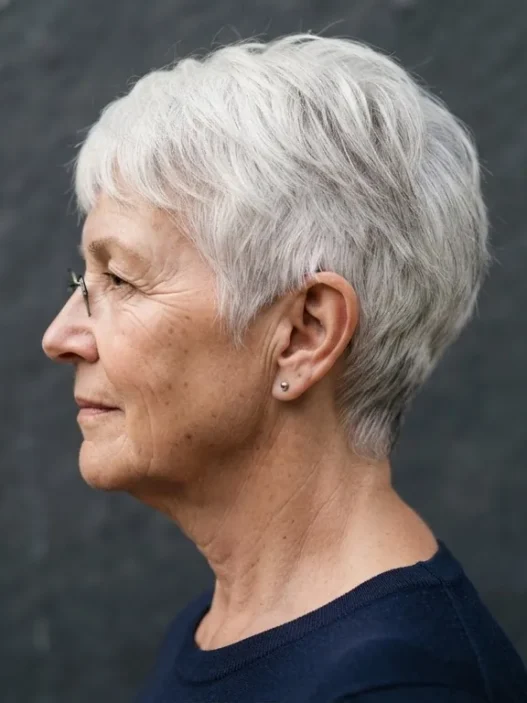
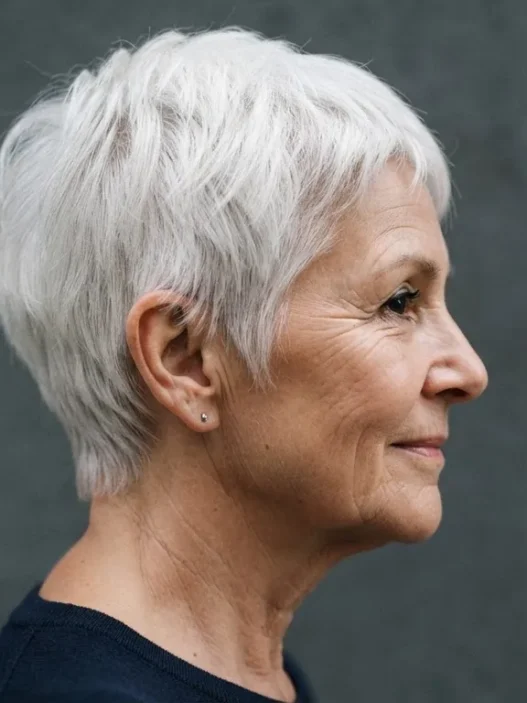
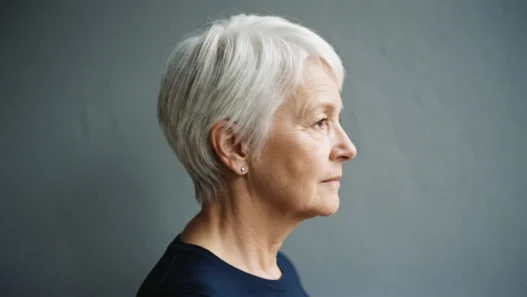
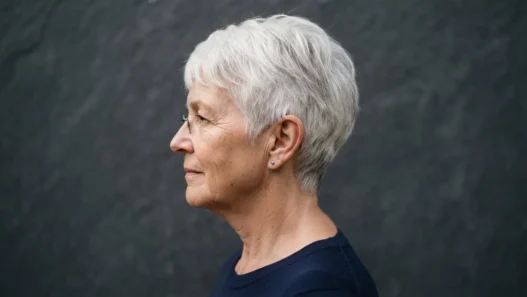
Look at the woman in this photo — see how the layers separate in the light, how the pieces fall with some weight but not so much that they flatten? That’s deliberate. That’s not just “a shag.” That’s a specific distribution of graduation and texture-point cutting that took someone who knew what they were doing about forty minutes to execute. The photograph shows you the destination. It doesn’t show you the route.
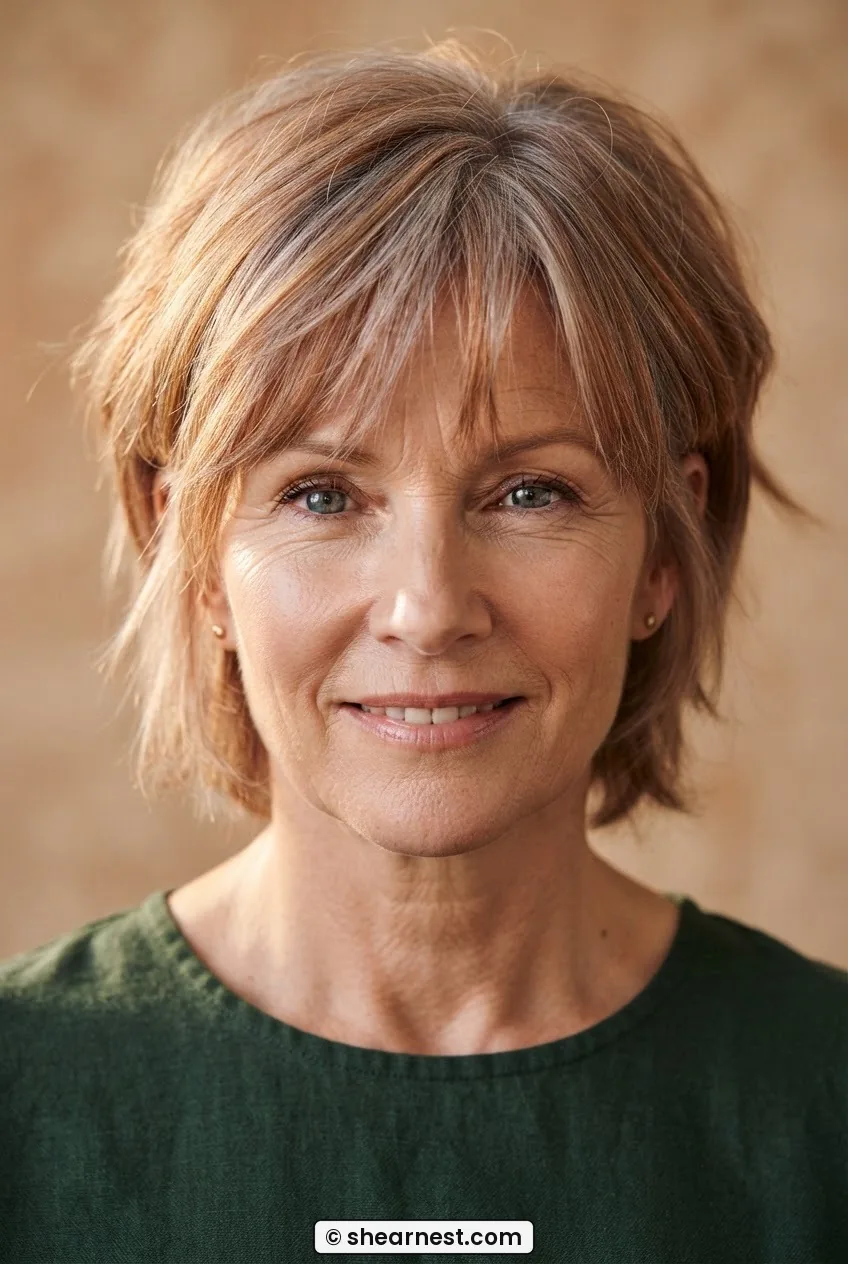
When someone shows me a shag photo and asks if their hair can do that, my first question is always about their natural texture. Fine and straight needs a different approach than thick and wavy. And after 50, the texture question gets considerably more complicated.
Why the Weight Has to Go
The whole mechanism of a shag is weight removal. That’s it. Layers aren’t decoration — they’re structural. When you take weight off the mid-lengths and ends, the hair at the root has less to drag against, so it lifts. The sections that remain heavier anchor the shape. The sections that are thinned and texturized create movement. On fine hair especially, this is transformative.
What I see consistently in clients who come to me after a bad shag experience: too much removed at the perimeter, not enough removed in the interior. The result is wispy ends that look thin rather than deliberately textured. A shag cut at the perimeter — meaning around the hairline, at the very tips — needs to retain enough density to look intentional. The removal needs to happen inside the layers, not at the edges.
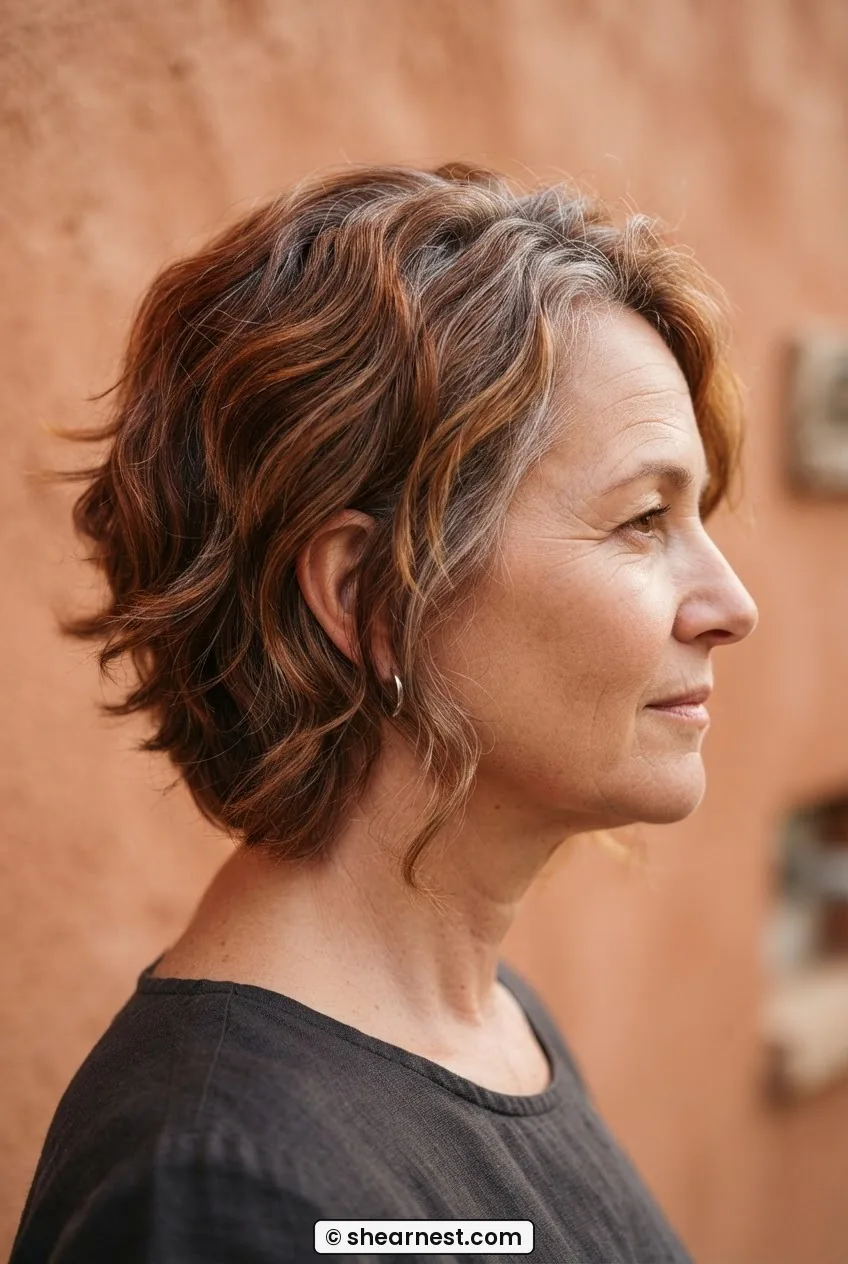
Think of it like a curtain. If you cut the hem to ribbons, it looks damaged. But if you take volume from the body of the fabric, it hangs better and moves more freely. The hem still looks clean. That’s the logic of a properly executed shag on fine or thinning hair, and it’s why I’d always point someone toward a stylist who specifically understands haircut choices for fine hair over 50 before booking a shag with someone who just says “yes” to everything.
For wavy or curly textures, the calculus shifts. There’s more natural volume to work with, and the layers create curl definition rather than root lift. But you still need that interior weight removal — otherwise the shag puffs out rather than falls in. Understanding your own how the shag works on your texture before you sit in the chair makes the conversation with your stylist significantly more productive.
What Actually Changes After 50
No euphemisms. Here’s what’s actually happening to the hair itself:
The follicle diameter shrinks. That’s why fine hair gets finer — it’s not imaginary, it’s structural. The scalp produces less sebum, so hair that was once slightly oily by day two is now dry by day one. The cortex becomes more porous, which is why grey and silver hair grabs colour differently and why heat styling can damage it faster than it used to. And the rate of growth slows slightly, which means a bad cut takes longer to grow out.
All of that sounds grim. But here’s what it means for a shag specifically: the reduced density is actually an argument for short shaggy layers, not against them. A longer style on thinning hair tends to look heavy at the bottom and flat at the top. A short shag distributes what you have more evenly. The layers create the illusion of density because the eye reads movement as volume.
If you have straight hair, the shift in texture after 50 sometimes works in your favour — hair that was too slippery to hold a style can develop a little natural wave as the follicle shape changes. I’ve written more on this when discussing straight hair cuts for women over 50, but the short version is: don’t assume your hair behaves now the way it did at 35. It probably doesn’t. And that’s not always a problem.
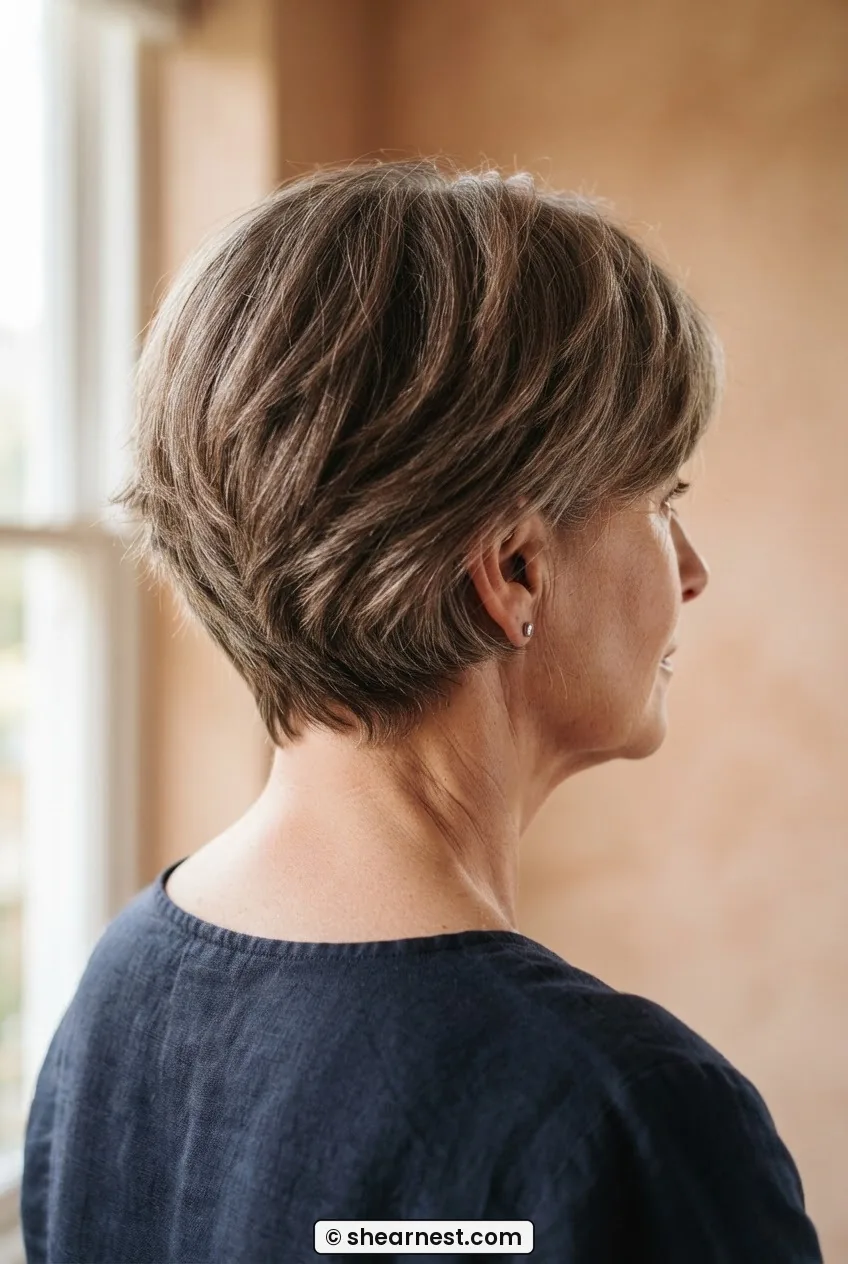
The jawline also softens — it happens to most of us and there’s nothing wrong with acknowledging it. A shag with layers that hit around or just below the chin can actually work with a softer jaw rather than fighting it, especially when the framing pieces are cut to fall slightly forward. For women with an oval face shape, this is almost foolproof; if you’re curious how face shape affects all of this, the breakdown in this piece on oval face hairstyles for women over 50 is genuinely useful context.
The Bangs Question I Keep Getting Wrong
I’ll be honest: I used to push clients away from bangs after a certain age almost automatically. “They require too much maintenance.” “They’ll emphasize forehead lines.” “They’re hard to grow out.” I said all of it. I was wrong — or at least, I was repeating received wisdom without thinking it through.
Here’s what I actually think now: the wrong bangs after 50 are blunt, heavy, one-length bangs that sit like a shelf across the forehead. Those are unforgiving at any age and they’re particularly difficult to pull off when the skin above the brow has changed. But that’s not the only bang that exists.
Curtain bangs — the ones that part slightly in the centre and sweep to the sides — are almost universally flattering with a shag, and they work beautifully on women over 50 in ways I didn’t fully appreciate until I started seeing the results in my own chair. They’re soft. They frame without closing in. And on a shaggy short cut, they blend into the layers so naturally that they don’t read as “bangs” in the traditional, high-maintenance sense.
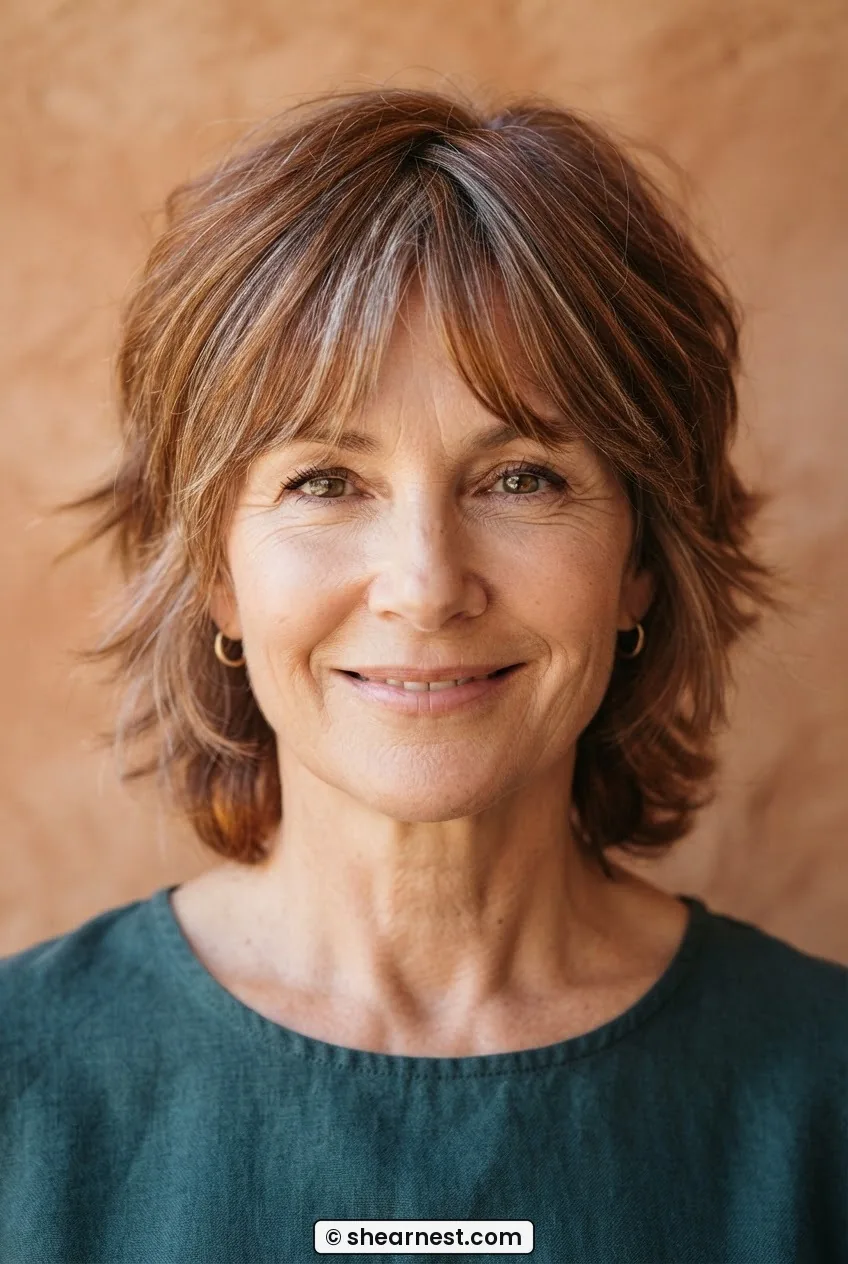
Wispy, piece-y fringe that’s point-cut and textured at the ends also works beautifully. The key is that it has to be integrated into the shag, not added on top of it. When a bang looks like it’s been stuck onto a separate hairstyle, that’s a technique problem, not a bang problem.
The maintenance argument is real, though. Bangs grow faster than the rest of the cut. If you’re someone who stretches appointments to every twelve weeks, a bang is going to look overgrown for two-thirds of that cycle. That’s the honest version of the maintenance conversation — not “bangs don’t suit you” but “how often are you realistically coming back?”
What I Changed My Mind About
For a long time I thought the shag was a young person’s cut. Not in a patronizing way — just in a practical one. The original 70s shag was rock-and-roll and a little dishevelled by design, and dishevelled reads differently on a 22-year-old than it does on a 55-year-old. That was my assumption, and I was carrying it around without examining it.
What changed my mind was — genuinely — watching my clients in their 50s and 60s walk out differently than my younger clients after the same cut. Not worse. Differently. There was something about the way a shag settled on hair that had some grey in it, that had texture, that had lived a little, that made it look more intentional than it did on twenty-something hair. The imperfection looked chosen rather than accidental. The movement looked real rather than styled.
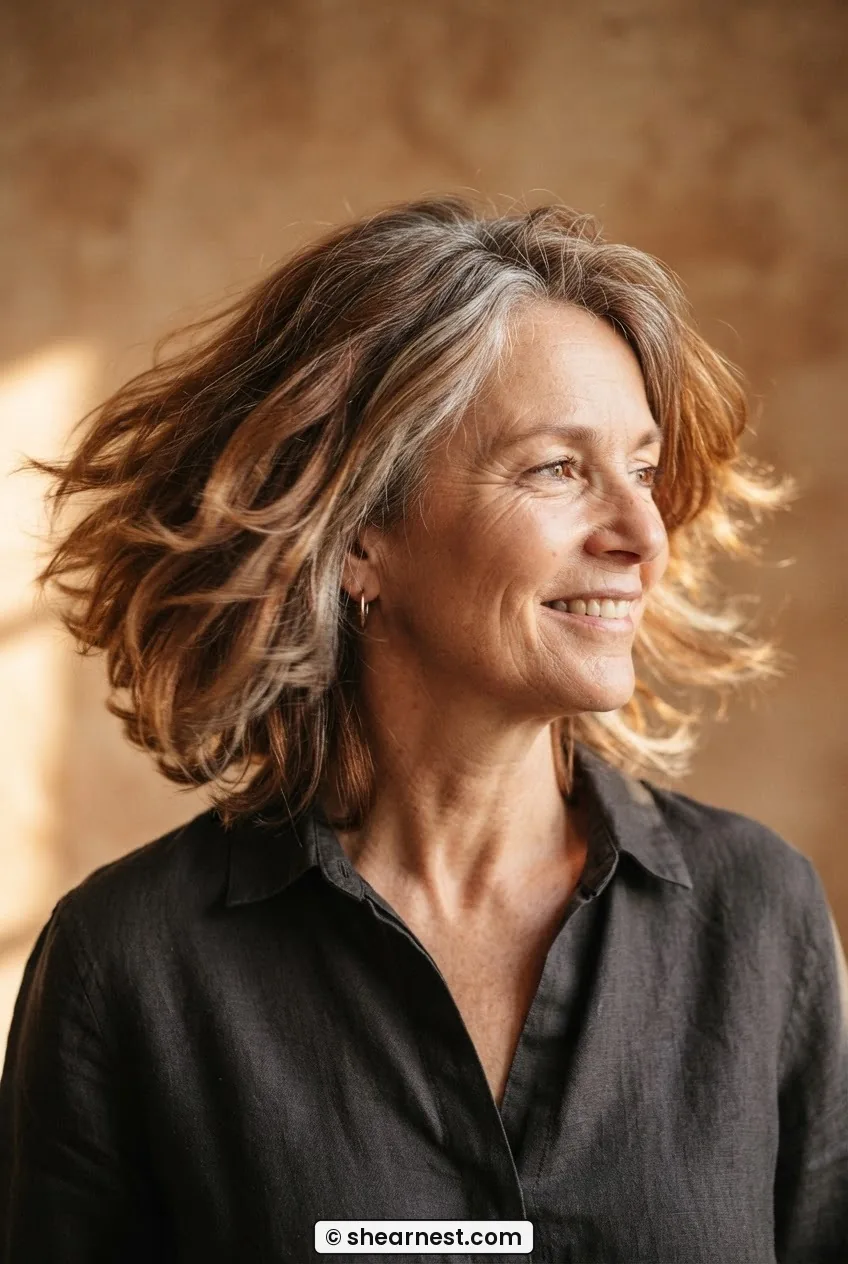
My unpopular opinion — and I stand by it — is that the shag is actually a better cut after 50 than before it for most women. The hair’s natural evolution toward finer texture and more movement works with the cut rather than against it. The styling margin for error is wider. A 55-year-old with a good shag and air-dried hair looks like she made a decision. The same cut on a 25-year-old with fine hair sometimes just looks undone.
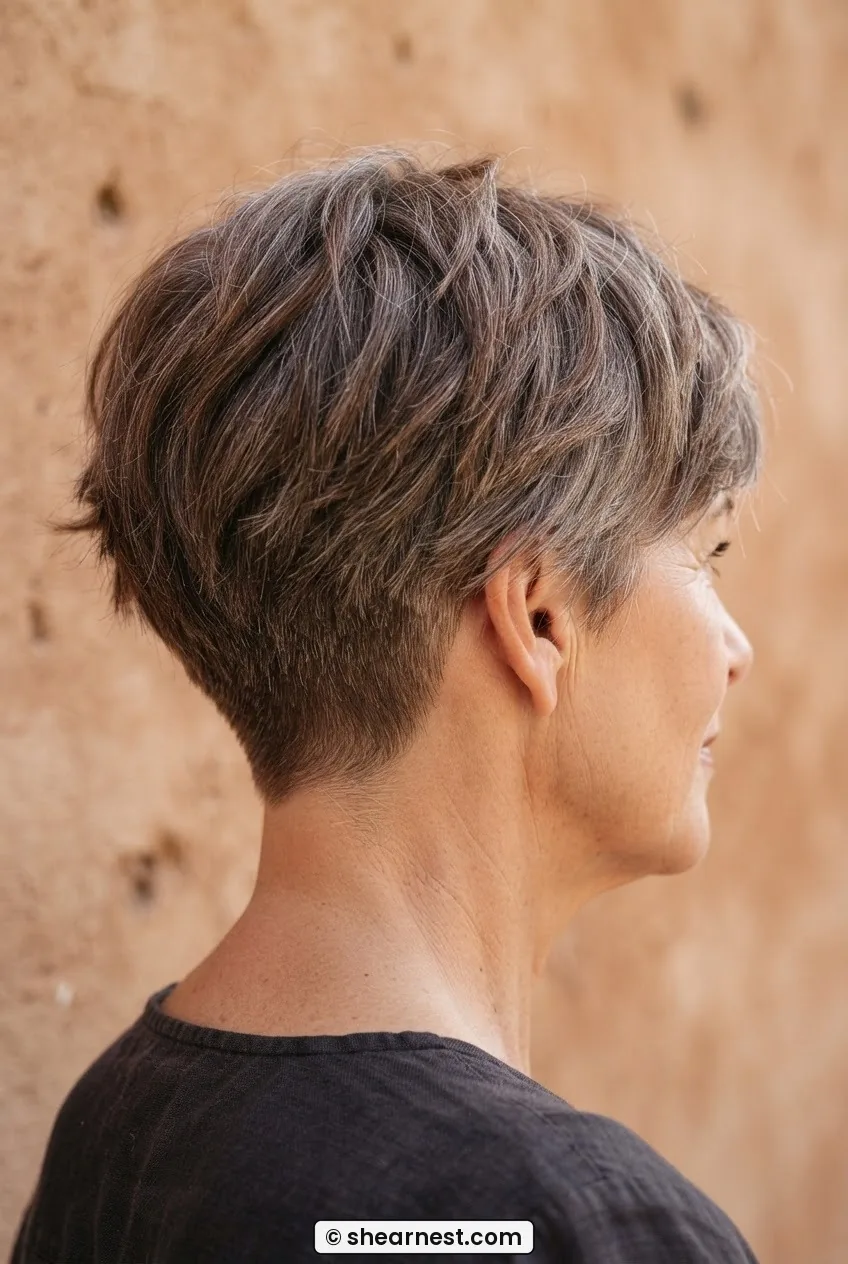
I also changed my mind about grow-out. Short shaggy layers have a longer graceful grow-out window than a clean bob or a pixie. Because the shape is built on textured layers rather than a precise perimeter line, six weeks of growth doesn’t break the silhouette. That matters enormously when you’re trying to space out appointments or you’re in a period of life where the salon isn’t the priority it used to be.
If you’re also weighing this cut against something longer, it’s worth reading through the considerations around wavy haircuts for women over 50 — particularly if your hair has developed any natural wave, because a longer shag and a wavy mid-length can actually be very close cousins. And for anyone in their 70s reconsidering the shag after years of something more “sensible,” the conversation in this post on hair styles for women over 70 about what actually changes is worth your time.
Questions I Get About This
Will a shag make thinning hair look worse?
Usually the opposite — if it’s cut correctly. The layers redistribute density and the movement creates the visual impression of fullness. The caveat is that interior weight removal needs to be calibrated carefully on very fine hair. Too aggressive and it reads as sparse. Ask your stylist specifically about their approach to fine or thinning hair before they start cutting.
How much styling does a shag actually need every day?
Genuinely not much, which is part of why I love recommending it. A diffuser or a rough blow-dry with fingers is usually enough. If your hair has any natural wave or texture, air-drying with a little lightweight styling product scrunched through the ends can be your whole routine. The cut is designed to look good with movement, not in spite of it.
Does grey hair change how a shag looks?
Yes, and mostly for the better. Grey and silver tones have a natural luminosity that catches light differently than pigmented hair — and with a shag, where the whole point is layers catching and separating in the light, that effect is amplified beautifully. The texture of greying hair also tends to hold a shag shape longer between washes than very fine pigmented hair does.
Can I get a shag if my hair is pin-straight?
Yes, but the approach shifts. On very straight hair, the shag relies more on a good blow-dry to activate the layers — the movement won’t happen on its own the way it does on wavy or curly hair. Some stylists will cut the layers slightly longer on straight hair so the shape reads as deliberate rather than accidentally layered. It’s a slightly more high-maintenance version of the cut, but it absolutely works.
The decision is yours, obviously. But if you’re sitting with that phone photo and that same knot of “will it look ridiculous on me” — I’d say book the consultation, not the appointment. Go talk to someone who can look at your actual hair, your actual face, your actual lifestyle. The photograph is a starting point. What you walk out with should be yours.